
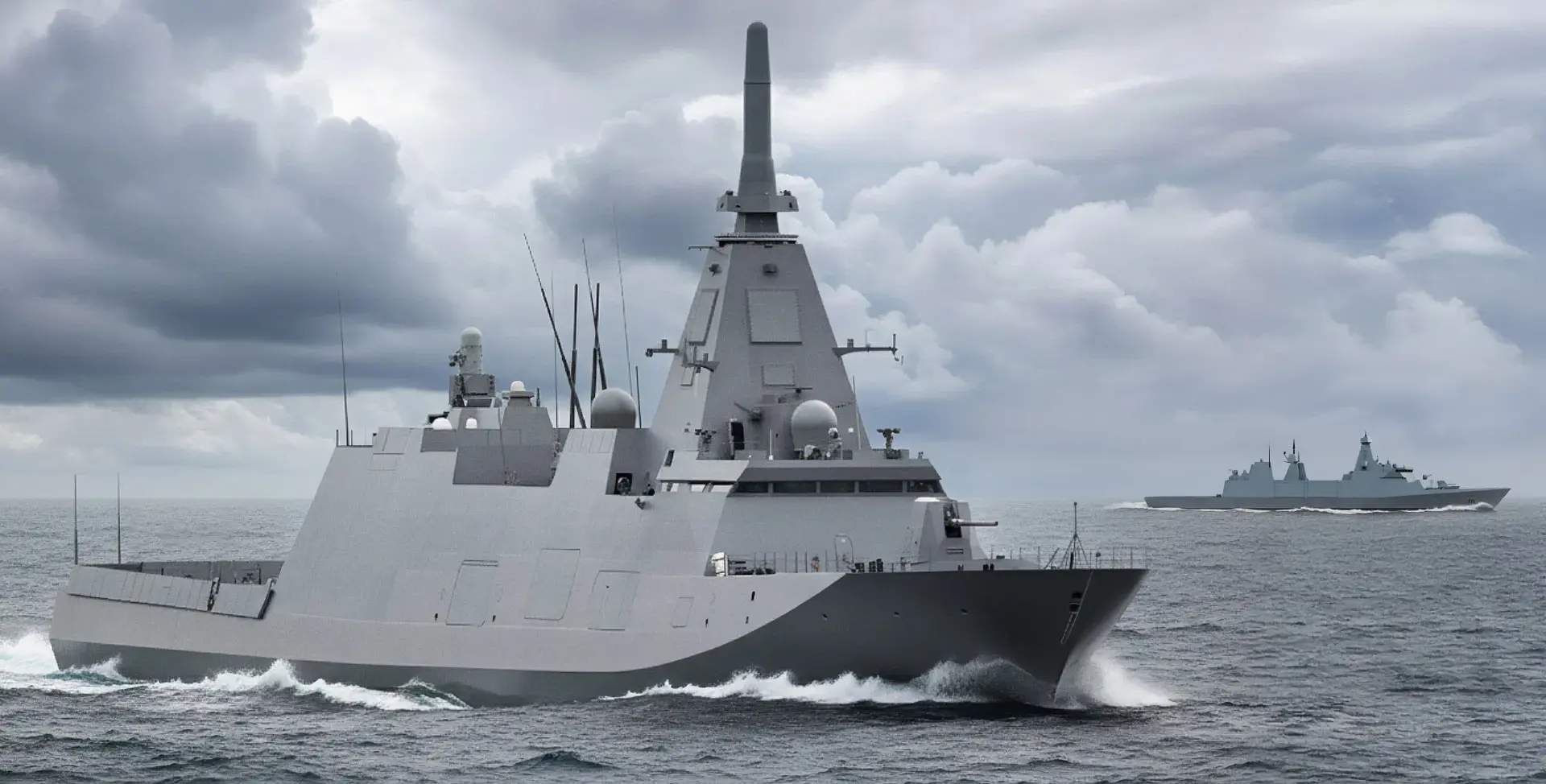
New Zealand is approaching a pivotal decision on the future of its surface combatant fleet as the Royal New Zealand Navy (RNZN) looks to replace its Anzac-class frigates in the mid-2030s. Two designs have emerged as the most likely contenders: Japan’s upgraded Mogami-class and the British Type 31 frigate.
Small navy, hard choices
New Zealand’s naval renewal priorities are set out in the 2025 Defence Capability Plan (DCP). The majority of its modest fleet will need recapitalising from the late 2020s to the late 2030s. At the core of this plan is the requirement to replace the two ANZAC-class frigates built in the early 1990s with modern surface combatants that can operate effectively across New Zealand’s vast maritime approaches, contribute meaningfully to coalition operations, and remain affordable to acquire and sustain. In addition, there is a need to replace its Offshore Patrol Vessels and the Multi-Role Vessel, HMNZS Canterbury. The RNZN’s requirement is shaped by geography as much as strategy. New Zealand has one of the world’s largest Exclusive Economic Zones, significant responsibilities in the Southern Ocean, and an enduring need to deploy forces at distance alongside Australia, the United States and other partners. There is also the aspiration for a dedicated Southern Ocean patrol vessel.
Personnel availability remains a major limiting factor. As of 2024, more than 600 naval posts were unfilled, directly constraining ship availability and readiness. Any future frigate must therefore minimise crew size through automation and common systems, while remaining robust enough for sustained blue-water operations. The DCP also hints at a desire for greater commonality across the surface fleet, potentially using the same hull and propulsion for all of the new vessels.
New Zealand has limited financial resources, and cost discipline will be important. Although the ships will almost certainly have to be built overseas, like all nations, NZ will look to maximise local industrial participation in the project. For a small navy, avoiding bespoke solutions and high-risk development programmes is a clear priority. This context explains why the choice is increasingly framed as a decision between two mature, in-production designs rather than a clean-sheet option.
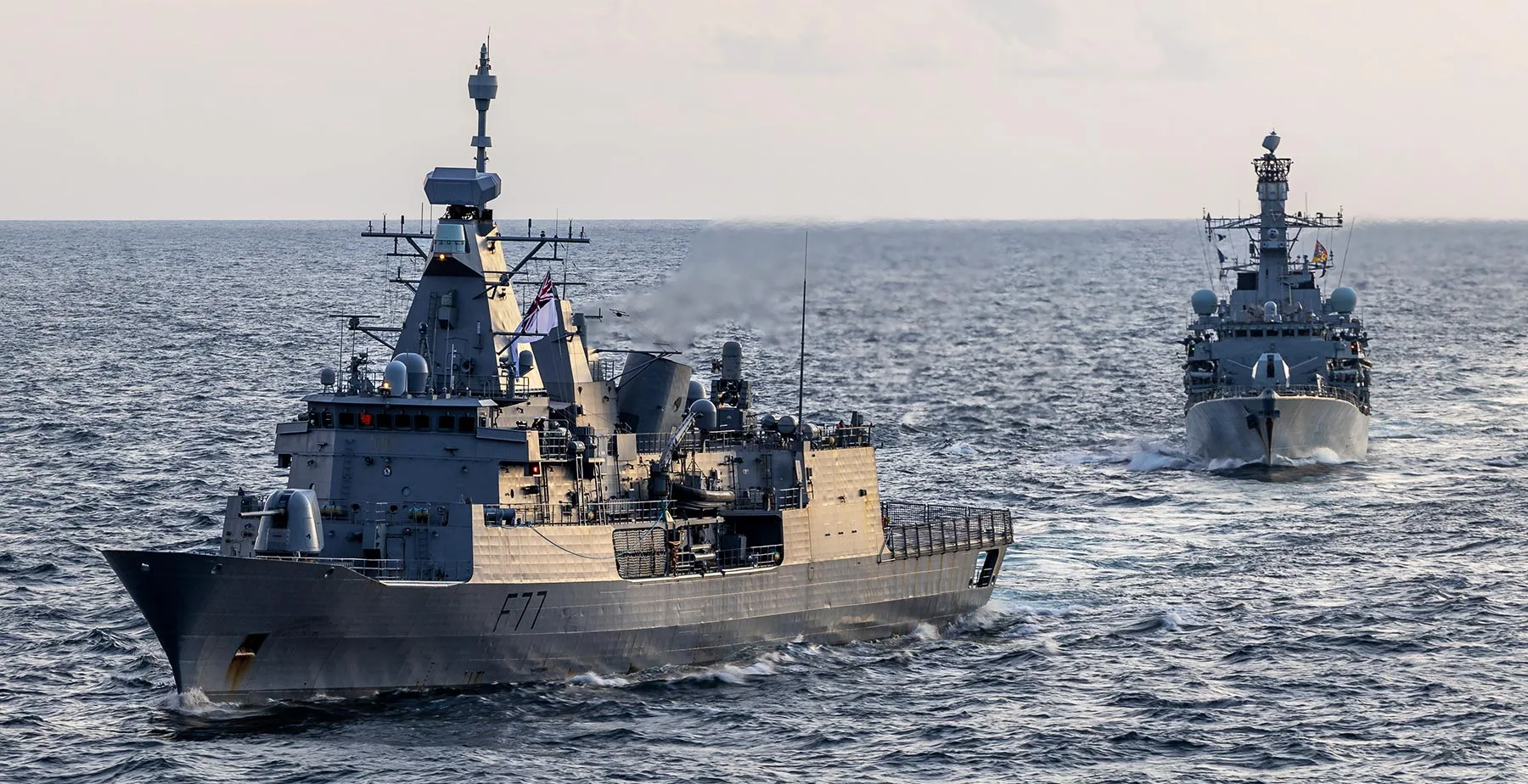 HMNZS Te Kaha exercises with HMS Richmond while working with the Carrier Strike Group in the Pacific, 5th July 2025. The ANZAC Frigate Systems Upgrade (FSU) programme began in 2014. This included fitting the Lockheed Martin CMS 330 Combat System, Sea Ceptor air defence system, installation of Sea Sentor torpedo defence and the MASS soft-kill system. The Thales SMART-S Mk2 3D radar was added, along with enhancements such as new inertial navigation and improved IFF.Japan’s Mogami proposition
Japan and New Zealand held high-level defence talks in Tokyo in October 2025 to examine the upgraded Mogami-class frigate, known as the New FFM configuration. While no formal agreement was announced, the discussions placed the design firmly among the leading candidates for New Zealand’s next-generation frigate programme, particularly following Australia’s decision to select an enlarged Mogami derivative for its own General Purpose Frigate programme.
The baseline Mogami-class was conceived for the JMSDF as a highly automated, multi-mission frigate capable of operating with a crew of around 90. At roughly 133 metres in length and around 5,500 tonnes full load, it combines a stealthy hull form with a Combined Diesel and Gas propulsion system, enabling speeds above 30 knots and long-range endurance well suited to Pacific operations. A highly integrated combat information centre, extensive automation and the ability to deploy helicopters and uncrewed systems are central to the design philosophy.
The upgraded New FFM builds on this foundation. The hull is lengthened to around 142 metres, displacement increases to approximately 6,200 tonnes, and the number of Mk 41 vertical launch cells doubles to 32. Sensor and electronic warfare suites are enhanced, and the design is explicitly optimised for longer blue-water deployments rather than primarily archipelagic operations. Despite this growth, Japan intends to keep crew numbers below 100, an attractive attribute for personnel-constrained navies.
Australia’s selection of the New FFM in August 2025 gives the design significant regional momentum. Canberra plans to acquire eleven ships, with the first three built in Japan and the remainder constructed in Western Australia. Following the model set by the ANZAC frigates, alignment with the RAN offers tangible advantages for the RNZN. Shared platforms reduce costs through common training pipelines, simulators, spares and sustainment arrangements, while also improving interoperability.
There are, however, uncertainties. Export configurations of the New FFM remain to be fully defined. Japan is second only to China in the speed it can build and deliver warships, but has limited experience exporting complex surface combatants at scale. Long-term support arrangements, technology transfer and the degree of design flexibility available to New Zealand will all need scrutiny. The Mogami’s combination of automation, endurance and alignment with Australia makes it a strategically compelling option for the frigate replacement project at least.
 The Type 31 alternative
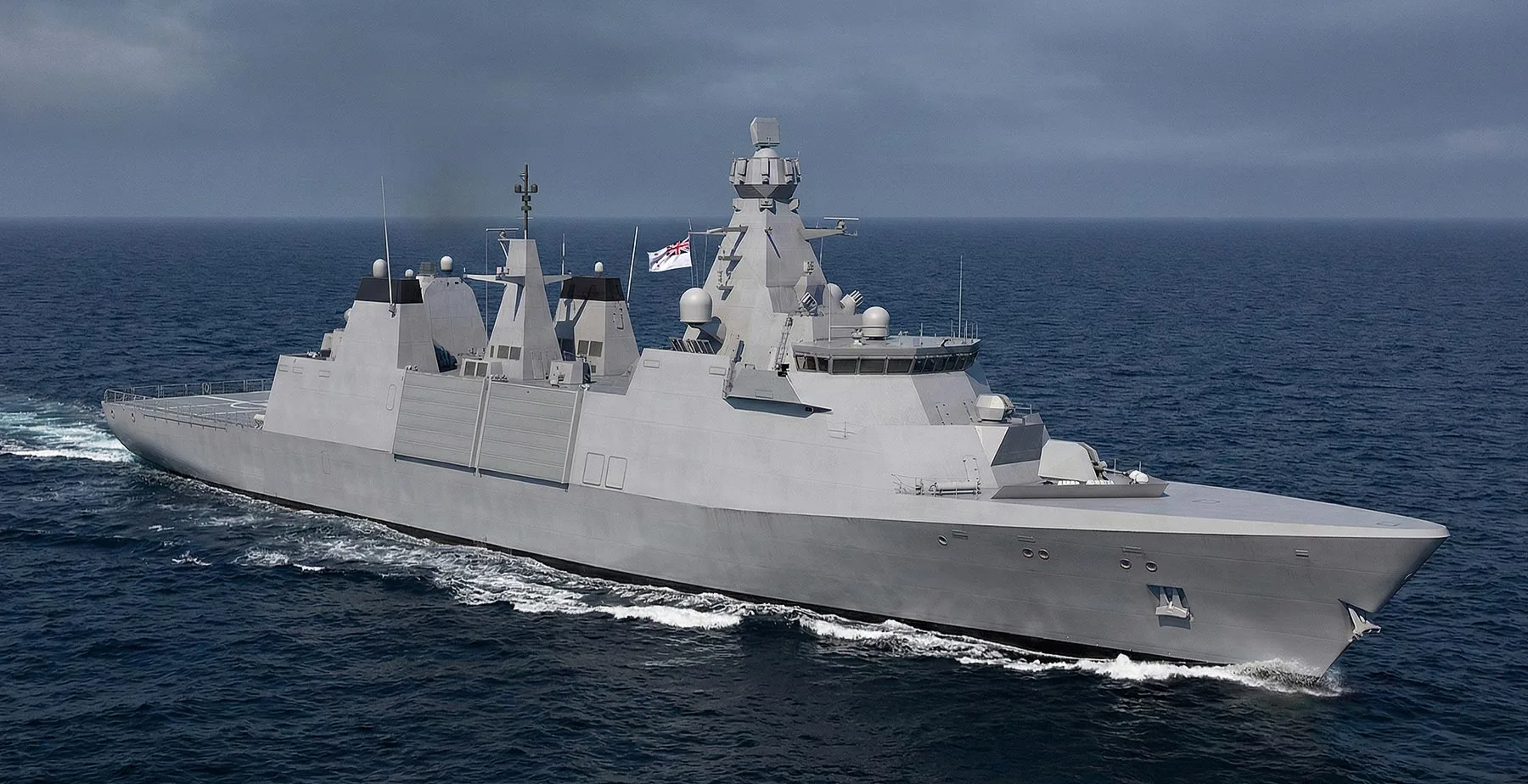
The most likely alternative solution for the RNZN is a British Type 31 frigate variant, based on Babcock’s Arrowhead 140 design. In 2023, Babcock Australasia confirmed it would formally present a Type 31 derivative as a future solution for the RNZN, building on the company’s existing role operating New Zealand’s largest marine engineering and maintenance facility at Devonport in Auckland.
Type 31 is larger than even the upgraded Mogami, with a displacement of around 5,700 tonnes and significant growth margins in space, weight and power. Designed from the outset as an affordable, exportable frigate, it prioritises simplicity of construction, adaptability and a modest crew requirement, similar to the Mogami, of around 100. Although the RN’s Type 31 design is perceived by many as under-armed, the late addition of Mk41 cells offers a step change in firepower. The design is already configured with Sea Ceptor/CAAM system, which is already in service on the ANZAC frigates. Neither the Mogami or Type 31 are primarily ASW platforms, but the addition of towed arrays and the deployment of offboard systems could improve this capability on Type 31 if a priority for the RNZN.
A key advantage of Type 31 lies in its maturity and production status. The class is already under construction for the Royal Navy at Rosyth, and adding additional hulls to the end of an established production run would likely represent the lowest-risk and lowest-cost acquisition path, especially if not substantially modified. Babcock has already engaged with industry in New Zealand, making agreements with about 60 local companies that could be involved in the supply chain.
The Arrowhead design’s size and flexibility also open up wider fleet options. A common hull form could potentially underpin not only frigates but also lightly armed or unarmed variants suited to Southern Ocean patrol or multirole support tasks. This aligns with the DCP aspiration for greater commonality across the surface fleet, simplifying training, maintenance and logistics.
Against this, Type 31 lacks the immediate regional commonality benefits offered by the Mogami-Australia alignment (Although Indonesia is building a Type 31 variant). Politically and strategically, a Japanese choice would reinforce New Zealand’s engagement in a Free and Open Indo-Pacific framework alongside Tokyo and Canberra, while a British option would lean more heavily on historical and cultural ties.
For New Zealand, the decision between the upgraded Mogami and Type 31 is less about headline performance and more about risk, alignment and sustainability. Mogami offers a very modern warship package and the attraction of commonality with Australia, while Type 31 provides more platform adaptability and a low-risk production pathway. Either choice would represent a significant step change for the RNZN, restoring a level of surface combat capability that has been steadily eroded over the past decade.