
Corrections lawyer Anselm Williams submitted that Mahoney’s past conduct showed a “pervasive pattern” of behaviour.
An ESO allowed Corrections to monitor and manage the long-term risk posed by high-risk offenders and to protect the public.
Mahoney’s lawyer, Charlotte Brook, said her client didn’t oppose the order or the conditions, but argued it should only be imposed for up to five years.
Justice Paul Radich’s recently released decision referred to Mahoney’s original sentencing notes, including an observation by the sentencing judge that Mahoney had “attacked” a young woman – “there is no other word for it”.
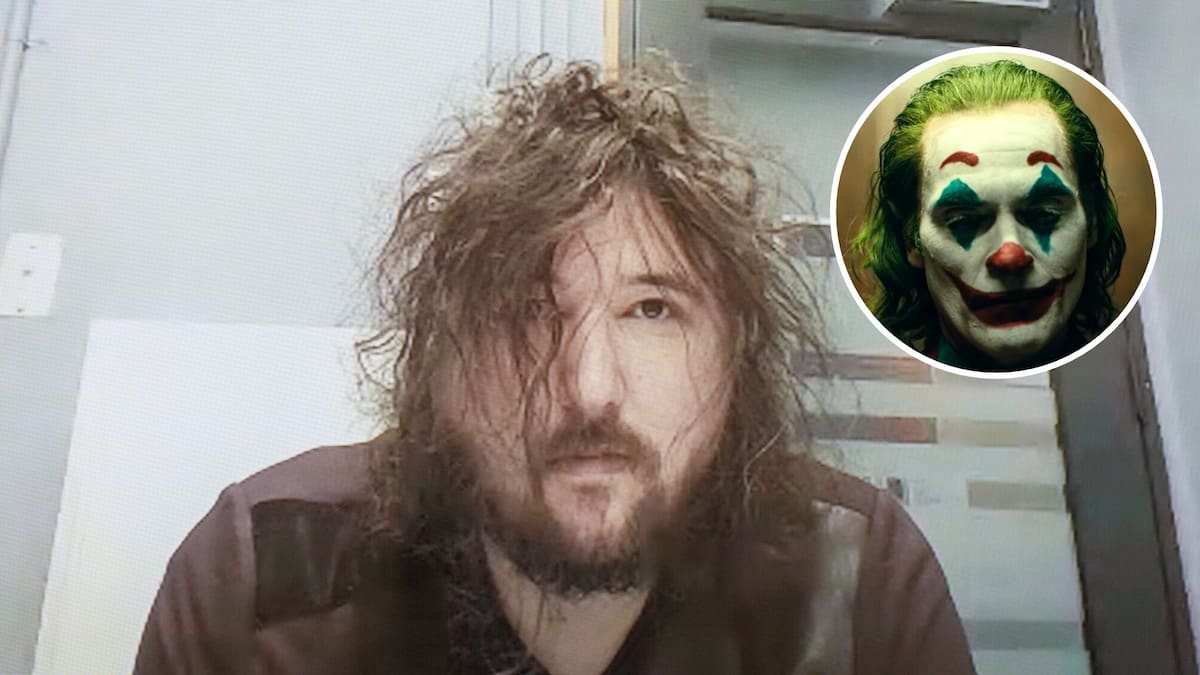
After meeting her at the Armageddon Expo, while he was dressed as the Joker, the two went back to her house. Once there, he raped her twice.
Nathaniel James Mahoney during his appearance via audio-visual link at a hearing in the High Court at Wellington to decide whether he should be subject to an Extended Supervision Order. Photo / Mark Mitchell
Mahoney choked the woman, and also bit her neck, shoulders, ribs and stomach, in some cases breaking the skin, as well as leaving scratches, bruising and abrasions over her body.
At sentencing, the judge referred to the woman, who has a condition, as particularly vulnerable.
“In my judgment, Mr Mahoney, it would have been reasonably clear to you that she had a degree of vulnerability to say the least.”
The decision also referred to a second sexual assault.
That incident occurred at a residential lodge in 2012 after Mahoney followed a drunk and vomiting woman he knew back to her room and got into bed with her.
Ignoring her pleas for him to leave and attempts to push him away, Mahoney touched her body and private parts.
The following year, a third assault, involving a woman who was also known to Mahoney, began after he grabbed her by the hair.
As she tried to get away, he grabbed her breast and pulled her towards him, causing considerable pain.
A high risk of future sexual offending
Corrections first applied for an ESO in 2024, before Mahoney’s release from prison.
Following his release in February, an interim supervision order was granted, requiring him to live at Te Korowai, a supported living facility on the grounds of Rimutaka Prison, offering 24/7 oversight and support.
Last month’s hearing sought an ESO for the maximum 10-year period.
Two of the three experts, who prepared reports for the hearing, assessed Mahoney’s risk of reoffending as high or very high, noting that any reoffending would likely involve a vulnerable woman he knew.
One of the reports also noted that Mahoney had a “complex risk profile” including mental health and personality factors, and neurodivergence.
He is currently on medication for ADHD and bipolar disorder.
Justice Radich’s decision noted the three incidents showed a clear pattern of Mahoney forcing himself on young, sometimes vulnerable, women, irrespective of their objections.
“The key factor on which the experts appear to agree is that the main contributor to Mr Mahoney’s future risk of offending is his lack of understanding of consent, especially in the context of his sexual preference for BDSM; he prefers to be ‘dominant’ during intimacy.”
The judge noted there was a “pervasive pattern” of serious sexual offending, as well as a high risk of future sexual offending, thereby meeting the requirements for an ESO.
Mahoney, who was in his 20s at the time of the offending, was now 36 and continued to maintain the sex was consensual.
However, towards the end of his sentence he began treatment and has now undertaken a considerable number of sessions.
“Concerns remain about Mr Mahoney’s ongoing denial of responsibility for the serious sexual offending he has committed. It is intended that his treatment will be long term,” the decision stated.
The decision went on to state that without significant treatment, Mahoney’s pattern of serious sexual offending was sufficiently pervasive to serve as a predictor of his future conduct.
Accordingly, Justice Radich imposed a five-year term for an ESO, with the Parole Board to review the conditions of Mahoney’s order in the new year.
Catherine Hutton is an Open Justice reporter, based in Wellington. She has worked as a journalist at the Waikato Times and RNZ. Most recently she was working as a media adviser at the Ministry of Justice.