
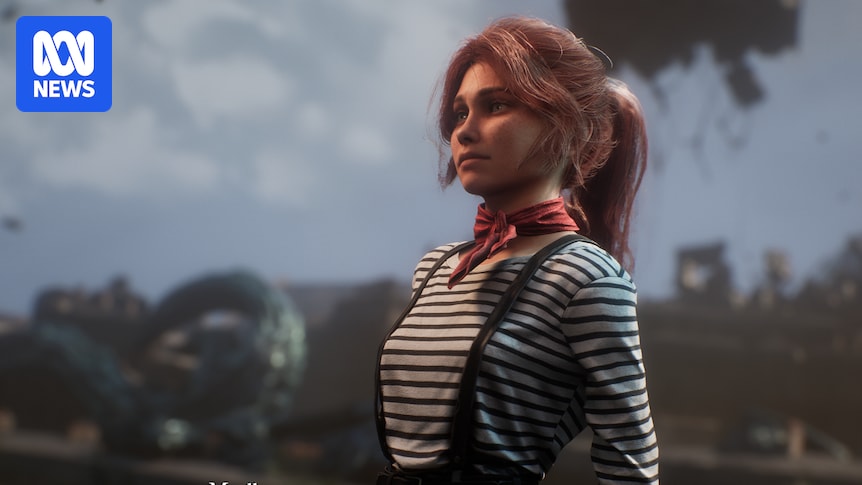
It’s no secret a lot of people in Australia play video games.
In fact, the latest Australia Plays report, conducted by Bond University and commissioned by peak body Interactive Games and Entertainment Association (IGEA), suggests video games are played in almost nine out of 10 Aussie households.
It’s not child’s play either, with the report showing the average age of gamers is 35 years old.
And in 2025, for the first time ever in the survey (which has been conducted since 2014) more women are gaming than men, with 51 per cent playing regularly.
Whether you’re playing word games regularly or picking up a controller with the family for some couch co-op, the cultural impact of games extends to our museums and to our festivals for interactive theatre events.
We have collected the thoughts of a diverse range of ABC writers who love this medium, and they present their picks for the games that have found a place in their hearts this year.
Death Stranding 2: On the Beach
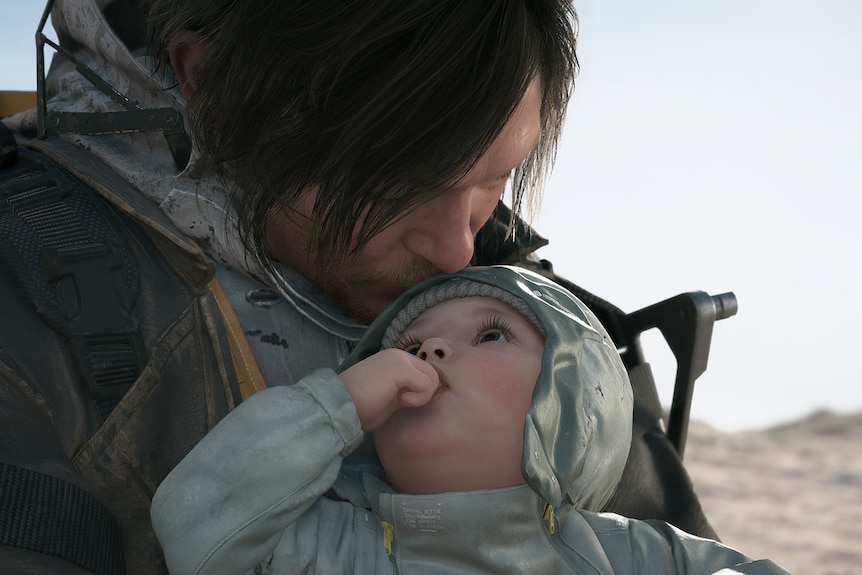
Norman Reedus stars as Sam Bridges in Hideo Kojima’s game Death Stranding 2: On The Beach which is set in Australia. (Supplied: PlayStation Studios)
Hideo Kojima — gaming’s most delightfully idiosyncratic auteur — returns to the post-apocalyptic world of Death Stranding with the long-awaited sequel, On The Beach.
This time he trades the first game’s Icelandic-inspired North America for Australia, dropping Sam Bridges (Norman Reedus) into harsh, barren landscapes that feel uncannily familiar: equal parts beautiful and ominous.
Unshackling itself from the original’s meditative “delivery game” loop, Death Stranding 2 leans harder into action and stealth, recalling flashes of Kojima’s earlier Metal Gear Solid work.
The result is a kind of Kojima-greatest-hits-package — stranger, punchier, and more confident in its weirdness.
Why Hideo Kojima set Death Stranding 2: On The Beach in Australia
With On The Beach, Kojima also continues to blur the lines between video games and cinema (his Instagram bio literally reads “70% of my body is made of movies”), bringing some of his filmmaking idols like George Miller and Hollywood heavyweights such as Elle Fanning into key roles.
In the end, Death Stranding 2 doesn’t just follow up the first game — it challenges it.
It’s still about connection and survival, but in today’s fractured, hyper-connected world, it’s also about what we lose when we assume being “linked” is the same as being together.
Whether you traverse its dusty roads or skip it entirely, this sequel leaves you asking: Should we have connected?
– Angus Truskett
Hades II
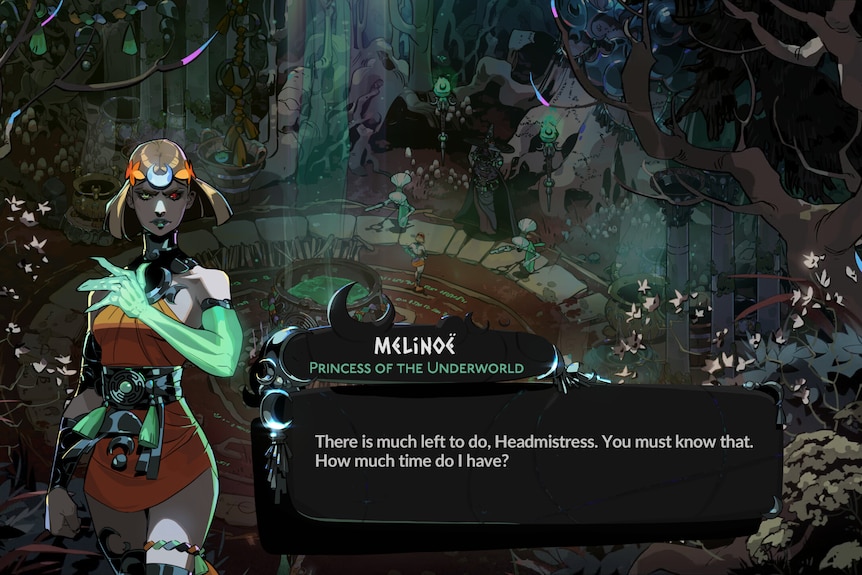
Hades II builds on the rogue-lite gameplay of the first game, with lead character Melinoë battling through levels that change every time you play. Dying is an important part of the process. (Supplied: Supergiant Games)
Hades II and its predecessor managed to do something that no other game has achieved for me — make me feel ok about repeatedly failing.
Normally in most run-based games, where I’m retreading the same path again and again, I hit a point where I just cannot make any further progress, and I move on to something else.
With Hades II the engaging and developing narrative and accumulation of resources that persist between deaths make every run feel meaningful; I’m always going to get something for my efforts.
The stunning voice acting and characterisation of the Supergiant’s version of the Greek pantheon in this sequel is far more developed, each incidental boss or side character comments on your progress, notes that you have met before, and again, congratulates or chides you.
Unlike a lot of other challenging rogue-lite games, I never feel like my time is being wasted, or that I’m being punished unfairly; each victory feels just within grasp and when you finally succeed it’s exhilarating.
Darren Korb’s soundtrack is filled with pumping guitar and electronic trills, the musical themed battles of Scylla and the Sirens are an absolute delight, leaving you wondering if you’ve unlocked a new song each time you meet the undersea pop stars that drive their listeners to obsession.
But its the tender quiet duets like Moonlight Guide Us by Ashley Barrett and Judy Alice Lee that really send a shiver down my spine.
Supergiant initially released the game into early access as a work in progress version that was added to over time.
The story was written around that too — which is a masterful move — characters in game explained when you’d hit the end of a still-in-development area in an narratively consistent way, and that will never be able to be experienced again now it’s finished.
You just had to be there, and I’m lucky I was.
– Gianfranco Di Giovanni
Split Fiction
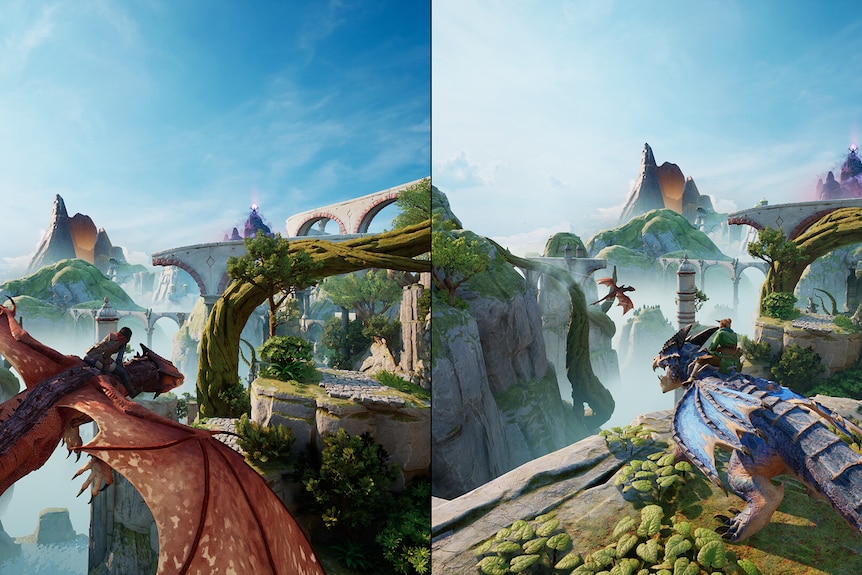
Split Fiction is designed for two players. Each player has different skills and they need to work together to complete tasks across fantasy and science fiction worlds. (Supplied: Hazelight Studios)
After winning 2021 Game of the Year at The Game Awards with their charming co-op It Takes Two, all eyes were on Hazelight Studios to see what high-octane tricks they would pull out to follow their hit.
And after the release of Split Fiction in April, the answer became clear: They pulled out all of them.
The mile-a-minute adventure swaps marital crisis for an enemies-to-friends journey between two aspiring authors; cynical sci-fi nerd Mio and optimistic fantasy-lover Zoe.
Both are lured to the monolithic Rader Publishing with the promise of trying out a new technology and maybe landing a contract.
But villainous tech bro JD Rader’s real plan is to eradicate the concept of an author all together, replacing writers with an army of AI to fill shelves and line his pockets.
An accident with Rader’s tech test sees Mio and Zoe thrown into various stories of their own creation as they battle together to make it back to reality and thwart the boss.
In a similar fashion to It Takes Two, players must cooperate to jump, dash, climb and rappel over incredible landscapes (An intergalactic depot that’s about to be destroyed by a supernova? Sure. A cursed candy-land that has a painful secret? Why not!) all while solving puzzles and mastering new features embedded in the numerous levels.
Hazelight very much went for the spaghetti method with Split Fiction, throwing everything at the wall, and most of it sticks.
While it might not be as fresh and original as its predecessor, it’s endless and accessible fun for any level of gamer.
– Velvet Winter
Blue Prince
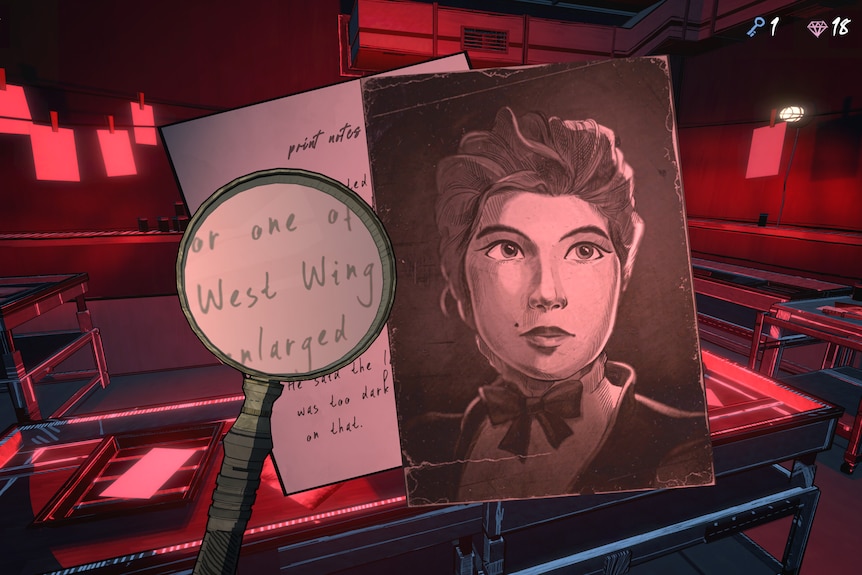
An ever-shifting puzzle game, make sure you’re writing down your own notes when playing Blue Prince, otherwise you’ll quickly become lost. (Supplied: Dogubomb)
The subtle double meaning behind the name of this puzzling adventure captures its enigmatic charm perfectly.
As you explore the ever-changing assortment of rooms in Mt Holly Manor, get ready to be intrigued, entranced and utterly, hopelessly absorbed trying to find the elusive Room 46.
The simple controls, muted colours and faint, elegant music rightfully allow Blue Prince’s spectacular story to take precedence.
While gaming knowledge isn’t required, a love for complicated puzzles is essential.
The blueprint of this mysterious manor changes daily and juggling the balance of finding resources and avoiding dead ends as you draw room tiles, as well as fatigue, is a challenging enough conundrum on its own.
However, the glimpses into the story and the metaphorical puzzle pieces of information you receive make the challenge worth it.
The mystery of Mt Holly and its previous inhabitants will worm its way into your brain and re-emerge long after you have stepped away from your first play session, beckoning you back to explore its halls once more.
The only slightly negative critique I have for this game is that it should come with a notebook, because if you want to have a chance at solving this one, you will find the game’s suggestion that you write things down is not optional.
– Naomi Jackson
Hollow Knight: Silksong
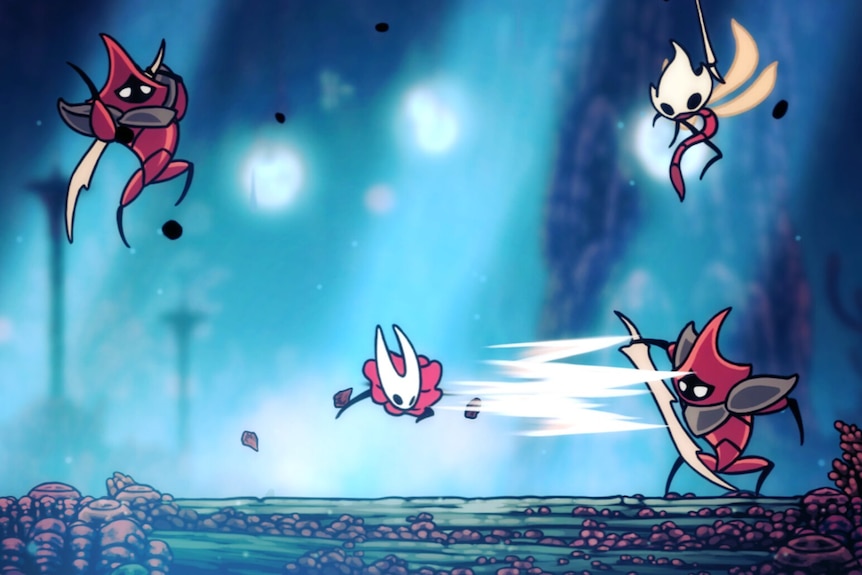
Hollow Knight: Silksong broke records when it launched, crashing online stores for PC and console players, but mystery surrounded most of its development. (Supplied: Team Cherry)
A fantastically challenging, frame-perfect test of technique, this Aussie-made sequel to the popular Hollow Knight has the polish you would expect from a game seven years in the making.
As you ascend to the peak of a haunted kingdom as the comically blunt, badass bug Hornet, Hollow Knight: Silksong introduces a bunch of interesting characters but also a large number of devastatingly difficult enemies that will likely have you backtracking to explore its beautiful environments as you calm down from the frustration of not being able to beat them.
But while this game is not for the faint of heart, if you stick with it long enough to learn its techniques, the springy, fast-paced yet methodical nature of the combat will delight and entice you to give it ‘just one more try’.
How Australian-made Hollow Knight: Silksong crashed the internet
As well as being used for bouncy attacks, Hornet’s diagonal needle dash also comes in handy for traversal. The parkour-style challenges to reach some of the game’s areas are incredibly satisfying — if you manage to complete them, or even find them.
This game weaves a web in more ways than one: The intelligent way areas of the deceptive map are hidden adds to the fun of untangling this game’s story as if it were a really tight silk knot, while tools and map resources can only be purchased with hard-to-come-by currency that is easy to lose, cleverly forcing hoarders like myself to accept and surrender.
My love/hate relationship with this haunted kingdom that’s a dream to unlock, but a nightmare as I try to unlock it, grows more and more affectionate every day I dare to play it.
This game is my personal game of the year, hands down.
– Naomi Jackson
Donkey Kong Bananza
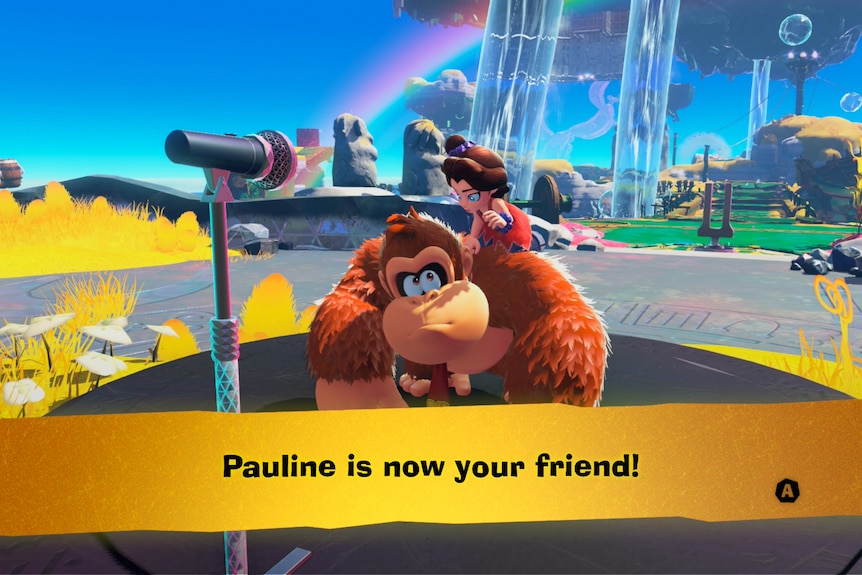
With incredibly destructable environments, Donkey Kong Bananza encourages players to smash their way through levels to discover all the secrets. (Supplied: Nintendo EPD)
Donkey Kong Bananza will be on a lot of GOTY lists this year.
In Bananza, DK and his friend Pauline must crash through an entire planet to reach the core and the riches that lie within.
For DK, it’s about obtaining a banana horde. For Pauline, it’s finding a way home to the surface. For the player, it’s a great excuse to wreck everything in sight.
Bananza’s central gameplay mechanic is that DK can destroy the world around him. There is no problem that can’t be solved by simply smashing through a wall.
DK is a wrecking ball. Little can stand in his way, and the novelty of tearing through rock on your way to a specific goal never wears off.
In 2025, games like Bananza are increasingly rare.
None of the shareholder-pleasing, revenue-raising cruft that has come to define major games in the 2020s (live service, mandatory multiplayer, micro-transactions, etc) is present here.
The prioritisation of additional revenue streams is a symptom of an industry that can no longer drive profit from a high number of copies sold.
Nintendo continues to take a more old-school approach: produce fun games at a high level of quality, and the rest will take care of itself.
Through this, Donkey Kong Bananza reminds us what a great video game looks like, and why we fell in love with games in the first place.
Fun, challenge, joy, a sense of accomplishment, all packed into a cartridge no bigger than an SD card.
– David Smith
Clair Obscur: Expedition 33
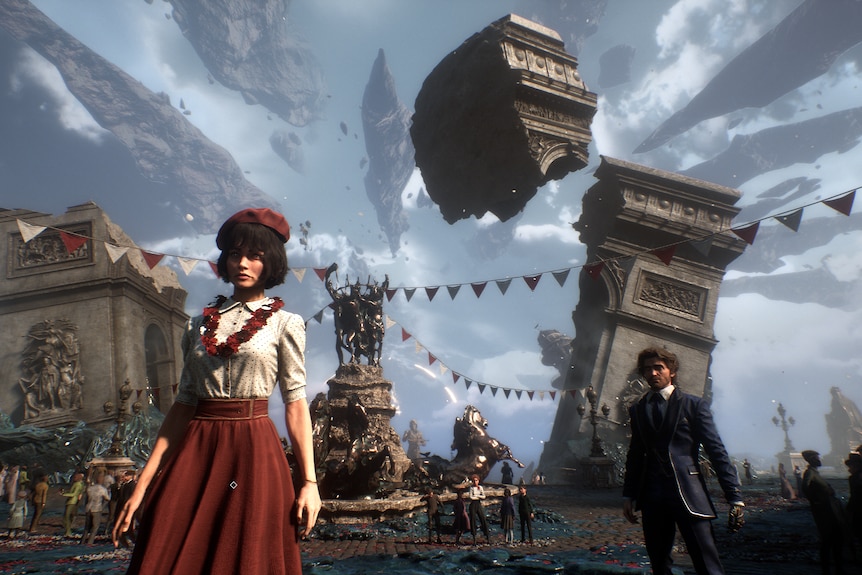
Clair Obscur: Expedition 33 scooped the pool at this year’s Game Awards, taking home a record nine trophies, including the coveted Game of the Year. (Supplied: Sandfall Interactive)
Clair Obscur: Expedition 33 made me cry so hard that I threw up.
Slap that quote on the box art Sandfall, you cowards.
There are a lot of common talking points when discussing why Clair Obscur rocks so insanely hard.
Its stunning art direction. Its captivating story. Its precise, brutal and utterly addictive combat. The way it captures a perfect storm of emotions — the intersection between despair and devotion.
All of those things are true and not one could exist to its fullest without the other.
Composer’s first game soundtrack is set to be one of the biggest of 2025
But it was this one line, spoken during an encounter with an NPC in an optional side quest in the late game after hours of dancing on an emotional knife-edge that truly shattered me: “He just wants you to fly.”
I can’t really explain why I had such a visceral reaction without a whiteboard, a family mental health plan and a bottle of medical grade disinfectant but the result remains the same; Clair Obscur: Expedition 33 made me cry so hard that I threw up.
Now is that a common criteria for my game of the year? No.
But how incredible is it for a game to be able to impact someone so dramatically?
To wrap them up in a story so completely and so easily that it can draw out so much emotion — a testament to the work that has gone in to create such a beautiful, captivating, brutal and utterly additive world.
My carpet may never be the same, but hey that’s a fair price to pay for such a phenomenal game.
– Gemma Driscoll
Dispatch
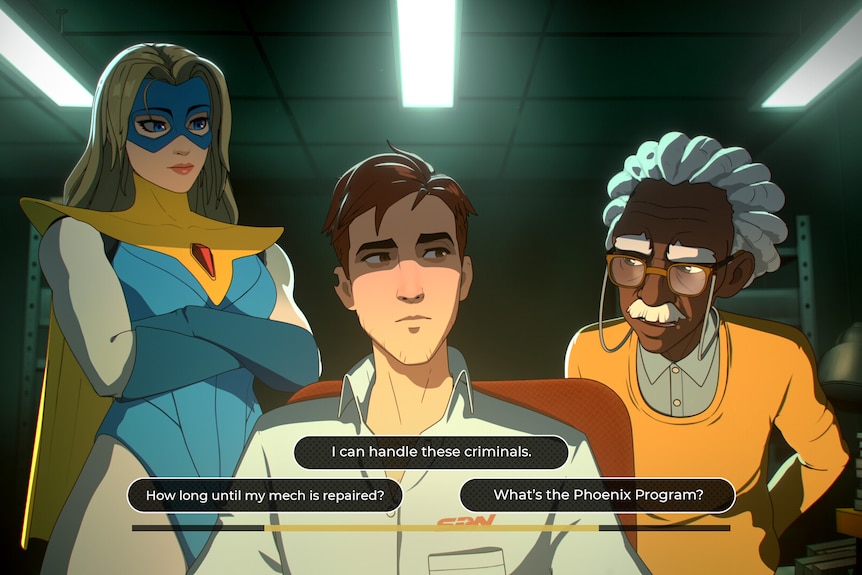
Everyone loves feeling like a superhero in video games, but in Dispatch you’ll be sending a group of supes out on missions all while managing office politics. (Supplied: AdHoc Studios)
Dispatch is one of those games that, on paper, shouldn’t be nearly as compelling as it is.
It’s an eight-part episodic ‘choose your own adventure’ game set in a world full of superheroes and super villains. The catch is you, Robert Robertson, have no powers.
Well that’s not entirely true; depending on how you play Robert his power might actually be endless patience for the metric shit tonne of roasting he gets from his charges — a small band of ex-villains called the Z Team.
Being the person to send out the people with powers to do cool missions whilst you babysit a progress bar doesn’t sound like a high-tension endeavour.
That is until you have four heroes on a mandatory rest break, two out of commission and five separate crimes taking place, the clock ticking down on each of them and you’re wondering how it’s possible for the one gig you took a chance on letting Waterboy handle has somehow gone so thoroughly awry the city is facing flooding.
All that to say, Dispatch is very good at keeping you on your toes in more ways than one.
It also manages to pack in a hell of a lot of heart, giving you characters to love, to hate, to love to hate and every emotion in between.
With so few words it’s hard to properly convey how sick some of the design choices in Dispatch are but suffice to say as a disciple of the emotional car wreck that was Telltale’s The Walking Dead series, it was awesome to see that same sparkle on display.
– Gemma Driscoll
Ghost of Yōtei
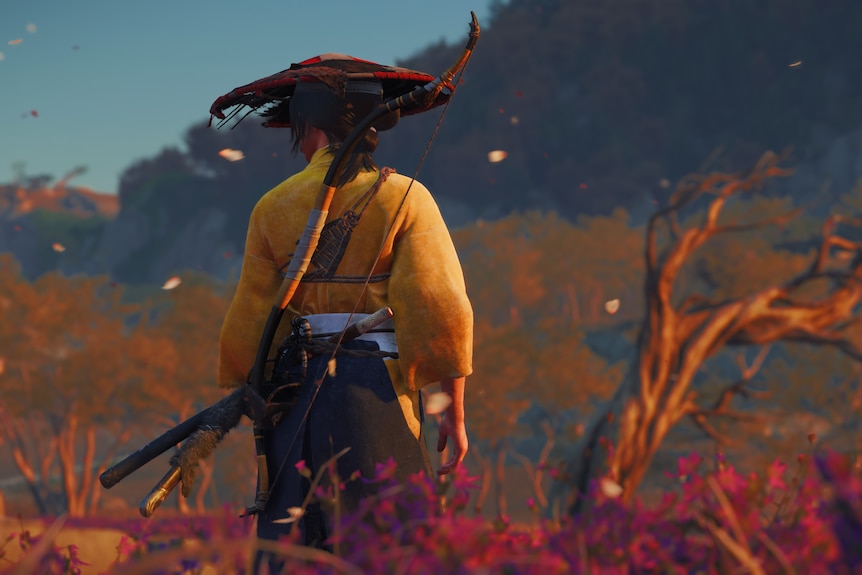
A rōnin story set on the island of Yōtei, this sequel channels the filmic legacy of Akira Kurosawa and modern anime like Samurai Champloo. (Supplied: Suckerpunch Productions)
Honour or freedom? That was the heart-breaking choice that players wrestled with in Sucker Punch Productions’ Ghost of Tsushima (2020).
The anticipated sequel, Ghost of Yōtei, asks a more personal question — are those who live for revenge truly alive?
Atsu, a battle-hardened rōnin, returns to Ezo seeking revenge against a powerful gang of outlaws, the Yōtei Six, for the murder of her family.
As Atsu attacks its outposts across Ezo, she earns fear and respect as “the onryō”, a vengeful spirit.
Combat in Yōtei is straightforward. Most battles with the Yōtei Six can be decided with katanas, but Atsu learns many distinctive combat forms, including the Yari, Kusarigama and Tanegashima.
Like Tsushima, which won The Game Award for Best Art Direction in 2020, the centrepiece of Yōtei is a rolling open world featuring the most breathtaking vistas in all of gaming.
From wild horses running free through Yōtei Grasslands, to smouldering villages in Ishikari Plains, the beauty of Ezo — and its scars of oppression — are on display in frightening clarity.
Players are invited to savour Ezo, with guiding winds and golden songbirds enticing players away from the beaten path to points of interest.
The films of Akira Kurosawa are a clear influence on Yōtei, but this strong sense of cinema can oust player choice and control for brief moments.
Ghost of Yōtei is a worthy successor to Tsushima, and anyone who enjoyed Tsushima will find a similarly thrilling, strangely calming, inescapably tragic tale of revenge at any cost.
– Joshua Wong
Kingdom Come: Deliverance II
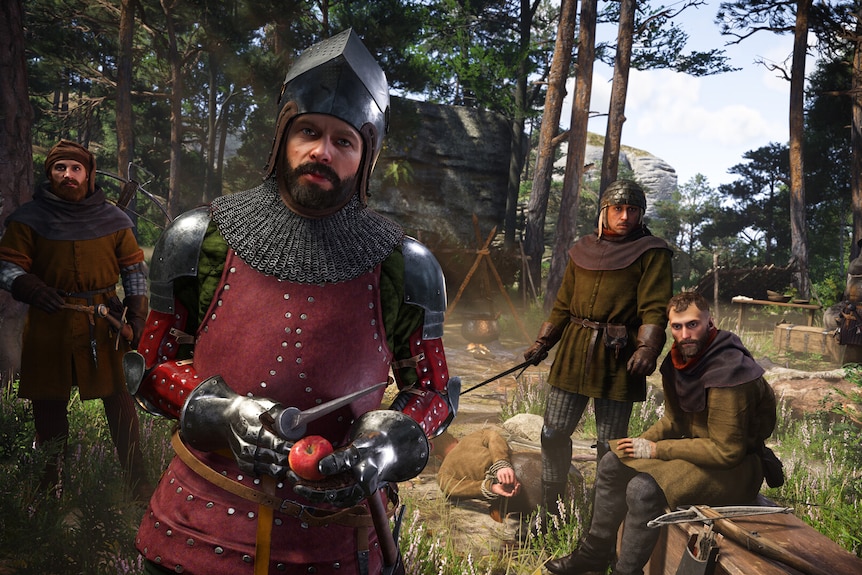
There aren’t any dragons or spells in this fantasy game; instead Kingdom Come: Deliverance II sells itself as a grounded and realistic recreation of medieval Bohemia, now modern Czech Republic. (Supplied: Warhorse Studios)
At the opening of Kingdom Come: Deliverance II, Henry of Skalitz is much as you left him: a peasant-turned-nobleman with all the armour, weapons and pride to prove it.
However, like most sequels, much of that is quickly stripped away leaving Henry in rags, penniless and in a strange new land where allies and enemies are hard to tell apart.
But his mission remains: unite a kingdom against a new monarch whose violent seizure of the throne has sparked civil war, closely following the real-life ousting of King Wenceslas of Bohemia (modern day Czech Republic).
Everything that makes this game special can be traced to its precursor; 2018’s Kingdom Come: Deliverance transported players into a grounded recreation of 15th-century central Europe.
Immersion is woven into every aspect of the experience. You manage Henry’s hunger, mend his wounds, repair his armour and even sharpen his weapons when they become dull.
You can even visit a bathhouse to clean your clothes and get for a fresh haircut (which grants a temporary charisma boost, of course).
No fantasy or otherworldly elements get thrown into the mix. This is a slow-paced first-person role-playing game deeply invested in tactile gameplay and consistent realism.
Whether you’re visiting vendors in a faithfully recreated medieval city, duelling to the death with all manner of weapons or riding through the countryside on horseback.
For some, the pace may prove slow and tedious. But for the patient, a compelling narrative, gorgeous open world and rich role playing journey awaits.
– Don Sheil