
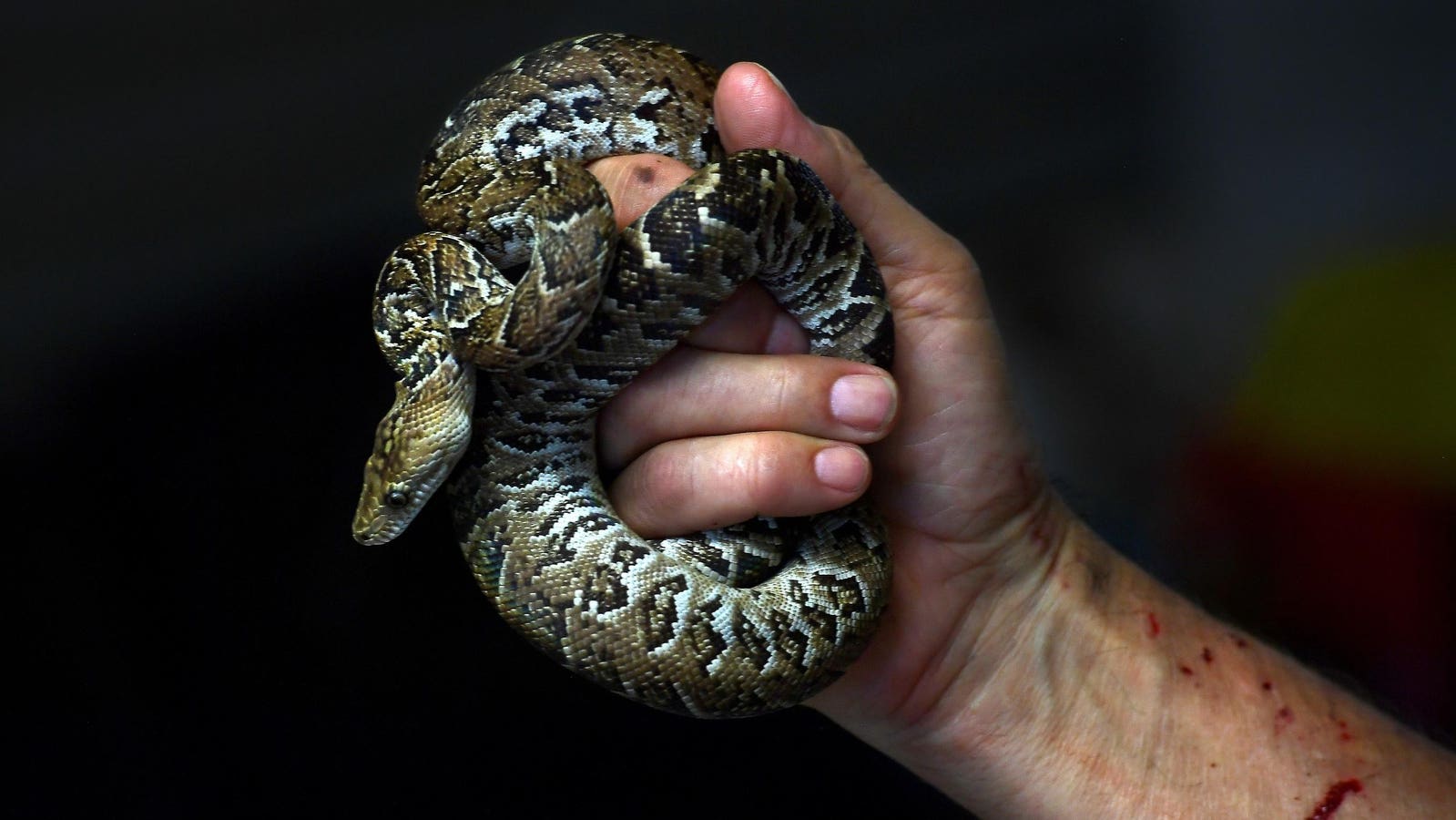
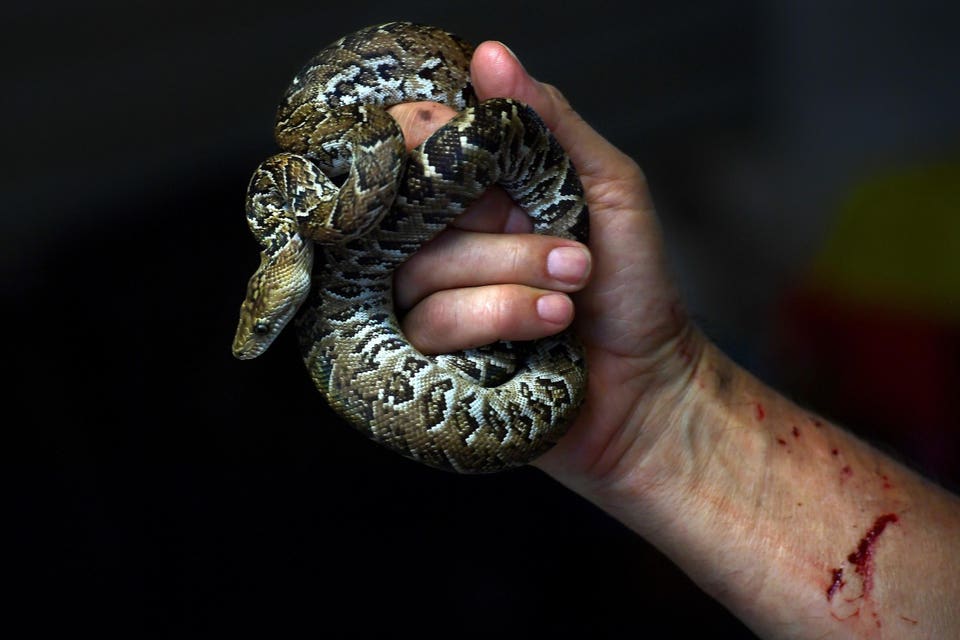
A rare discovery in a Cuban cave has rewritten what we thought we knew about reptile intelligence: the first snake hunters we know that work together.
The Washington Post via Getty Images
For most of natural history, snakes have occupied their own solitary niche. We know that they ambush, constrict, swallow, digest and repeat — and we know that they do it alone. Even their social interactions (which are rare enough on their own) are always brief and pragmatic: mating, seasonal aggregations, mother–offspring cohabitation.
Knowing this, the idea of snakes hunting together, coordinating strategies and taking cues from one another in real time sounds completely implausible. And for many decades, it’s been accepted that these behaviors are restricted almost exclusively to pack hunters such as wolves, orcas and lions: predators with big brains and group dynamics baked into their biology.
That was until 2017, when a biologist crawled into a cave in Cuba and watched a snake do something that no reptile had ever been seen doing before.
How Snakes Were Spotted Hunting Together
In 2017, Vladimir Dinets published a small but remarkable study in Animal Behavior and Cognition that almost completely overhauled what we thought snakes were capable of. In the study, he described coordinated, pack-like hunting between nine large, heavy-bodied constrictors native to the Caribbean: the Cuban boa (Chilabothrus angulifer).
Many might just assume that these nine boas were simply hunting in the same place, at the same time, or say that animals at a shared buffet can hardly be accused of strategic cooperation. But these boas were, indeed, working together highly strategically: they adjusted their positions based on where others were already stationed.
Over the eight days he spent observing, Dinets noticed that, at these cave openings, one boa would arrive first and anchor itself along a wall or ceiling crevice. Then, bizarrely, a second boa would position itself beside the first; sometimes, it’d even mirror the other’s angle. Then a third would follow, and a fourth, and so on.
Eventually, these nine boas formed what you could essentially consider a live blockade across the entrance of the cave. And then they waited — until the bats arrived.
Incredibly, their strategy actually worked. The snakes that hunted alone often missed. But with a loose, spatial alliance, they caught bats at far higher rates. This is because their blockade functioned almost like a staggered barrier that bats, in their hurried flight out of the cave, could find no way around.
It’s worth noting that these snakes weren’t simply showing up at the same cave because prey was abundant. According to Dinets’ analyses and observations, the boas seemed to be actively taking others’ positions into account, not merely piling into a food-rich zone.
In his study, Dinets argued that coordinated hunting requires two specific criteria:
Predators adjusting their behavior in relation to one another in space and/or timeMutually increased success as a result
The Cuban boas’ strategy checked both of these boxes.
Why These Snakes’ Strategies Matter
To the average person, this finding might not seem revolutionary at face value. But for herpetologists, it disrupted many of the core assumptions they had about snakes in the first place — but in the best possible way.
Non-avian reptiles have, for decades, been painted with a very broad brush. They’re regarded as simple, instinct-driven and cognitively limited animals, in comparison to birds and mammals. Although this stereotype has been placed under scrutiny for a few years prior to this discovery, the Cuban boa’s hunting strategy was nevertheless a massive milestone. This is because cooperative hunting is rare even among mammals; among snakes, it was completely unheard of.
What makes this case noteworthy is the highly intentional placement that the strategy demanded. People might forget that cooperation doesn’t necessarily require conversation or planning in the way that we, humans, imagine it. In the animal kingdom, it’s an incredibly subtle phenomenon.
However, boas are largely nocturnal and notoriously secretive by nature. This begs a new question: How much coordinated snake behavior have we simply failed to witness?
A Closer Look At Snake Intelligence
Reptile cognition is an area where scientific humility pays off. Our understanding is evolving, and for many species, we still know shockingly little. Snakes, in particular, pose several challenges in a methodological sense: they’re difficult to observe, difficult to motivate experimentally and they’re often completely uninterested in the kinds of cognitive tasks designed for birds or mammals.
However, studies like Dinets’ hint at a more flexible behavioral repertoire than what we’d previously have credited them with:
Spatial awareness. The boas demonstrated an ability to position themselves strategically in relation to others.Learning or pattern recognition. Boas that adopted these cooperative positions gained better success; this pattern repeated across observation nights.Response to social cues. Even without social bonding, the snakes responded to the presence and behavior of conspecifics.
To be clear, this doesn’t mean that Cuban boas spend their nights secretly plotting dinner plans together, with the same amount of coordination as a pack of wolves or a murder of crows. The boas most likely recognized that being close to another hunter increased their odds, or that spacing themselves at certain intervals along the cave wall helped them to intercept more prey than they would otherwise. The mechanism didn’t need to be elaborate in order for it to work.
Why Cooperative Hunting May Have Evolved In These Snakes
The ecological context of this finding matters. It cannot be overstated how challenging of a foraging scenario it is for boas to hunt against cave walls, targeting bats traveling at high speed through tight spaces.
A single snake has to be exceptionally well-positioned and perfectly timed to snag a bat mid-flight. But for nine snakes, spaced out along an exit route, it’s easy to collectively slow and funnel the bats’ flow. This, in turn, almost guarantees an increase in each individual’s chance of success.
In evolutionary terms, behaviors like these — which reliably increase energy intake — tend to stick. More importantly, they also don’t require stable social groups or long-term alliances; they just require that individuals benefit from adjusting to each other’s presence.
Cuban boas also live in an environment where encountering other boas at predictable feeding sites is quite plausible. Cave entrances serve as annual, nightly hotspots, which makes them the perfect stages for repeated cooperative interactions.
Are you an animal lover who owns a pet, perhaps even a pet snake? Take the science-backed Pet Personality Test to know how well you know your little friend.
Curious what your inner creature is — whether it’s a snake, wolf or something entirely unexpected? Take the Spirit Animal Test for an instant answer.