
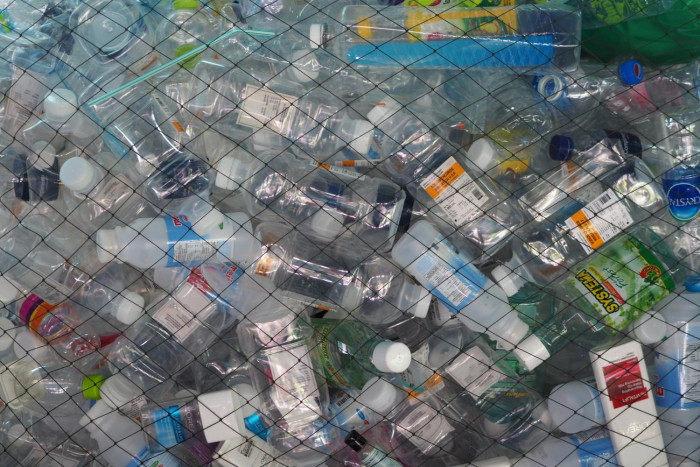
In the global fight against climate change, plastics have emerged as both a symbol of modern convenience and an environmental challenge.
Thailand, which produces millions of tonnes of plastic waste annually, is now at the forefront of Southeast Asia’s efforts to reimagine how plastics are produced, consumed and recycled.
The stakes are high. In addition to domestic sustainability goals, looming international trade rules could soon penalise carbon-heavy plastic imports, forcing industries to adapt or risk losing competitiveness.
One of the most direct ways to reduce carbon dioxide emissions is to change the way businesses and households handle plastics. From production lines to kitchen tables, the push is on to minimise reliance on virgin plastic, those made from fossil fuels, and to embrace recycling and green alternatives.
State agencies, private companies and civic organisations have launched campaigns to cut waste and promote circular practices.
Their collective efforts are helping Thailand’s Roadmap on Plastic Waste Management gain momentum, while also preparing petrochemical manufacturers for the European Union’s Carbon Border Adjustment Mechanism (CBAM), a non-tariff barrier that could soon include plastics.
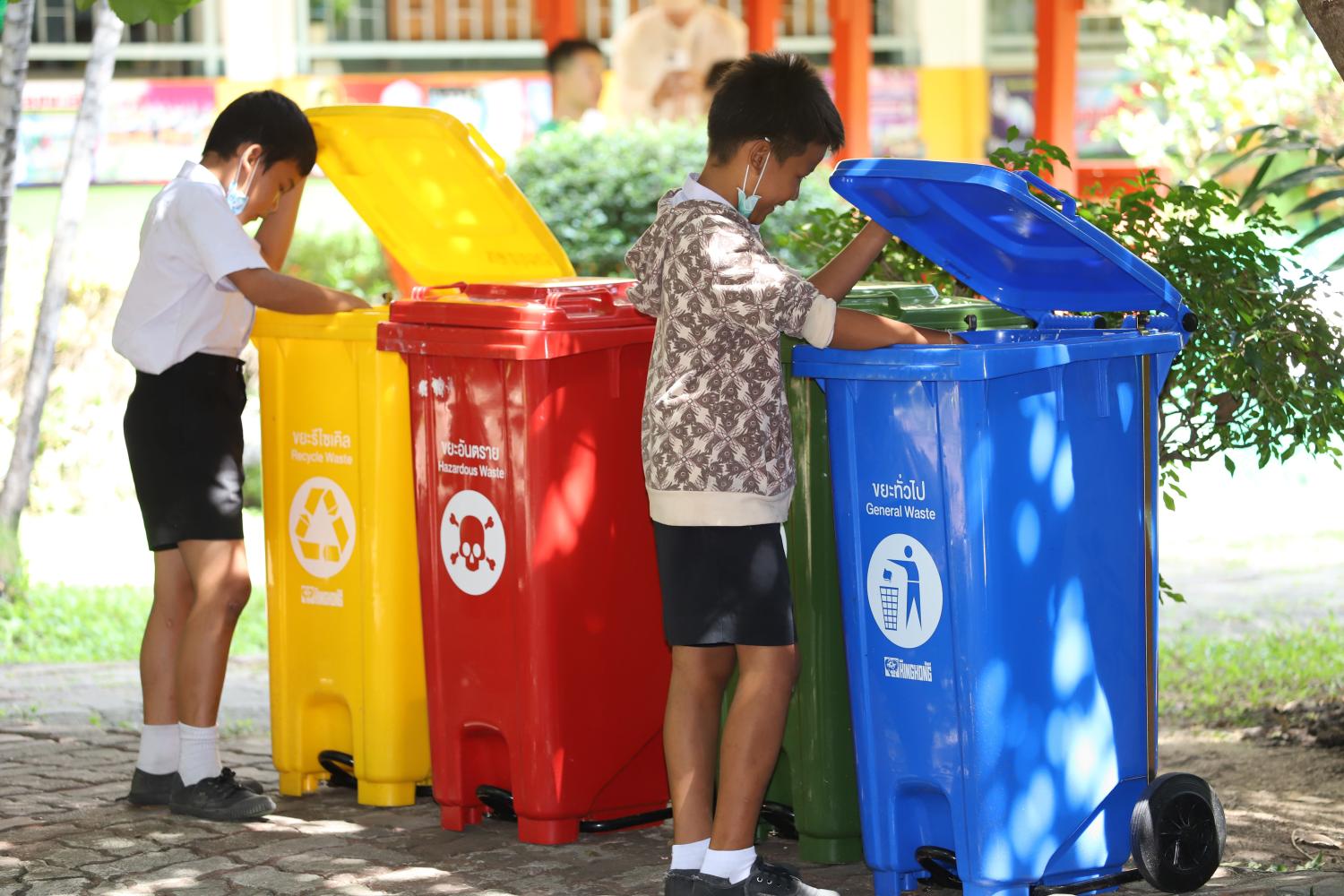
Students at a school in Bangkok are encouraged to separate garbage for recycling. (Photo: Varuth Hirunyatheb)
DRIVE MAKING HEADWAY
The roadmap, which covers 2018 to 2030, sets ambitious targets and actions are taking shape to achieve the goals.
By 2027, officials expect 100% of plastic waste to be reusable. At the heart of this effort is PPP Plastics — the Public Private Partnership for Sustainable Plastic and Waste Management. The group has adopted circular economy principles, upcycling unwanted materials into new products, as part of Thailand’s broader bio-circular-green (BCG) economy model.
“We have joined with the Federation of Thai Industries (FTI), the association of recycling collectors and second-hand dealers and the Economic Reporters Association to promote recycling under the BCG model,” said Veera Kwanloetchit, director of PPP Plastics.
Cooperation with the Plastic Industry and Petrochemical Industry Club under the FTI is crucial as the club directly oversees the production and distribution of plastic materials.
Thailand generates more than 3.2 million tonnes of plastic waste annually, though the exact figure remains uncertain due to incomplete data collection.
The Petrochemical Industry Club, representing 28 companies, has pledged to transform waste into high-value products.
Their motivation is clear. Plastic waste contributes to global warming at every stage of its lifecycle. From crude oil extraction to energy-intensive manufacturing, transportation and disposal, plastics release greenhouse gases.
In landfills, they degrade slowly, emitting methane. When incinerated, they release carbon dioxide, methane and other pollutants.
Currently, Thailand is in the second phase of its roadmap (2023–2027), which aims to eliminate targeted plastic waste from landfills. This includes bottles, caps, single-layer film packaging, bags and cups.
PPP Plastics is working with local governments, communities and petrochemical firms to recycle three key types of plastics in Rayong province: PET (polyethylene terephthalate), used in bottles; PP (polypropylene), common in food containers; and HDPE (high-density polyethylene), found in milk jugs and detergent bottles. According to Mr Veera, Rayong’s recycling model could process up to 700,000 tonnes annually.
URBAN APPLICATIONS
Bangkok, a city of more than 8 million residents, is also experimenting with ways to cut plastic waste.
During the BKK Expo 2025, a four-day showcase of urban development projects, the Bangkok Metropolitan Administration (BMA) encouraged participants to use reusable containers.
The results were striking: 11,243 reusable cups replaced 22,486 single-use cups and lids, while 1,992 reusable bowls eliminated an equal number of disposable containers. In total, the initiative reduced nearly 24,500 pieces of single-use plastic.
City officials also partnered with the Environmental Justice Foundation and water service providers to install drinking water dispensers, reducing reliance on bottled water. Over the course of the event, 768 litres of water were dispensed, equivalent to avoiding 1,280 plastic bottles. The BMA said this saved 153.6 kilogrammes of carbon dioxide emissions.
For Bangkok, these small but measurable victories demonstrate how urban policy can align with national sustainability goals.
GREEN PLASTICS
Businesses in the petrochemical and plastics sectors are increasingly embracing the concept of green polymers — plastics made from renewable resources or recycled materials.
“Thailand aims to promote green plastics by being a leading producer and implementing the BCG model to encourage sustainable resource use,” said Thitithum Pongpanangarm, chairman of the FTI’s Plastic Industry Club.
Among the most ambitious players is SCG Chemicals (SCGC), a unit of Siam Cement Group. SCGC is investing heavily in purification processes that turn plastic waste into usable polymers.
“We plan to produce up to 1 million tonnes of green polymers by 2030,” said Sakchai Patiparnpreechavud, SCGC’s president and chief executive.
The company’s focus on plastic beads derived from waste reflects a broader industry trend towards high-value recycling.
Thailand’s agricultural abundance also offers opportunities. The Office of the Cane and Sugar Board has highlighted sugar as a potential feedstock for plastics.
Sugar can be processed into ethanol, which in turn can be converted into ethylene — a key building block of plastics traditionally derived from fossil fuels. This innovation could position Thailand as a leader in bio-based plastics, leveraging its sugarcane industry to reduce dependence on petroleum.
TAKING THE INITIATIVE
While Thailand’s domestic roadmap is ambitious, international trade pressures add urgency.
The EU’s CBAM, which imposes tariffs on carbon-intensive imports, currently covers six products: iron and steel, cement, aluminium, fertilisers, electricity and hydrogen.
Plastics are not yet included, but the EU is reviewing its scope during a transition period from October 2023 to December 2025. Plastics could be added in the future.
“Manufacturers should prepare by adopting renewable energy, optimising efficiency with smart technology and reducing overall demand,” said Mr Veera.
The EU is expected to charge €80 (2,970 baht) per tonne of carbon dioxide equivalent in 2026, a cost that could significantly affect Thai exporters.
For petrochemical companies, the message is clear: sustainability is no longer optional — it is a prerequisite for global competitiveness.

This pet dog doll, displayed in front of the Nine Centre on Rama IX Road, is made from 2,000 discarded PET bottles. (Photo: Varuth Hirunyatheb)
BIGGER PICTURE
Thailand’s plastic waste roadmap is more than an environmental policy because it is a strategic response to global economic realities.
By aligning domestic recycling campaigns with international trade rules, the country is positioning itself as a responsible player in the global supply chain.
The collaboration between government agencies, industry associations and local communities reflects a recognition that plastic waste is not just an environmental issue but a social and economic one, says PPP Plastics.
Experts, both in the state and private sectors, believe Thailand is facing a challenging task. Consumer behaviour, particularly in urban areas, still leans heavily on convenience-driven single-use plastics.
While green polymers offer promise, scaling production to meet both domestic and international demand will require sustained investment and innovation.
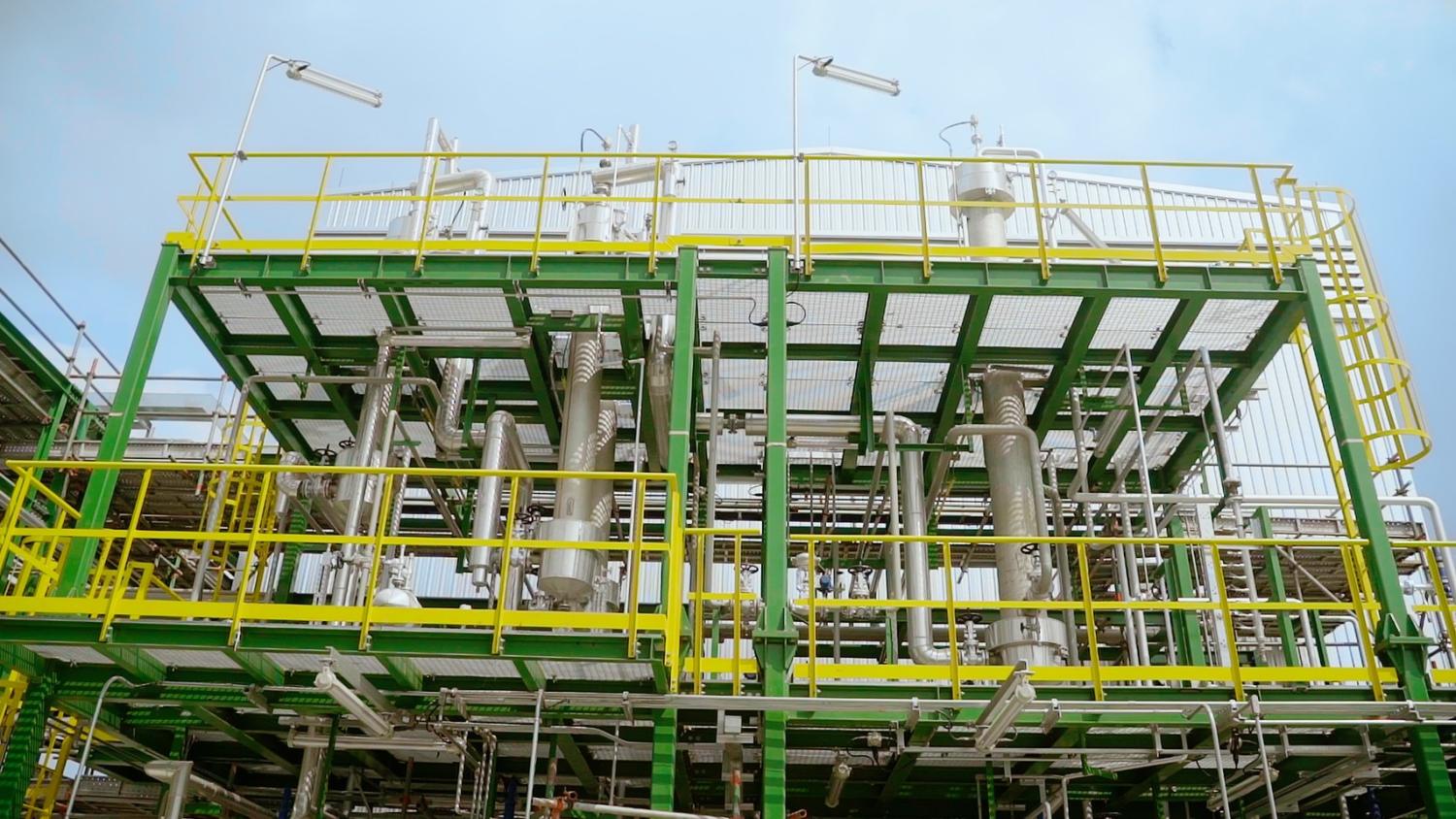
SCGC’s petrochemical facility in Rayong. The company is stepping up efforts to produce green polymers, part of a campaign against carbon dioxide emissions.
