
Swimming New Zealand began the year with two senior world champions and ended it with a junior world champion. Along the way both senior defending champions were bundled out of their favoured finals, returning with its second lowest top world championship result since 2011; only 2017 was lower.
New Zealand’s best effort was fifth.
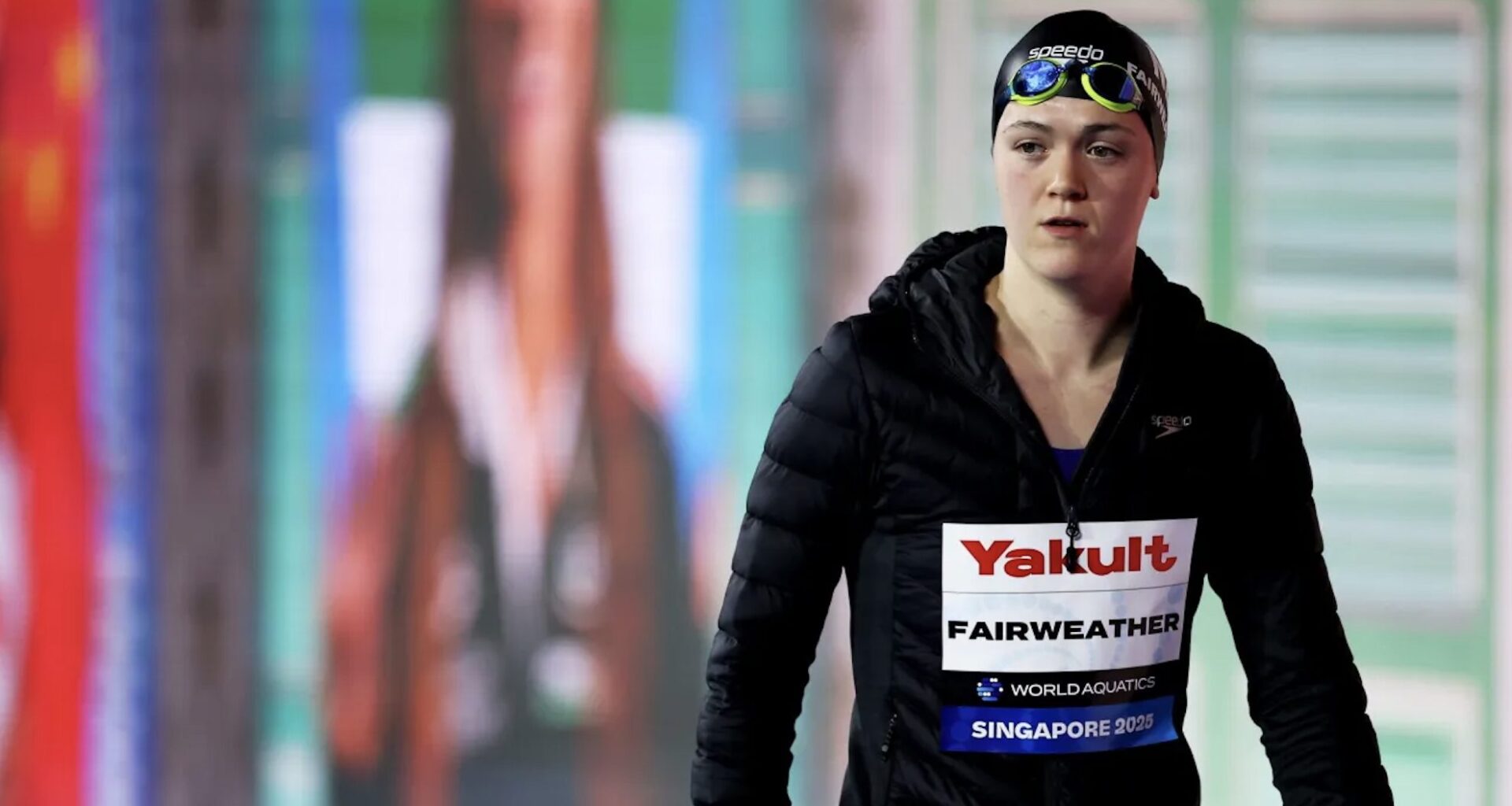
Neither of the titleholders – Lewis Clareburt and Erika Fairweather – were able to defend their titles, nor have they lowered their times in both of their top two events since early 2023. Fairweather was disqualified in her 400m freestyle event for moving on the starting blocks. Clareburt placed fifth in the 200m individual medley but failed to make his 400m medley final.
The year also ended with Zoe Pedersen as a world junior champion. Her 50m butterfly title in August at the World Junior championships was just 0.17 seconds off a junior world record and was this swimming year’s shining light. Pedersen is also the College Sport Auckland Young Sportswoman of the Year.
Had she clocked her 25.63 seconds time at the senior world championships, she would have placed seventh, so at 18 she is one to watch.
She became just the second woman to swim under 26 seconds in 50m butterfly and is one of a handful who have this year clocked under the tough Glasgow Commonwealth Games qualifying standards. Pedersen was just 0.20 seconds under that standard.
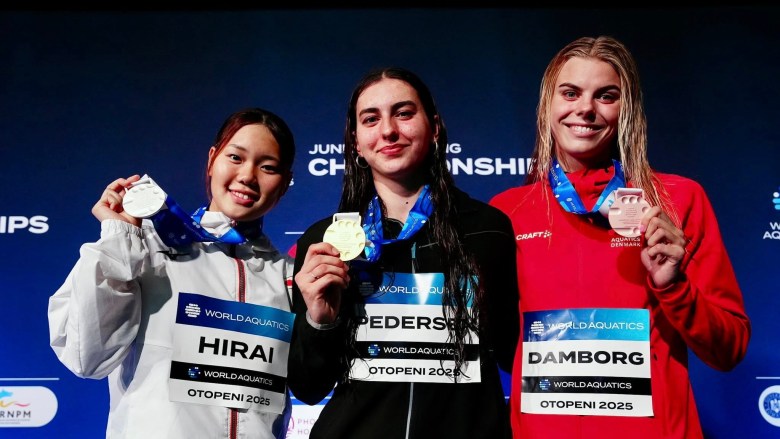 Zoe Pedersen on the podium winning 50m butterfly gold at the 2025 World Juniors in Romania in August . Photo: Istvan Derencsenyi/World Aquatics
But she didn’t know that until months later, when Swimming New Zealand released the selection criteria for next year’s games. Pedersen’s final was on August 22, with the criteria effective just two days before, despite not being released until late October. But unfortunately for Pedersen, the qualifying period in the criteria started on December 1, so she’ll have to swim it again, without her 2025 coach guiding her.
Pedersen’s coach, John Gatfield, also New Zealand’s head junior coach, recently moved to Australia. In December, Clareburt, this year’s top senior swimmer, also announced his permanent move to Australia to chase his goal of a medal at the 2028 Los Angeles Olympics.
Although some swimmers are recording lifetime bests, the gap between most female swimmers and their key international competitors is increasing as many of these competitors have been recording bigger improvements across the year, which is why some qualifying times for the 2028 Olympics are tougher. Should this continue next year, it could lead to lower results for New Zealand swimmers at pinnacle competitions – those who get there.
The two key events this year were these world championships, senior and junior, with Pedersen competing at both. The junior championships were a success with two swimmers placing in the top five and a further making a final, but the senior championships were somewhat tougher. Clareburt’s New Zealand record for fifth in the 200m medley was the top result; his best international world championships placing in his second favoured event. Fairweather placed sixth in the 200m freestyle.
Caitlin Deans was the third most successful Aquablack, finishing 10th in the 800m freestyle. She was also ranked sixth in the Commonwealth, in the 2024/25 season, according to rankings compiled by US website SwimSwam. She’ll still have to swim more than five seconds faster to meet the New Zealand Commonwealth Games qualifying standard, though.
As well as their 2024 world titles, Fairweather and Clareburt had previously won world championship bronze medals in earlier years. Given Lauren Boyle is the only other swimmer who has stood on any level of a senior world championship podium since Danyon Loader in 1994, doing it more than once is significant.
All eyes are now on next year’s Commonwealth Games and the 2028 Olympics. Aside from the new 50m distances added to the Olympics – 50m backstroke, butterfly, and breaststroke – just three Aquablacks have gone under LA Olympic selection standards.
The top six in these 50m distances at the world cup series in October 2027 will be selected for LA if they don’t meet standards in other events – and of Aquablack sprinters, none have yet.
Many Commonwealth Games standards set by Swimming New Zealand are tougher than Olympic standards. The women’s 400m freestyle standard is three seconds tougher with only two Commonwealth swimmers attending next year’s games having ever swam faster. Dual Olympian Eve Thomas, who twice placed fourth at last year’s world championships, will have to do lifetime bests to meet the 400m and 1500m freestyle times. The women’s 50m backstroke standard is also set faster than any other country, with just four swimmers across Commonwealth countries swimming faster.
The New Zealand Olympic Committee-mandated quota for the sport has dropped from 12 in 2022 to 10 next year – meaning if a male and a female relay is selected, just two other swimmers can compete.
Most of the Commonwealth Games swimming team is expected to be female. Hazel Ouwehand has eyes on a medal; she was the third ranked Commonwealth swimmer in 50m butterfly in the 2024/25 season, as was Fairweather in the 400m freestyle. Pedersen was ranked fifth as was Deans in the 1500m freestyle.
Fairweather will be looking to win her first Commonwealth Games medal after placing fourth in Birmingham in 2022 in the 400m freestyle before becoming the world’s fifth woman to drop below four minutes in the event the following year.
Now, four Commonwealth swimmers have.
Fairweather got a silver and a bronze medal at last year’s world championships in the 200m and 800m freestyle. If she swims 0.04 seconds slower in each at trials for Commonwealth Games, she won’t meet Glasgow qualifying standards.
Clareburt will be looking to do what no other non-disabled New Zealander has done – win swimming medals in individual events at three consecutive Commonwealth Games after setting a Commonwealth record in the 400m medley at Birmingham in 2022 and winning bronze on debut four years before. Of Aquablacks, only Anthony Mosse, in 1990, has won gold in back-to back Commonwealth Games.
Along with Fairweather, Clareburt and Pedersen, just backstroker Finn Harland, who placed top 16 on his world championship debut, and Ouwehand, who bypassed this year’s championships despite being the country’s equal highest ranked swimmer, have been under the Commonwealth Games standards this year.
Additionally, Thomas clocked 0.02 seconds inside the 800m freestyle standard last year. US-based Taiko Torepe-Ormsby was 0.04 seconds inside the 50m freestyle standard when trialling for last year’s Paris Olympics, and in March swam a lifetime best in short course yards.
Everyone else must either do a lifetime best to meet Glasgow qualifying standards, be selected as potentially placing in the top six, or compete in a relay.
New Zealand did not enter relays at the 2022 Commonwealth Games or this year’s World championships. Five relays were entered in 2014, the last time the Commonwealth Games were held in Glasgow, and two relays won medals in 2010. None have since, but relays are to be selected on the basis that they are able to podium and are a higher priority than selecting swimmers assessed as top six potential who couldn’t make qualifying times.
Yet some who are potentially top six have done better than any relays since 2010, such as Cameron Gray in 2022 and Clareburt in 2018, who did better than most who met qualifying standards. Each won Commonwealth Games medals on their Aquablack debut as teenagers. Harland could possibly be selected in this manner if he does not swim faster than he did in his world championship semi-final. Gray, another former world championship semi-finalist, could also be selected if he swims well.
Should a women’s 4x200m freestyle relay be selected to back up its eighth place at Paris, Fairweather could be joined by Australian-based Milana Tapper, who made her Aquablack debut at this year’s world championships, Paris relay finalists Thomas and Deans, or Chelsey Edwards, the latter being one of just two Aquablacks to set multiple New Zealand records this year.
Edwards is also the fastest ever female 50m freestyler, but she will have to break her record to meet the qualifying standard in that. If Thomas and Edwards both meet qualifying standards, and one gets selected for a relay with Tapper, Deans and Fairweather, that could knock out a top six potential swimmer that could medal, as what almost happened with Clareburt in 2018 when he only got selected at the last minute, after earlier being telephoned by Swimming New Zealand CEO Steve Johns informing him he would not be selected.
However, eight days after the Commonwealth Games conclude, the Pan Pacific championships commence in Los Angeles. It’s a tougher competition, but qualifying standards are easier and the fastest swimmer doesn’t necessarily qualify. Those aged 21 or younger who are not Aquablacks can record an easier ‘development’ standard to debut as Aquablacks. Those who are older can simply win a national title in that development time to make their debut. This competition is behind only the world championships and the Olympics, and features swimmers from powerhouses such as Australia, the United States, Canada, and other Pacific rim countries.
It’s the first time these championships have been held since 2018, as the 2022 championships were postponed because of the pandemic. Giving swimmers an opportunity to debut as Aquabacks via development standards is a positive move by Swimming New Zealand as it looks to line up swimmers for the 2028 LA Olympics. World Junior finalists Monique Wieruszowski and Milan Glintmeyer, who won a national title aged 14, have previously been under the development standard, and could be two who get there.
So could Gina McCarthy, 23, if she swims well to win her favoured 400m individual medley at next year’s nationals, as she did this year – even if another her age swims a faster development standard at a different qualifying competition. They’ll miss selection simply because they did not do it at a national championship.
Concluding next year’s international swimming programme is the world short course championships in December, held in a 25m pool in China. The New Zealand qualifying period started nearly three months ago, just after this year’s New Zealand Short Course championships concluded. No individual qualifying standards have yet been released, but World Aquatics specifically states that this year’s New Zealand short course nationals was a qualifying competition, even as Swimming New Zealand stated it wasn’t.