
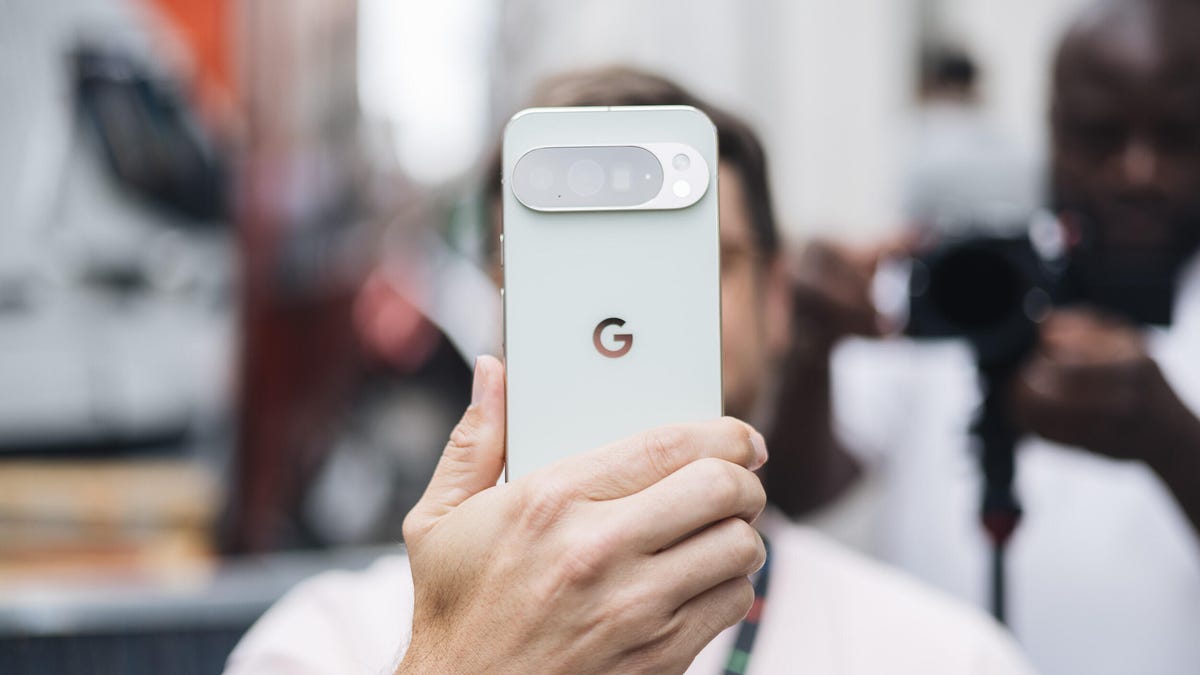
We’ve seen some amazing phones in 2025, from the iPhone 17 Pro and its vibrant orange color to the Pixel 10 Pro’s reliance on AI. Then there’s the Galaxy S25 Ultra, Oppo Find X9 Pro and Xiaomi 15 Ultra, which all want to be the only camera you carry around.
Most of these phones have a lot in common, from their powerful processors to features like water resistance. But this year, we saw phone-makers really up the ante by adding a whole host of new tricks and accessories to help them stand out from the competition. And a few of these additions have really caught our eye.
Here are our favorite phone features that slipped into the mainstream in 2025. Will they continue into 2026?
The OnePlus 15 is a big Android phone with an even bigger 7,300-mAh battery.
Andrew Lanxon/CNETMassive silicon-carbon batteries
Batteries might seem like they’re the same as they’ve always been, but in fact, battery technology is constantly evolving, just like any other part of your phone. The most recent shift is toward silicon-carbon batteries that promise more energy-dense cells, giving longer battery life without you having to carry a phone the size of a house brick.
The Oppo Find X9 Pro and the OnePlus 15 both pack batteries with a capacity over 7,000 mAh, while the Vivo X300 Pro’s 6,300-mAh cell is nearly as massive. For reference, the S25 Ultra — despite its gargantuan 6.8-inch screen — has only a 5,000-mAh battery. The iPhone 17 Pro Max’s battery is similar at 5,088 mAh.
But don’t get overexcited just yet about almost doubling your phone’s battery life. While Oppo and OnePlus’s latest handsets did perform extremely well on our battery tests, the iPhone 17 Pro Max remained one of the best battery performers we’ve ever had, and that comes down to the efficiency Apple is able to achieve through producing all the parts of the phone. Still, silicon-carbon battery technology is undoubtedly a step forward that will hopefully mean you’re less likely to find yourself out of power halfway through your day.
The Oppo Find X9 Pro is available with a huge telephoto zoom lens.
Andrew Lanxon/CNETDetachable telephoto lenses
While I’m talking about the Oppo Find X9 Pro and Vivo X300 Pro, I have to mention the enormous telephoto lenses both companies offer with their devices. Both phones can be bought with photography kits that include a case and a hefty all-metal telephoto lens that, when attached, looks as if you’ve added a small chair leg to the back of your phone. These detachable telephoto lenses can take your zoom up to a usable 40x magnification — that’s around a 920mm focal length on a normal lens which far outstrips any of the actual zoom lenses I own for my professional cameras.
The result is that you can take amazing close-up shots from a long distance, making these lenses great fun for wildlife photography or street photography, where you don’t want to be noticed. As the lenses use real optical elements, the image quality can be superb, and the natural bokeh around your subject makes it possible to take photos that look like they were shot with a regular camera and zoom lens.
Apple’s iPhone Air and Samsung’s Galaxy S25 Edge: two phones with exceptionally thin designs.
Abrar Al-Heeti/CNETUltra-thin phones
Back in March, my excellent colleague Abrar Al-Heeti was taken aback by the plethora of phones with ultra-thin designs. Samsung had its S25 Edge, while the Tecno Spark Slim concept promised a body of only 5.25mm thick. Cut to the end of the year and we’ve since had Apple’s take on slender phones with the arrival of the iPhone Air.
These phones promise a more refined aesthetic than their rivals, allowing you to cram them into your jeans pocket without causing an undignified bulge where you might not want one. But it’s in foldable phones that this thin design is really impactful. Both Oppo’s Find N5 and Honor’s Magic V5 offer razor-thin designs that mean when you close the phone — and essentially double its thickness — you’re not left with a cumbersome brick. Samsung wowed with its ultra-thing Galaxy Z Fold 7, too, which is only 4.2mm when unfolded.
The Pixel 10 Pro Fold can keep both water and dust out of its delicate hinge components.
Andrew Lanxon/CNETDust-resistant foldable phones
But while I’m singing the praises of ultra-thin folding phones, I have to give a shout-out to the Pixel 10 Pro Fold. Google’s latest foldable is the first of its kind to offer an IP68 rating that promises to keep both water and dust out of its delicate hinge mechanism.
Previously, the top foldables offered, at best, some level of water resistance, with dust resistance limited to particles 1mm or larger — not very helpful in a dusty area or if you’re taking a call during yet another tour of your local flour factory. But Google took this further by keeping dust out, too. That means you can finally open your folding phone at the beach to read an ebook, confident that sand won’t ruin your pricey handset.
Sure, the Pixel 10 Pro Fold is a bit chunkier than the super-skinny foldables mentioned above, but Google traded sleekness for durability — and that might mean your phone lasts much longer as a result.
The square image sensor on the new iPhones means it doesn’t matter which way you hold your phone when taking a selfie.
Celso Bulgatti/CNETSquare image sensors
The most recent iPhone 17 lineup included a huge overhaul to its front-facing camera with the introduction of a square image sensor. The idea is that you can hold your phone in a comfortable portrait position for your video call but the video will still be in landscape without using cropping that would reduce the quality. Or vice versa. It doesn’t matter which way you hold your phone, a square sensor means you’re always going to get full-width sensor resolution.
And since you can take selfies (horizontal or vertical) when holding the phone in portrait orientation, you don’t get that weird, off-to-the-side camera angle that you would when holding the phone in landscape. Everyone looks nice, symmetrical and centered.
It’s a great idea, and it’s not just phones that are starting to take advantage of it. The recent DJI Osmo Action 6 action camera also uses a square image sensor, letting you re-crop your footage into portrait or landscape after the fact without any loss in quality. It’s ideal for creators who want to shoot long-form and social content at the same time, and I fully expect this to become a trend in more phones and cameras down the line.
The Pixel 10’s Camera Coach function tells you how to take a better photo.
Andrew Lanxon/CNETAI camera coaching
As a professional photographer, I was impressed with the camera quality of Google’s Pixel 10 Pro when I took it on a photowalk around Paris. But what if you’re not a pro but still want to get good shots? Then the Pixel’s Camera Coach might be for you.
It uses Gemini AI to analyze the scene in front of you and then gives you a set of step-by-step instructions on how to capture a better image. Taking a photo of your friend? Camera Coach might suggest switching to Portrait Mode, taking a few steps to the right and maybe even shooting from a lower angle for a more dramatic stance.
CNET’s Patrick Holland — a talented photographer himself — used the tool and concluded, “I can see amateurs becoming photography enthusiasts after using Camera Coach. At a time when AI is everywhere, it’s nice to see Google use Gemini as a teaching tool.”
Qi2.2 compatibility means that Google and Apple can now share magnetic accessories.
Joseph Maldonado/CNETQi 2.2 for faster charging and magnetic accessories
Apple’s MagSafe has long been a standout feature of the iPhone, but the company has contributed elements of its technology to the open Qi2.2 standard, meaning Android manufacturers will now be able to use it as well. Not only will this bring faster wireless charging speeds to more Android phones, but it also opens the door to shared accessories — Android phones using Qi2.2 will be compatible with some Apple MagSafe accessories, and vice versa.
Google has jumped right onto the bandwagon, equipping its latest Pixel 10 range with what it calls PixelSnap. Ignore the naming; it’s basically the same as MagSafe and functions using the same Qi2.2 standard. Bought a nice new wireless charging dock for your Pixel 10? Great, your iPhone-owning friends can use it, too, and if you switch allegiance later on, you won’t need to buy a new dock. Lovely stuff.
Watch this: The Google Pixel 10 Pro XL’s Camera Is So Smart, It Almost Took the Photos for Me
07:57