
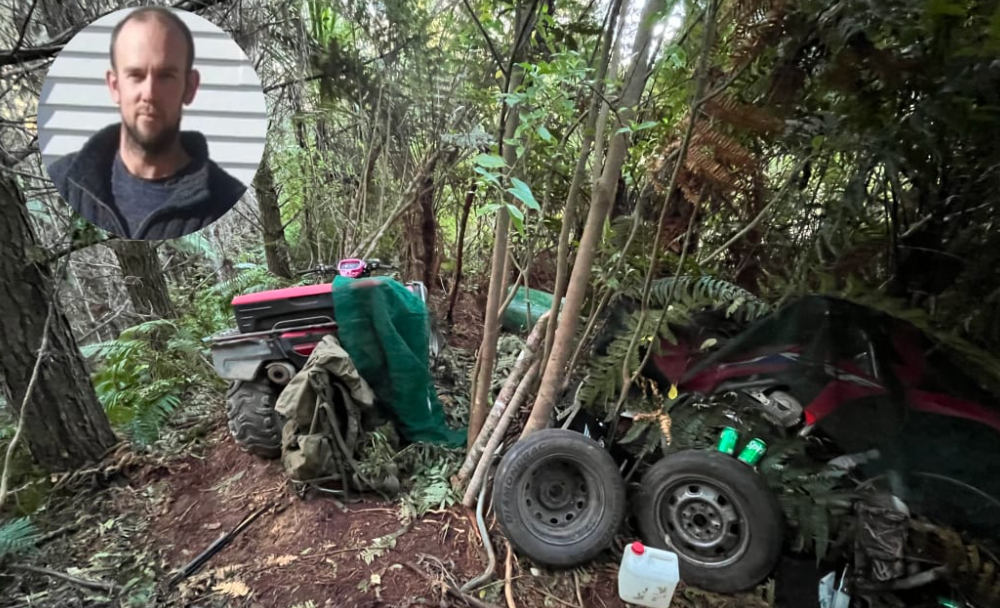
The producer of The Marokopa Project agreed police could preview and edit the feature-length documentary before it airs.
A film crew from Dunedin-founded NHNZ Productions has been following the hunt for fugitive Tom Phillips and his three children for more than a year, gaining exclusive access to the investigation.
Phillips died following a shootout with police in Marakopa, Waikato, after they were called to reports of a burglary in September this year.
The four disappeared in December 2021 and had been living at various sites in remote bush.
The documentary makers’ ‘access agreement’ – released to RNZ under the Official Information Act – outlines exactly what the filmmakers and police signed up to in March this year.
Filmmakers got exclusive opportunities to view evidence and attend and record police briefings, meetings and operations over the course of the year.
In exchange for this access, police retained extensive control over the documentary project.
Details from the documentary’s final proposal
• A focus on footage following staff involved in Operation Curly and associated operations
• Interviews with key investigation and district staff
• Interviews with specialist officers
• Footage of police visits to the Marokopa community and local stakeholders (subject to permissions being granted)
• Done footage during aerial operations
• Additional footage, audio recordings and still images held by police
• Recordings or transcripts of interviews
• Access to stills, CCTV and trail camera footage being used as evidence (subject to permissions being granted)
The contract gives authorities the right to preview any broadcast and require edits or removals a range of grounds including security, sensitivity, privacy and relevant court orders.
Police also hold veto rights over replays or altered versions of the documentary and the right to terminate filming access at any time.
Grounds for termination include the producer breaching any term of the access agreement and failing to remedy the breach within five working days.
The contract says if a breach can not be remedied, including where the producer or their staff disobey a police direction, authorities can terminate the agreement without notice.
The filmmakers can not use any material recorded for the documentary for any other purpose whatsoever, unless authorised by police in writing.
The agreement also states the filmmakers can not use photos of the children, with the exception of those already published in the media, without permission from their legal guardian and police.
These provisions all exist within the context of heavy suppression orders made by the Family Court that remain in place.
The producers’ employees, agents and contractors all had to be vetted by police, and the producer signed off on liability limited to $1 million for the documentary.
The contract was signed by the police and NHNZ Worldwide, in partnership with London-based Grain Media Ltd, on March 20 this year.
It is expected the documentary will be broadcast in 2027, though this is subject to court proceedings.