
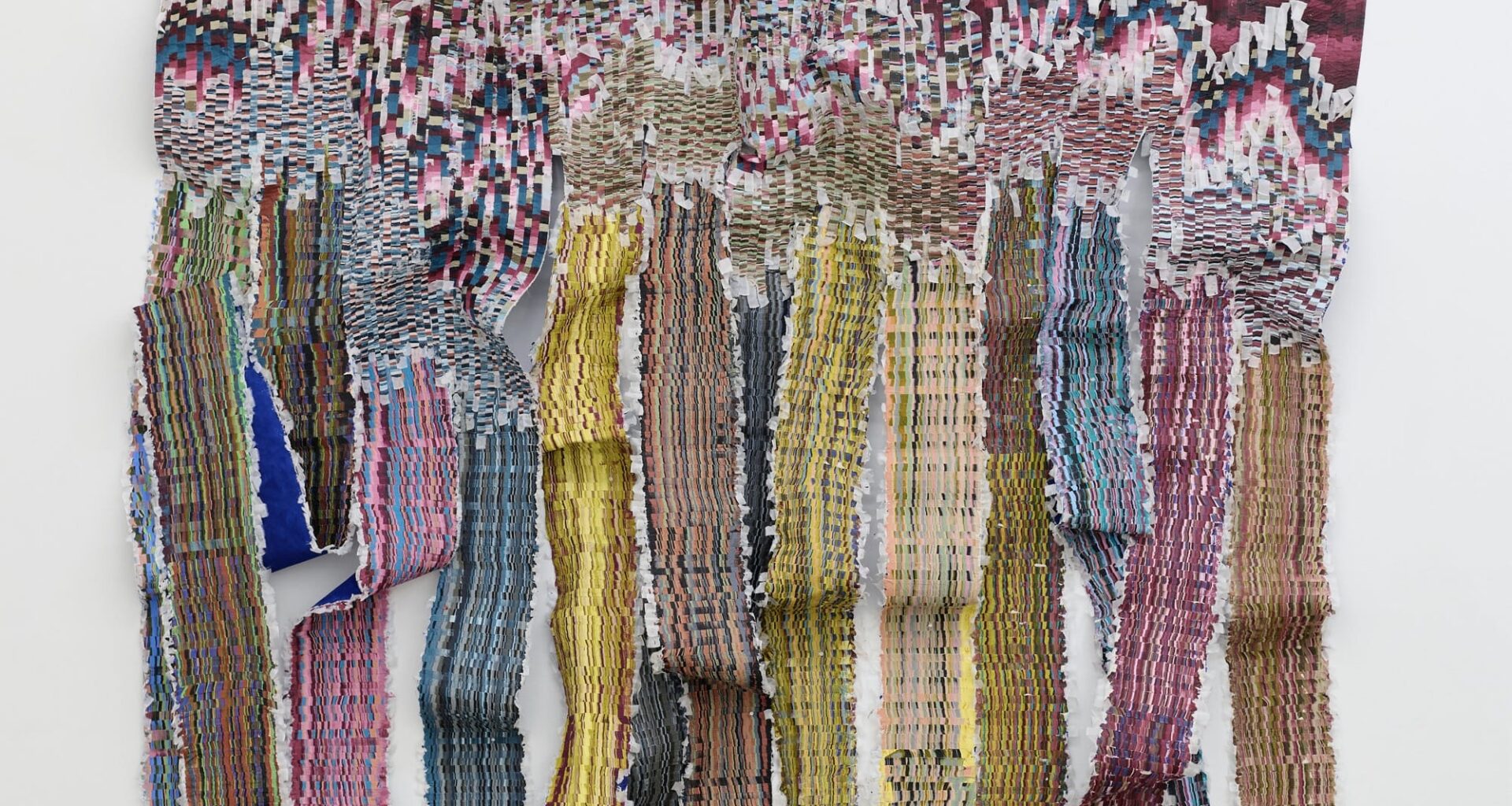
When we see a painting, we don’t generally ask ourselves, “Is this art?” A work on canvas is almost always inherently seen as such, but what about mediums like ceramics, photography, or fiber that also often serve functional or decorative purposes and historically have not been considered “high art?” Why are some textiles considered art while others are not, and what system are we using to determine this “value?” What makes a tapestry a tapestry, and a rug a rug?
Thread Count, a large-scale group exhibition curated by Charlotte Grüssing at The Hole, aims to illuminate the beguiling nature of textiles—something of a dark horse in the contemporary art world. The show is organized as an ode to the work of trailblazing artist Anni Albers, a modernist weaver who studied at the Bauhaus in Germany and later taught alongside her husband, Josef Albers, at Black Mountain College in North Carolina.
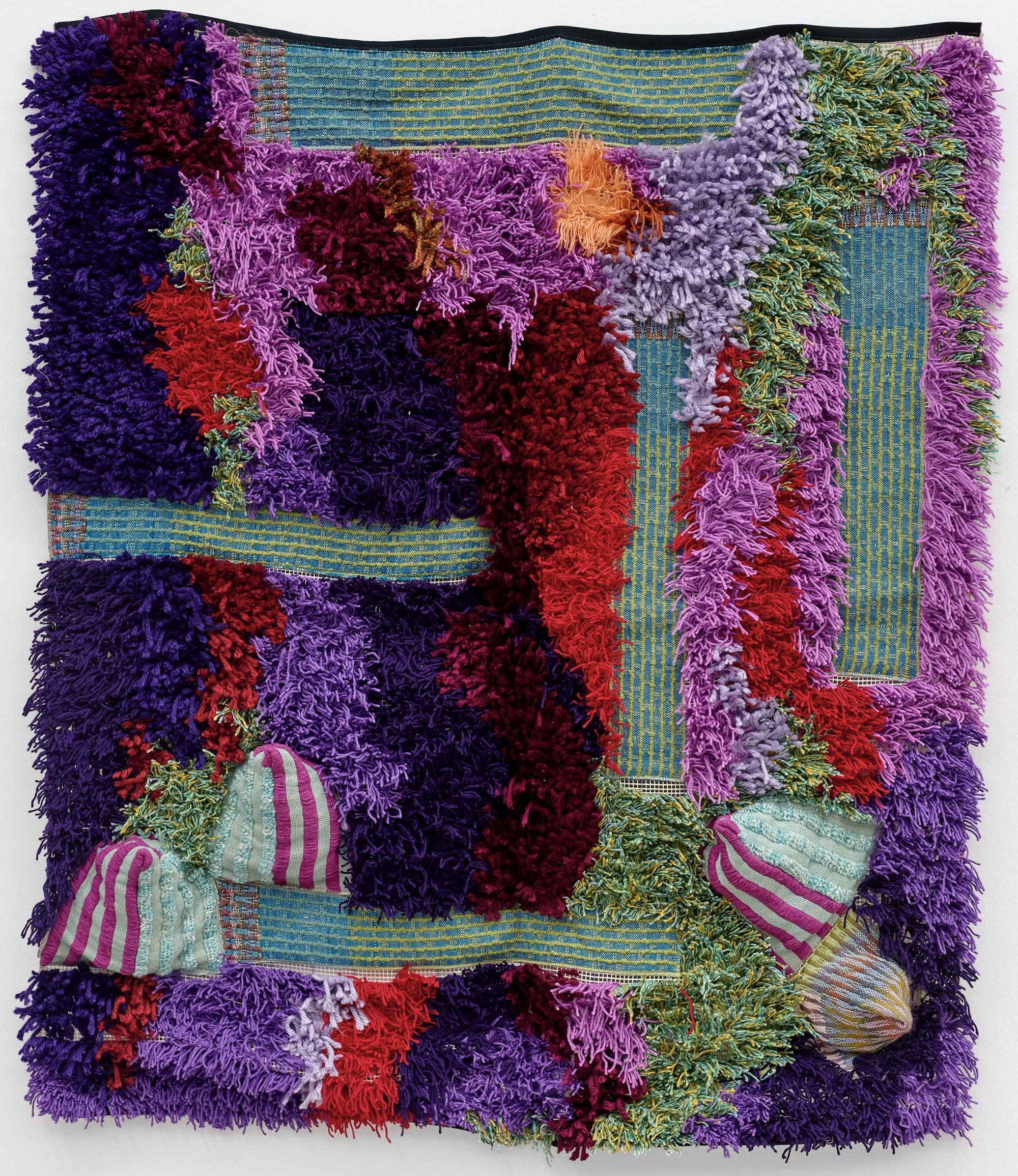 Sarah Zapata, “Towards An Ominous Time V B” (2022), handwoven cloth, natural and synthetic fibers, 72 x 60 inches
Thread Count, the title for which nods to the number we often see on bedsheet sets to indicate quality, brings together work by more than two dozen contemporary artists working with fabric and fiber.
“Fiber practices may be having a cultural moment, yet they remain widely misunderstood,” the gallery says. “Thread Count invites a slower kind of looking: attention to surface, texture, knots, dyes and the physical logic of how things are built.” The show serves as a reminder, despite the rise of textiles in modern and contemporary art, “of how inadequate such quality measurements are for describing the complexity of textile work.”
The artists each approach fabric, thread, rope, dyes, and found objects with a huge array of techniques. Kenny Nguyen, for example, creates undulating large-scale wall pieces made of woven strips of silk, and Rachel Mica Weiss creates stunning color gradients by stretching thin embroidery thread taut within a frame. Molly Haynes’ tight, structural weavings also emphasize the material characteristics of silk and cotton thread—individual strands of which may seem inconsequential, but woven and wrapped together into chunky textures, they transform into an intimately detailed object.
Thread Count also highlights the work of artists for whom textiles are a conduit for powerful imagery, a kind of cross-pollination between fiber art, painting, and even digital processes. Qualeasha Wood, for example, creates digital collages which are then woven with a jacquard loom. Jim Drain’s sculptural form evokes a lidded basket, incorporating knitting. And Samantha Bittman’s meticulously rendered geometric compositions, augmented with acrylic, evoke Op Art of the 1960s.
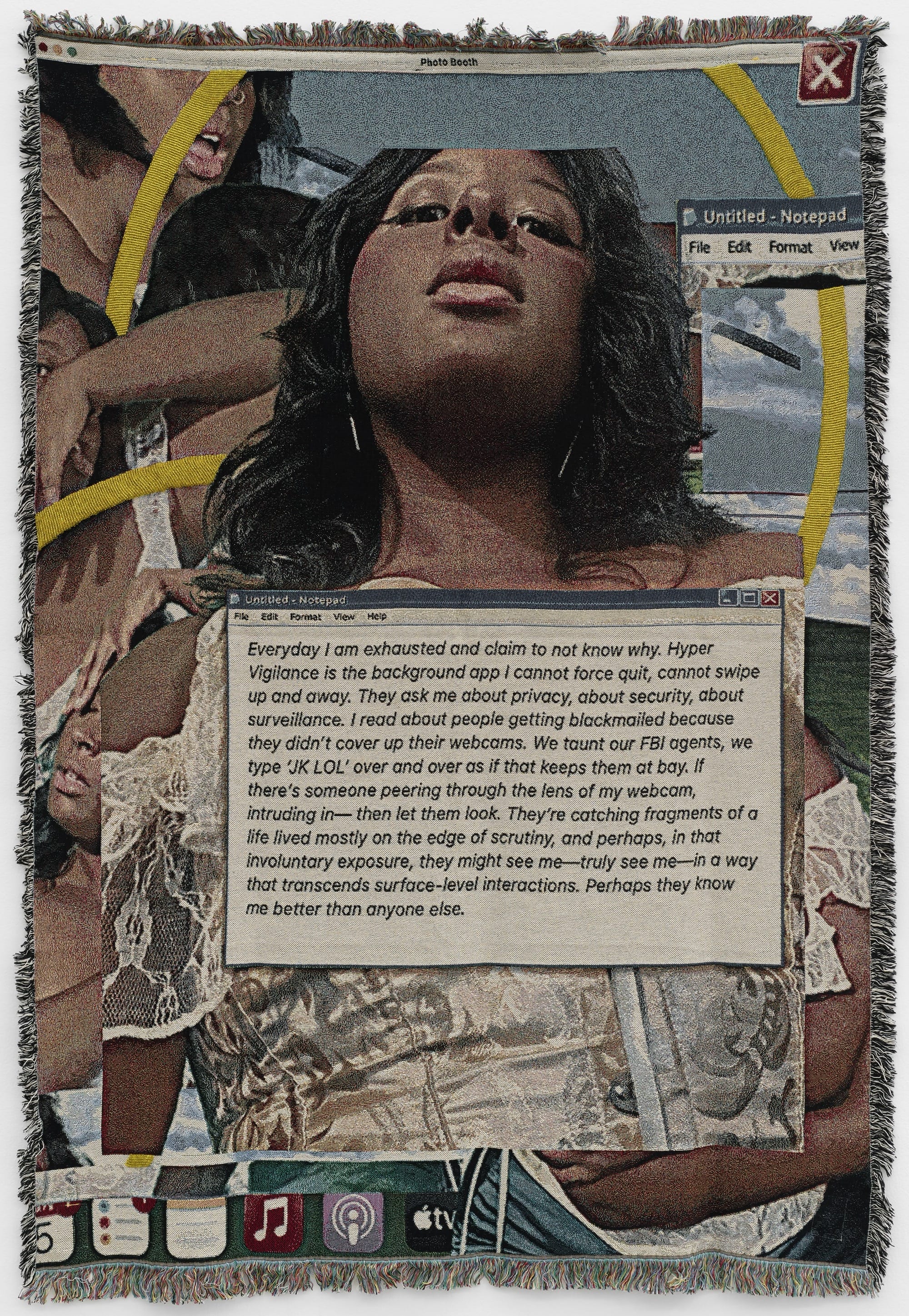 Qualeasha Wood, “Peep Show” (2023), woven jacquard and glass seed beads, 80 x 56 inches
Colossal readers will also likely be familiar with Sarah Zapata’s textural, tufted surfaces and Antonio Santín’s hyperrealistic oil paintings that resemble scrunched carpets. You may also recognize work by Jacqueline Surdell, Anne Samat, and more.
See Thread Count in New York City at The Hole’s Bowery location through January 11. Learn more and plan your visit on the gallery’s website.
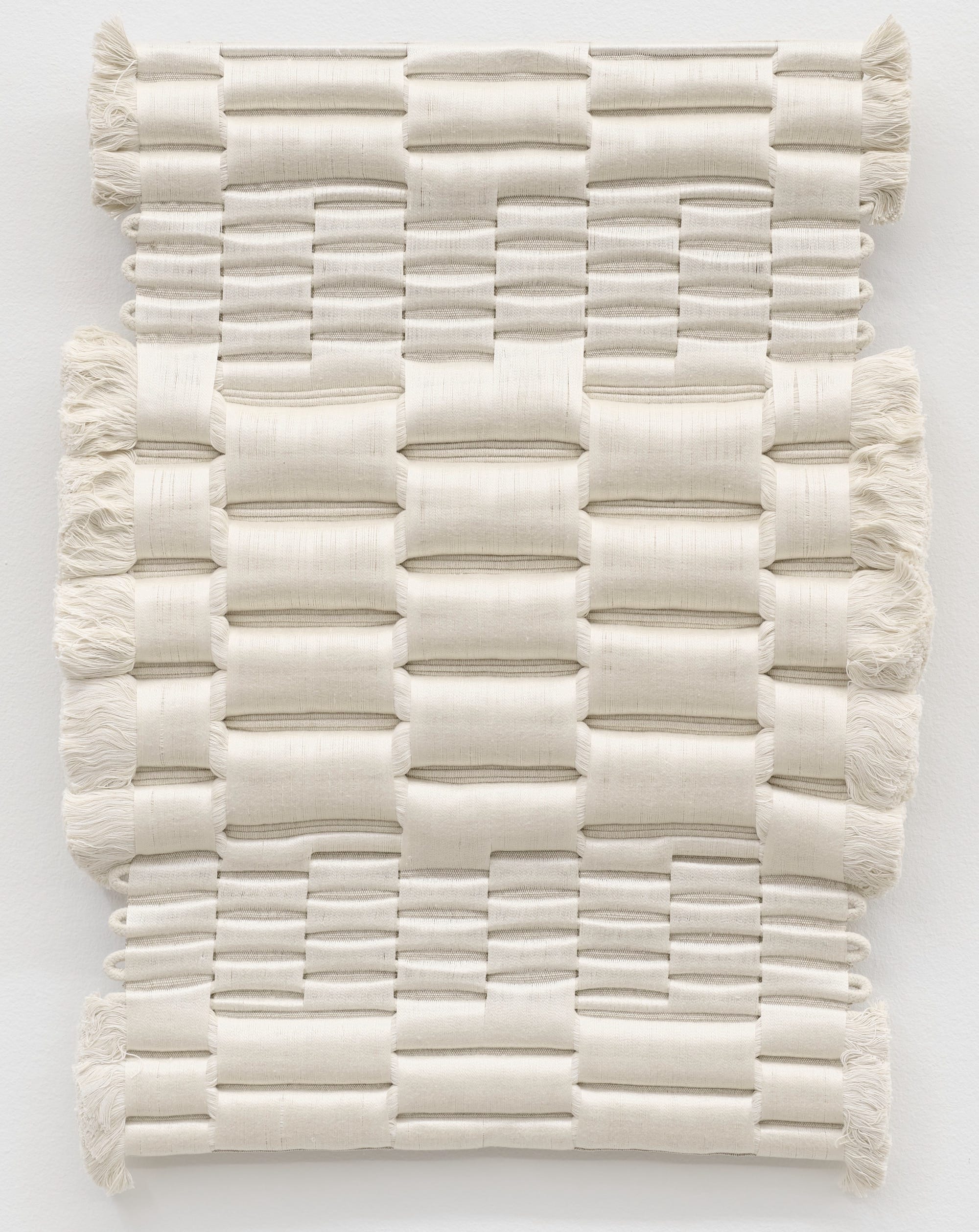 Molly Haynes, “Formation (Bone) Expanded” (2025), silk, cotton, linen, and steel rod, 38 x 28 x 3 inches
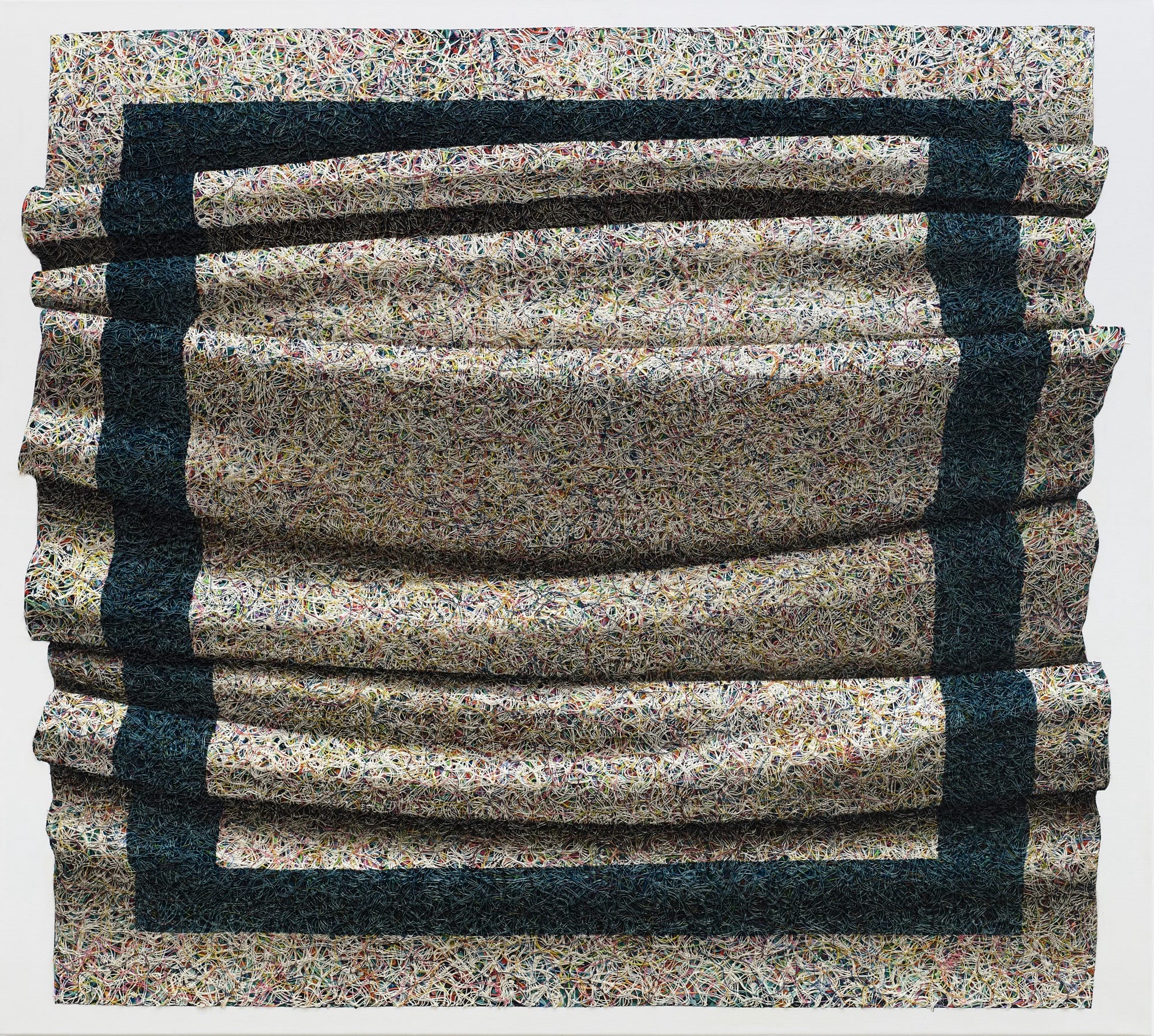 Antonio Santín, “Al lío” (2022), oil on canvas, 71 x 79 inches
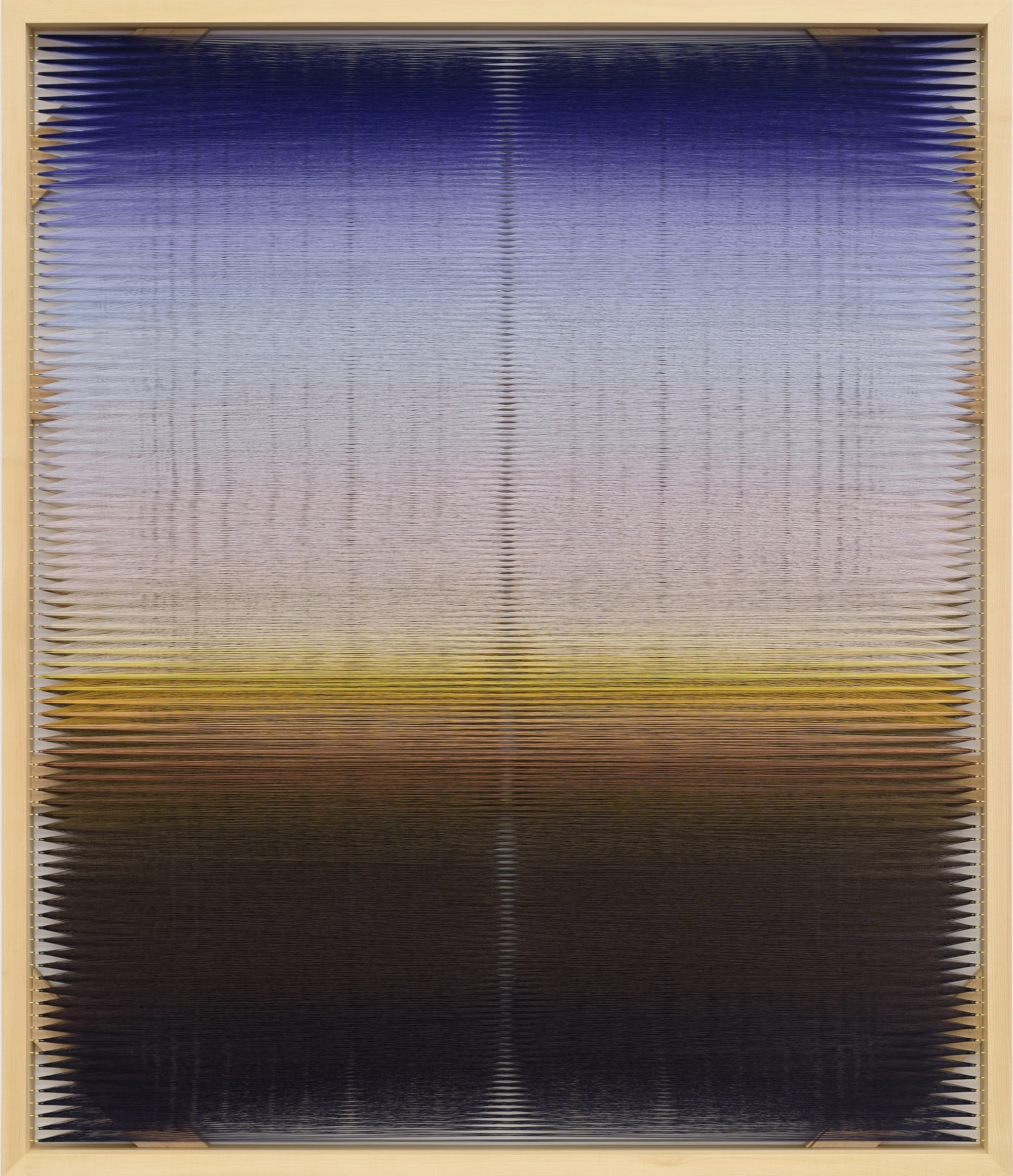 Rachel Mica Weiss, “Tundra” (2025), polyester embroidery thread, brass hooks, and maple, 70 x 60 x 3 inches
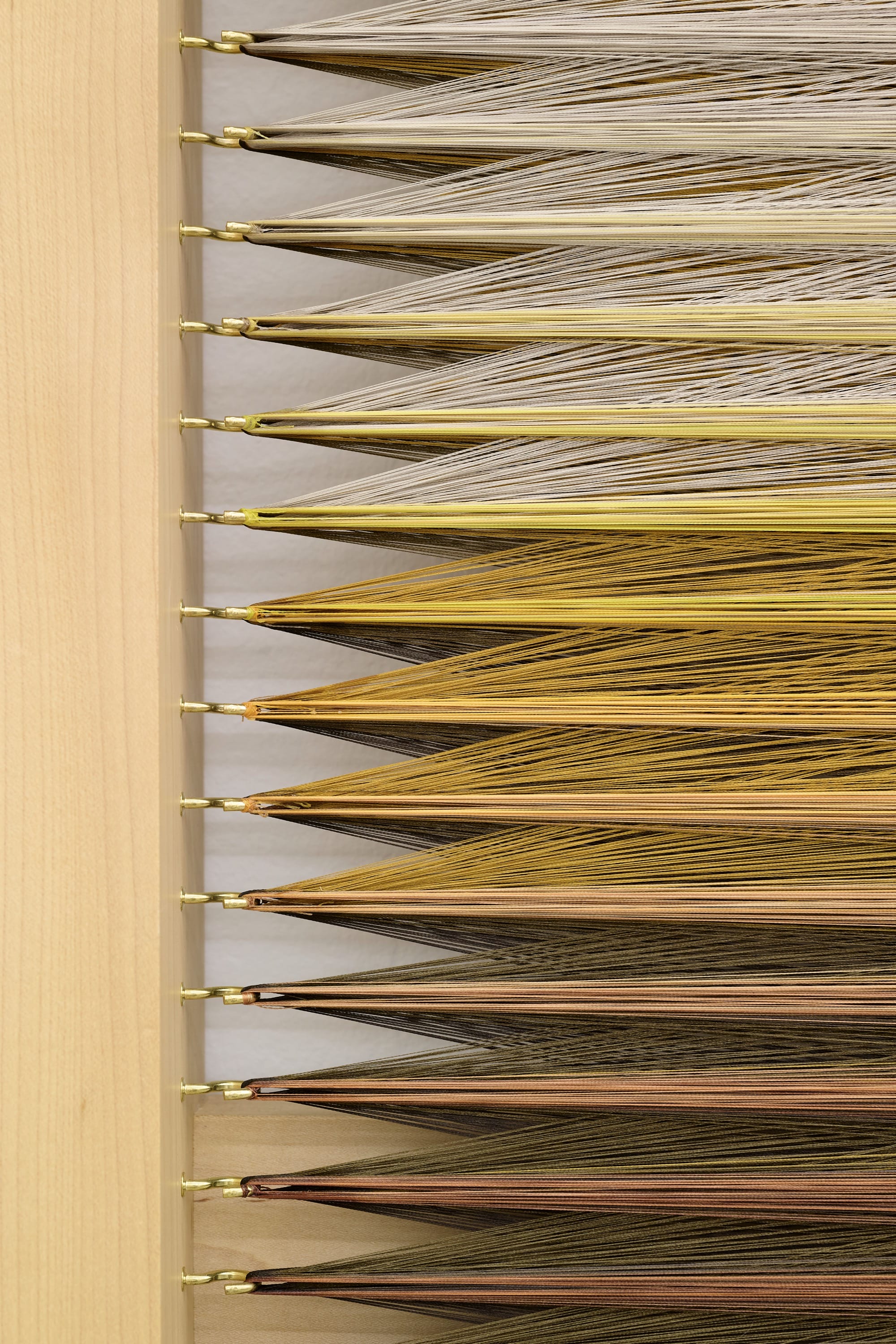 Rachel Mica Weiss, “Tundra” (detail)
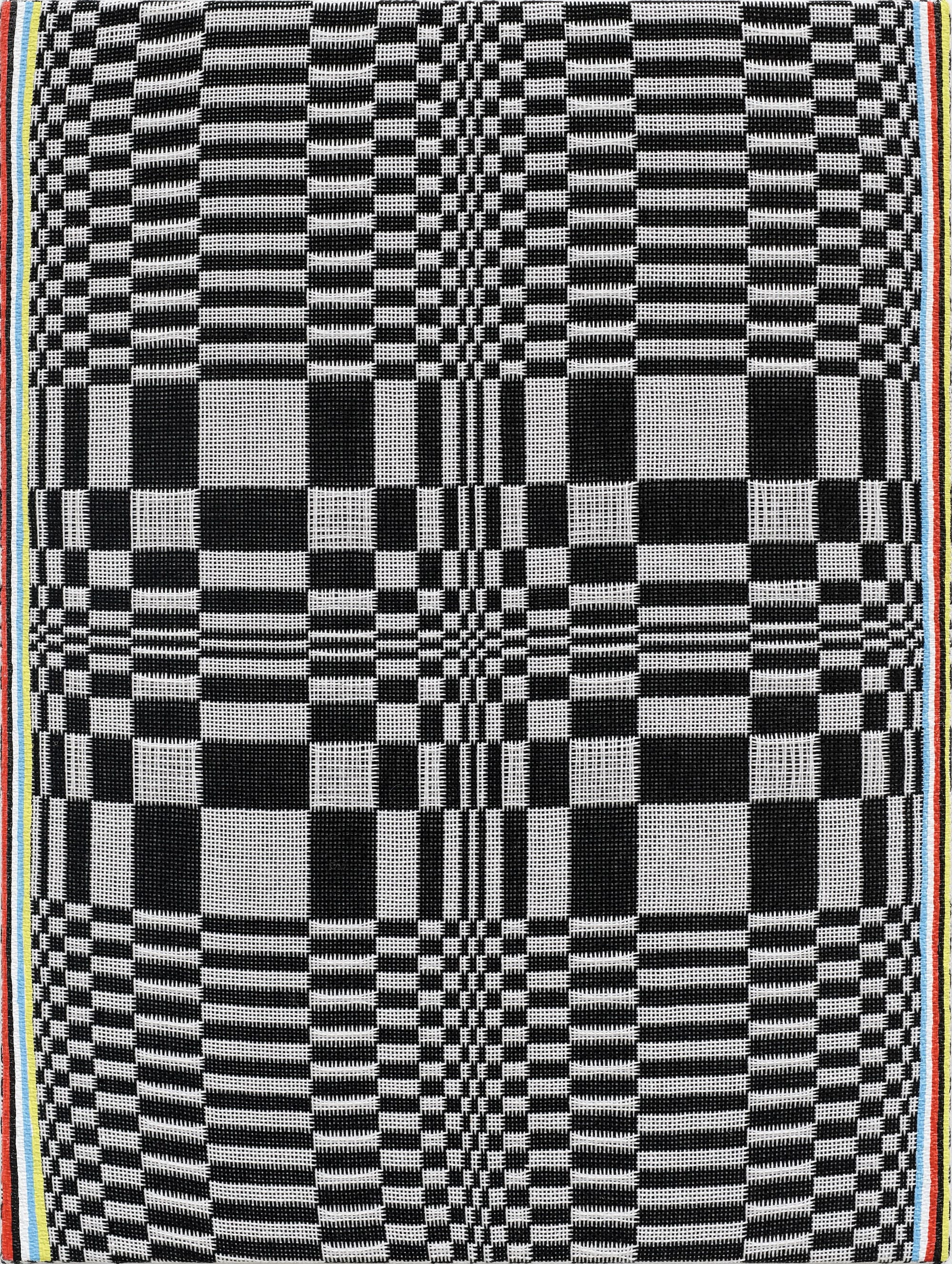 Samantha Bittman, “Untitled” (2025), acrylic on hand-woven textile, 24 x 18 inches
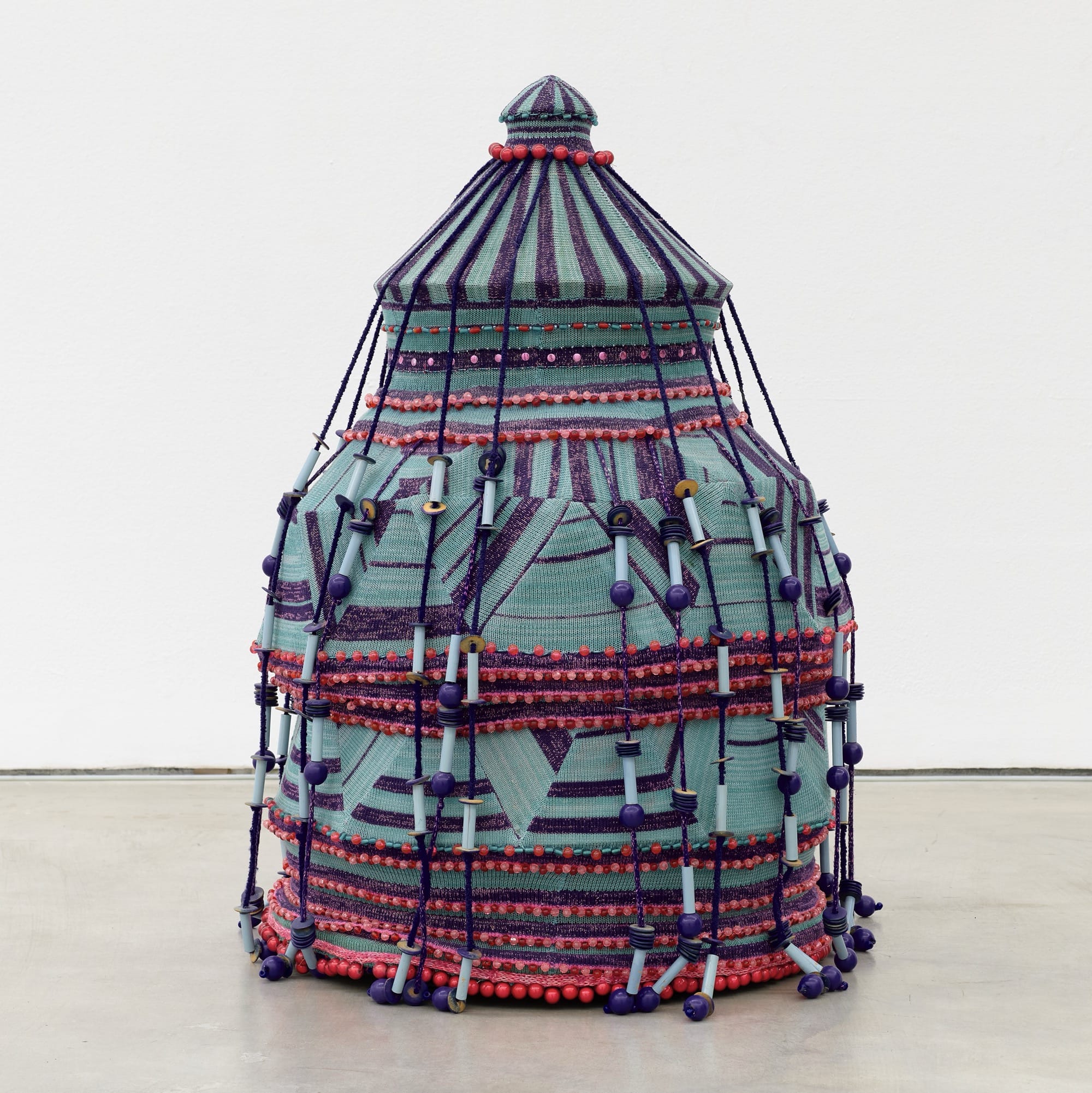 Jim Drain, “Big Boy” (2005), beads, fabric, string, and mixed media, 69 x 24 x 24 inches
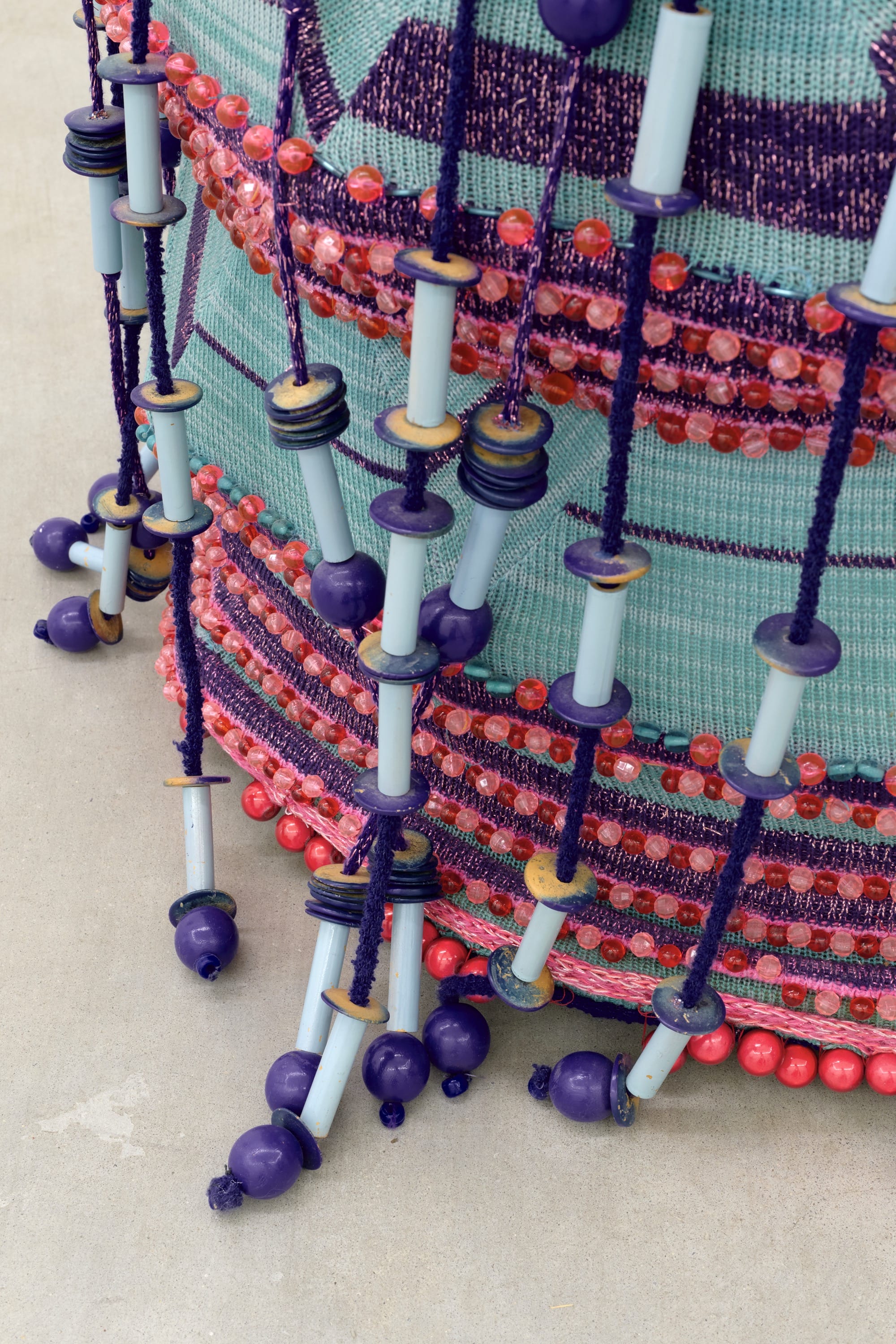 Jim Drain, “Big Boy” (detail)
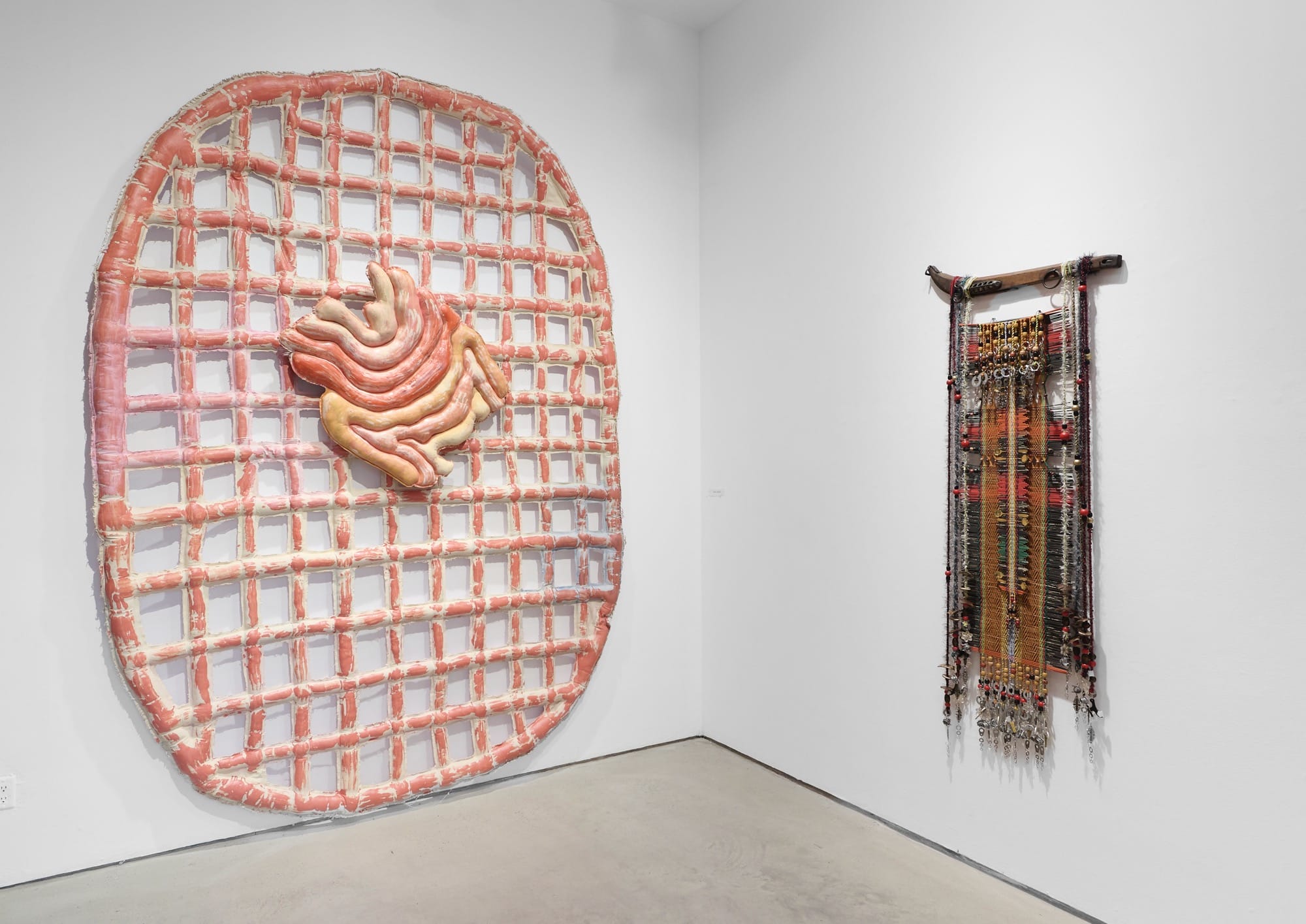 Installation view of ‘Thread Count.’ L-R: Meg Lipke, “Mendieta Grid” (2020-2025), acrylic on canvas with canvas and thread, 129 x 93 x 3 inches; Anne Samat, “Kalambi 4 (A)” (2024), table loom-woven piece with hand painted rattan sticks, recycled and upcycled jeans/denim, wooden horse harness, numerous types of yarn, washers, wooden beads, metal and plastic ornaments, 74 x 28 x 2 inches
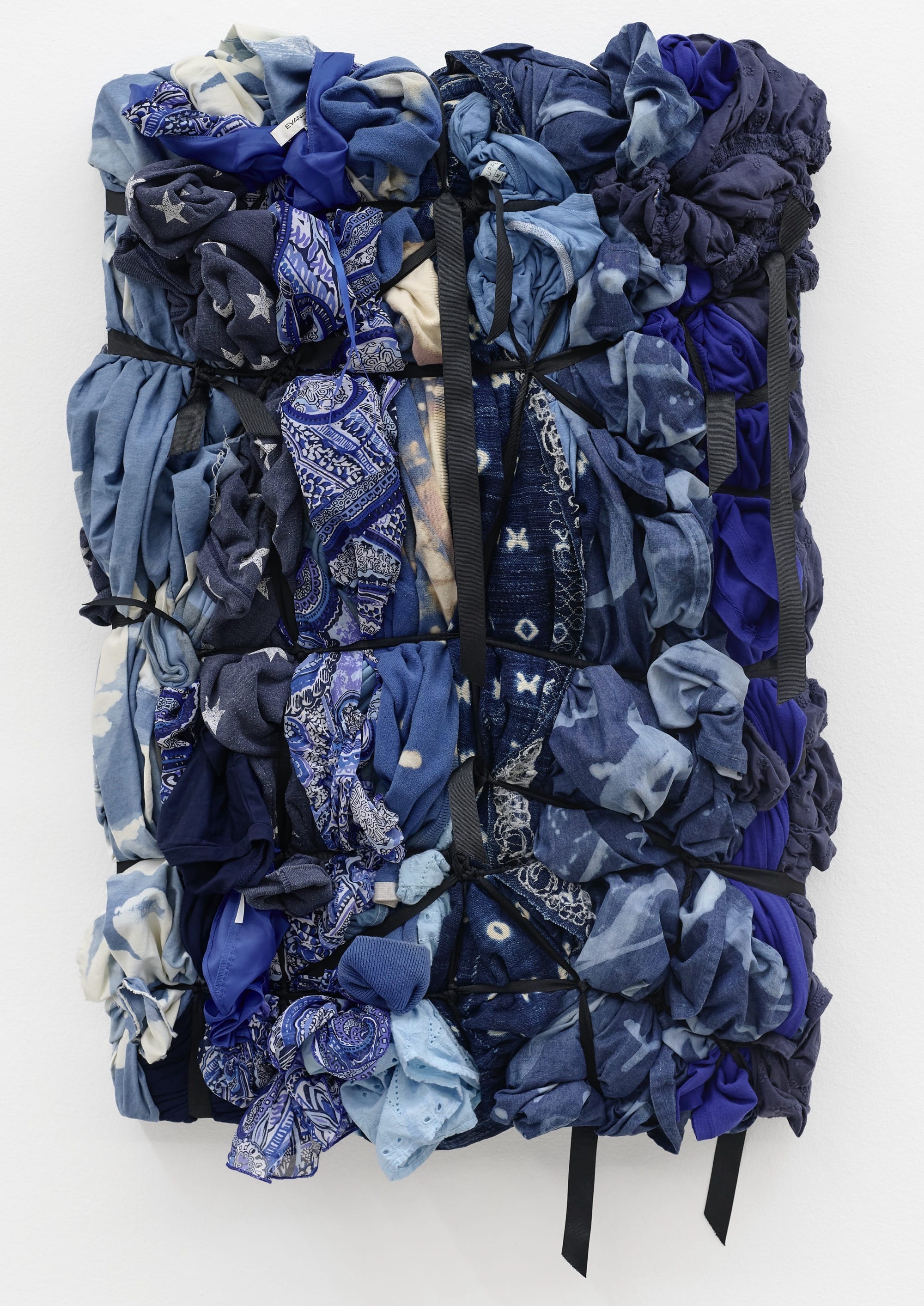 Shinique Smith, “Gathering Stars” (2025), vintage indigo cloths, clothing and fabric from ‘Breathing Room’ performances, and ribbon on wood panel, 38 x 25 x 5 inches
Do stories and artists like this matter to you? Become a Colossal Member now, and support independent arts publishing.
Hide advertising
Save your favorite articles
Get 15% off in the Colossal Shop
Receive members-only newsletter
Give 1% for art supplies in K-12 classrooms