
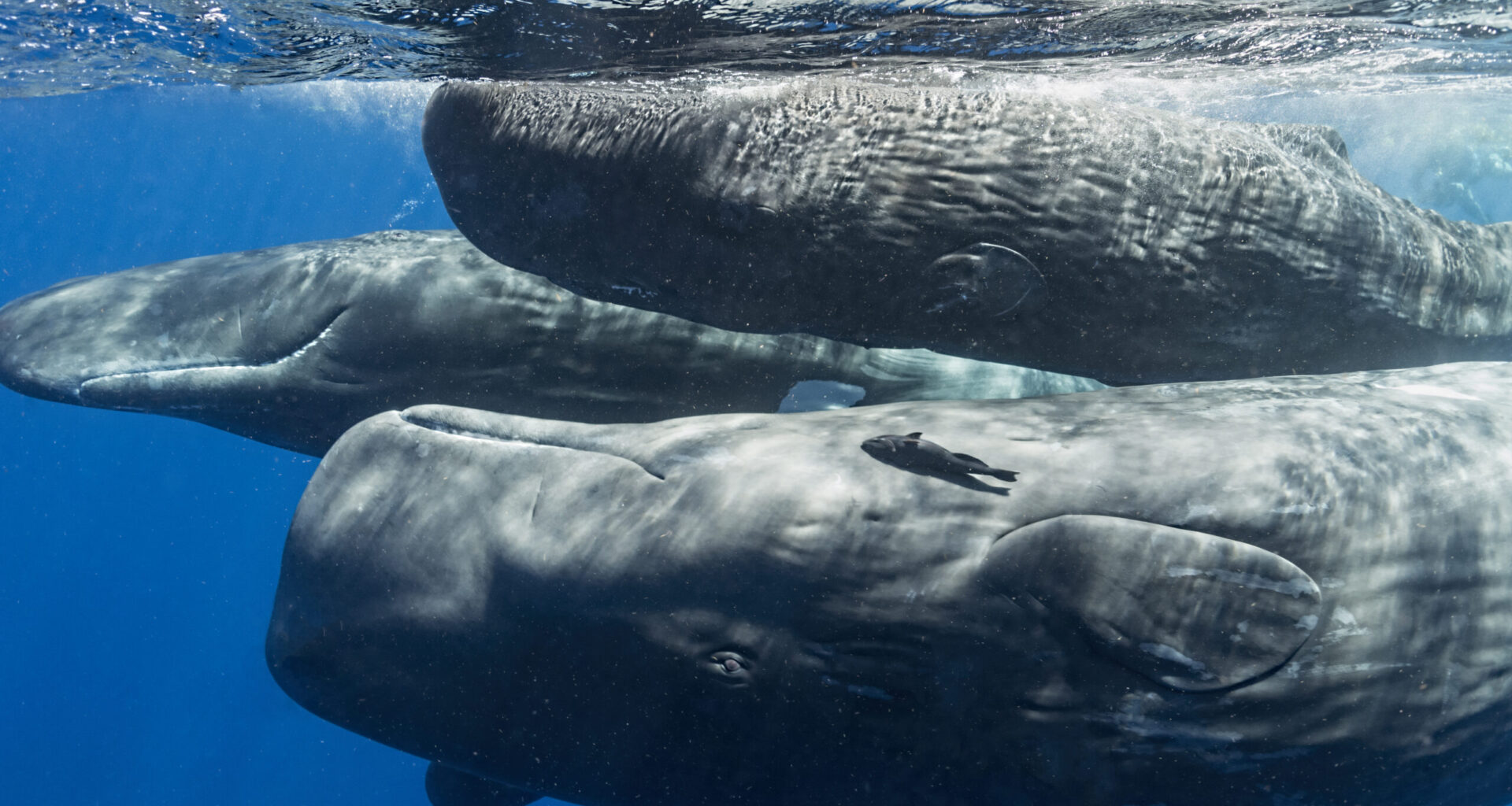
The non-invasive bio-logger attaches to whales using suction cups developed by Harvard robotics researchers, inspired by the anatomy of clingfish. Once deployed, the device uses three synchronised hydrophones to record sound from multiple whales at varying distances, alongside GPS data and sensors measuring depth, temperature, light, and movement. Designed to withstand long, deep dives, the device operates for up to 16 hours and captures higher-frequency sounds beyond the range of human hearing.
Unlike earlier whale-tagging technologies – which primarily captured vocalisations – the CETI bio-logger gathers a richer array of data and can distinguish between individual whales by analysing the origin of recorded sounds. This enables researchers not just to listen, but to interpret communication in context.
Early findings suggest the approach is working. One study using data collected by the bio-loggers indicates that sperm whales may use a form of alphabet, while another reports vowel-like sounds and diphthongs – features that mirror elements of human speech.
The entire bio-logger system, including hardware designs and software, has been made open-source. Researchers hope this will accelerate innovation across marine science and beyond.
“This really democratises and opens up the field of marine science, to biologists across the world,” said David Gruber, founder and lead scientist of Project CETI and a National Geographic Society Program.
Founded in 2020, Project CETI has grown into the world’s largest interspecies communication initiative, bringing together eight institutions and around 50 scientists working across artificial intelligence, linguistics, cryptography, marine biology, and robotics. Harvard researchers play key roles across the project, including robotics, linguistics, and autonomous drone systems used to locate whales and predict surfacing behaviour for tagging.
Adhering a recording device to a free-swimming sperm whale presents a series of technical and ethical challenges – from deploying tags via drones without disturbing the animals, to ensuring devices remain attached in rough ocean conditions, to retrieving and interpreting vast datasets. Project CETI researchers report progress across each of these fronts.
Looking ahead, the team believes the technology could have applications far beyond sperm whales.
“This technology could now be expanded to the millions of other species we share the planet with” Gruber said. “I see this as a massive moment, because the field of bioacoustics and artificial Intelligence can now vastly expand.”
By refining how scientists listen to the ocean’s largest communicators, Project CETI hopes not only to understand what whales are saying – but one day, to answer back.