

Racing NSW (RNSW) has laid bare its reasoning for appointing an administrator to take control of the Australian Turf Club (ATC) as tensions between the two parties reach boiling point.
On Tuesday, following the appointment of an administrator due to “significant financial and governance issues”, the sport’s regulator and NSW’s major race club were locked in the Supreme Court as the ATC seeks injunctive relief from having an administrator appointed to manage the club’s affairs.
• PUNT LIKE A PRO: Become a Racenet iQ member and get expert tips – with fully transparent return on investment statistics – from Racenet’s team of professional punters at our Pro Tips section. SUBSCRIBE NOW!
The Supreme Court move followed Racing NSW’s decision on Monday to appoint an administrator following months of discussions between the two parties after the ATC was slapped with a “show-cause” notice back in September which cited significant financial and governance issues.
Tensions escalated further on Tuesday when within moments of Justice Michael Slattery declaring a decision on the interim relief would be handed down on Thursday, the ATC board issued a broadside to its members, making a range of claims while arguing Racing NSW’s power to appoint an administrator was beyond its authority.
In a bid to ensure full transparency to participants and stakeholders, Racing NSW issued a statement of its own to its 60,000-strong base, with chair Dr Saranne Cooke outlining the precise reasoning for why the decision, “which was not taken lightly”, was made to appoint an administrator.
• PUNT LIKE A PRO: Become a Racenet iQ member and get expert tips – with fully transparent return on investment statistics – from Racenet’s team of professional punters at our Pro Tips section. SUBSCRIBE NOW!
“Racing NSW commenced the show-cause process because of serious and growing concerns regarding the ATC’s deteriorating financial position,” Dr Cooke said.
“Those concerns did not abate during the process. Instead, they intensified.
“The ATC board was unable to articulate or provide a credible, coherent, or disciplined strategy to stabilise or improve the ATC’s financial performance.
“The material advanced was overwhelmingly reactive, superficial, and devoid of rigorous commercial analysis.
“Far from demonstrating leadership, the ATC Board’s focus appeared to be limited to short-term, distressed asset disposals, pursued without adequate strategic planning.
“The ATC did not demonstrate, at the appropriate level of detail, how it would increase revenues and decrease costs in the future.”
• ‘Serious financial issues’: ATC placed into administration
In appointing an administrator, Racing NSW “formed the clear and considered view that the conduct of the ATC board gives rise to serious and systemic corporate governance concerns”.
“Taken collectively, these matters demonstrate a pattern of conduct that falls materially short of the standard of governance, transparency, and probity expected of the board of an organisation of the scale, public significance, and statutory importance of the ATC,” Dr Cooke said.

Racing NSW chair Dr Saranne Cook. Picture: Richard Dobson
Among the raft of governance concerns raised was communication between ATC chair Tim Hale and Upper House member Mark Latham, both of whom were in staunch opposition to the sale of Rosehill Gardens.
It included discussions between Mr. Hale and Mr. Latham which aired “confidential information” relating to ‘in camera’ proceedings during the Select Committee Inquiry into the potential sale of Rosehill Gardens.
“Mr Hale did not take any steps to prevent Mr Latham from disclosing that confidential information to him, including cautioning him not to do so or terminating the relevant conversations,” Dr Cooke said.
“It was most concerning that Mr Hale, a senior counsel since 1999, was receptive to receiving confidential information from Mr Latham contrary to his parliamentary responsibilities.
“Mr Hale did not make any disclosure to the ATC board in respect of the communications and, further, was and is of the opinion that he did not need to do so.”
At the heart of Racing NSW’s concerns was the ability for the ATC to meet their fiscal obligations as they fall due, with the ATC board “failing to develop and present an adequate contingency plan of substance”.
“This is despite being on notice since May that the Commonwealth Bank was unlikely to extend facilities absent from continued guarantees from Racing NSW,” Dr Cooke said.
“This position remained even after the ATC was advised that auditors were likely to issue a going concern qualification and despite a halving of cash reserves over three years.
“To exacerbate the situation, no application was made by the ATC to Racing NSW to extend the guarantee until 17 November 2025.
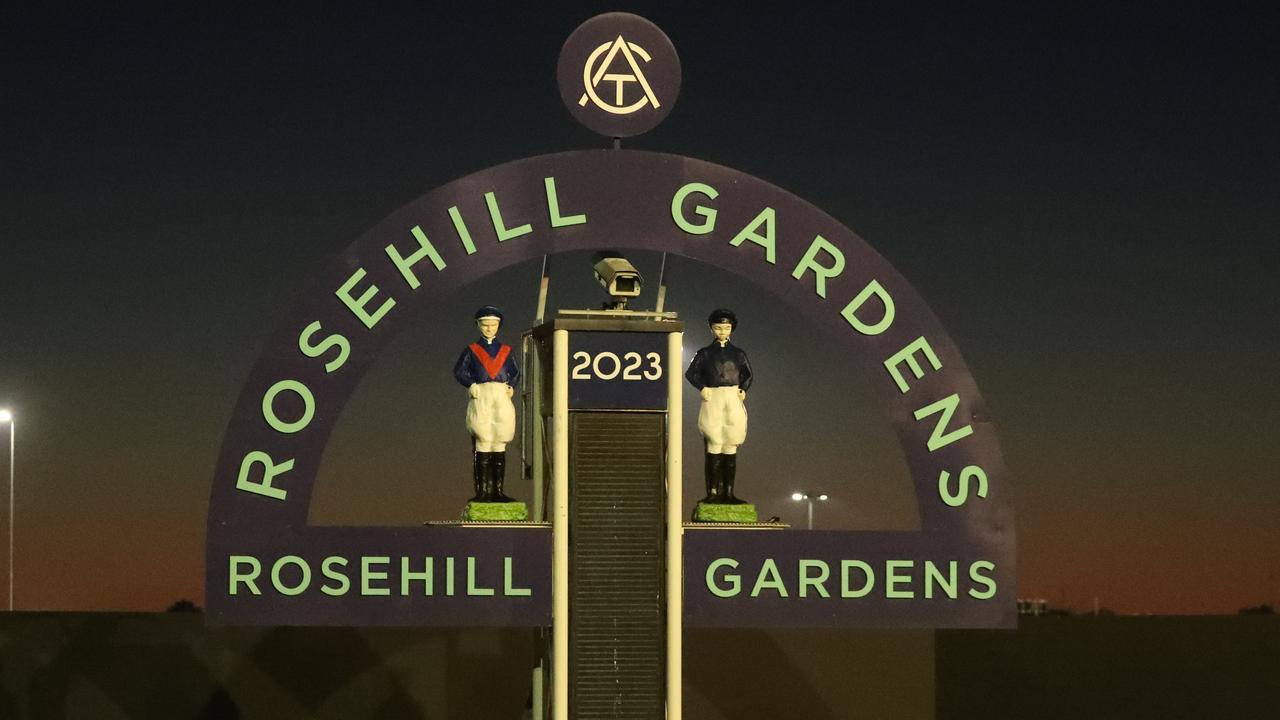
The ATC-managed Rosehill Gardens. Picture: John Grainger
“The ATC relies on Racing NSW guarantees and discretionary financial support to maintain solvency.
“The current financial position presents a real and unacceptable risk that Racing NSW would be called upon to honour guarantees exceeding $30m.
“Such an outcome would directly imperil industry funds and undermine Racing NSW’s statutory obligation to act in the best interests of the NSW thoroughbred racing industry as a whole.”
In coming to the conclusion that the ATC board “had ceased to be effective as a governing body”, Dr Cooke said failed promises around headcount optimisation, ever-changing cash flow forecasts and the flagging of asset disposals were also cause for concern.
“The ATC board also has no cogent or structured plans in place on cost reduction, revenue growth, property sales and development,” she said.
“To the extent that any plans were presented to Racing NSW, they did not contain detailed analysis but were in the nature of general statements or aspirations.”