
DoC Coastal Otago biodiversity ranger Moss Thompson said pregnant females begin searching for birthing and pupping sites away from the advances of males.
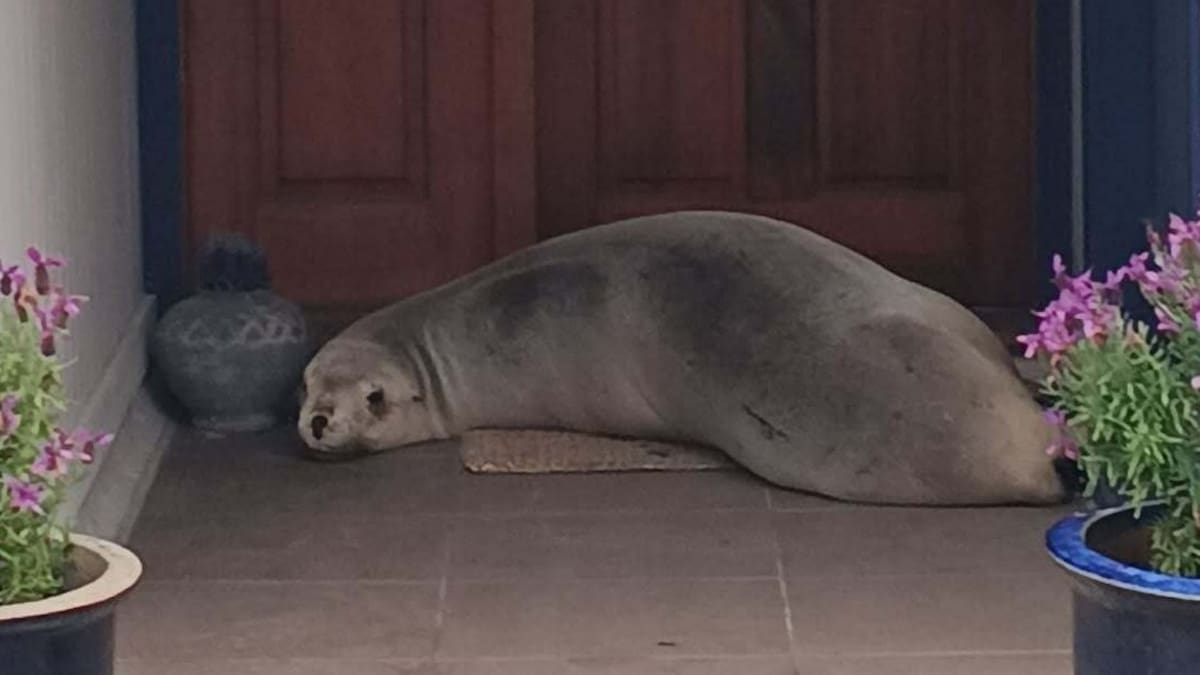
“This means we often start seeing more females using beaches closer to Dunedin city — and sometimes in more urban locations like along roads, golf courses and people’s backyards,” Thompson said.
The expectant mother was caught taking a snooze on a residential doorstep on Wednesday morning as Dunedin’s sea lion continues to boom. Photo / Regan Larkin
“As we get into December and then through the rest of summer, pups start appearing, and as they get older, they’ll start exploring the area too, often showing up inland.”
Dunedin has experienced strong breeding seasons in recent years.
Last summer, about 34 breeding-age females were recorded along the coastline, with about 25 pups expected.
As preferred habitats fill up, females are moving further inland to find quiet, elevated nesting sites.
DoC said pregnant females and pups were extremely vulnerable and needed space to remain safe.
Sea lions have been regularly seen on Dunedin’s beaches, golf courses, walking tracks and suburban areas.
“This summer we’re asking people to ‘pause for pakake’,” Thompson said.
DoC was urging people to keep dogs under control, follow signage, and take care when driving or visiting hotspot areas including Smaills and Tomahawk beaches, St Kilda, Brighton, and parts of the Otago Peninsula.
DoC is working with the Dunedin City Council on road management in known hotspots, and rangers are hopeful of another strong season.
To reach breeding colony status, more than 35 pups need to be born.
Dunedin’s sea lions are all descended from “Mum”, a female NZ sea lion who in 1993 became the first of the species to give birth on the mainland in more than 100 years.
Mum gave birth to 11 pups before disappearing in 2010, aged 24, and is credited with re-establishing the species on the mainland.
Ben Tomsett is a multimedia journalist based in Dunedin. He joined the NZ Herald in 2023.