
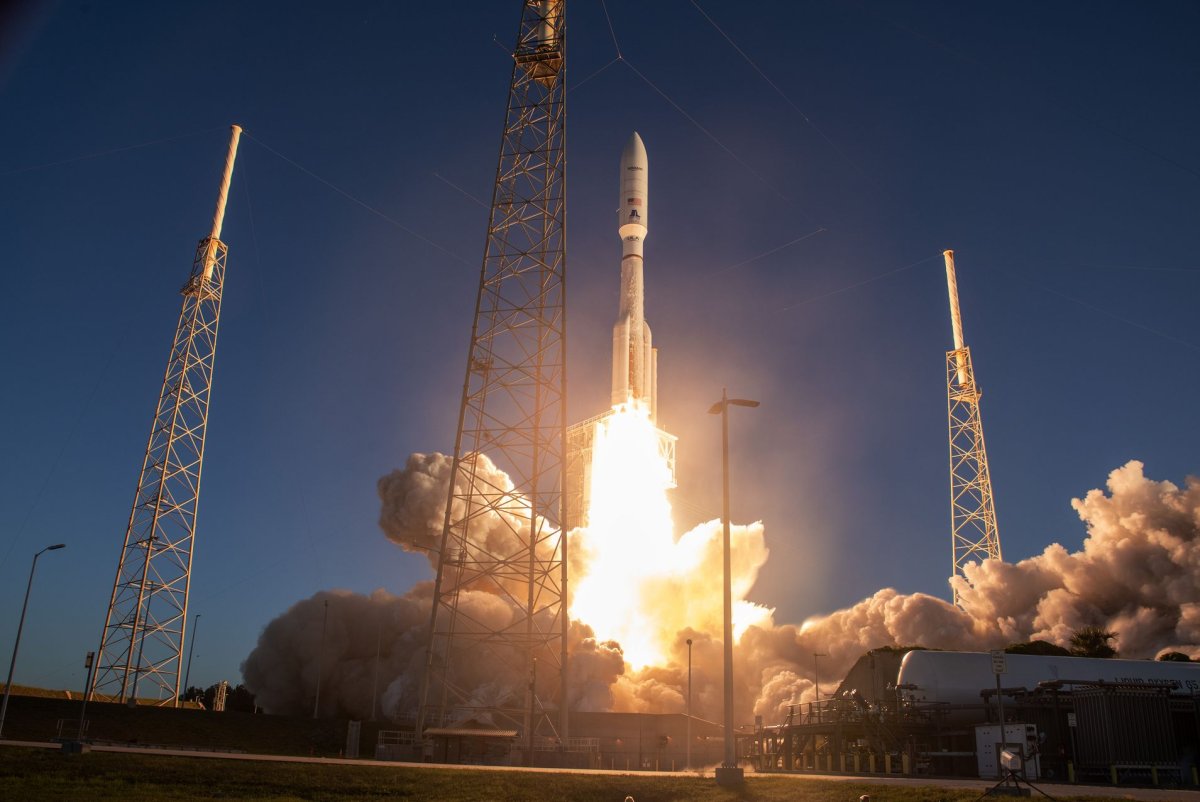
United Launch Alliance (ULA) Atlas V rocket pictured in June lifting off from Space Launch Complex 41 at Cape Canaveral Space Force Station in Cape Canaveral, Fla. ULA launched its Atlas V rocket fitted with 27 more Amazon Leo satellites for its Internet megaconstellation from Cape Canaveral at 3:28 a.m. EST. File Photo by Pat Benic/UPI | License Photo
Dec. 16 (UPI) — Colorado-headquartered United Launch Alliance launched on Tuesday a fresh set of Amazon Internet satellites into orbit.
An Atlas V rocket from ULA launched 27 Amazon Leo satellites from Cape Canaveral Space Force Station in Florida at 3:28 a.m. EST.
“The United Launch Alliance Atlas V rocket has delivered its fourth success for Amazon Leo, deploying another 27 advanced broadband satellites into space,” ULA posted on X just after 5 a.m. local time.
A little before 6 a.m., Amazon officials confirmed deployment of the more than two dozen satellites to its constellation and were “operating nominally on orbit.”
ULA congratulated Amazon on the “successful launch of this critical payload.”
Amazon Leo — formerly Project Kuiper — is Amazon’s upcoming low Earth orbit megaconstellation of satellite’s for its Internet network.
All 27 Amazon Leo satellites were planned to deploy within 15 minutes starting roughly 20 minutes after liftoff.
Around 3,200 satellites will eventually form the network launched in more than 80 missions using various rockets.
Tuesday’s launch marked the fourth Project Leo mission using the Atlas V launched in 2002.
ULA is retiring the Atlas V in favor of the newer Vulcan Centaur, which has completed three missions to date.
United Launch Alliance, meanwhile, is a direct competitor of the Elon Musk-owned SpaceX and its Starlink spinoff to expand global Internet access.
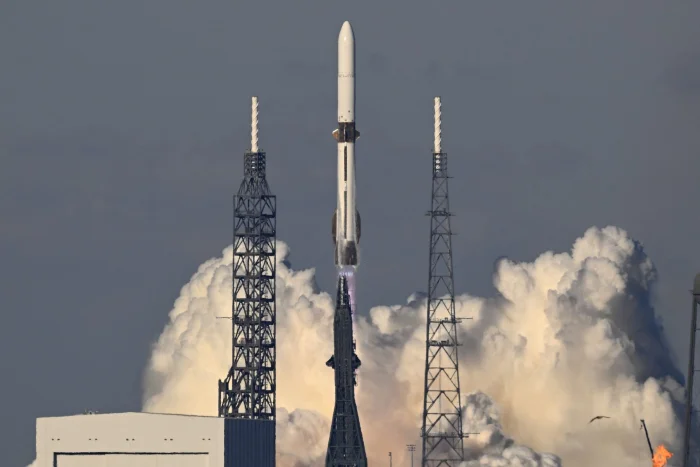
Blue Origin”s New Glenn rocket boosts a pair of NASA’s EscaPADE spacecraft from Launch Complex 36 at the Cape Canaveral Space Force Station in Florida on November 13, 2025. Photo by Joe Marino/UPI | License Photo