
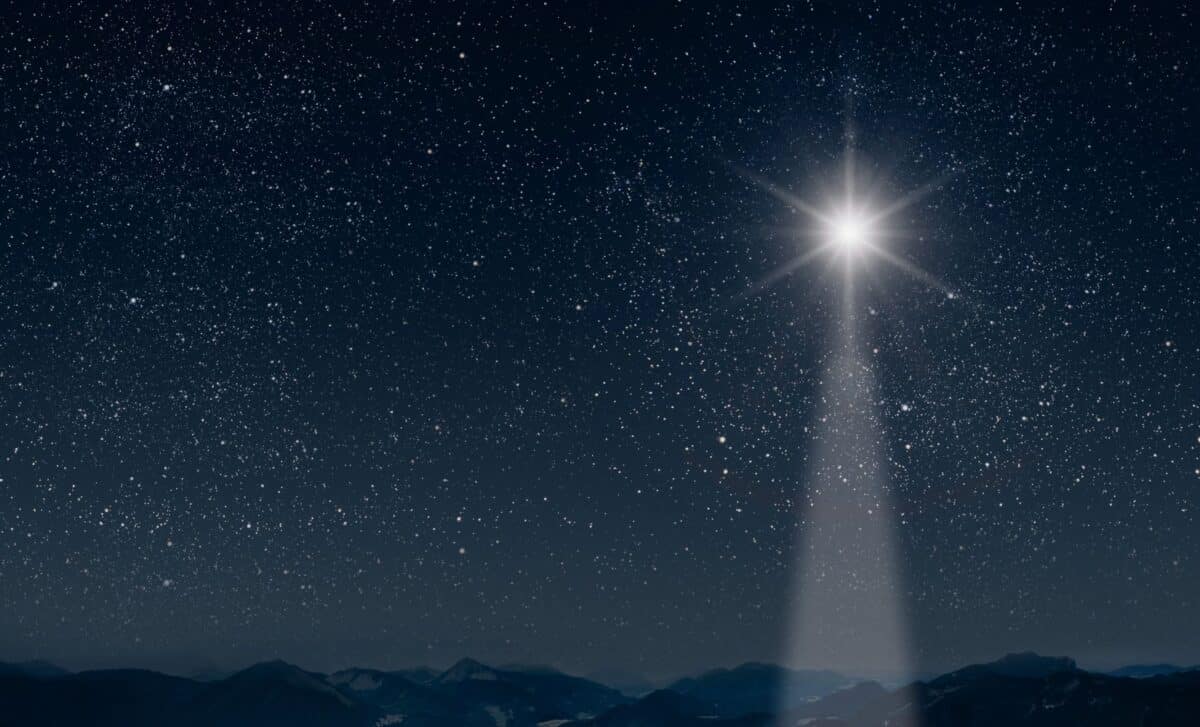
This week, the night sky offers a rare celestial spectacle that promises to captivate stargazers across North America. Among the highlights are the dazzling Star of Bethlehem and the continued Geminid meteor shower, both offering unique opportunities for observation. With the winter solstice marking the official start of winter, this week’s sky will be filled with some of the most anticipated astronomical events of the year.
The week opens with a delicate crescent moon at dawn, and builds towards a crescendo of celestial events, including the appearance of the Star of Bethlehem and a peak of the Geminid meteors.
The Star of Bethlehem: A Rare Sight in the Sky
One of the most anticipated sights of the week is the Star of Bethlehem, a celestial event that draws its name from the star in Christian tradition. Its appearance occurs when planets, particularly Jupiter and Saturn, align to create a bright, star-like appearance in the sky.
According to Forbes, the Star of Bethlehem is a rare but not entirely unusual event, as such alignments happen periodically. However, the visibility and timing of the event this week make it a special occurrence. The alignment of Jupiter and Saturn will appear particularly bright, creating a striking star-like effect that can be seen across the Northern Hemisphere.
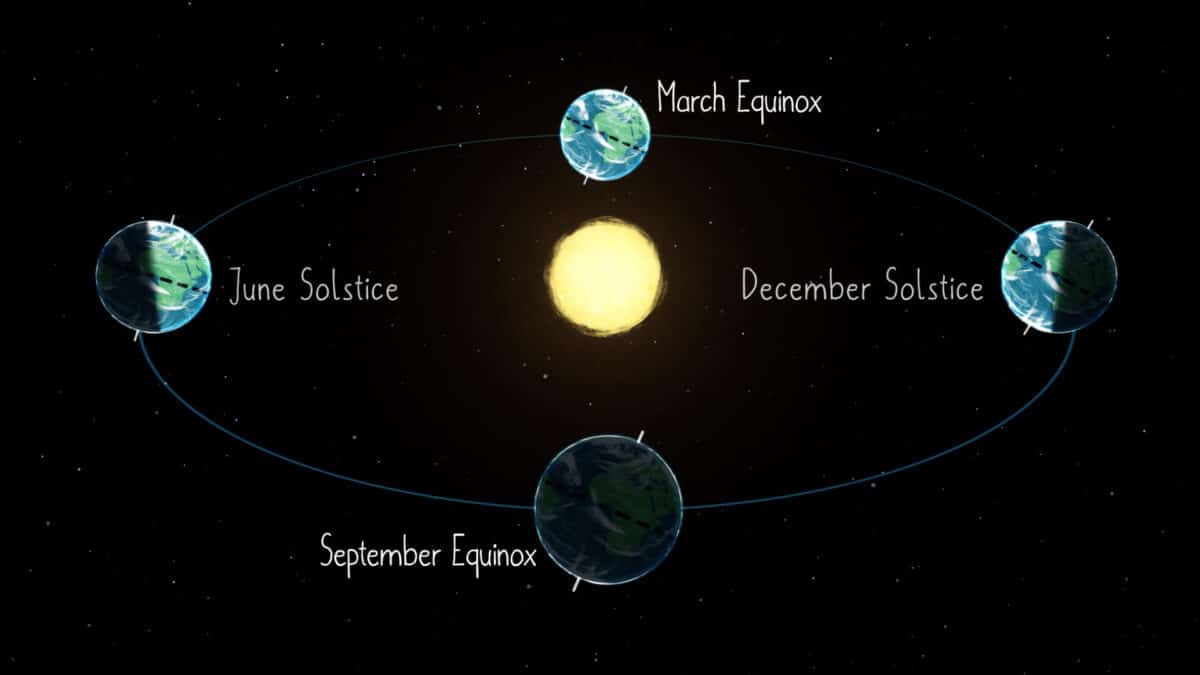 From the equinoxes to the solstices, this diagram shows how Earth’s tilt creates the rhythm of the seasons. Credit: NASA/JPL-Caltech
The Geminid Meteor Shower: A Winter Favorite
The Geminid meteor shower, which peaks this week, is one of the most anticipated meteor events of the year. Active from December 4 through 17, the Geminids offer a spectacular display, with meteors streaking across the sky throughout the night. This meteor shower stands out not only because of its brightness and frequency but also because it originates from an asteroid, 3200 Phaethon, rather than a comet, which makes its meteors appear particularly vibrant.
As stated by EarthSky, the Geminid meteor shower can produce up to 120 meteors per hour at its peak, making it one of the most prolific showers of the year. The best viewing times are after midnight when the sky is at its darkest, though the Geminids can be visible earlier in the evening as well.
Witnessed the Geminid meteor shower and I’m STILL SHAKING!
A bright meteor streaked across the sky for a full 5 seconds ( FIVE! ) JUST LOOKING LIKE A WOW. pic.twitter.com/2pFmNqXuFL
— Sujal Singh (@sujalsingh_x) December 14, 2025
Stargazing at Its Best: The Solstice and New Moon Align
This week also marks the arrival of the winter solstice, the shortest day of the year. Occurring just after the new moon on December 16, 2025, the solstice and moon phase create ideal conditions for stargazing. The new moon will ensure that the sky remains dark, offering perfect visibility for the Star of Bethlehem and the Geminid meteor shower.
The combination of the new moon and the solstice creates a unique opportunity for skywatchers. The absence of moonlight during the new moon phase allows for the meteors to be more visible and vibrant. Also, the solstice itself has long been a symbol of renewal in many cultures, marking the return of longer days as the Earth begins to tilt back toward the Sun.