
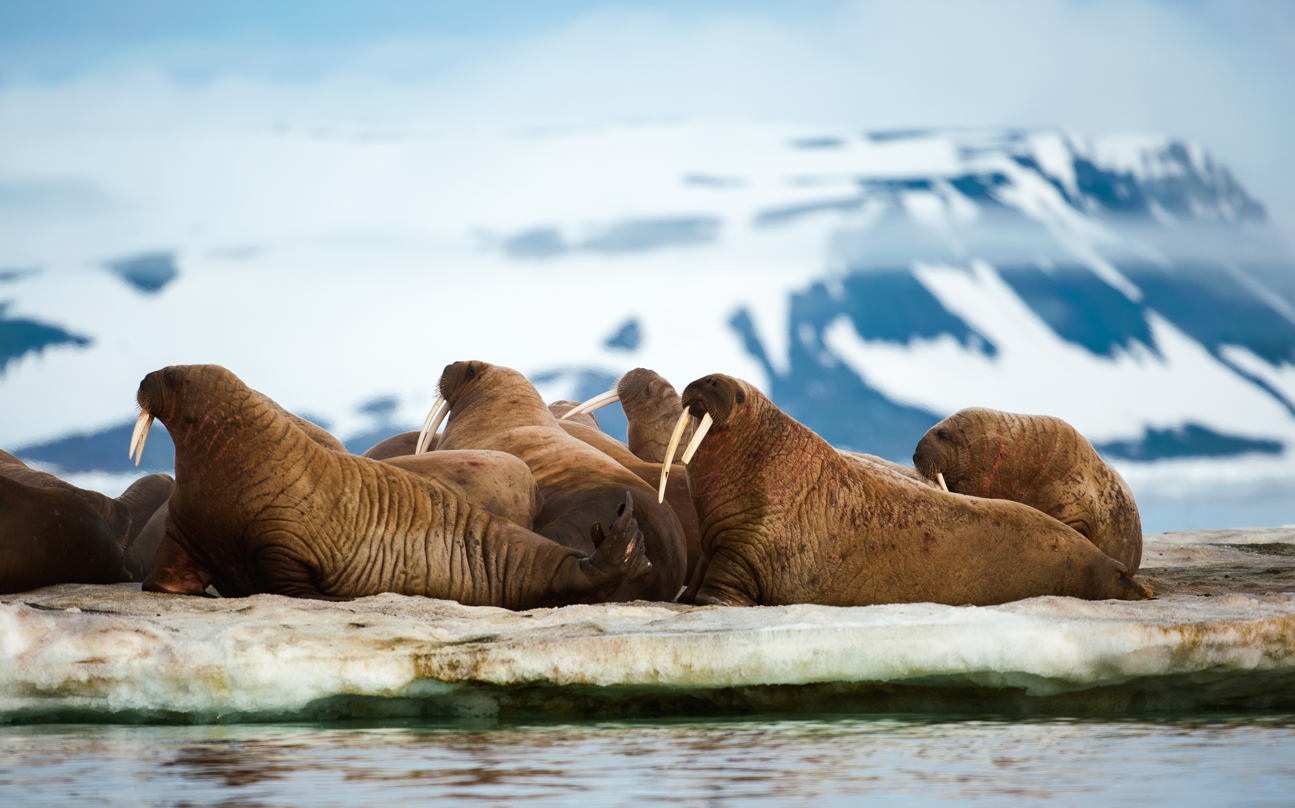
Our planet is vast, and so many species live on it. Nevertheless, it’s not always easy to keep track of animal populations over such a vast area. Especially since, quite rightly, wildlife tries as much as possible to avoid those who make their lives miserable, namely humans.
However, new technologies make it easier to observe certain species without disturbing them. Such is the case of an Arctic giant whose habits biologists need to know in a world turned upside down by climate change: walruses.
Walruses seen from space
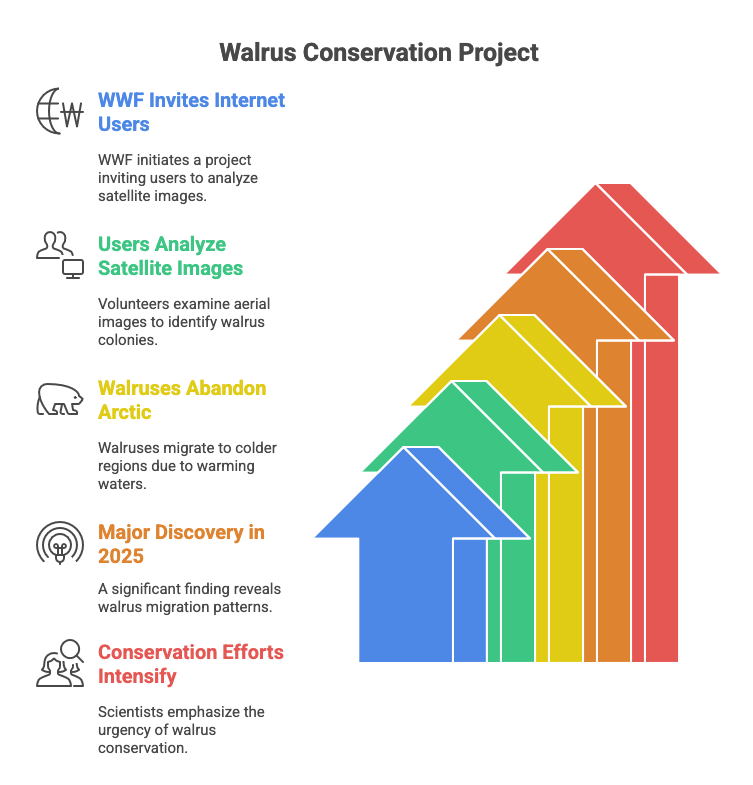
Since 2021, the WWF (World Wildlife Fund) has been offering Internet users the chance to play walrus detective. The idea is to use thousands of satellite images taken from the air to note walrus shoals, count them and so on. Of course, most of the photographs are taken in and around the Arctic Circle, to see how these large, gregarious mammals divide up at a time when the Arctic Circle is becoming increasingly fragmented by the heat of the waters. This is all the more important as walruses make the most of ice blocks and icebergs to live and feed in the surrounding waters.
A total of 11,000 people from 68 countries around the world are observing millions of images to detect walruses, and thus provide valuable information on their numbers, where they are, etc. An already promising project that made a major discovery in 2025.
Svalbard, the new haven
Indeed, volunteers and scientists have noted that one of the places where walruses most often stop for long periods is Svalbard. This is a thin strip of land between Norway and the North Pole. So, for the time being, it would appear to be one of the few safe environments for these nearly two-ton animals.
This trend also shows that they really do seem to be abandoning the Arctic Circle for places where they can find still-cold water, but a little more ice and snow. Which just goes to show how, unfortunately, global warming has made life in the Arctic Circle increasingly difficult.
Walrus conservation is becoming a matter of urgency for many scientists, who are counting on this WWF project and other research to come up with solutions for these mammals essential to Arctic biodiversity.
Illustration: Shutterstock – 2104315292
References
Satellites Capture Massive Gathering of Gigantic Arctic Creatures on Remote Island – https://indiandefencereview.com/massive-gathering-gigantic-arctic-creature/
Walrus from space – https://www.wwf.org.uk/learn/walrus-from-space
Arctic: a playground for researchers – https://cursus.edu/fr/25335/arctique-le-terrain-de-jeux-des-chercheurs
Scientists Stunned by Unexpected Creatures Living Inside Arctic Ice – https://indiandefencereview.com/unexpected-creatures-inside-arctic-ice/
Walrus (animal) – https://fr.wikipedia.org/wiki/Morse_(animal)
Atiku – Northern and Arctic knowledge portal – https://cursus.edu/fr/23447/atiku-portail-des-connaissances-sur-le-nord-et-larctique