
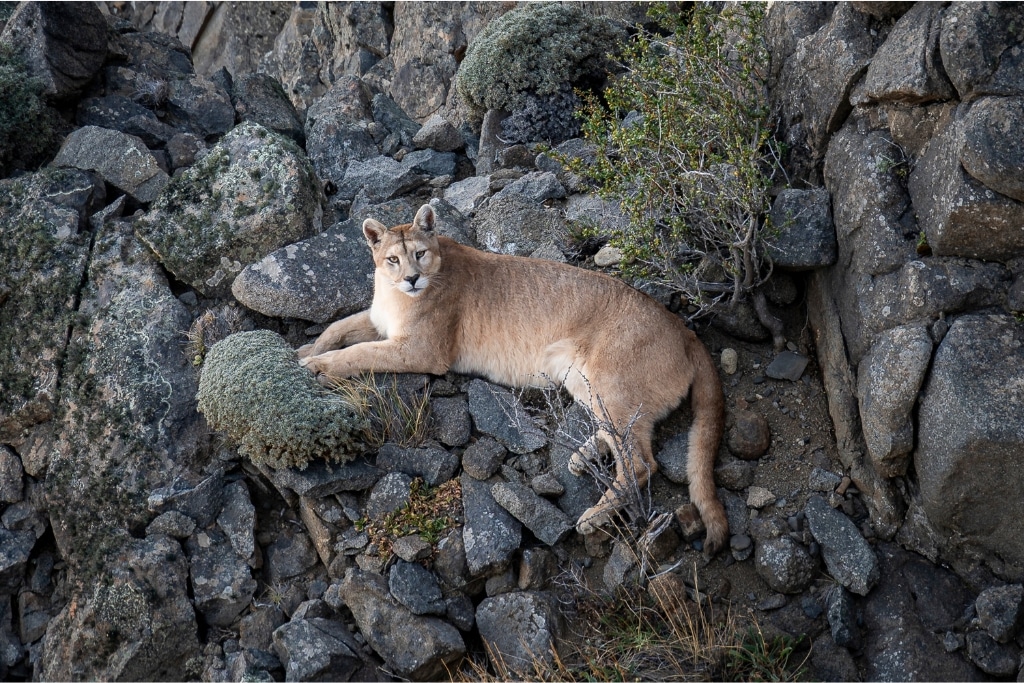
One of the best places in the world to see wild puma is in Patagonia, Chile. Here, on the windswept steppe beside Torres del Paine, guanacos graze under circling condors while pumas move silently through the hills. Once hunted as enemies of ranching, these apex predators are now at the center of a groundbreaking human-wildlife coexistence project at Estancia Cerro Guido.
—
By Andi Cross
While Torres del Paine National Park captures the world’s imagination with its granite towers and sweeping trails, a lesser known story is unfolding just beyond its borders that may prove even more transformative for Patagonia’s future. At the foot of the Andes, where Pacific storms feed lush evergreen forests in the west and fade into the dry steppe in the east, a bold experiment in coexistence is underway.
This is Estancia Cerro Guido, a 200,000-hectare ranch turned conservation frontier. Its extremes of rain-soaked forest and windswept shrubland create a landscape of incredible contrasts, as well as unmatched biodiversity. Condors circle above, guanacos roam the grasslands, foxes and skunks lurk in the brush, while Chile’s Buzzard-Eagle patrols the skies. But the most iconic resident, and perhaps most controversial, is the puma.
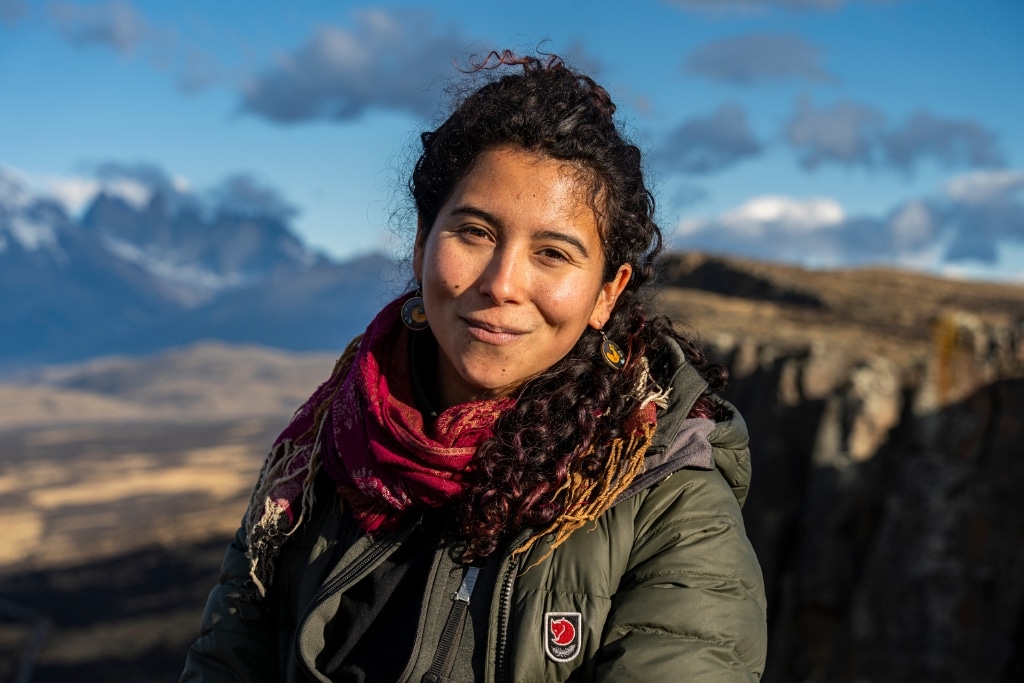
Solange Sabelle, a pioneering researcher helping to better understand pumas. Photo: Adam Moore.
Pumas, or Puma concolor, are apex predators vital to ecosystem balance, yet are often misunderstood. They hold a Guinness World Record for having more names than any other mammal, with over 100 across northern Canada to the tip of Patagonia. However, in Chile, their story has long been one of conflict. For over a century, sheep ranching has defined the region’s economy, and pumas were hunted relentlessly as enemies of survival. Despite protections introduced in the 1990s, persecution remains a reality on many estancias.
At Cerro Guido, that narrative has been one the team is focused on shifting. Through science-based research, community partnerships, and new predator management strategies, Fundación Cerro Guido, the Estancia’s conservation arm, is testing a radical question: can humans and these large carnivores share the same land successfully?
If their endeavor does succeed, it could reshape conservation in Chile, and all across the continent.
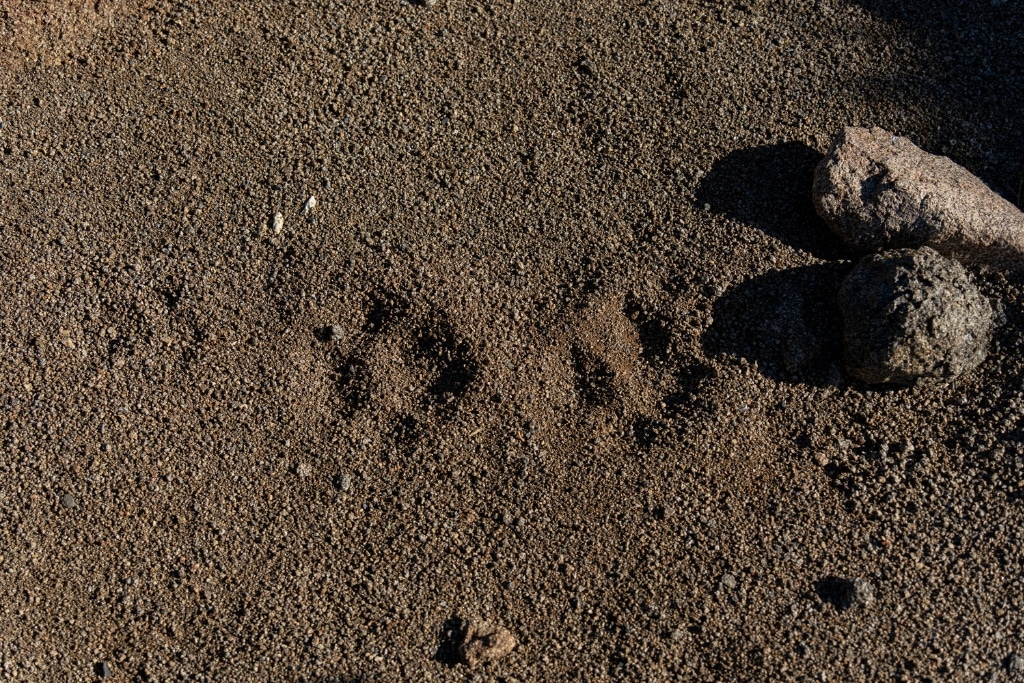
Puma tracks in the sand in Patagonia, Chile. Photo: Adam Moore.
Understanding Pumas
At the heart of Fundación Cerro Guido’s work is The Puma Project, which is deemed one of the most ambitious predator coexistence initiatives in South America. In the shrub-covered hills known as the Condoreras, where pumas exist in their highest known density on Earth (an estimated three to six cats per 100 square kilometers), researchers are working to protect a species while redefining how Chile, and the world, perceives these animals.
The project is led by Pía Vergara and her right hand, Solange Sabelle, marking these two women as breaking ground in a field long dominated by men. Pía, originally a wildlife photographer, has spent more than 20 years in Patagonia, turning her lens into a science-based program that began with just three people.
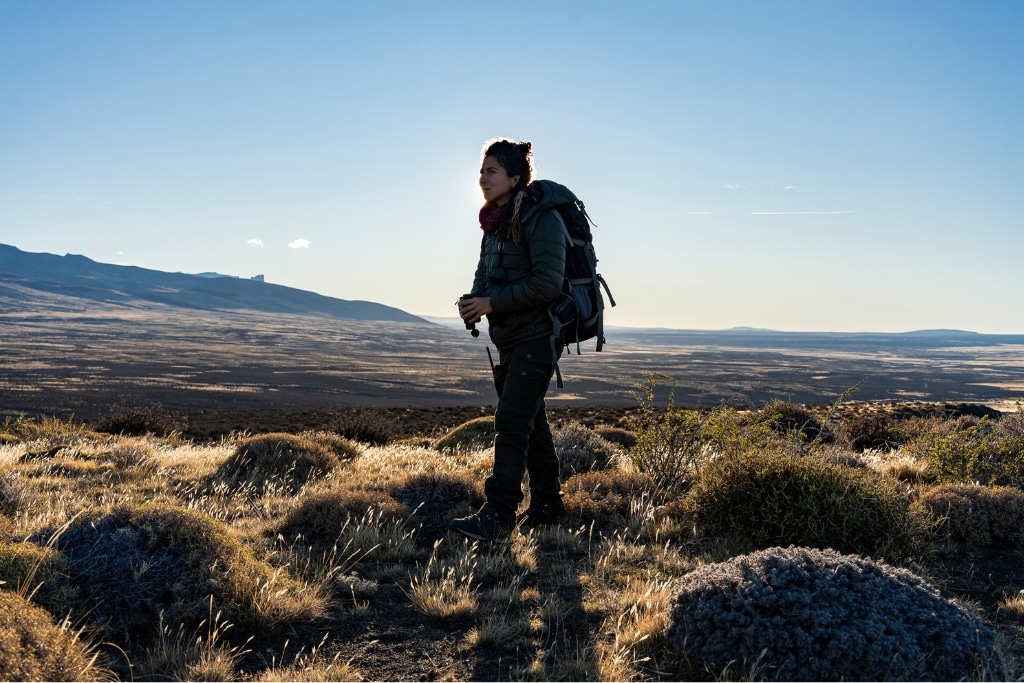
Solange takes the Edges of Earth Expedition team on a trek to find pumas in the wild. Photo: Adam Moore.
Their results are already challenging assumptions, which has been an exciting development for the experiment. Textbooks describe pumas as solitary and elusive, yet the Cerro Guido team has logged more than 3,000 hours of direct observation pointing to evidence that tells a different story. “We’re seeing females traveling and playing with cubs in ways that suggest more social behavior than previously believed,” said Solange. “Our work is scientific, but it also needs to be about building emotional connections with nature and our land so that we look at it differently. We are inspired to look closer.”
Those connections and different perspectives are forged through patience. The research team spends eight, sometimes 12 hours a day in near silence, observing even the smallest of details. They study how pumas lower their bodies to ambush guanacos; how cubs wrestle in the grass; how a mother patrols her territory. With no distinctive spots or stripes like cheetahs or jaguars, each individual must be recognized through more subtle traits. “We are identifying these animals through their gait, posture, or personality. Over time, these patterns transform into relationships, allowing us to identify cats as individuals shaping the landscape,” Solange further explained.
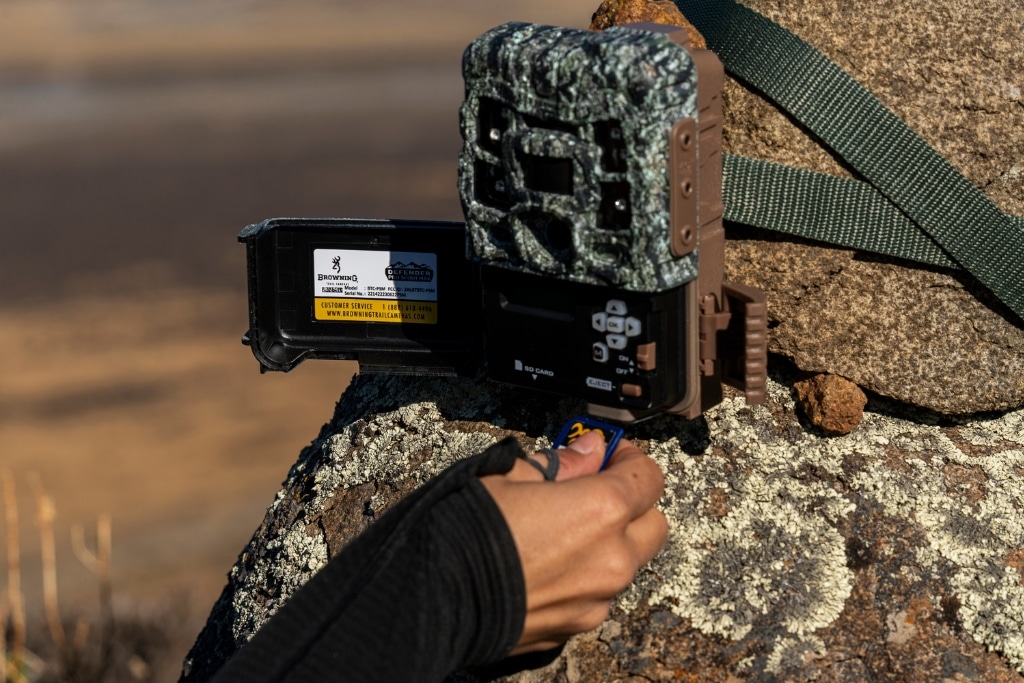
Solange setting camera traps to better understand wild pumas. Photo: Adam Moore.
One of the most iconic cats ever documented at Cerro Guido is Raya, the first puma captured on a camera trap in 2019. Her name — which translates to “line” in Spanish — is used to describe the way she moves through the landscape, leaving almost no trace. For six years, researchers have followed her and her cubs, piecing together an intimate portrait of family life, inclusive of playful tumbles in the grass and cautious lessons in hunting. But this work goes well beyond animal behavior; it is acting, at its core, as a strategy for creating this desired balance between people and nature.
For more than a century, sheep ranching has defined Patagonia’s economy and culture. In that world, pumas — who prey mainly on guanacos and hares but occasionally on sheep — were seen as relentless adversaries. Even after hunting bans in the 1980s, illegal killings persisted, especially in smaller northern estancias where losing a single sheep could mean a whole family going hungry.
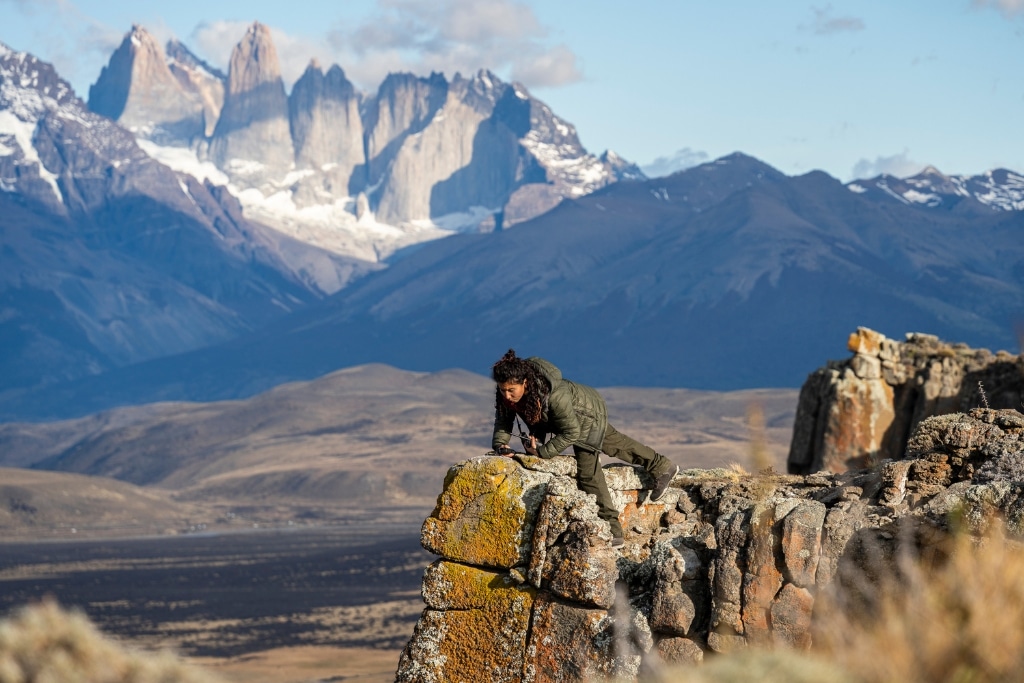
Solange at work, with a backdrop of Torres del Paine. Photo: Adam Moore.
Cerro Guido’s team understood that protecting pumas meant going beyond scientific rigor. They would need to earn the trust from people who have generationally worked these lands, which is no easy feat. That started with the gauchos, or the ranch hands whose traditions run deep in Patagonia. Gaucho life itself is fading. Most are older men that have been hardened by a lifetime of brutal winters and long days in the field. Few marry or pass the traditions on. “You cannot become a gaucho. You are born into it,” said Solange. Building trust with this community takes time, as well as assurance and proof that conservation will not erase their way of life.
From Hunters to Conservation Allies
Many gauchos were hired as leoneros, or discreet puma hunters. Today, some of those same men are employed as trackers and conservation allies. One of the most powerful examples of this sits with Mirko Utrovicich, a former puma hunter who now supervises the estancia’s guardian dog program. Using Great Pyrenees and Maremma breeds, the project introduces puppies to sheep at just three months old, imprinting them so they become part of the herd. Their presence, inclusive of a distinct bark and scent, deters pumas who are known to avoid unnecessary conflict. Early results show promise, as herds protected by these working dogs see up to a 30% reduction in losses.
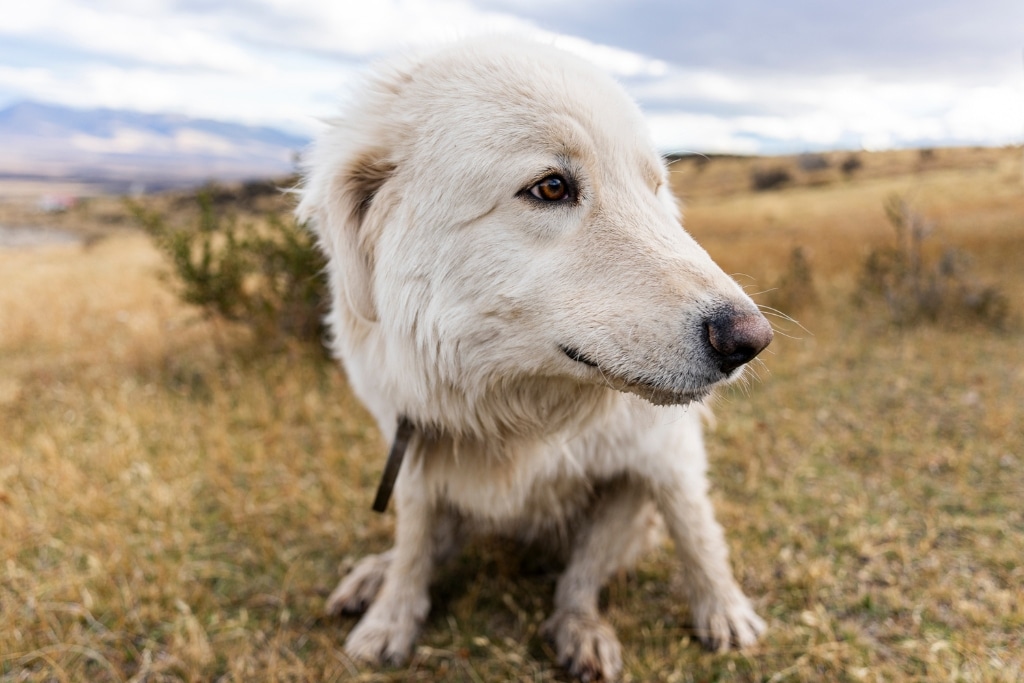
The Edges of Earth Expedition team meeting some of the working dogs on the Estancia. Photo: Adam Moore.
Still, dogs alone aren’t enough on this vast and rugged land, where pumas use gullies and cliffs to stalk unseen. To maximize success, the team is also adapting livestock practices, which include reducing the size of grazing areas, rotating flocks across the Estancia’s 77 fields, and combining traditional gaucho knowledge with modern conservation science.
Technology is strengthening the effort. With GPS collars on both sheep and pumas, the research team can monitor movement patterns in real time. This is the first time coexistence has been measured and mapped with such precision, revealing which strategies work best to prevent conflict.
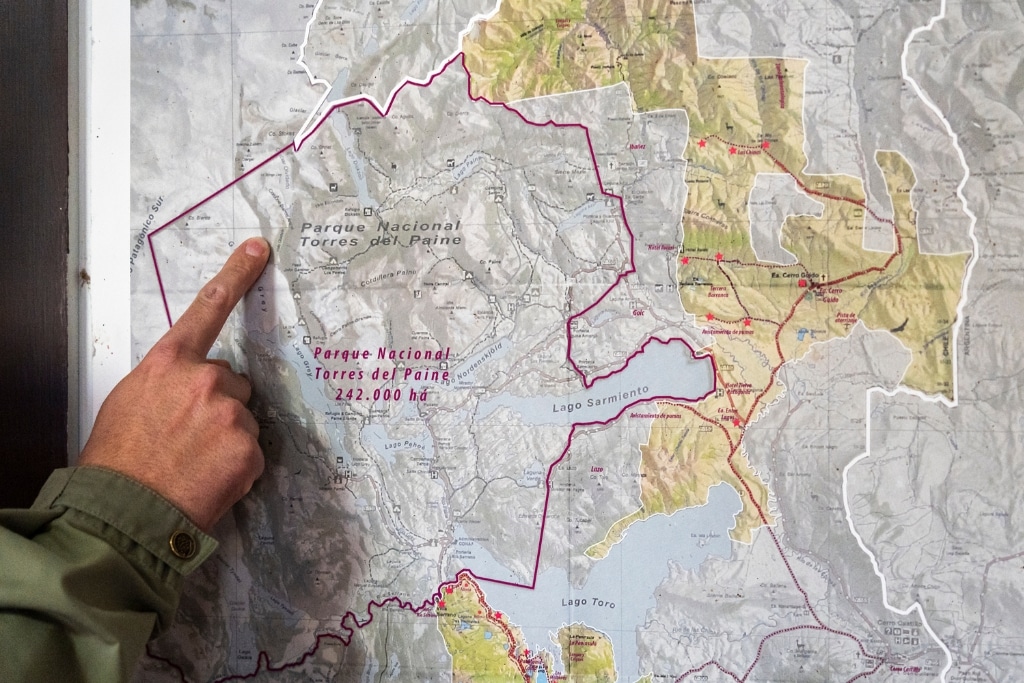
A map of the Estancia property and protection zones. Photo: Adam Moore.
To put coexistence to the test, the team is running a large-scale trial: 700 sheep split evenly between herds with and without guardian dogs. The results will provide hard evidence of what works and what doesn’t when it comes to protecting flocks without killing predators. For the gauchos, and for ranching across Patagonia, this is trending towards proof that tradition and the natural world do not have to be at odds.
Balancing Conservation and Tourism
Still, with all this progress, the balance here is fragile. “We are in a position where we can offer a tourism product to see pumas in the wild. Tourism is one way to keep the pumas alive,” explained Solange. “But it can also be harmful if not managed carefully.” At the Estancia, the team is deliberate about how they frame their wild puma-sighting experiences. Tourism is a vital economic driver in Patagonia, but unmanaged encounters risk stressing the very animals visitors come to see.
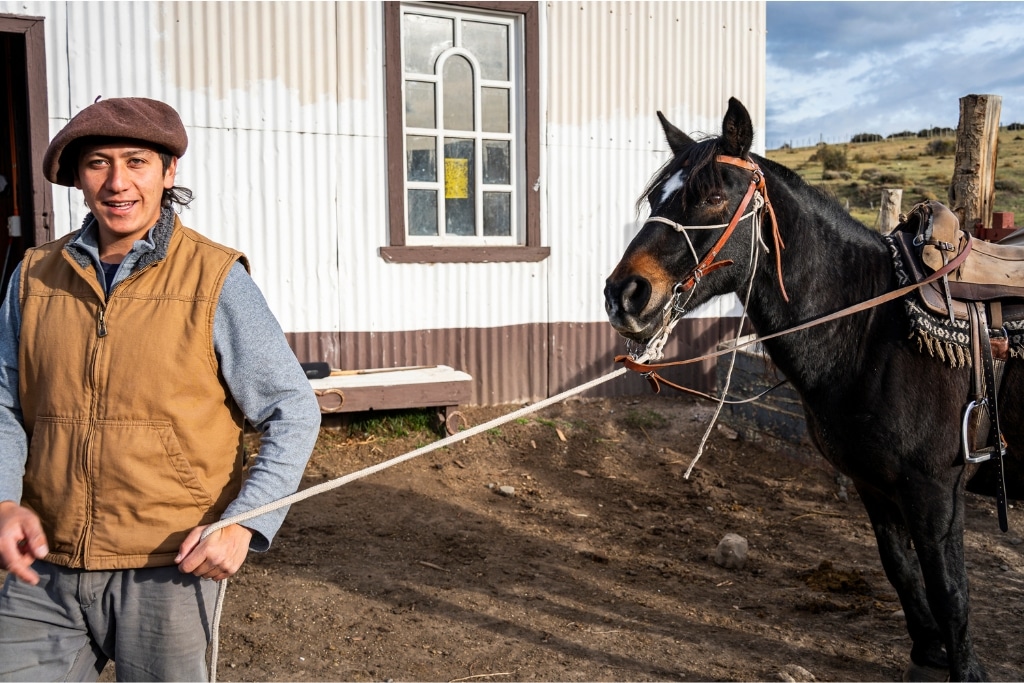
The Estancia offers a premium tourism offering that is for travelers interested in seeing wild pumas ethically. Photo: Adam Moore.
Their solution is about structure, or clearly defined zones for tourism, grazing, and conservation, paired with strict protocols on how to observe wildlife safely and ethically. But step beyond Cerro Guido’s boundaries, and things are not this well thought through. Across Torres del Paine, not every operator follows the same principles. Some are known to bait or feed pumas to guarantee close encounters, practices that are extremely unsafe for people and exceptionally damaging for the animals. The contrast proves there is a pressing need for stronger management across the region, and highlights why the work at Cerro Guido is so critical.
We live in an era where intense, high-risk wildlife encounters are packaged as entertainment, amplified by social media and sold as authentic adventure. However, the reality is far different. Feeding or pressuring wild animals for the sake of a photograph compromises their natural behavior and endangers both people and the species themselves. Cerro Guido is offering another way, where science-led tourism prioritizes animal welfare, community benefit, and long-term conservation. Without regulation and responsibility, tourism risks becoming just another threat to Patagonia’s predators, rather than the powerful tool for protection it must be.
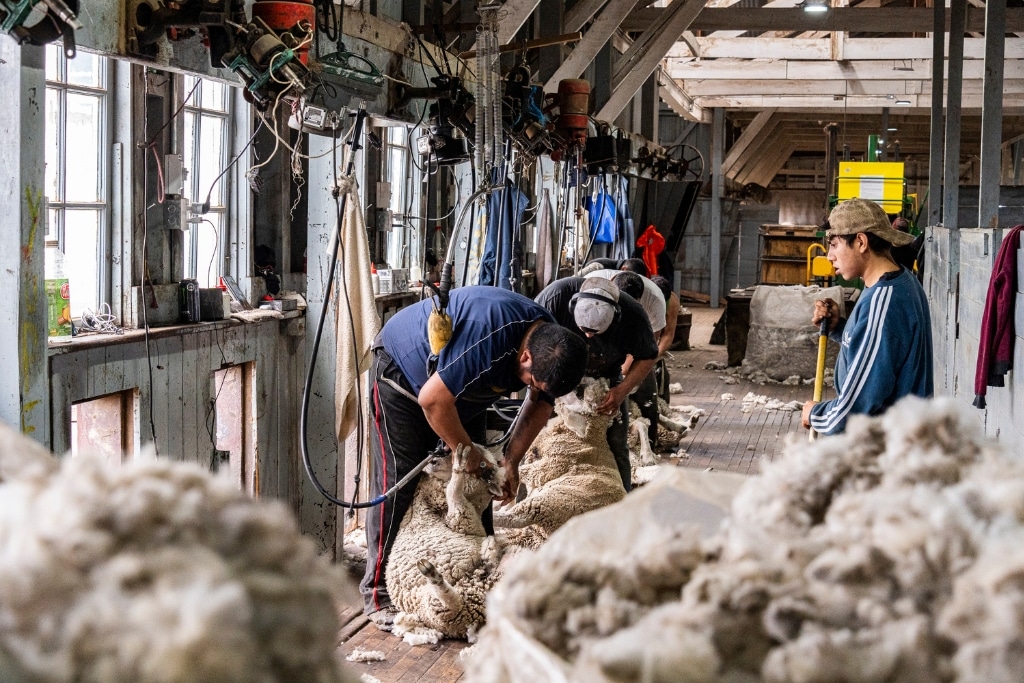
The Estancia is a working sheep farm, while focusing on conservation. Photo: Adam Moore.
Next Steps
This is all part of why, under Pía’s guidance, Solange is leading the next chapter of their research work that is taking things up a notch. A 60-camera trap grid is being instated that will offer the most detailed record of puma behavior ever gathered in Chile. Over two years, it will map how these cats move through grazing lands, conservation corridors, forests, and tourist zones, ultimately revealing how human presence shapes their lives.
“We have done the baseline work. Now it is time to go deeper,” Solange shared with visible pride. “Most puma research in the Americas has focused on the north. What we are doing here will change how we understand and protect this species in Patagonia.” Already, 66 individual pumas have been identified, which is the largest database of its kind in Chile. With no fixed breeding season, cubs can arrive any time of year, demanding constant vigilance from the team.
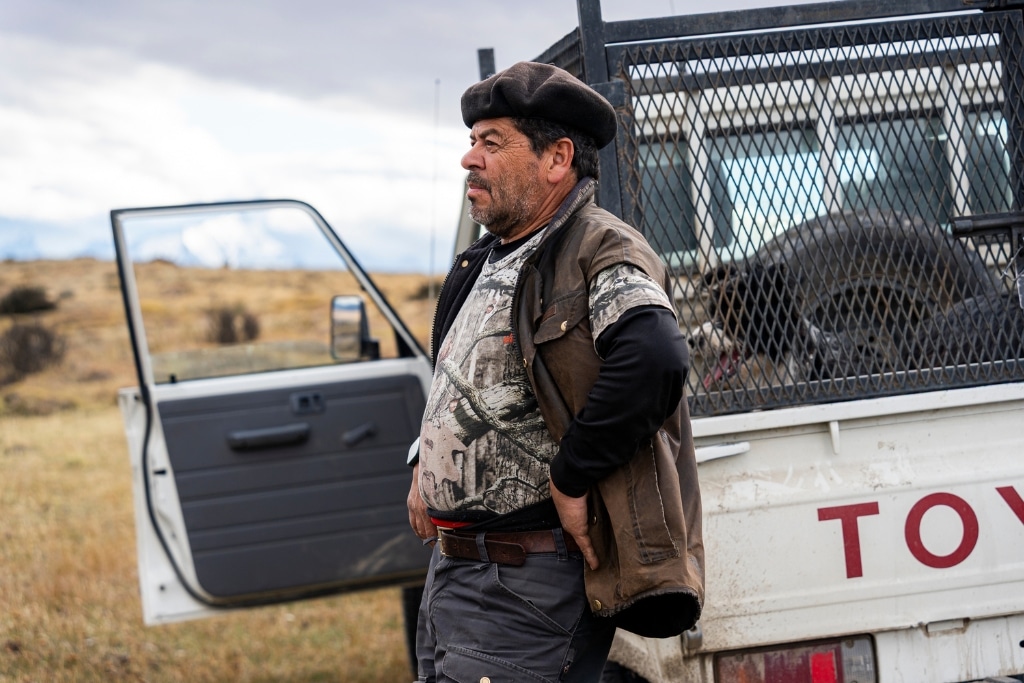
Mirko Utrovicich on the Estancia. Photo: Adam Moore.
For the people of Cerro Guido, the work involves transforming all this data into a new way of thinking. “This effort is long-term. Maybe 20 years, if not more. We are not in this line of work for fast wins. We are here to bring everyone to the table — ranchers, scientists, tour operators — to figure out how to live together,” said Solange.
Here on this remote edge of the world, balance is something you can feel is in reach. It is seen in the way gauchos who once hunted now track with patience, in the low rumble of dogs standing guard through the day, and in the power of a puma slipping back into the steppe where it belongs. This is the future of conservation in Patagonia. Not people against predators, but people learning to live alongside them in one of the wildest working landscapes on Earth.
Featured image: Adam Moore.
—
This story is part of an editorial collaboration between Earth.Org and Edges of Earth Expedition, a team dedicated to uncovering powerful stories from the frontlines of the climate crisis. Leading the charge is Andi Cross – an expeditionist, impact strategist, writer, and SSI divemaster – who has spent over two years traveling the world, immersing herself in the realities of environmental change.
This story is funded by readers like you
Our non-profit newsroom provides climate coverage free of charge and advertising. Your one-off or monthly donations play a crucial role in supporting our operations, expanding our reach, and maintaining our editorial independence.
About EO | Mission Statement | Impact & Reach | Write for us