
Anybody who has made 35 years of national insurance contributions is entitled to the full new state pension. The actual amount you get over your lifetime, however, varies dramatically depending on how long you live.
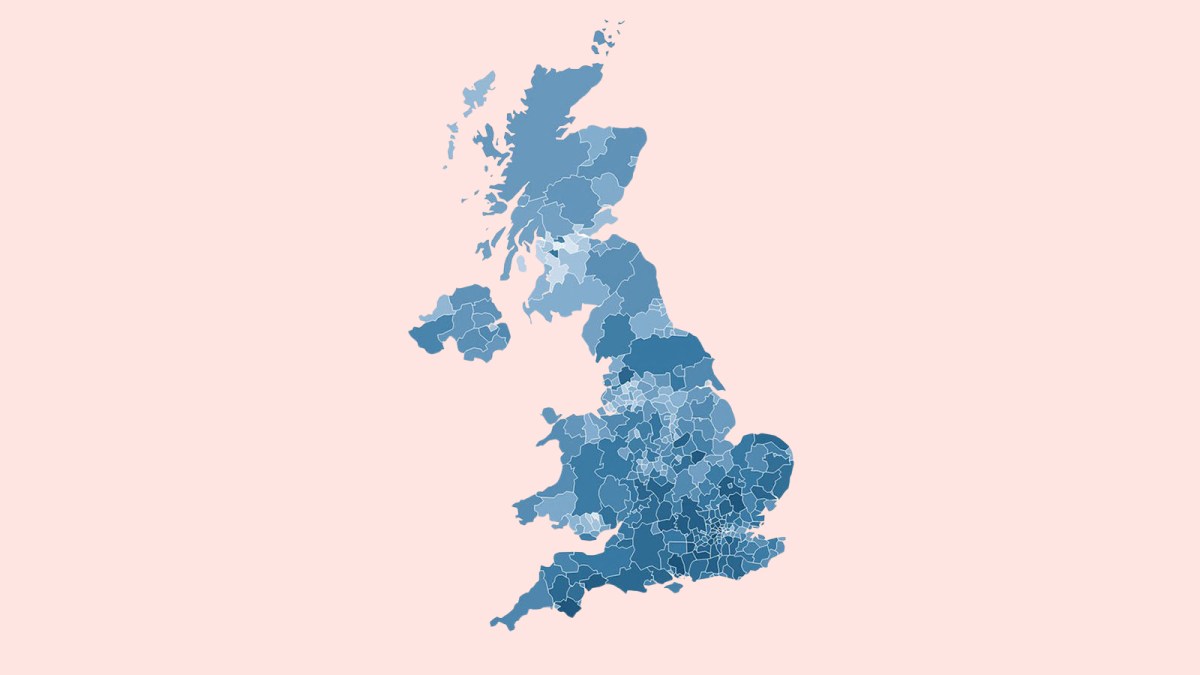
Times Money analysed life expectancy rates published last week by the Office for National Statistics (ONS) to discover where in the UK pensioners are likely to live the longest and so get the best value from their contributions.
Using the ONS data on how long the average 65-year-old can expect to live in each local authority, we found that a woman who died at the average age of 88.9 in Kensington, west London, would get £403,689 in state pension payments. This is £140,000 more than a woman living to the average age of 83.1 in Glasgow — the lowest life expectancy in the UK. We assumed that the state pension will go up 2.5 per cent a year.
• You don’t need £1 million to enjoy a rich retirement
For men, the area offering the best value was Hart in Hampshire where they can expect to live to 86.2 years, which would be worth £345,300 in state pension payments. This is £95,000 more than the £250,626 payments made to a man in Blackpool who lived until the average age of 81.4.
Women in the south can expect to get a considerably better return. All the local authorities where 65-year-old women are expected to live for at least another 23 years were in London and the southeast. After Kensington & Chelsea the areas with the longest female life expectancy were Westminster, Camden, Richmond-upon-Thames, Winchester in Hampshire, Barnet, Harrow, and South Hams in Devon.
A postcode lottery
Men in the south also fare better. After Hart, the areas that had the longest life expectancy for men were Richmond-upon-Thames, Barnet and Harrow in London, Wokingham in Berkshire, Westminster, Winchester in Hampshire and Uttlesford in Essex. Ribble Valley in Lancashire was the only place in the top ten not in the southeast.
The full new state pension is worth £230.25 a week (rising to £241.30 in April). The state pension age is 66 but will be 67 by 2028 and is set to hit 68 by 2026, if not earlier.
Workers tend to view their national insurance record as a direct contribution to their state pension. In reality, contributions also fund other benefits including maternity allowance, jobseeker’s allowance and universal credit. A portion goes to the NHS.
• The two-tier tax threat to your state pension
Times Money worked with the wealth manager Quilter to crunch the figures and assumed, for ease, that the pensioners would turn 66 and so start claiming their pension on the first day of the new financial year in April, from when it will be worth £12,547.60 a year.
We calculated payments on the basis of a 2.5 per cent annual increase from 2027, in line with the minimum requirement of the government’s triple lock, which guarantees that payments go up every year in line with wages, inflation or 2.5 per cent — whichever is highest.
Adam Cole from Quilter said: “Regional differences in life expectancy could have a significant impact on the total value of state pension you get. When you factor in that the state pension age is typically the same for everyone, the financial disparity becomes clear.”
Is there a solution?
The new full state pension is a fixed amount, as long as you have made the necessary national insurance contributions. If you buy an annuity — a product that pays out an income for a fixed period, or for life — the amount you get will depend on how much you spend, the terms you choose, where you live and your general health. Two pensioners spending the same amount could get totally different annuity rates.
Steve Webb, a former pensions minister, said: “Our national insurance system does pool risks, as those who sadly die early are in effect used to pay the pensions of those who live longer. If we turned everyone’s state pension rights into the same notional pot at retirement and then put them through an annuity-type formula, you would end up paying higher pensions to people in the north, who could expect to get them for a shorter period, and lower pensions to those in the south.”
The government began a review into the state pension age in July, which will consider whether the state pension age is appropriate, based on the latest life expectancy data.
The average man born in the UK between 2022 and 2024 can expect to live to be 79.2 according to the ONS, up from 75.9 for those born between 2001 and 2003. Life expectancy for the average woman has risen from 80.5 to 83.
It means an increase in state pension age could further disadvantage those whose lifespans are shorter.
• Tom McPhail: The state pension splurge is betraying the young
The review comes amid warnings the state pension, largely due to the triple lock, could soon become unaffordable. Pensioner spending, of which the state pension is the largest component, is estimated to rise from £161.2 billion in the 2025-26 financial year to £195.4 billion by 2030-31, according to the government’s fiscal watchdog the Office for Budget Responsibility.
The Institute for Fiscal Studies, a think tank, said the state pension age would need to rise to 74 by 2068 to sustain the triple lock.
Webb, now at the consultancy Lane Clark and Peacock, suggested that one way of narrowing the disparity could be to guarantee a minimum of five years of state pension payouts which, if someone died within that time, would go to their heirs.
He said: “This isn’t perfect, but it takes away some of the most extreme unfairness, such as someone dying the day after they retire.”