
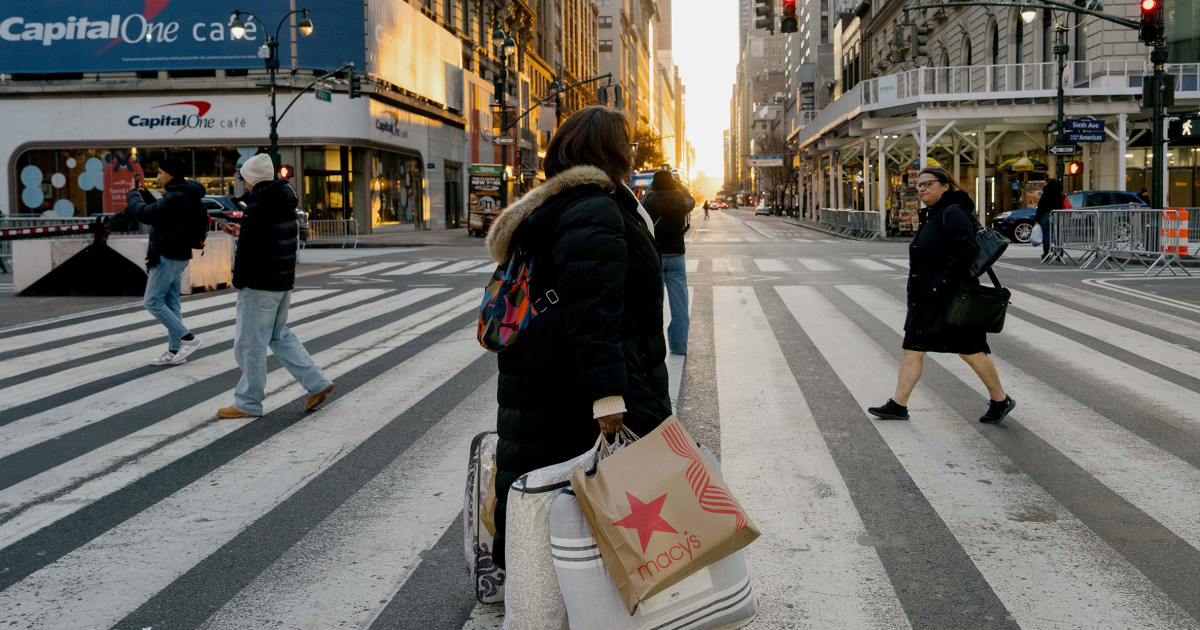
Consumers are about to find out just how much more they paid at checkout in November, one of the busiest shopping months of the year.
The Bureau of Labor Statistics is set to release inflation data for November at 8:30 a.m. ET. Known as the Consumer Price Index, or CPI, it will be the first batch of inflation data to be published since the government shutdown ended in mid-November.
Analysts and economists surveyed by Dow Jones expect inflation overall to have risen to 3.1% in November.
Americans consistently report that inflation and everyday costs are the most pressing economic issues they face: 44% of adults chose “inflation and the rising cost of living” as their top concern in an NBC Decision Desk poll released Sunday.
The data coming Thursday morning will finally put a number on the feelings many consumers describe about rising prices.
During the 43-day shutdown, BLS employees did not collect all the data they needed to determine how prices had changed over October. BLS later confirmed it would not release an October inflation report.
The few data points BLS was able to collect for October will be released alongside November’s data on Thursday. However, without the full picture of October for comparison, it will be difficult to grasp the extent of November’s price swings.
JPMorgan analysts wrote in a recent note that they expect the report to be “more uncertain” and “likely incomplete relative to prior releases” because of the gap in October data.
They project that “core CPI,” which excludes food and energy, will have risen 0.27% in October and November. The Federal Reserve Bank of Cleveland had a slightly higher estimate.
September’s inflation data, released during the shutdown, showed that inflation rose to 3% that month, a slight increase from August’s rate of 2.9%. Prices for housing, airline tickets, recreation, household furnishings and apparel all increased measurably.
Despite the October data gap, the Federal Reserve announced last week that it would cut borrowing costs by a quarter of a percentage point. Behind the decision were concerns about the labor market, which has shown signs of weakening in recent weeks.
On Tuesday, BLS released new data showing job cuts jumped in October, pushing the unemployment rate up to 4.6% last month.
Asked about persistent inflation at a news conference in Washington, Federal Reserve Chair Jerome Powell pointed to President Donald Trump’s trade policy.
“It’s really tariffs that’s causing the most of the inflation overshoot,” he said.