

A $200 million-plus statewide expansion of recycling is set to launch in 2026, paid for by grants to communities from fees charged on consumer packaging companies, after Colorado officials approved a detailed rollout plan.
In giving final approval to the packaging producers’ plan, the Colorado Department of Public Health and Environment rejected a challenge from the American Chemistry Council trade group that would have given plastics producers more credit for controversial “chemical recycling” of hard-to-reuse items.
The plan should bring tangible recycling expansion to all corners of Colorado at no cost to residents, environmental groups said, while bringing traceability for how much packaging in the state is truly recycled and builds to a more “circular” economy.
The plan as approved “underscores the importance of establishing a transparent, verifiable recycling system in Colorado,” said Suzanne Jones, executive director of the nonprofit recycler Eco-Cycle. The plan makes Colorado only the second state in the nation requiring consumer packaging producers to charge themselves a fee based on volume, and use the money to reimburse communities for free recycling programs, Jones said.
 While Colorado and local governments are hoping to make big strides in recycling rates, we’re starting from behind.
Rejecting efforts by the plastics industry or others to promote “greenwashing” of recycling accounting is also “a major milestone in bringing this transformative program to Colorado,” Jones said. “That is significant, and it will be a model for other states.”
The chemistry council still objects to the plan’s definitions of plastics recycling and calls it unlawful. The trade group’s media office did not respond to a request for comment Wednesday. Many environmental groups that audit recycling efforts nationally contend claims of new chemical processes to recycle plastics still result in large amounts of the packaging being burned as dirty fuel. The process is meant to break down nonbiodegradable plastics into usable chemical elements, but the resulting materials are rarely used in new consumer packaging. Trackers have shown much plastic waste going into incinerators.
While that controversy continues, the health department and the Circular Action Alliance trade group that will run the program called final approval of the plan a turning point for Colorado’s recycling efforts, which previously lagged national averages of waste diversion.
“This approval marks a significant milestone in the state’s transition to a 100% producer-funded, statewide system for recycling packaging and paper products,” the alliance said, noting the collaboration among government and interest groups to implement a 2022 state law. “The program is projected to more than double the state’s recycling rate for packaging and paper by 2035.”
The alliance is made up of package-intensive companies like Pepsi, Coors, Coca-Cola, McDonald’s, Amazon, Ikea, Colgate-Palmolive and more, and the group is working to set the internal fees on packaging based on volume and actual recyclability. Companies will have incentives to shave new packaging to lower their overall fees, as well as use more recycled products in new packaging.
The alliance’s budget for 2026, envisions fees raising $215 to $267 million in the first year for distribution to reimburse existing and new community recycling programs applying for the money. By 2030, the annual budget from fees is expected to rise to between $300 million and $400 million.
The plan will provide “cost relief for local governments and more consistent recycling access for residents,” the alliance said. Grants to cities with existing recycling programs should allow them to make those services free to residents, and expand into new services. Towns or counties without programs can now apply to the alliance for grants establishing free-to-the-consumer recycling services.
If a waste hauler applies for reimbursement to run a local program and receives it, they then must eliminate any costs for consumers.
The rules include statewide definitions of recyclable products, to provide more certainty both to consumers and to businesses who will try to capitalize on a more reliable stream of reusable materials for new products. Current recycling and composting programs are often plagued by unusable packaging contaminating otherwise valuable loads of recyclable commodities.
The state and supporting recycling groups say there will be no discernible price increases for consumers buying the packaged goods as a result of the internal fees, which will amount to fractions of a cent on each package, Jones said.
“Producer responsibility for packaging has been the law of the land in the European Union for almost 30 years, and it’s been in place in Canada for the better part of a decade, and those countries have seen no increase in consumer prices,” Jones said. “So it won’t be noticed by the consumer who’s buying the bottle of Coke. But it will add up for Coke, so it will incentivize Coke to make sure their packaging is as minimal as needed and as recyclable as possible.”
State health officials say the grants from the producer fees will not only allow smaller, more rural communities to launch or expand recycling, they will also provide funds for cities to finally add recycling for multi-unit apartments not part of curbside programs. The plan projects new recycling access for 700,000 households.
“Municipalities will no longer pay to provide recycling,” a state announcement said, with the Dec. 10 final decision. “Circular Action Alliance will reimburse all net recycling costs for local governments.”
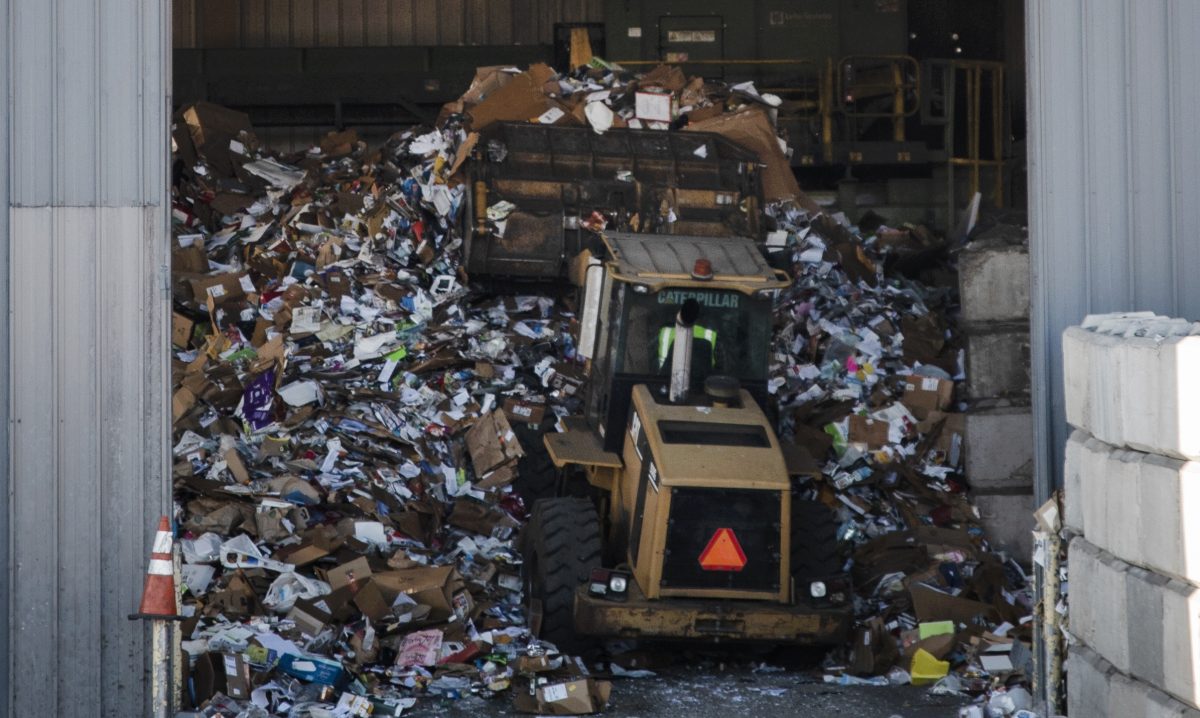 Recyclables are seen at the Eco-Cycle compost and recycling center on Dec. 21, 2021, in Boulder. (Olivia Sun, The Colorado Sun)
The state forecasts the plan will increase the recycling rates for paper and packaging covered by the fees to 58% by 2035, up from the current 25%. That would reduce the stream currently sent to landfills by 410,000 tons a year, the state said.
Colorado communities should now start public hearing sessions and policymaking for starting or improving local recycling programs, with an eye toward applying for the alliance’s grants, Jones said.
“People should be talking to their local elected officials about the recycling services they want to see and how they want them to be implemented, and help stand up this amazing program,” Jones said. “We’ve been lagging behind, and now we’ll be a national model.”
“It’s a dial, not a switch,” added the alliance’s Colorado director, Juri Freeman. It will take communities time to make new policies and fill out the applications for reimbursement for new programs. It will take haulers time to ramp up equipment and systems to fulfill the new local plans.
Still, in coming years the results should be palpable, said Freeman, who has worked with recycling associations and in consulting in Colorado for 25 years.
“This is by far the most exciting thing to happen to recycling in that time,” he said.
Type of Story: News
Based on facts, either observed and verified directly by the reporter, or reported and verified from knowledgeable sources.