
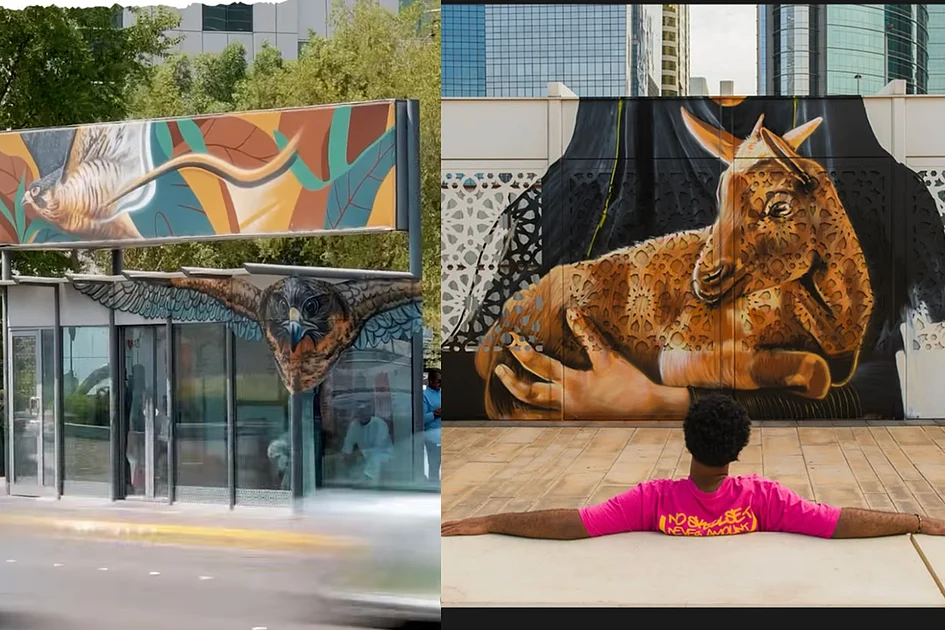
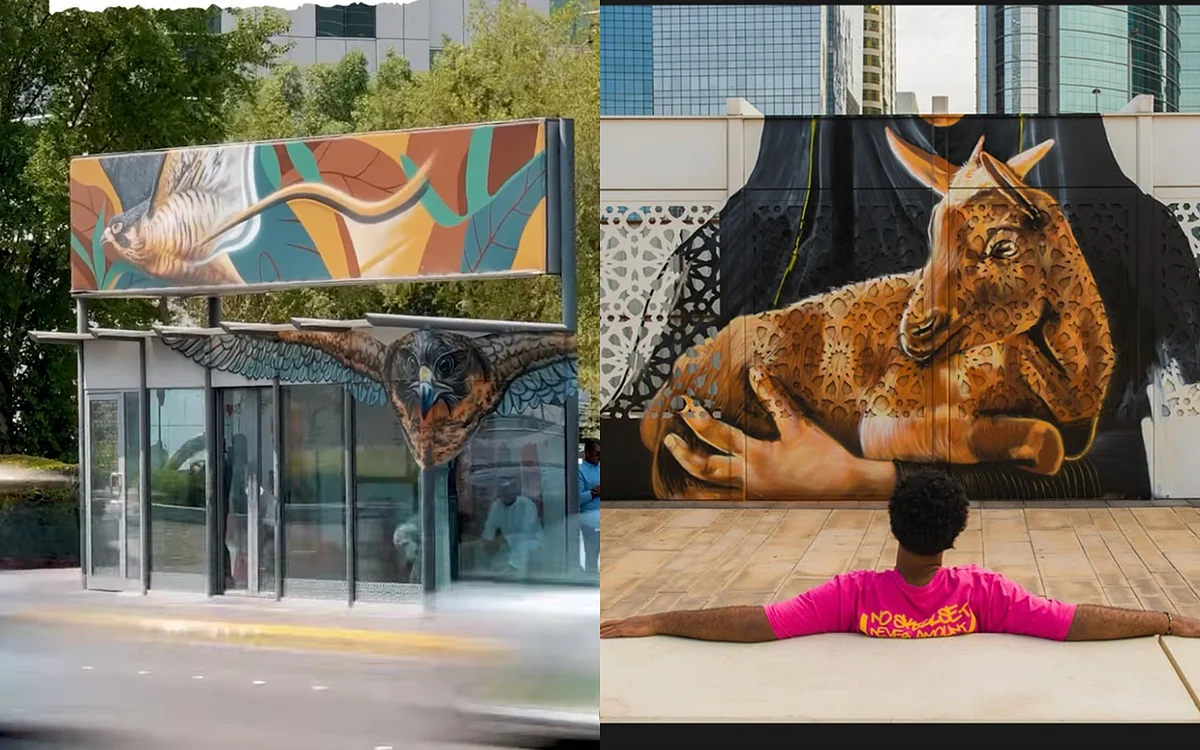
In Abu Dhabi, art has moved beyond the galleries or museum walls and now lives in streets, neighbourhoods, and public spaces. They have turned ordinary city corners into a visual spectacle, evoking curiosity and building connection. Through large-scale murals and subtle artistic touches, the city has become a canvas where culture, identity, and daily life intersect.
According to Noor Shamma, acting executive director of the Marketing and Communications Sector at the Department of Municipalities and Transport, the initiative is based on the belief that art can enhance quality of life and strengthen a sense of belonging.
“We launched Abu Dhabi Canvas to transform everyday spaces such as residential areas, shopping centres and bus shelters into engaging artistic experiences that encourage meaningful interaction and cultural appreciation,” she said. “Simply put, it reflects our belief in art as a unifying force.”
Stay up to date with the latest news. Follow KT on WhatsApp Channels.
Since its launch, more than 400 artworks have been displayed across 130 locations in Abu Dhabi City, Al Ain, and the Al Dhafra region. Over 100 Emirati and locally based artists have contributed, collectively spending about 17,000 hours on projects covering nearly 7,800 square metres.

Shamma noted that public response has been overwhelmingly: “The strong public engagement we have seen reassures us that people value seeing art integrated into their daily environments,” she added.
The selection of artists and artworks follows a curated process. Each piece must meet the initiative’s themes, including community, mobility, culture, sustainability, growth and urban planning, while respecting the UAE’s heritage and identity.
Create connections
“Artworks are not selected only for their visual impact,” Shamma explained. “They are chosen for their ability to enrich public spaces and create moments of connection, reflection and dialogue among residents and visitors.”
Ensuring the participation of Emirati and UAE-based artists remains vital to the initiative. “Having a strong pool of local artists is central to our vision, as their work reflects authentic stories connected to place and people,” she said.
While Abu Dhabi Canvas is led by the Department of Municipalities and Transport, its implementation is supported by collaboration with several entities, including Mubadala through the Mubadala Foundation in partnership with the Authority of Social Contribution – Ma’an, as well as the Abu Dhabi Department of Education and Knowledge and other affiliates.
“One of the most rewarding aspects of this initiative is seeing art come to life across crosswalks, utility boxes and bus shelters,” Shamma said. “This would not have been possible without the commitment of our partners and artists.”
Abu Dhabi’s extreme summer temperatures posed a challenge during the implementation of the project. “Managing weather conditions requires careful planning to ensure the safety of artists and workers,” Shamma noted. “That is why much of the painting and installation work is scheduled during cooler months, using durable materials that can withstand the climate.”
Voice of the city
For Emirati artist Ahmed Al Mehairi, participating in Abu Dhabi Canvas was an opportunity to use public space as a storytelling medium. “I see walls as the true voice of a city’s culture,” he said. “They reflect pride, joy and identity. Through my work, I wanted to introduce an element that sparks curiosity and invites people to question and explore the meaning behind it.”
Al Mehairi added that his inspiration stemmed from Abu Dhabi’s balance between heritage and progress. “No matter how far we advance, authenticity remains the foundation of everything,” he said.
Emirati visual artist Farah Falaknazi described the experience as deeply fulfilling. “When the work moved from concept to reality, it exceeded my expectations,” she said. “Working on site gives you a completely different feeling and allows you to add details that enhance the final piece.”
Falaknazi, whose works often draw inspiration from nature and sustainability, believes public art plays a vital role in shaping cities. “Public art gives a place its own character,” she said. “It strengthens emotional connections, improves wellbeing and supports local artists. Sometimes, a single artwork can communicate more powerfully than an entire media campaign.”
For Ghaith Al Roubi, his concept aimed to create a quiet dialogue between past and present, bringing heritage and modernity together without visual excess. “I wanted the viewer to see Abu Dhabi as I feel it, a city that balances authenticity, simplicity and progress at the same time.”
Emirati artist Sultan Al Hashemi described his participation in Abu Dhabi Canvas as both personal and meaningful. Having grown up in the capital, he saw the initiative as an opportunity to contribute to the city that shaped his identity.
“Abu Dhabi is my city. I was raised here, and I wanted to leave a mark that reflects my connection to it,” Al Hashemi said. “This project gave me the chance to highlight its heritage, architectural character and everyday beauty through art.”
Al Hashemi’s artistic journey began at an early age, progressing from pencil drawings to working with brushes, paints and spray techniques, before expanding into large-scale public artworks. He believes that artistic expression is driven more by vision than by tools. “Art depends on the person more than the materials,” he said. “What matters is how clearly the idea and emotion are communicated.”

Staff Writer

Arwa Almazrouei is an Arabic editor passionate about storytelling and journalism, and creating impactful content that highlights culture, society, and the inspirational.