
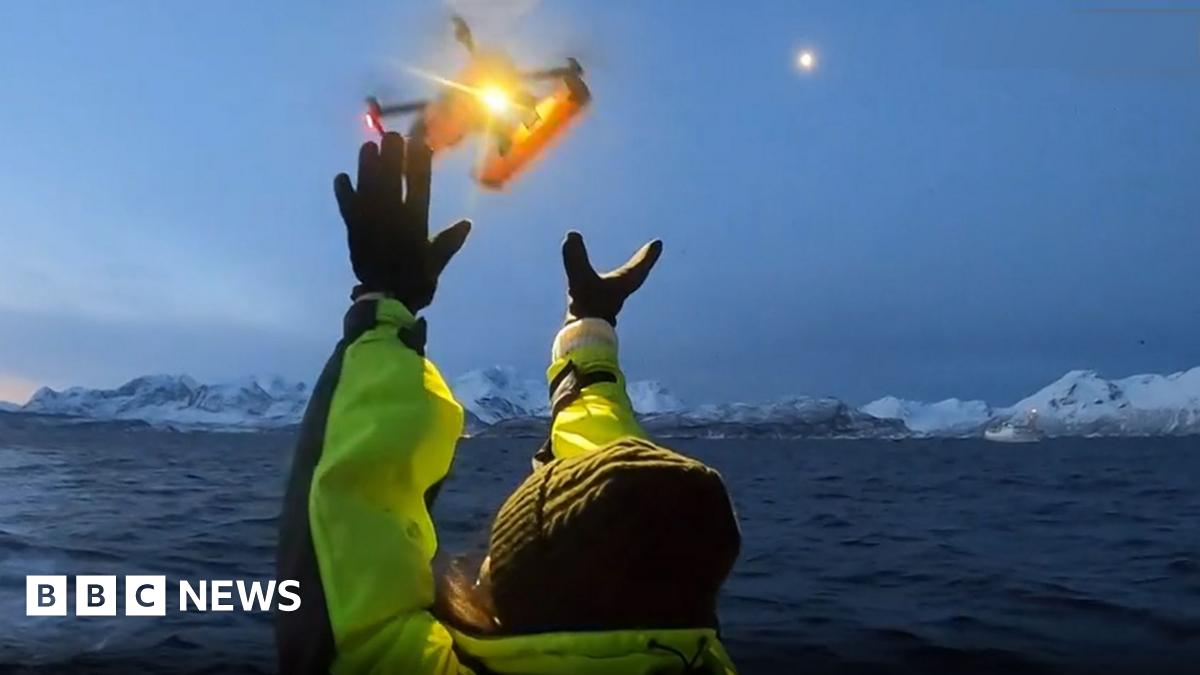
The researchers used drones carrying sterile petri dishes to capture droplets from the exhaled breath of humpback, fin and sperm whales, combined with skin biopsies taken from boats.
They confirmed for the first time that a potentially deadly whale virus, known as cetacean morbillivirus, is circulating above the Arctic Circle.
The disease is highly contagious and spreads easily among dolphins, whales, and porpoises causing severe disease and mass deaths.
It can jump between species and travel across oceans, posing a significant threat to marine mammals.
The researchers hope this breakthrough will help spot deadly threats to ocean life early, before they start to spread.