
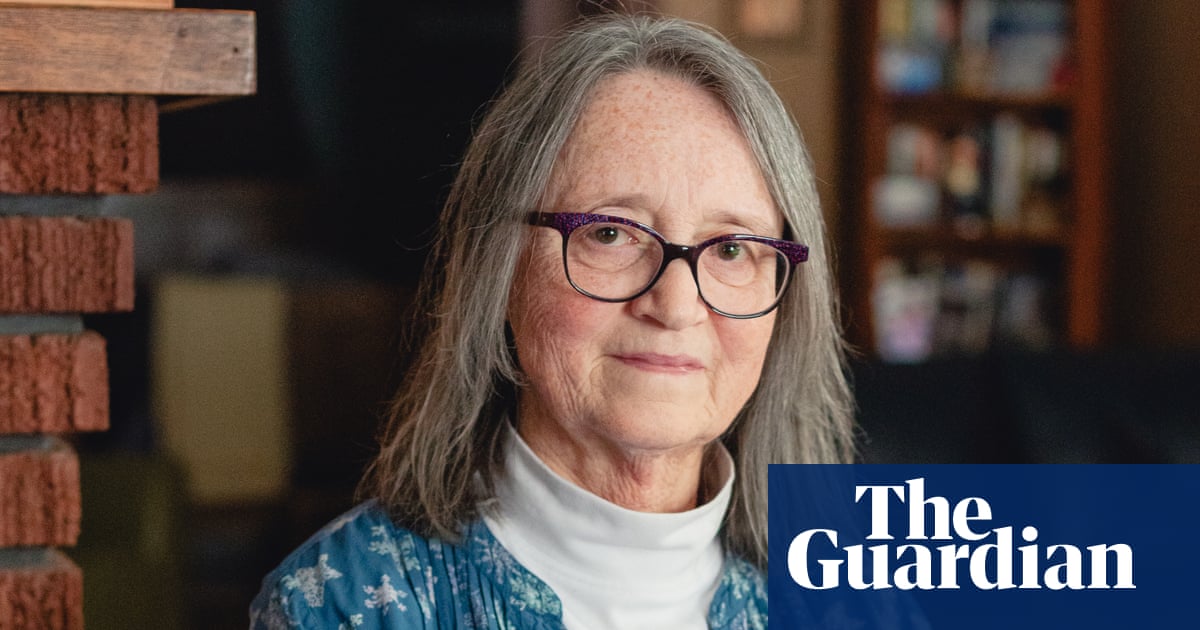
After Rita Buckley slipped on a sidewalk, hitting her jaw so hard she broke four teeth and sustained a traumatic brain injury, she struggled to tell red and green apart. Turning her head could make her lightheaded or, worse, spark a devastating headache. She fought to remember basic daily tasks. Driving became impossible, as did the idea of continuing to work as a nurse.
But at Buffalo Therapy Services, a clinic near her home in the suburb of East Aurora, New York, Buckley felt hopeful. For more than a year, she worked diligently with the clinic’s cognitive and occupational therapists. They took her into the darkened staff room and flashed red and green lasers so she could relearn the difference. They taught her to write everything down, to help with her lack of short-term memory. They made a list of what she wanted to accomplish, and told her: “We’re not going to work on what you can’t do any more. We’re going to work on what you can do.”
“They made me focus on my strengths,” Buckley said. “I believe my therapists helped me find a different way to bring meaning and purpose to my life.”
But in August, Buffalo Therapy Services’ parent group – Kaleida Health, the largest healthcare provider in western New York – revealed that it would effectively close two of the clinic’s locations, in part due to colossal healthcare funding cuts included in Donald Trump’s sweeping tax-and-spending legislation, the so-called One Big Beautiful Bill Act. Buffalo Therapy Services wasn’t the only casualty: Kaleida also announced plans to shutter a freestanding surgery center and a family planning center.
Many patients treated at these facilities now say they have nowhere else to go. The two clinics are technically still open, but not offering clinical services to patients.
Buckley, who is 74, last saw her cognitive and occupational therapists in November. She’s on a waiting list for cognitive therapy; she’s hoping that she’ll be able to see her occupational therapist at a new location in 2026. But nothing is certain. As she waits for care, Buckley worries that her hard-won skills will atrophy.
Rita Buckley, left, and her daughter Sarah Buckley review notes.
“I know it was going to come to me,” Buckley said of the One Big Beautiful Bill Act’s cuts. “I just didn’t realize it would be so fast.”
Signed into law this summer, Trump’s One Big Beautiful Bill Act – as the legislation known as HR 1 is more colloquially known – extends tax cuts from Trump’s first term while ripping at the US social safety net. Over the next three years, the US government will slash more than $1tn in federal healthcare funding by making it more difficult for some people to obtain insurance through the Affordable Care Act, Barack Obama’s signature piece of legislation, and shrinking the number of people eligible for Medicaid, the government insurance program for low-income people, among dozens of other changes.
Ultimately, the Congressional Budget Office estimates that about 10 million people will lose health insurance due to the One Big Beautiful Bill Act. That dramatic drop, experts say, will not only keep people who rely on Medicaid from accessing care, but also imperil providers’ ability to offer services and stay open. Entire communities could lose access to healthcare.
“Hospitals will likely be seeing fewer paying patients, they’ll likely be providing more uncompensated care to patients, and that means their finances could take a hit,” said Zachary Levinson, who studies hospitals and health systems’ financial practices at the health policy organization KFF. “Hospitals that treat a large number of Medicaid patients, safety-net hospitals, will take a relatively large hit from the law.”
The One Big Beautiful Bill Act has put more than 300 rural hospitals at risk of closure or cutting services, according to an analysis by the University of North Carolina at Chapel Hill. Harvard researchers identified another 90 or so urban hospitals whose ability to keep their doors open is also threatened by the bill. Healthcare groups across the US have already started to close locations, cut services and lay off staff.
The House speaker, Mike Johnson, has defended the One Big Beautiful Bill Act, whose tax cuts will predominantly benefit the wealthy, by arguing that its changes will prevent waste and fraud. The bill, he told NBC News, “strengthens Medicaid for the people who actually need it and deserve it”.
But Timothy Kennedy, a Democratic congressman and trained occupational therapist whose district includes Buffalo, called the facility closures in his hometown “a warning sign of a broader national pattern”.
“When hospitals close, when nursing homes close, when clinics close and people cannot get their healthcare in their communities, they go without it,” Kennedy said. “And they die.”
Kaleida Family Planning Center in Buffalo.
With one in four US hospitals characterized as in “financial distress”, much of the US healthcare system was stretched to its breaking point long before Trump took his Sharpie to the One Big Beautiful Bill. One 2022 report by the Healthcare Association of New York found that 64% of New York state hospitals were operating in the red, in part due to the rising cost of labor, drugs and equipment. Medicaid and Medicare – the government insurance program for people over 65 – also don’t pay hospitals enough money to adequately reimburse them for the cost of care.
Kaleida Health had already planned to launch a $200m “strategic plan” to address some of those challenges, a spokesperson said in an email. “What the federal bill did was accelerate the implementation of that plan,” the spokesperson said. “It’s added to the size of the challenge and the pace at which we need to implement and execute.”
Kaleida estimates that it will lose up to $125m a year due to the One Big Beautiful Bill Act.
When news of the Kaleida closures broke, patients and providers rallied. Sarah Buckley, Rita Buckley’s daughter, works both as a nurse at a Kaleida hospital and as the political and legislative director for Communication Workers of America Local 1168 (CWA 1168), which represents several Buffalo Therapy Services employees. To raise awareness of the closures, Sarah Buckley organized a small meeting at her union’s office with elected officials. She expected about 12 people to attend.
About 75 showed up.
Rita Buckley, left, and her daughter Sarah.
“It was standing room only,” Sarah Buckley recalled.
Gina Passantino took to regularly calling her state representative, her congressman – Kennedy – and officials at Kaleida. Passantino had spent a decade undergoing physical therapy at Buffalo Therapy Services, where her therapist helped ease overwhelming pain in her shoulder and neck. Without that therapy, Passantino said she’s started to fear going to sleep, because she can only sleep two, maybe three hours at a time before she wakes up in pain.
“It makes me depressed. I’m anxious because I don’t know how I’m going to be fixed,” Passantino said. “I take Advil. I take a muscle relaxer at night. I try to stretch. I try to stay as active as I can be. And sometimes I cry a lot, even though that doesn’t really get me anywhere.”
Her voice ragged with tears, Passantino continued: “My therapist – I will tell you, he has literally saved my life. That is not hyperbole.”
New York department of health regulations require that healthcare facilities obtain permission to close, which the department has not granted Kaleida. A Kaleida spokesperson said that the two Buffalo Therapy Services locations slated for closure are still staffed, to assist walk-in patients and callers, but they are no longer providing clinical care. The family planning center is still seeing patients and will remain open until the health department authorizes its closure, but the surgery center has not seen patients since October.
New York health regulations also require that, before closing, facilities identify other places where patients can obtain care. Passantino said that although Kaleida recommended that she seek services at two other local clinics, neither clinic offers the therapy she needs. According to Passantino, the clinics also told her that, even if they had offered the right therapy, their providers didn’t have the capacity to take on all of Buffalo Therapy Services’ former patients.
“There’s a huge void in this area now for care,” Passantino said.
A Kaleida spokesperson said that the organization sent letters to all patients who are being affected by the closures with information about obtaining care elsewhere. It is also willing to work with patients one-on-one.
Buffalo Therapy Services in Williamsville, New York.
“Kaleida Health has been very transparent with the Department of Health about the challenge of the Department of Health requirement to notify all impacted stakeholders prior to submitting our closure plans,” the spokesperson wrote in an email. “When we do that, naturally providers, staff and patients begin seeking other options for employment and care. As that occurs, it increases the challenge of continuing operations, staffing and care at the site[s].”
In a statement this month, CWA 1168 deemed the Buffalo Therapy Services facilities closed. Between the changes at Buffalo Therapy Services, the family planning center and the surgery center, at least 50 positions have been eliminated, according to the union.
As more and more of the One Big Beautiful Bill Act’s cuts take effect, Sarah Buckley worries that hospitals will become less safe for patients. In the days before Trump signed the One Big Beautiful Bill, New York hospital trade groups estimated that its passage would lead hospitals to cut 34,000 jobs.
“As a nurse, you always have to tell people: ‘You gotta have a loved one there. You can’t leave them there by themselves.’ You assume that that kind of care is available, but it’s not. Especially at times like these,” Sarah Buckley said. “Your loved one is gonna have to be in their bed soiled if they can’t look after themselves.”
She added: “Even small cuts have such a terrible impact on our patients, but a cut that is as big as this, in terms of the human suffering that will create – it’s actually immeasurable.”
Before Kaleida Health announced that it was closing Buffalo Therapy Services, Rita Buckley had kept the news of her traumatic brain injury to her inner circle. “It’s not that my community is mean or anything, but people look at you different when you have a head injury,” she said. “Also, when you have a handicap, our leaders make fun of you.”
But when Rita Buckley realized that her “angel helpers” could lose their jobs, she decided to speak out. “I cannot find this type of service anywhere,” Buckley wrote in an October Facebook post. “I have heard countless stories about others who are in the same boat as me. Please help save my life-saving services!”
Months later, as she sat at a cozy living room table on a Tuesday afternoon in December, Buckley didn’t regret her decision.
Rita Buckley: ‘I know it was going to come to me. I just didn’t realize it would be so fast.’
“I thought it was more important to keep this place open than it was for me to always feel so safe,” she said, as she and her daughter leaned into each other. In her planner, Buckley had written down a note to herself, so that she would remember it: “Being part of a community is most helpful when you’re dealing with an illness. It’s our pathway to a good future.”
That evening, Buckley’s cousin drove her to her physical therapy appointment, at a kind of elevated gym inside a strip mall. While speakers blasted Chappell Roan and Natasha Bedingfield songs, Buckley practiced pushing weights around and kicking a deflated volleyball. When she got lightheaded, she sat down in a quiet, darkened room and took deep breaths, trying to stave off a headache.
Buckley is also continuing to do the homework that her Buffalo Therapy Services therapists gave her, like answering questions about short reading prompts. She would love to go back to doing some of the work she did as a nurse, like leading bereavement groups and teaching about end-of-life care directives. But Buckley isn’t sure yet if she can do it.
She tries to be grateful, every day, for what she has.
“I don’t think we’ve hit bottom yet. And I think that when we do, it’ll be a really good opportunity to make good positive change,” Buckley said. “I don’t know if it’s going to be in my lifetime or not.”