
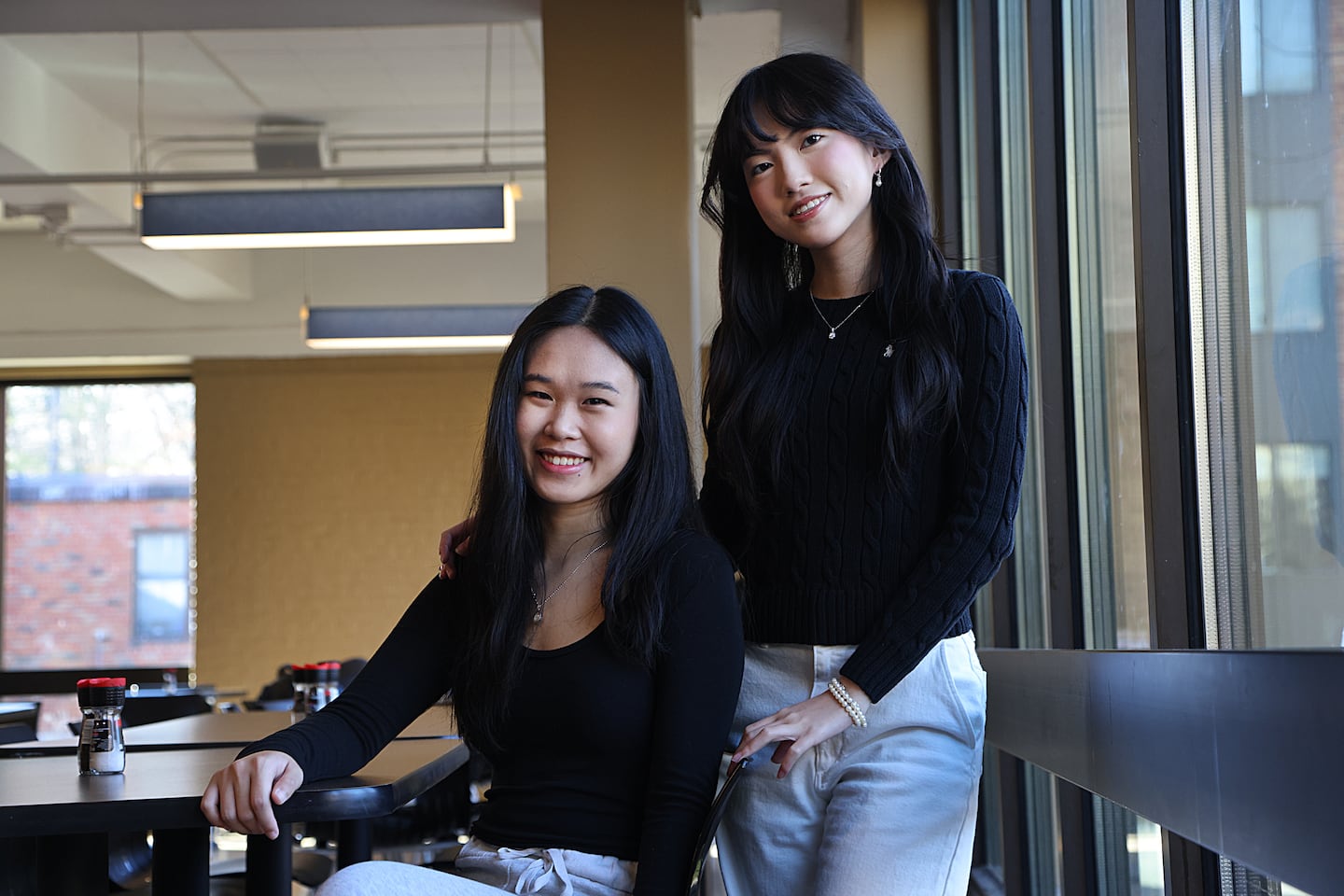
“Clubs or big group activities might not be for everyone,” said Tran, 21, an economics and business major. “But everyone needs to eat.”
The platform launched as a website last March, and it went live on Apple’s App Store at the end of November. It now boasts about 150 users across campus. Last semester, Strangers facilitated about 208 meal matches.
Get Starting Point
A guide through the most important stories of the morning, delivered Monday through Friday.
While only available on campus for users with a school email account, the creators are considering to expand the app to other schools nationally, with a short-term goal of 1,000 users by the end of spring 2026.
The creators said they have been in touch with students from local universities including Suffolk, Northeastern, and Boston University, as well as Stanford University and the University of California, Berkeley.
Unlike social media apps with algorithms set up to maximize engagement time, Strangers’ main goal is to get people off the app and into conversations with their future best friends in person. That’s a task the app’s creators say is becoming increasingly hard, especially for Gen Z.
Recent studies suggest a downward trend of young adult happiness. For decades, happiness was depicted in a U-shaped graph across age groups, with high levels of happiness reported in early and late adulthood. Now, that graph looks more like a gradual line, with young adults reporting lower levels of happiness than other age groups. Not only that, but loneliness is also becoming more prevalent among young adults, according to a 2024 Northwestern University study.
In 2023, the US surgeon general issued a report that coined the term “loneliness epidemic,” and students are also bearing its brunt. In a 2024 survey of 1,100 students, the youth mental health nonprofit Active Minds and virtual care provider TimelyCare found that nearly two-thirds of students, or about 67 percent, report feeling lonely.
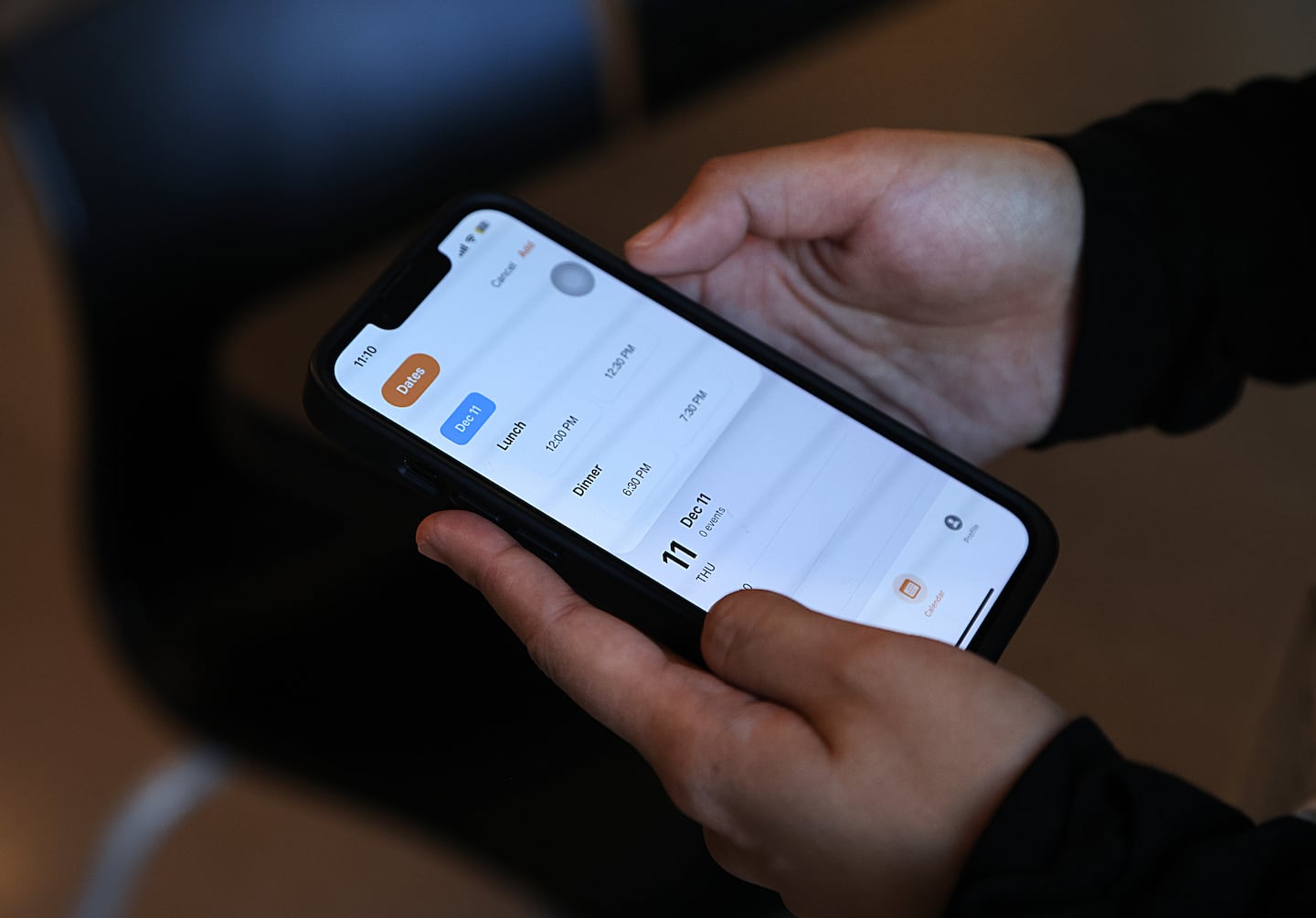 Unlike social media apps with algorithms set up to maximize engagement time, Strangers’ main goal is to get people off the app and into conversations with their future best friends in person.Suzanne Kreiter/Globe Staff
These studies hint that loneliness and declining happiness are connected to reduced participation in community groups or organized social activities. Now, much of what was once a social activity is available online. Going shopping, watching movies, or even seeking emotional support is only a literal click of a button away, even more so thanks to artificial intelligence that has taken the form of friends, doctors, and romantic partners.
“People associate more followers [on social media] as more friends. Kind of a quantity over quality perspective,” said Cameron Sherman, 22, a computer science and business major at Brandeis. “That’s the wrong way of thinking.”
Last year, Sherman grew distant from the friends he had made on campus. Craving new connections, but wary of initiating in-person conversations with people he didn’t know on campus, he jumped on the opportunity to participate in a pilot for Strangers.
His first meeting was with a student from the class above him. After a few semi-awkward sentence exchanges, a connection brewed over mutual friends and a similar sense of humor.
“It was a reminder that I’m not alone,” he said. “That people still wanted to connect with me.”
Sherman has since participated in five meals through Strangers, including a few organized group meals, which he said were mostly a success.
Brandeis freshman Linh Nguyen, 18, said Strangers has helped her branch out of the freshman bubble. The app introduced her to seniors and students from other majors who taught her lay of the land around campus.
In one Strangers meal, Nguyen met a student who traveled to her hometown of Hanoi in Vietnam, an instant connection, she said.
“Now we see meet in cultural organizations, follow each other on Instagram, and support each other on campus,” said Nguyen, who last month joined Strangers as a volunteer to introduce new students to the app.
Still, building an app from scratch doesn’t come without its challenges. Jie, 22, one of the app’s co-founders and a computer science major, developed a matching algorithm that had to meet the standard of an app on the App Store, including safety features like the ability to block users or the recommendation to meet at a public location.
Expanding the app to more campuses means additional coding to increase capacity, or in other words, Jie’s winter break.
“When we pitch [the app] to adults, they don’t really get it at first,” said Jie. “But students are already reaching out to us to bring it to their school.”
Yogev Toby can be reached at yogev.toby@globe.com.