
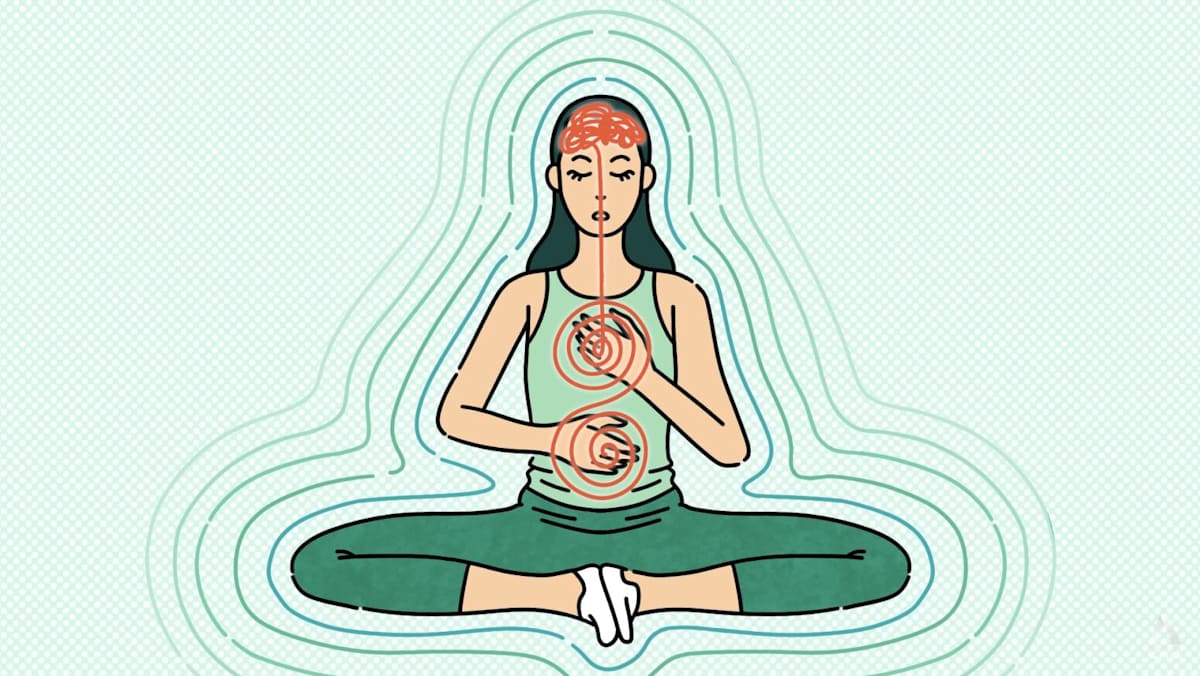
Somatic therapy must also be administered safely by trained professionals.
“Relational somatic therapy is safe when facilitated by trained, certified and trauma-informed therapists who can recognise when the work becomes too much for the person and when other interventions may be more supportive at that juncture,” Ms Ling advised.
“The greatest risk arises when the process moves faster than the body’s capacity, overwhelming a system that cannot yet stay connected.
“With the right timing, pacing, and support, many people eventually develop the capacity to benefit from somatic work.”
When they do, a typical session may involve somatic tracking where clients are guided to notice and interpret signals from their body, including subtle inner shifts and sensations that reflect the state of their nervous system.
Clients are also taught small body-based movements, which can include extended exhales or feet-to-floor grounding – where one gently presses their feet into the ground, to ground them in the present moment – and these are gradually titrated or introduced over time.
Ms Andersen said: “The therapist moves slowly, checks in frequently, and keeps the client within a safe window of tolerance.
“The focus is on bodily awareness rather than verbal storytelling, allowing the body to release stuck energy and restore balance.”
Dr Chew said that if the sessions are carried out properly, people feel calmer, less reactive, more present and more in control of their emotions.
They also recover from stress more quickly, sleep better and feel more connected to themselves and others.
“You know somatic therapy is working when your body starts responding to life from a place of safety rather than survival,” she added.
HOW IT COMPLEMENTS OTHER THERAPIES
Somatic therapy, while beneficial, is not superior to talk therapy or other forms of treatment. Rather, it is a complementary form of therapy that integrates well with other methods, the experts said.
The different approaches simply offer different “entry points” for individuals, Ms Ling explained.
For example, talk therapy works for those who make sense of their experiences through conversation, exploration and meaning-making.
“Different approaches serve different people at different junctures in life,” Ms Ling said. “Sometimes, we need language, reflection, insight, understanding and meaning-making. Sometimes, we need grounding, presence and the steadiness of the body.
“Both pathways hold equal importance and each complements the other. Relational somatic therapy simply bridges the gap between insight and lived experience, helping the nervous system catch up with what the mind already knows.”
Agreeing, Dr Chew said that to establish when to focus on the body or on emotions or thoughts when working with clients, she follows their nervous system.
“If someone is overwhelmed, we start with the body. (Likewise) if someone is shut down, we begin with sensory grounding.
“Once they’re more regulated, we bring in emotions and meaning-making.”