
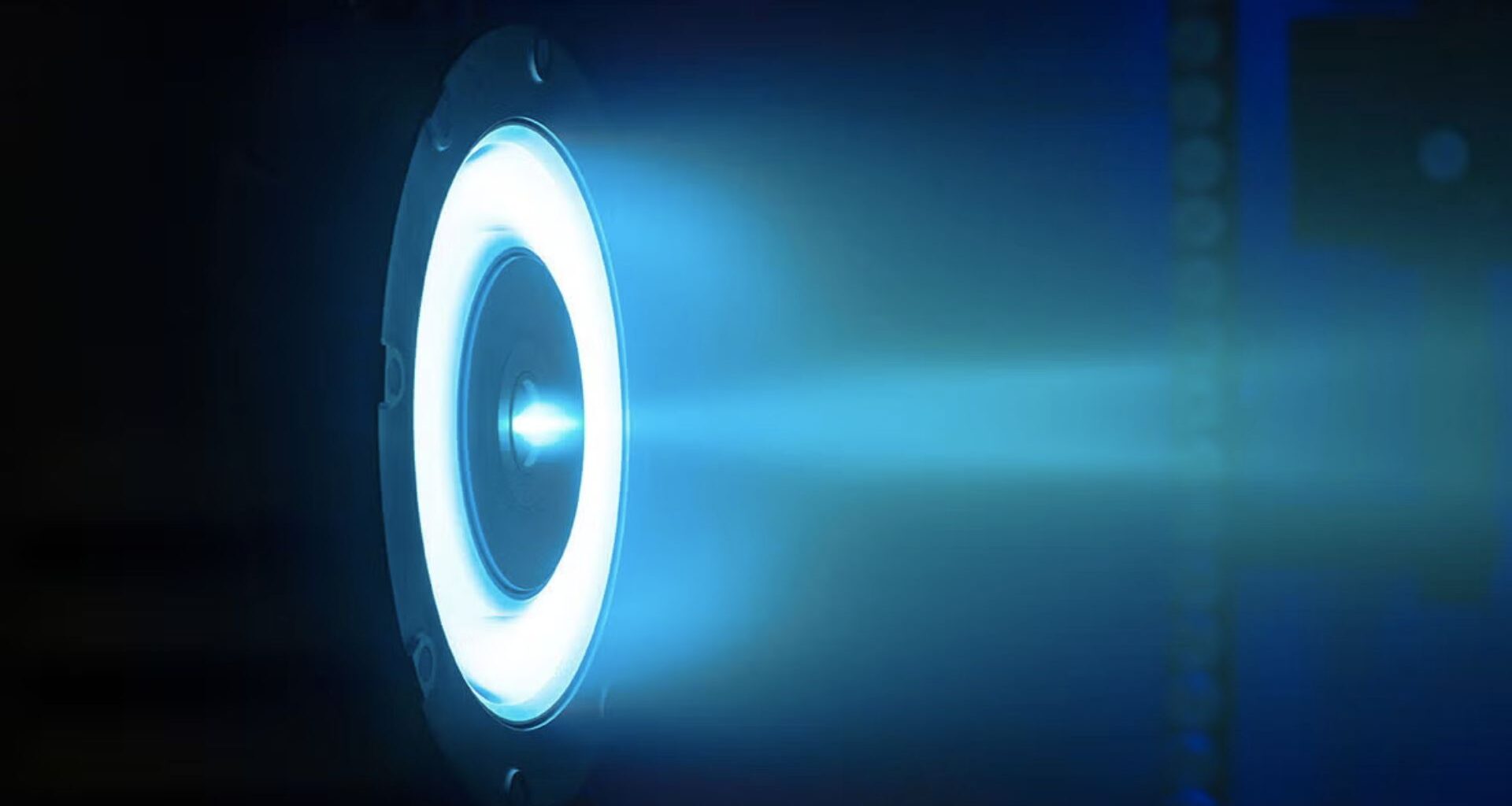
A Melbourne-based company has completed testing and delivery of three 12-kilowatt Advanced Electric Propulsion System (AEPS) thrusters. These thrusters, developed by L3Harris Technologies, will be used for NASA’s lunar-orbiting Gateway station and become the most powerful electric propulsion system to fly in space.
The delivered thrusters will enable the Gateway station to reach and maintain its orbit around the Moon, supporting Artemis IV astronaut missions to and from the lunar surface.
Electric thrusters offer significantly higher fuel efficiency
“Electric thrusters offer significantly higher fuel efficiency over conventional chemical propulsion systems, making them ideal for Gateway and other long-duration missions,” said Kristin Houston, President, Space Propulsion and Power Systems, Aerojet Rocketdyne, L3Harris.
“NASA will be able to pair the AEPS thrusters with nuclear power sources to help enable new classes of exploration missions, such as a robotic grand tour of Jupiter and its moons or transporting large cargo vessels to Mars.”
The AEPS thrusters underwent extensive hot-fire testing at NASA’s Glenn Research Center in Cleveland, Ohio, this year following vibration testing at L3Harris’ facility in Redmond. These tests validated the thrusters’ performance and readiness for integration into the PPE, according to a press release.
Most powerful electric propulsion ever flown
The AEPS will be the most powerful electric propulsion ever flown, capable of accelerating spacecraft to extremely high speeds over time using a fraction of the propellant required by conventional chemical propulsion systems. The system consists of three 12-kilowatt Hall thrusters that are more than twice as powerful as current in-space electric ones. The L3Harris thrusters will help deliver Gateway to its unique lunar orbit and maintain its position, according to details.
Gateway is a habitable space station designed to orbit the Moon and serve as a staging point for astronaut and cargo missions to and from the lunar surface. NASA’s Glenn Research Center in Cleveland leads the Solar Electric Propulsion project for the agency, developing next-generation technology and capabilities to enable Artemis missions and prepare for human missions to Mars.
Gateway is central to the NASA-led Artemis missions to return to the Moon for scientific discovery and chart a path for the first human missions to Mars and beyond. The small space station will be a multi-purpose outpost supporting lunar surface missions, science in lunar orbit, and human exploration further into the cosmos. NASA is working with commercial and international partners to build humanity’s Gateway.
International teams of astronauts will explore the scientific mysteries of deep space with Gateway, humanity’s first space station around the Moon.
The Gateway will provide core functions to keep astronauts healthy and thriving, including pressurized space for crew to prepare for missions to the lunar surface, conduct science, prepare meals, exercise, and rest. Two habitable elements will provide this pressurized space where astronauts can live and work.