
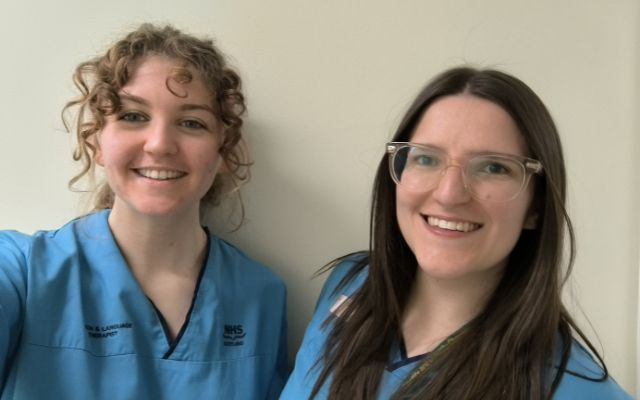
Two NHS Tayside specialists have put themselves on a pureed diet to gain an insight into the difficulties faced by patients with head and neck cancers.
Specialist Speech and Language Therapist, Sinéad McCarney, and Specialist Oncology Dietitian, Rachel Stewart, embarked on the week-long trial to mark Mouth Cancer Awareness Month.
The two team members at Ninewells Hospital ate only a blended food diet as part of a study into eating, drinking and swallowing challenges for people with cancers that affect their ability to eat – and gathered patients’ reflections on the impact the change in diet has had on them.
Alongside the blended food diet, Sinéad and Rachel taste-tested drink supplements, ate the same hospital lunch as patients, and held a ‘puree potluck lunch’, where staff brought in a buffet of only blended food items.
As well as raising awareness and gaining new insights, the two colleagues are developing resources for multidisciplinary cancer teams, and looking at how dietitians, speech and language therapists and medical teams can work best together to support patients to deal with issues surrounding having to change how they eat.
Rachel said:
“Many of our patients need to have modified diets before, during or after cancer treatment like radiotherapy or surgery, and we wanted to experience what we recommend to them.
“Even as health professionals not experiencing the consequences of cancers or treatments, we have found this to be challenging, which gives us a greater appreciation for patients going through this process.”
Sinead added:
“We hadn’t fully appreciated the preparation needed for meal planning, shopping and cooking, the equipment needed like blenders, food processors and sieves, and the increased time that was needed.
“The social aspect is also a big thing – there are barriers to eating out, to sharing meals and snacks, and favourite meals associated with occasions and celebrations can be hard to replicate.”
Hazel Robinson, an executive assistant with NHS Tayside, was diagnosed with oral cancer in February after an emergency dental appointment, and was referred to the maxillofacial team at Ninewells.
She was operated on in April. However, a series of complications meant many further surgeries were necessary and Hazel remained in hospital until July.
Like many patients in similar circumstances, Hazel says she was forced to change how she ate:
“From my first operation I was unable to eat orally and was on a tube throughout my stay. Rachel and Sinead were always there with support, encouragement and, when I was able to start eating orally, different suggestions as to what I could try.
“The modified diet was extremely difficult as the options feel more limited.
“My family and friends brought in some different foods, with the help of Rachel and Sinead as to what would be appropriate and best nutritionally. It was exceptionally important to allow me to try different foods and textures.”
ADVERTISEMENT

Head and neck cancer patients may need to modify their diets due to surgeries in the mouth, throat or jaw leading to difficulty chewing or swallowing, taste changes and limited tongue movement. Sometimes the surgery involves removal of teeth.
Side effects of chemotherapy or radiotherapy can include mouth ulcers, taste changes, poor appetite, nausea and swallowing difficulties. Meanwhile tumours can directly cause obstructions or difficulty eating.
Oncology teams say they may also need to modify people’s diets to ensure adequate nutrition to maintain their health during cancer treatments and surgeries.
Hazel Robinson added:
“The whole team across various specialities have been amazing and epitomise why we can still say our NHS is the best in the world. It’s fantastic that Sinead and Rachel have tried the diet for themselves to get a real feel for what patients face – it’s extremely commendable.”
Read more: Innovation and Scotland’s first digital hospital; Prehabilitation pays off for lung cancer patients; High-fibre trial targets cancer treatment side effects
Sign up to receive our bulletin for key health & social care updates straight to your inbox.