
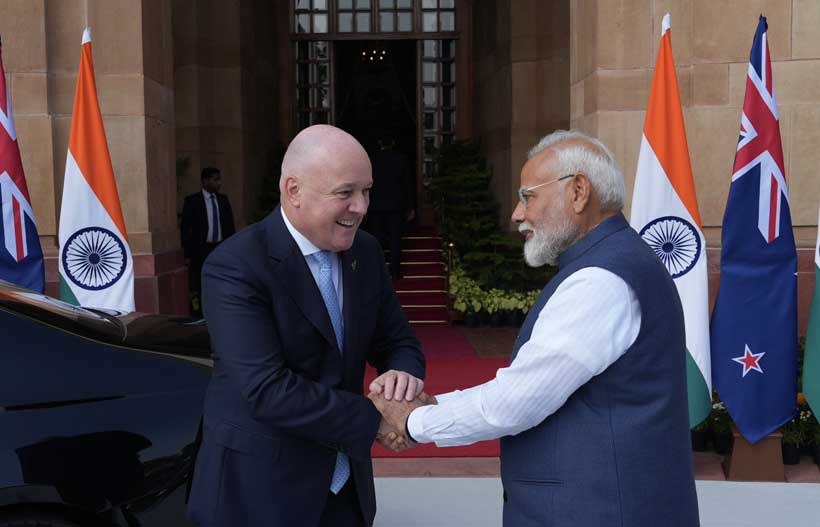
New Zealand and India have concluded a free trade agreement, both governments said on Monday, aiming to boost access for New Zealand exporters to the world’s most populous country and one of the fastest-growing major economies. The deal will eliminate or reduce tariffs on 95% of New Zealand exports to India, with more than half of products becoming duty free immediately, according to the New Zealand government. The agreement is expected to be signed in the first half of 2026.
Economic Impact
India’s economy is forecast to be worth NZ$12 trillion ($7 trillion) by 2030, making it a major growth opportunity for New Zealand exporters targeting India’s expanding middle class.
New Zealand Prime Minister Christopher Luxon said the agreement would create jobs and drive growth, calling the gains “wide-ranging and significant”.
Trade Minister Todd McClay said the pact would place New Zealand on an equal or better footing with other countries trading with India and deliver “thousands of jobs and billions in additional exports”.
Visas and Labour Mobility
Under the deal, New Zealand will offer:
1,667 temporary work visas annually for skilled workers in areas of shortage, including healthcare, education, technology and engineering
1,000 additional working holiday visas per year, matching Australia’s free trade agreement with India
Political Reaction
The agreement fulfils a 2022 election pledge by New Zealand’s governing National Party to finalise a trade pact with India during its first term.
However, parliamentary approval is not guaranteed. Coalition partner New Zealand First, which holds eight seats in parliament, said it would vote against the deal.
Party leader Winston Peters said the agreement “gives too much away, especially on immigration,” and does not secure sufficient benefits for New Zealanders, particularly in the dairy sector.
India’s Position
The Indian government confirmed the agreement but did not provide further details. India’s trade minister was scheduled to brief reporters later on Monday.
With information from Reuters.