
AI model: Short for artificial-intelligence model, it’s a particularly smart computer algorithm. Simple types of these models choose from a set of pre-selected info to answer a user’s requests (perhaps to respond to a chat). More complex models may train on mountains of data to essentially figure out their own answers to potentially novel questions.
antibiotic: A germ-killing substance, usually prescribed as a medicine (or sometimes as a feed additive to promote the growth of livestock). It does not work against viruses.
artificial intelligence: A type of knowledge-based decision-making exhibited by machines or computers. The term also refers to the field of study in which scientists try to create machines or computer software capable of intelligent behavior.
bacteria: (adj. bacterial) Single-celled organisms. These dwell nearly everywhere on Earth, from the bottom of the sea to inside other living organisms (such as plants and animals). Bacteria are one of the three domains of life on Earth.
bacteriophage: Also known simply as a phage. This is a type of virus that infects — and ultimately kills — bacteria, but not before reproducing and spreading.
computational: Adjective referring to some process that relies on a computer’s analyses.
develop: To emerge or to make come into being, either naturally or through human intervention, such as by manufacturing. (in biology) To grow as an organism from conception through adulthood, often undergoing changes in chemistry, size, mental maturity or sometimes even shape.
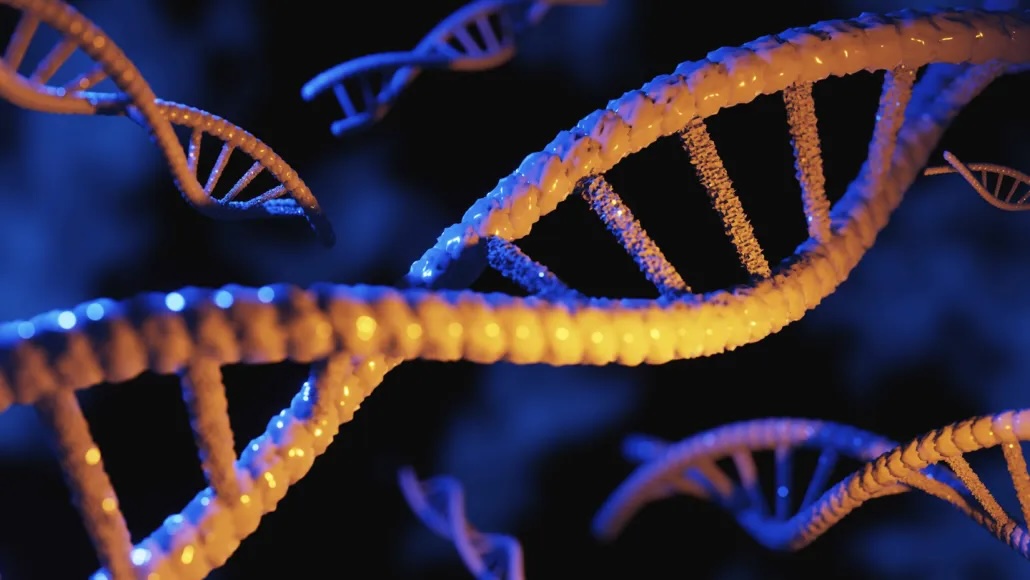
DNA: (short for deoxyribonucleic acid) A long, double-stranded and spiral-shaped molecule inside most living cells that carries genetic instructions. It is built on a backbone of phosphorus, oxygen, and carbon atoms. In all living things, from plants and animals to microbes, these instructions tell cells which molecules to make.
E. coli: (short for Escherichia coli) A common bacterium that researchers often harness to study genetics. Some naturally occurring strains of this microbe cause disease, but many others do not.
evolve: (adj. evolving) To change gradually over generations, or a long period of time. In living organisms, such an evolution usually involves random changes to genes that will then be passed along to an individual’s offspring. These can lead to new traits, such as altered coloration, new susceptibility to disease or protection from it, or different shaped features (such as legs, antennae, toes or internal organs). Nonliving things may also be described as evolving if they change over time. For instance, the miniaturization of computers is sometimes described as these devices evolving to smaller, more complex devices.
gene: (adj. genetic) A segment of DNA that codes, or holds instructions, for a cell’s production of a protein. Offspring inherit genes from their parents. Genes influence how an organism looks and behaves.
genome: The complete set of genes or genetic material in a cell or an organism. The study of this genetic inheritance housed within cells is known as genomics.
infect: To spread a disease from one organism to another. This usually involves introducing some sort of disease-causing germ to an individual.
infection: A disease that can spread from one organism to another. It’s usually caused by some type of microbe.
microbiologist: A scientist who studies microorganisms, the infections they might cause or ways that they can interact with their environment.
organism: Any living thing, from elephants and plants to bacteria and other types of single-celled life.
phage: Short for bacteriophage. This is a type of virus that infects — and ultimately kills — bacteria, but not before reproducing and spreading. Phage is both singular and plural, like fish. (For instance, if you had many tuna, the plural would be fish. But if you had many tuna, mackerel, cod and halibut, you’d say there were many fishes. The same applies to phage.)
plastic: Any of a series of materials that are easily deformable; or synthetic materials that have been made from polymers (long strings of some building-block molecule) that tend to be lightweight, inexpensive and resistant to degradation. (adj.) A material that is able to adapt by changing shape or possibly even changing its function.
protein: A compound made from one or more long chains of amino acids. Proteins are an essential part of all living organisms. They form the basis of living cells, muscle and tissues; they also do the work inside of cells. Antibodies, hemoglobin and enzymes are all examples of proteins. Medicines frequently work by latching onto proteins.
replicate: (in biology) To copy something. When viruses make new copies of themselves — essentially reproducing — this process is called replication.
strain: (in biology) Organisms that belong to the same species and share some small but definable characteristics. For example, biologists breed certain strains of mice that may have a particular susceptibility to disease. Species of bacteria or viruses may develop strains when some members of the species gain mutations. Sometimes, specific strains are immune to drugs that would usually kill that species of microbe.
therapy: (adj. therapeutic) Treatment intended to relieve or heal a disorder.
virus: Tiny infectious particles consisting of genetic material (RNA or DNA) surrounded by protein. Viruses can reproduce only by injecting their genetic material into the cells of living creatures. Although scientists frequently refer to viruses as alive or dead, in fact many scientists agree that viruses are not truly alive. They don’t eat as animals do or make their own food as plants do. A virus must hijack the cellular machinery of a living cell to survive.