


In order to address the ongoing economic crisis in Pakistan, the country is preparing to sell its national airline.
The Shehbaz government is preparing to sell a 75% stake in Pakistan International Airlines (PIA) the Dawn reported on Monday.
Who all submitted the report?
According to the same report, today is be the last day to submit bids.
Just 2 days before the deadline, Fauji Fertilizer Private Limited (FFPL), a fertilizer company associated with the army, withdrew its bid, leaving only 3 contenders in the race.
Why did the government have to sell the airline?
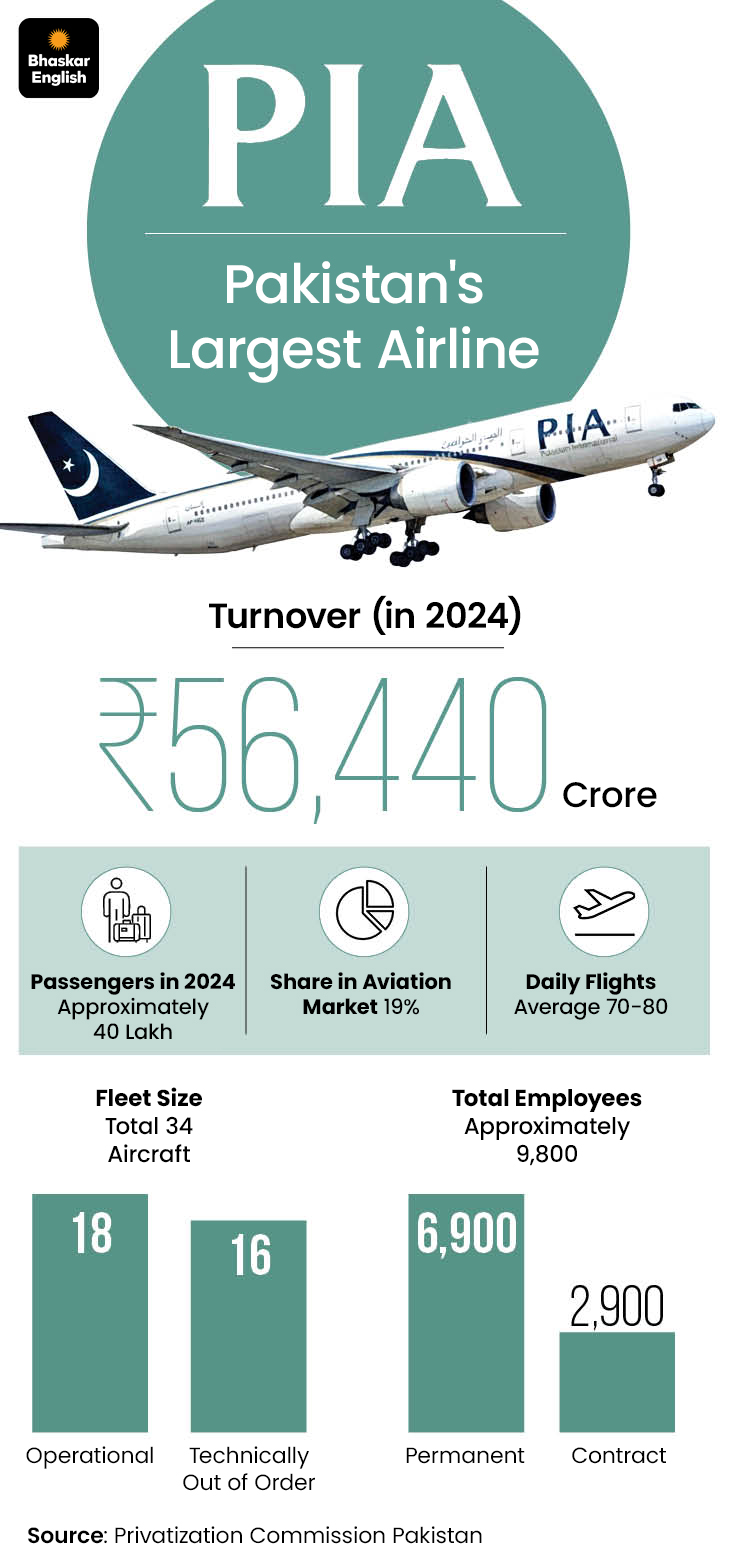
IMF Policy: The biggest reason behind selling the airline is the IMF’s policy. Pakistan needs a $7 billion loan from the IMF. In return, the IMF wants the privatization of loss-making government companies in Pakistan. According to this condition, Pakistan is privatizing 24 of its government companies. PIA is also a part of this.Financial Crisis: Another reason for selling PIA is to revive the airline, as the government is unable to invest in PIA due to financial constraints. Passengers are also troubled by PIA’s poor management.Poor Image: In 2020, a PIA plane crashed in Karachi, killing 96 people. Investigations found that more than 250 PIA pilots had suspicious or fake licenses. The accident damaged PIA’s image, and many countries banned PIA flights. Due to the ban, PIA’s losses increased, and the company accumulated a debt of about 25,000 crore rupees.Expectation of better growth: Currently, Pakistan’s aviation sector contributes only 1.3% to its GDP. The aviation sector’s contribution to GDP in Pakistan is only 1.3%. Whereas in UAE it is 18 percent and in Saudi Arabia it is 8.5 percent, while in Pakistan it is only 1.3 percent. Privatization can lead to growth in this.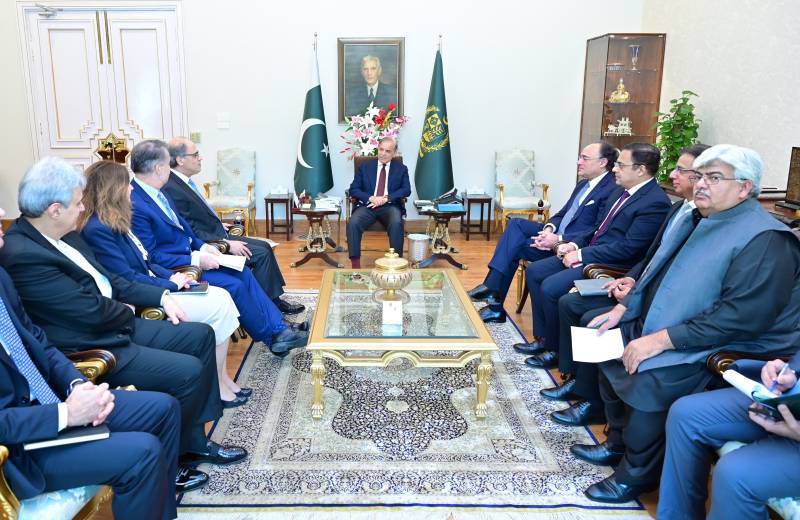
Pakistan’s Prime Minister Shehbaz Sharif met with IMF officials on May 22, after which it was decided to privatize 24 government companies, including PIA.
Government has already sold airports and ports
Pakistan has taken loans from the IMF a total of 20 times since 1958. It has made many difficult decisions under pressure from the IMF. In this series, Pakistan has already sold its ports and airports. Last year, Pakistan decided to lease out Islamabad Airport.
How will the auction process be?
Mohammad Ali, Chairman of the Privatization Commission, stated that a ‘closed bidding’ or sealed bid process will be used for the PIA auction. From 10:45 AM to 11:15 AM on December 23, all three bidders will write their bid amount in a sealed envelope and place it in a transparent box. The bidders will not know how much the others have bid.
After this, the board of the Privatization Commission will hold a meeting and determine a ‘reference price’. Following this, a meeting of the Cabinet Committee on Privatization (CCoP) will be held, which will approve this reference price. This same price will be made public when the bids are opened.
This process will not be live like the IPL auction. There will be no live bidding or price increases. Only the process of opening the envelopes will be shown live.
If a bid amount exceeds the government’s set price, then a limited open auction may occur, but if the bids are lower than the reference price, the highest bidder will be given priority.
Out of this 75% bid amount, 92.5% of the money will go directly to PIA, while only 7.5% will go to the national treasury.
Who is in line to buy PIA?
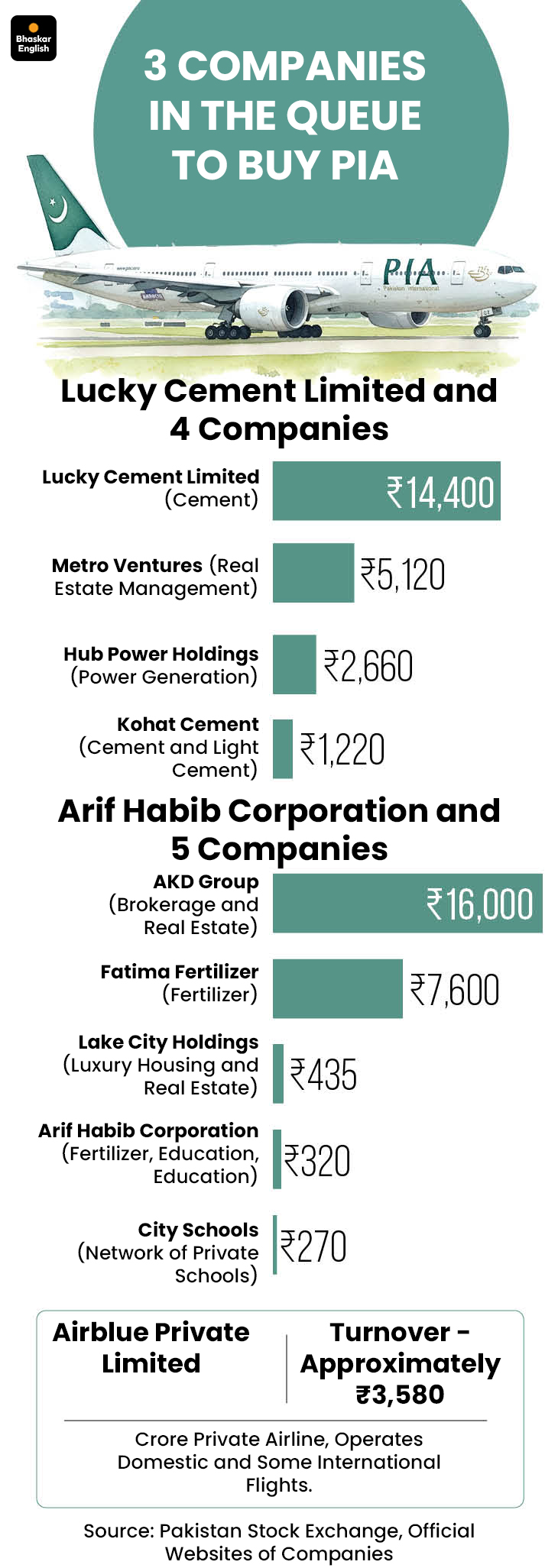
There are only 3 contenders in line to buy PIA-
Lucky Cement & Companies: Four companies are bidding together in this group – Lucky Cement Limited, Hub Power Holdings, Kohat Cement Company, and Metro Ventures.Arif Habib & Companies: This group also includes four companies – Arif Habib Corporation Limited, Fatima Fertilizer, City Schools, and Lake City Holdings.Airblue Private Limited: This company is bidding alone.
Why did the army-affiliated company withdraw its name?
Fauji Fertilizer, a Pakistani fertilizer manufacturing company established in 1978, was also part of this bidding. This company is a part of Fauji Foundation, which is associated with the Pakistan Army. It withdrew its name from the bidding process on December 21. 3 reasons are being cited for this –
Official Reason: Officials associated with the bidding committee say that Fauji Fertilizer withdrew its name so that flexibility in the deal remains. That is, if the company wishes, it has a chance to join the winning bidding consortium later. If the company had bid, this option would have been closed.
Strategic Reason: Army Chief Asim Munir appoints the Quarter Master General of Fauji Fertilizer, who is part of the company’s board. According to this, the army has indirect control over this foundation.
If a company with army involvement wins the bidding, a wrong message can go to the IMF and it could be a violation of bidding rules. According to the rules, PIA can only be bought by a private company.
Fear of losing the bidding: Asim Munir wants control over PIA, but he won’t know how much other contenders will bid in a closed bidding process. In such a scenario, if Fauji Fertilizer loses the bid, Asim Munir will lose the opportunity to control PIA. This is why the company withdrew its name. Now, Fauji Fertilizer will still have a chance to join the winning company.
Who has the highest chance of winning?
According to Pakistani media reports, the Lucky Cement consortium and the Arif Habib consortium are the strongest contenders to win the bidding. Both are large business groups and are ready to later include Fauji Fertilizer with them. Airblue’s chances seem low, as it is a standalone company and its financial strength is not as much as other contenders.