
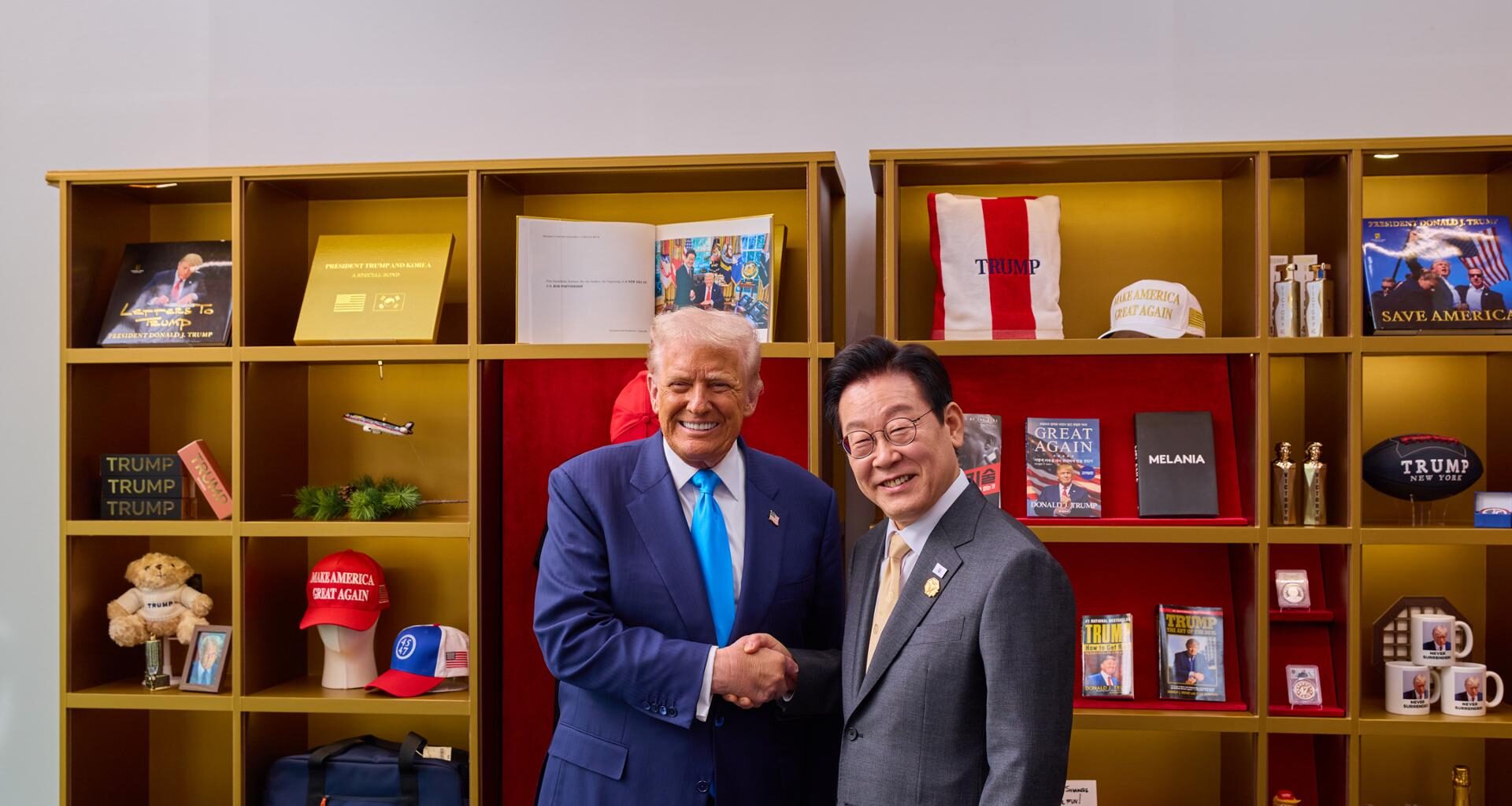
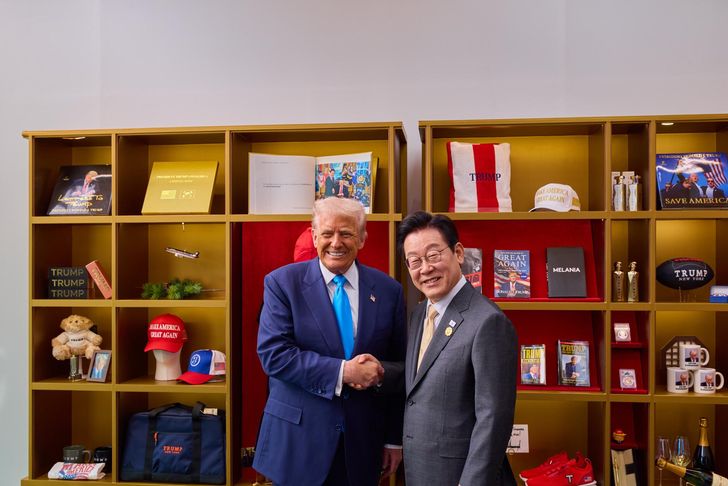
President Lee Jae Myung shakes hands with U.S. President Donald Trump at the Gyeongju National Museum in Gyeongju, North Gyeongsang Province, Oct. 29. Courtesy of presidential office
Korea’s economy was shaped by major external shocks and policy pivots in 2025.
After months of stalled talks, Korea and the United States agreed on a deal cutting U.S. tariffs on key Korean exports to 15 percent, easing pressure on exporters. At the same time, the won weakened sharply, hovering near levels last seen during the 1998 Asian financial crisis.
The government also pushed ahead with structural reforms, including separating budget functions from the finance ministry and revising the Commercial Act to strengthen shareholder rights.
Financial markets were a study in contrasts. The “KOSPI 4,000 era” began as trading reached new heights, fueled by an AI-driven semiconductor supercycle. However, the rally was heavily concentrated in large-cap stocks, leaving concerns over volatility and overseas profit-taking unresolved.
The real economy saw uneven sectoral performance. Korea’s battery industry was forced into restructuring due to a prolonged global EV slowdown, while consumer goods such as instant noodles and cosmetics posted record export growth on the back of K-content popularity.
Meanwhile, a string of major data breaches at telecoms, credit card firms and e-commerce platforms exposed serious weaknesses in corporate cybersecurity.
Here are 10 pivotal moments that shaped Korea’s economic landscape in 2025.
Korea, US seal tariff deal after months of stalled talks
Korea’s trade ministry spent much of this year dealing with the fallout from Washington’s “reciprocal” tariffs, but the year is ending with a breakthrough in long-running negotiations that eased the worst fears of domestic exporters.
After the Trump administration imposed “reciprocal” tariffs of up to 25 percent in early April, Seoul and Washington launched talks, but progress stalled amid political uncertainty surrounding Korea’s June presidential election.
The talk soon picked up pace as President Lee Jae Myung’s administration appointed new ministers, culminating in a preliminary trade agreement on July 30. Under the new framework, the U.S. agreed to cut tariffs on automobiles, parts and other key exports to 15 percent, while Korea pledged a $350 billion investment package in U.S. assets and related commitments.
This month, the U.S. has formally implemented a Korea–U.S. trade deal by posting a Federal Register notice to cut tariffs on Korean goods to 15 percent, retroactive to Nov. 1.
Since reaching the initial agreement, the two country’s officials have been ironing out detailed terms, including non-tariff issues such as digital trade rules and Korea’s nuclear-powered submarine program.
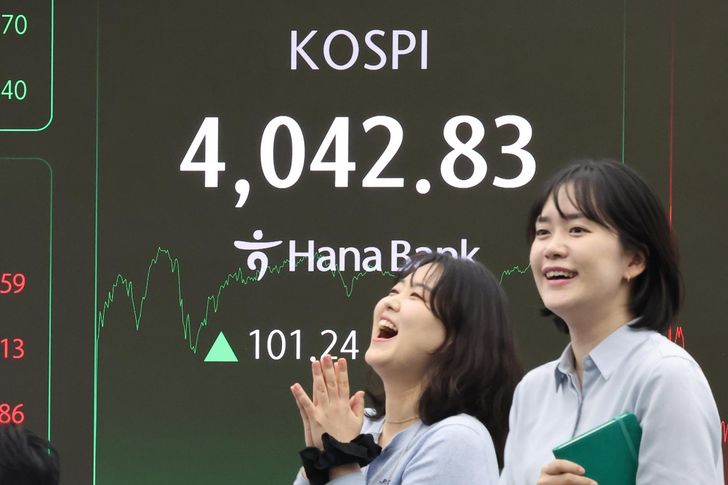
The KOSPI index is displayed on a screen at Hana Bank’s headquarters dealing room in Seoul, Oct. 27, after the benchmark crossed the 4,000 mark for the first time. Yonhap
KOSPI 4,000 era and market rally
The KOSPI broke above 4,000 points for the first time in October, reaching a historic high, 45 years after its launch in 1980. After starting the year around 2,400, the benchmark index surged more than 60 percent in just 10 months. This fueled optimism, as forecasts for 2026 set the lower band at 3,500 to 4,000 and the upper band at 4,500 to 5,500.
The rally was driven by a semiconductor supercycle linked to the artificial intelligence (AI) boom, alongside heavy foreign inflows into market heavyweights such as Samsung Electronics and SK hynix. Expectations of easing the long-standing “Korea discount,” supported by the new government’s push for capital market reforms and shareholder-friendly policies, also played a key role.
However, concerns persist that gains have been concentrated in large firms and blue-chip stocks, widening the gap between headline index performance and broader market sentiment. Alongside hopes for a “KOSPI 5,000 era,” investors remain wary of heightened volatility and the risk of foreign profit-taking.
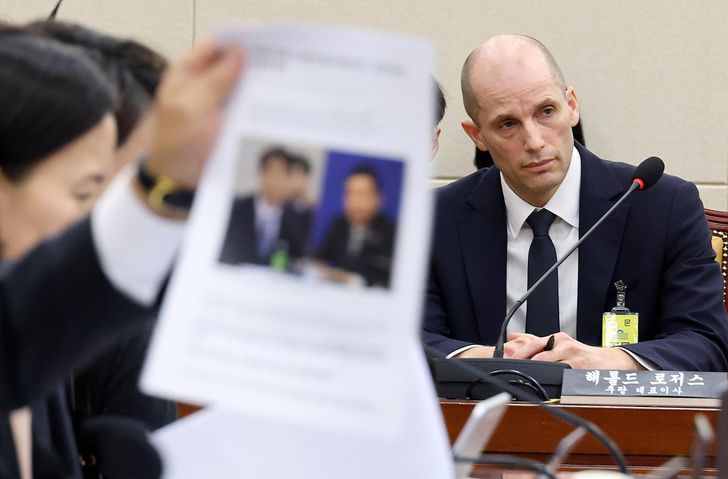
Harold Rogers, interim chief executive officer of Coupang, attends a parliamentary hearing on the company’s data breach at the National Assembly in Seoul, Dec. 17. Yonhap
Major data breaches puts Korea’s corporate cybersecurity on blast
Data breaches have become one of this year’s keywords thanks to a series of large-scale hacking incidents at major companies in Korea, including SK Telecom, KT, Lotte Card and Coupang, raising major concerns over corporate data security.
Telecom giant SK Telecom reported in April that the personal information of nearly 23 million users had been compromised, including users’ phone numbers and universal subscriber identity module (USIM) data. The breach resulted in a fine of 134.8 billion won ($96.9 million) by the government, and the company spending an additional 1 trillion won on customer compensation measures.
KT, meanwhile, saw mobile payment fraud from hackers breaching its users’ phones using an illegal portable base station, compromising the personal data of about 22,227 customers.
Lotte Card faced renewed scrutiny after investigators found that payment data from more than 2.97 million people had been leaked, including card numbers, expiration dates and security codes.
E-commerce giant Coupang experienced the largest-scale incident of the year, affecting its 33.7 million users with the theft of information including names, phone numbers, email addresses, delivery addresses and order histories by a former employee. The ongoing case, which surfaced last month, rattled the government into warning that methods as severe as a suspension of Coupang’s domestic operations remains on the table as regulators probe the company’s response and weigh possible sanctions.
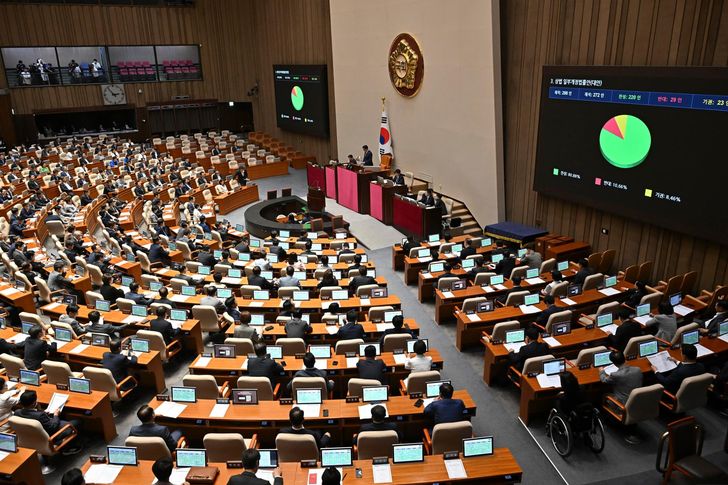
The revised Commercial Act is passed during a plenary session of the National Assembly in Seoul, July 3. Korea Times photo by Jeong Da-bin
Commercial Act revision
The revised Commercial Act, passed in July and August, expanded directors’ fiduciary duties from their company alone to both the company and its shareholders, explicitly requiring directors to protect the interests of all shareholders. The change is seen as laying an institutional foundation for greater consideration of minority shareholder interests in management decision-making.
For listed companies, rules governing the appointment and dismissal of audit committee members were strengthened, curbing the influence of controlling shareholders. The introduction of electronic shareholder meetings also enables remote voting, which is expected to boost participation by domestic and overseas investors and enhance corporate governance transparency.
From a corporate perspective, the revisions increase the need to manage compliance and governance risks, as directors’ liabilities are reinforced and minority shareholder rights expanded. From a capital market standpoint, these shareholder-friendly reforms are widely expected to support long-term corporate value rerating and attract greater foreign investment.
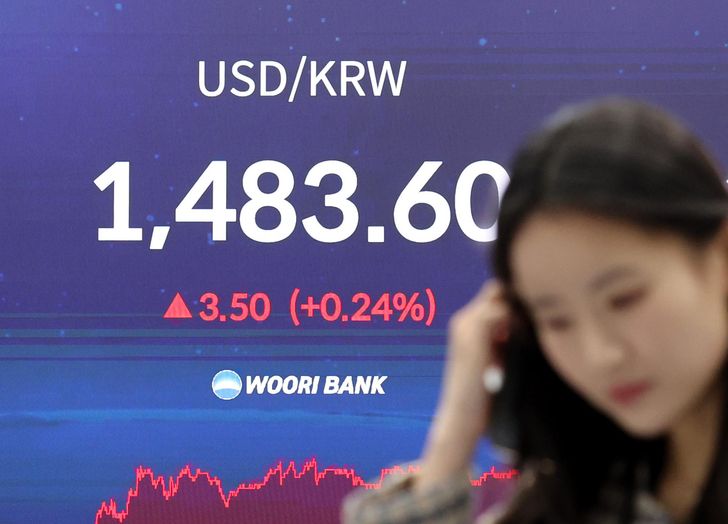
The won-dollar exchange rate is displayed on a screen at Woori Bank’s headquarters dealing room in Seoul, Dec. 23. Yonhap
High exchange rates
The won-dollar exchange rate surged past 1,480 won per dollar intraday in December, nearing its lowest value since March 1998 during the Asian financial crisis, when it reached 1,488.87 won. With levels above 1,470 won becoming increasingly routine, some experts even point to the possibility of the rate surpassing 1,500 won.
Beyond U.S. monetary policy, key factors include growing overseas investment by domestic investors and a rise in outbound foreign direct investment by Korean companies. These dynamics have increased the likelihood that the currency will settle at elevated levels for an extended period rather than rebounding sharply as in the past.
A prolonged period of high exchange rates could push up import prices and energy costs, weighing on domestic demand and real incomes while adding inflationary pressure. As a result, policymakers are being urged to move beyond short-term market intervention and focus on strengthening growth engines, enhancing industrial competitiveness and improving the structure of the current account through broader real-economy reforms.
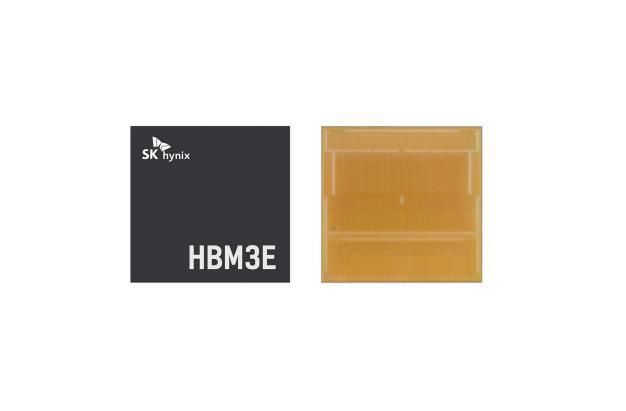
SK hynix’s high-bandwidth memory 3E / Courtesy of SK hynix
HBM emerges as new battleground as AI chip race heats up
Artificial intelligence (AI)-centric demand has turned high-bandwidth memory (HBM) into the frontline of a new semiconductor power struggle. Homegrown chipmakers, led by SK hynix and Samsung Electronics, have emerged as major players as demand for AI accelerators surged, supplying advanced HBM products to global tech giants such as Nvidia.
SK hynix consolidated its position as the leading HBM supplier by being first to develop HBM4 in September and is currently supplying Nvidia with paid production samples. The company has also been the major supplier of HBM3E to Nvidia throughout the year, leading to record performances for three consecutive quarters.
Samsung, the world’s biggest chipmaker, scrambled to close the gap after ceding the second HBM supplier title to Micron Technology in the first half of the year, ramping up shipments for its 12‑layered HBM3E products. It recently received strong evaluations for its HBM4 samples from Nvidia.
Nvidia’s pending approval to resume H200 graphic processing unit (GPU) exports to China, each equipped with six HBM3E stacks, is expected to further sustain demand for legacy HBM3E and expand the overall market, even as demand for HBM4 ramps up. However, it comes amid heightened U.S.–China tensions, with Washington’s conditional green-light and Beijing’s still‑uncertain import approval highlighting the growing issue of geopolitical risk.
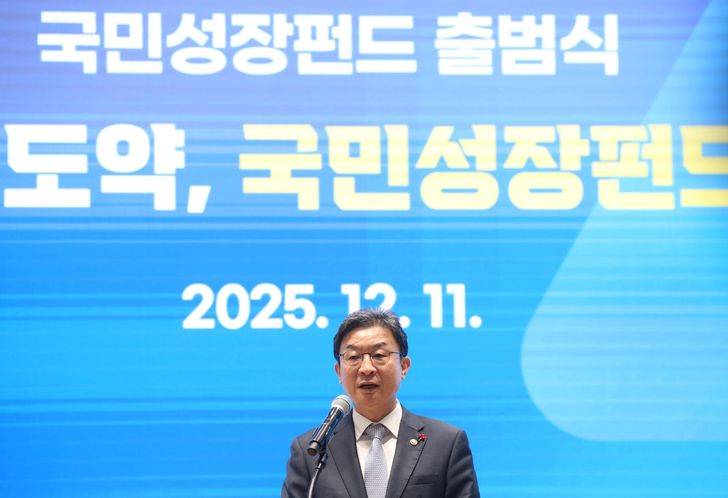
Financial Services Commission Chairman Lee Eog-weon delivers a congratulatory address at the launch ceremony of the National Growth Fund at the Korea Development Bank in Seoul, Dec. 11. Yonhap
National Growth Fund
The government has rolled out the National Growth Fund, committing 150 trillion won ($101 billion) over five years to advanced industries. Of that total, more than 30 trillion won is set to be allocated next year alone to strategic sectors such as AI and semiconductors.
By sector, the planned distribution includes about 6 trillion won for AI, 4.2 trillion won for semiconductors and around 3 trillion won for future vehicles and mobility, reflecting a strategy to concentrate capital on high-growth areas.
The fund is expected to serve as a policy finance platform that offsets weakened private investment amid a high exchange rate and high interest rate environment, while supporting efforts to secure a technological edge in AI and semiconductors and foster new industrial ecosystems.
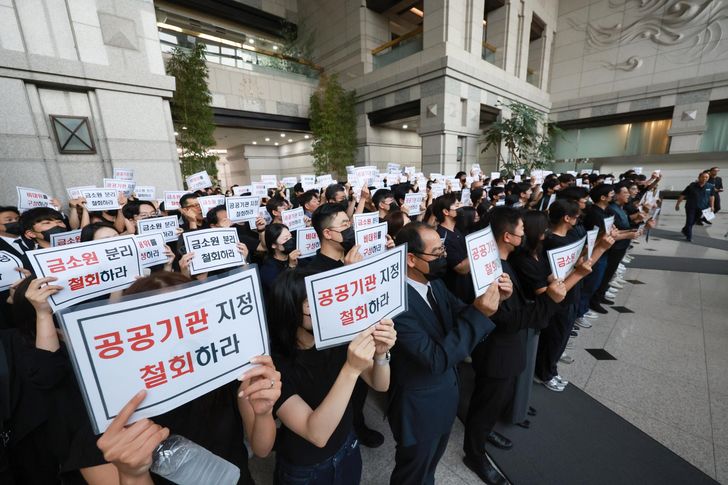
Members of the Financial Supervisory Service’s (FSS) labor union and employees protest a government reorganization plan at the FSS headquarters in Seoul, Sept. 9. Yonhap
Separation of finance ministry
Under the Lee Jae Myung administration’s government reorganization plan, budgetary functions will be separated from the Ministry of Economy and Finance starting Jan. 2.
A new budget authority will be established under the Prime Minister’s Office, taking charge of budget formulation and allocation and fiscal policy management, while the finance ministry will retain responsibility for taxation as well as economic and financial policy.
In discussions on broader government restructuring, reforms were also considered for the Financial Services Commission and the Financial Supervisory Service. However, after meeting strong opposition and calls for further deliberation, the government decided to first proceed with the larger framework of reform, including the split of the finance ministry, while leaving changes to the FSC-FSS structure as a follow-up task.
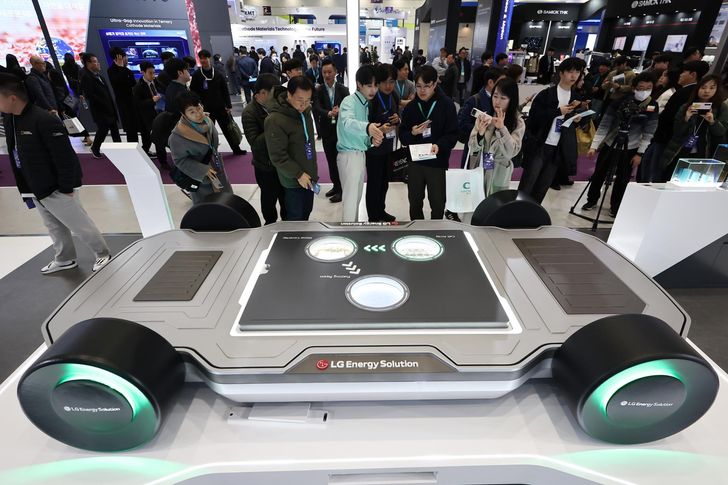
A model electric vehicle chassis featuring the 46-series battery by LG Energy Solution is displayed at the company’s booth at the InterBattery 2025 at the COEX exhibition hall in Seoul, March 5. Yonhap
Prolonged EV slowdown forces battery sector into restructuring
The prolonged Electric vehicle (EV) chasm — a slowdown in consumer adoption — in global demand has begun to exert serious pressure on Korea’s battery industry, which has been facing sharply lower utilization rates and contracting sales amid sustained weak EV adoption.
Slowing demand in the United States and Europe, coupled with intensifying price competition led by Chinese carmakers, has led local major companies, including LG Energy Solution, Samsung SDI and SK On, to respond with production cuts, delayed investment plans and a sharper focus on profitability over volume growth.
LG Energy Solution’s average plant utilization fell to just 51.3 percent in the first half of this year from 73.6 percent in 2022, while Samsung SDI’s small-battery operations dipped to 44 percent.
Battery makers are shifting from joint ventures with automakers to wholly owned plants, especially in North America. SK On’s break with Ford and LG Energy Solution’s takeover of General Motors’ stake in their third U.S. plant highlight moves to cut back on inefficiencies while tightening control over strategic assets.
At the same time, three makers are redirecting lines toward energy storage systems and lithium iron phosphate battery products, betting that grid-scale ESS will offer steady subsidy‑independent growth than the volatile EV market.
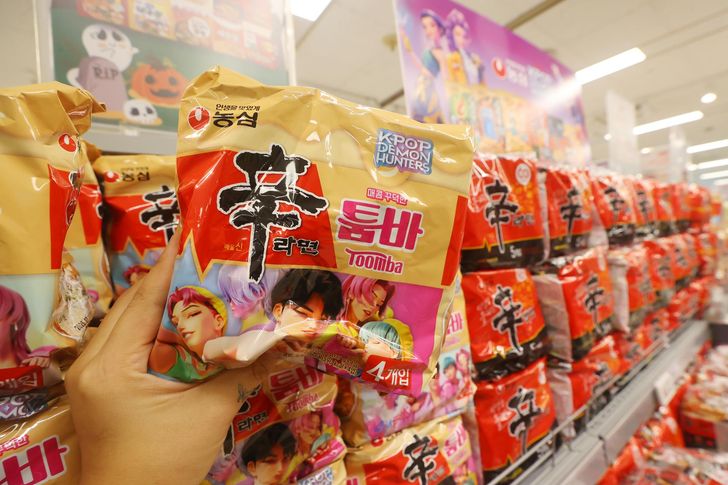
Nongshim Shin Ramyun instant noodles are displayed at a supermarket in Seoul, Oct. 28. Yonhap
Korean consumer goods surge globally
Korean consumer goods from food to cosmetics showcased remarkable momentum in the global market this year, especially with the continued success of hit K-content series boosting exposure among overseas consumers.
Exports of K-food, including products from the agricultural industry such as smart farms and pet food, reached $11.24 billion dollars from January to October, up 5.7 percent from a year earlier, marking another record for the agri-food industries.
Shipments alone totaled $8.59 billion, supported by strong sales of instant ramen noodles, ready-to-eat rice dishes and beverages.
Instant noodles and processed rice-based foods such as frozen kimbap and tteokbokki logged some of the fastest growth, with rice-based product exports jumping 41.4 percent in the first half, with sales to Europe surging more than 40 percent and 30 percent to the Middle East.
Stirred by the smash-hit animation “KPop Demon Hunters,” Nongshim’s sales climbed 1.9 percent in the January–September period to reach 2.63 trillion won, driven by its flagship Shin Ramyun instant noodles.
K-beauty also delivered a record performance, with this year’s total cosmetics exports already topping $10.3 billion in November, with expectations of a new high figure amid robust demand from the U.S., Europe, Japan and Southeast Asia. December exports alone rose 18.4 percent year-on-year.