
New species are still being added to the tree of life – not only from remote field sites, but also from museum drawers, where specimens have waited for better tools and new questions.
In 2025, researchers at the American Museum of Natural History documented more than 70 new species and one new mineral, spanning fossils, living animals, and geology. The findings highlight how much biodiversity remains hidden, even in well-studied places.

“Together, these discoveries highlight the remarkable richness of Earth’s biodiversity,” said Cheryl Hayashi, provost for science at the museum.
Some discoveries came from recent expeditions, while others emerged after scientists reexamined older specimens using modern genetic and imaging tools.
Long-term collections and careful storage make those comparisons possible, revealing new species long after they were first collected.
How new species earn their names
The analysis depends on taxonomy, the science of naming and classifying living things, to prevent confusion as discoveries accumulate.
Before a name becomes official, researchers must show that a species is truly distinct.
That proof comes from careful comparisons of body structures and, increasingly, genetic data, with each name anchored to a type specimen that serves as a permanent reference for future checks.
The process often begins in the field. Teams collect specimens while recording precise locations, dates, and habitats, and they work under permits and local regulations that protect ecosystems and respect the communities connected to them.
Once samples reach the lab, museum staff dry, freeze, or preserve them in alcohol, slowing decay so key details survive long enough to be studied, compared, and verified.
Hidden species in plain sight
Many additions emerge from museum drawers, where older finds have waited for sharper questions and better tools.
Some specimens sat for decades before researchers noticed the tiny differences that separate one species from another.
Modern DNA sequencing, which reads genetic code letter by letter, now reveals hidden lineages that careful eyes alone can miss.
Much of that growth comes from insects and other small animals. Tiny bodies often conceal crucial traits, visible only under microscopes that expose wing veins, mouthparts, and fine hairs.
Those details can shift rapidly between closely related species. Despite their size, insects matter deeply: different species pollinate plants, recycle nutrients through decomposition, and form the base of food webs that support larger animals.
 A new species of mouse opossum with an exceptionally long nose and tail, Marmosa Chachapoya. Credit: Pedro Peloso. Click image to enlarge.Familiar animals, new species
The record also includes mammals at times, even though mammals look familiar and seem well cataloged.
Some mammals are cryptic species – separate species that look almost identical – and genetics can sort them out.
DNA changes build up over generations, and matching patterns across many individuals can signal a split that visual inspection missed.
Dinosaurs ate differently
Among the additions were two feathered dinosaurs, Sinosauropteryx lingyuanensis and Huadanosaurus sinensis, described together.
Feathered theropods, mostly meat-eating dinosaurs with bird-like legs, lived about 125 million years ago in northeastern China.
One fossil preserved two mammal skeletons inside the abdomen, showing the predator swallowed its prey before burial locked the details in stone.
 Illustration of the two new feathered dinosaurs named in 2025, Sinosauropteryx lingyuanensis (right) and Huadanosaurus sinensis (left), found in Lingyuan, Liaoning province. Credit: CAS. Click image to enlarge.When fossils defy categories
Rare fossils can preserve more than bones. In exceptional cases, stomach contents survive when soft tissue decays slowly and minerals replace it fast enough to hold their shape.
That kind of dietary evidence can redraw food webs, because a single confirmed meal links species that may never appear together elsewhere in the fossil record.
The same cataloging logic can extend beyond biology. The inventory also included a mineral, reflecting how naming rules apply across the natural sciences.
Lucasite-(La) was approved after experts carefully verified its chemistry, with type material placed in the American Museum of Natural History’s collections.
Found within kimberlite, a volcanic rock that carries minerals from deep underground, the crystal structure confirmed that Lucasite-(La) was distinct enough to earn its own name.
Seeing what was missed
Work supporting the list relied on technology that makes small differences visible, from imaging tools to computer models.
Digital 3D models let researchers rotate fossils on screen, and the measurements expose patterns that handwritten notebooks missed.
Shared databases help experts compare new finds with older samples worldwide, speeding corrections when a name seems wrong.
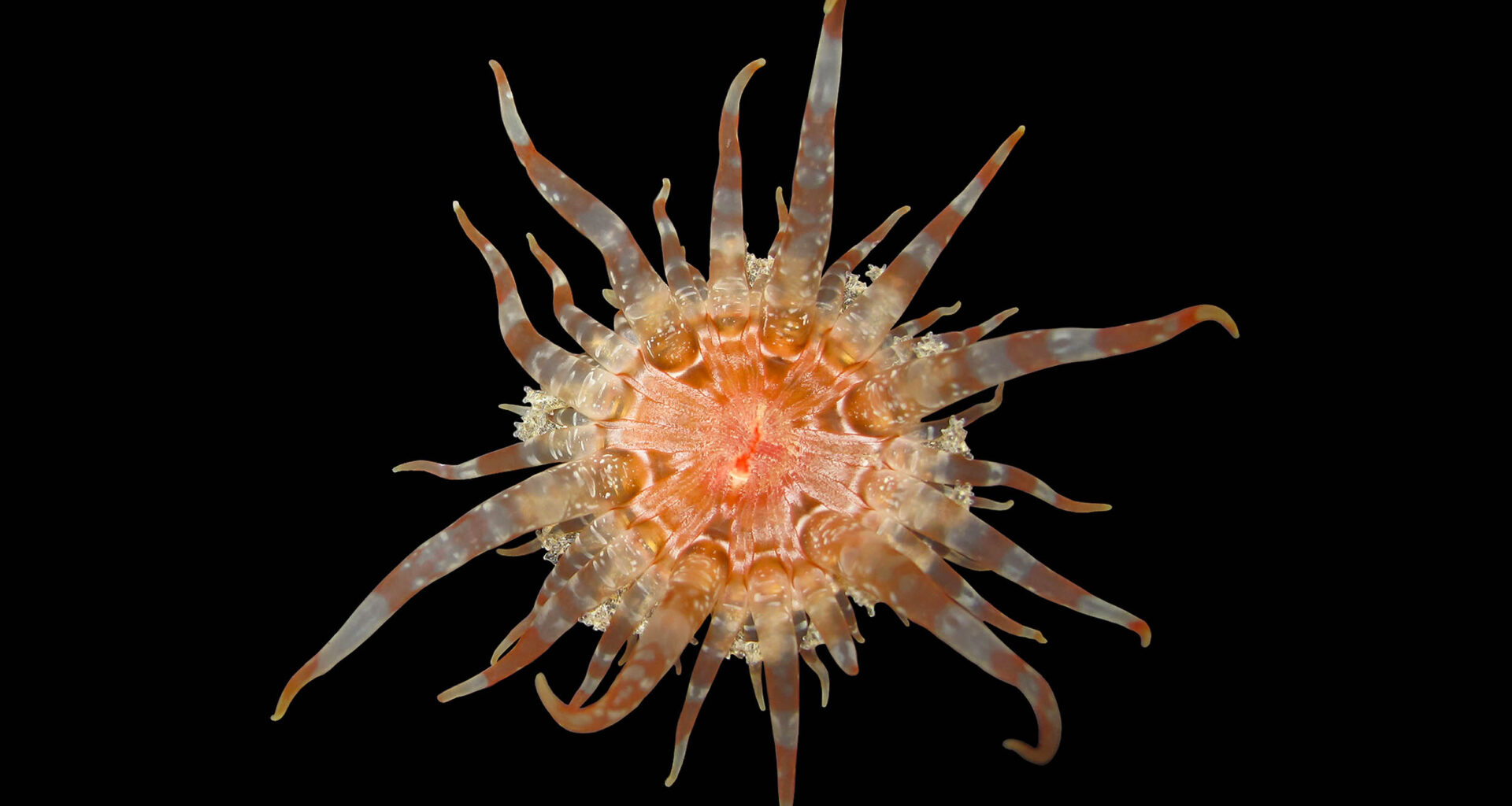
 A new genus and species of sea anemone, Endolobactis simoesii. Credit: Ricardo Gonzalez Muñoz. Click image to enlarge.How technology helps discovery
This record matters because conservation plans start with knowing what lives where, and how many individuals exist.
Legal protection often follows a scientific name, so unnamed species can slip through policy gaps and lose habitat silently.
New species also guide medical and agricultural research, because traits like toxins or pollination behaviors affect people directly.
Blind spots in science
No list can ever be complete, because museum collections reflect where scientists have worked, what environments were accessible, and which specimens survived long enough to be preserved.
Remote regions and small-bodied animals remain under-sampled, a bias that can hide real biodiversity for generations.
Careful curation matters just as much as discovery. Preventing damage over decades requires space, funding, and trained staff, yet many specimens already sit unlabeled and unstudied.
As this global catalog grows, it highlights both progress and gaps: even well-studied groups across land and sea still hold surprises.
Looking ahead, the work will depend on sustained support for museums and universities, because training species-naming scientists takes years and requires careers built on careful identification.
Wider online access to specimen records can also help, inviting outside experts to review findings and catch errors earlier.
Each newly named species turns a stored specimen into evidence anyone can revisit, keeping science open to revision, challenge, and discovery.
—–
Like what you read? Subscribe to our newsletter for engaging articles, exclusive content, and the latest updates.
Check us out on EarthSnap, a free app brought to you by Eric Ralls and Earth.com.
—–