
LOOKING BACK AT THE TOP 10 photography stories OF THE YEAR
Moments from 2025 were captured through the lenses of photographers across the globe, showcasing a diverse range of projects that caught our eye here at designboom. Spanning expansive volumes and standalone series, artists offered compelling glimpses of the world, from Christopher Herwig’s vibrant documentation of South Asia’s trucks and tuk-tuks to Romain Jacquet-Lagrèze’s daring portraits of bamboo scaffolding workers navigating the heights of Hong Kong. The year also brought haunting aerial compositions by Reuben Wu, who combined drones, lasers, and long exposures to mesmerizing effect, alongside a collection of unusual houses around the world, documented in a book published by Hoxton Mini Press.
After revisiting the striking photography projects we covered over the past 12 months, we’ve curated a selection of the top 10 that continue to inspire us. Read on to explore the full list.
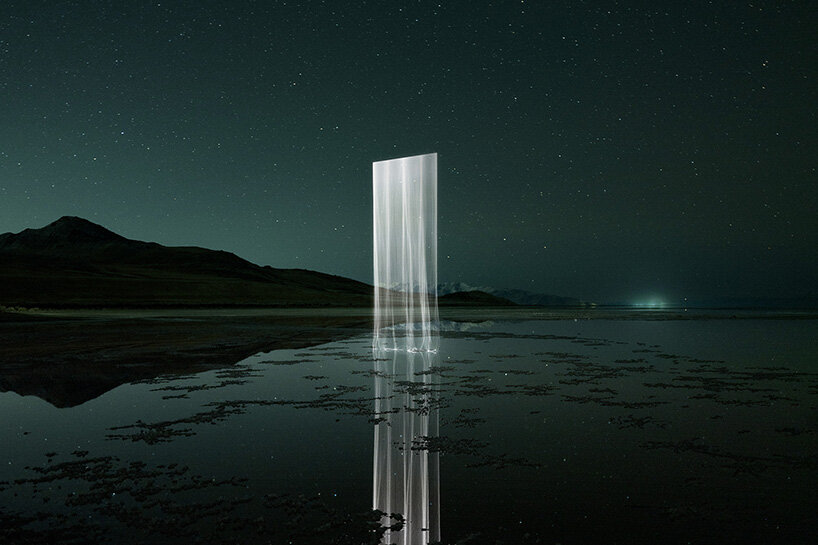
image by Reuben Wu
In his series Thin Places, multidisciplinary visual artist, photographer, and director Reuben Wu inscribes light onto remote natural environments through experimental photographic interventions. Known for his haunting aerial compositions using drones, lasers, and long exposures, the artist has developed a unique visual language that brings photography, design, and speculative technology together. In Thin Places, Wu frames landscapes where artificial light and natural terrain seem to meet halfway. The images are captured entirely on-site, in single exposures, using drones and lasers to trace fleeting geometries into the environment.
One standout work from the series, Surface Tension, was photographed at a remote salt lake under a moonless sky. Using a custom aerial laser swept just above the water’s surface, Wu renders a floating curtain of light, revealing crystalline salt structures caught between the stars above and their reflections below.
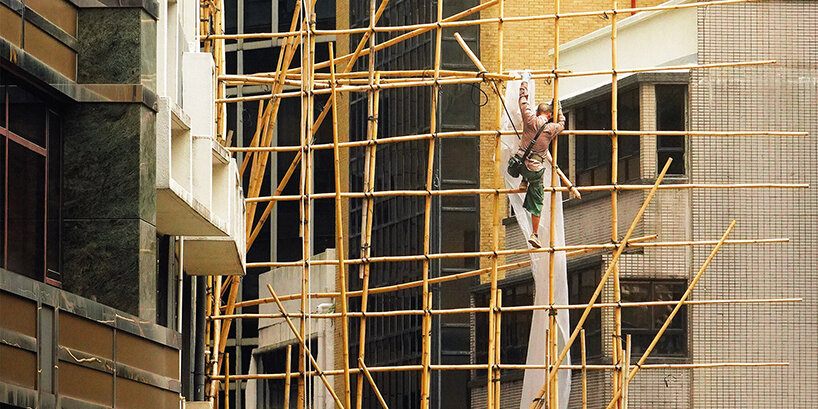
image by Romain Jacquet-Lagrèze
While Reuben Wu illuminates remote landscapes with ethereal light, Romain Jacquet-Lagrèze turns his gaze to human skill and labor within Hong Kong’s dense urban fabric. In Echoing Above, he documents the extraordinary practice of bamboo scaffolding, focusing on its structural and spatial nuances and the precision required to navigate it safely. Bamboo scaffolding, particularly the Fei Paang (飛棚, or ‘flying shed’) type, remains a defining feature of renovation work in compact residential areas. Assembled directly onto building exteriors with minimal anchoring, it allows workers to perform targeted maintenance tasks, from air conditioning repairs to facade cleaning. Suspended at dizzying heights, they move along narrow ledges and supports, often holding long bamboo poles in a single hand, showcasing remarkable agility and dexterity.
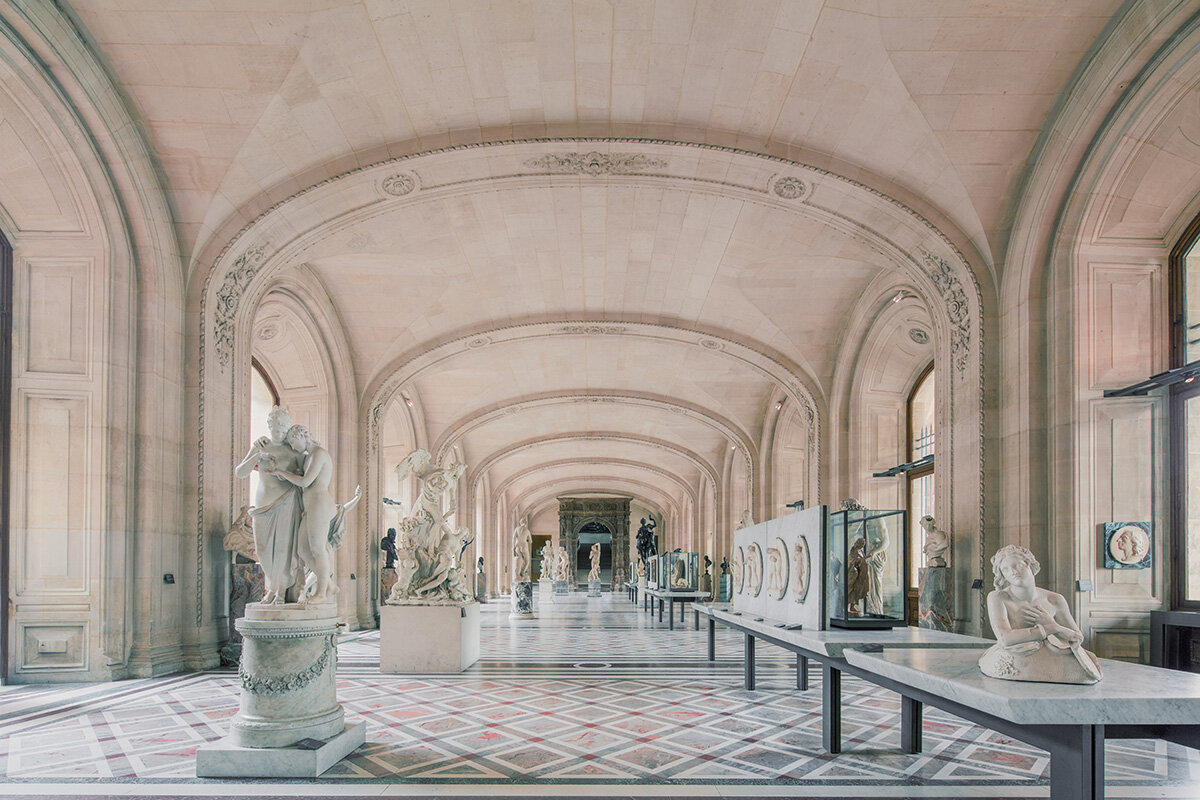
image © Franck Bohbot
From Hong Kong’s soaring scaffolds, the focus shifts to the hushed interiors of one of Europe’s most iconic cultural landmarks. Franck Bohbot turns to Paris’s Musée du Louvre, capturing a side of the institution rarely seen by its millions of annual visitors. In his series, Bohbot presents an unusually tranquil, architecturally attentive portrait of the museum. Granted rare carte-blanche access, the French-born, New York–based photographer explores the Louvre’s interiors with a quiet precision, revealing its structural rhythm and enduring material presence. Part of his broader Parisian Interiors project, the work reframes the Louvre not as a global destination but as what Bohbot calls ‘a living architectural organism.’ His images distill the museum into a sequence of calm spatial encounters, captured entirely in natural or available light. Daylight subtly gradients across galleries, vanishing lines draw the eye through layered histories, and the textures of stone, wood, and marble anchor each composition in a sense of stillness and permanence.
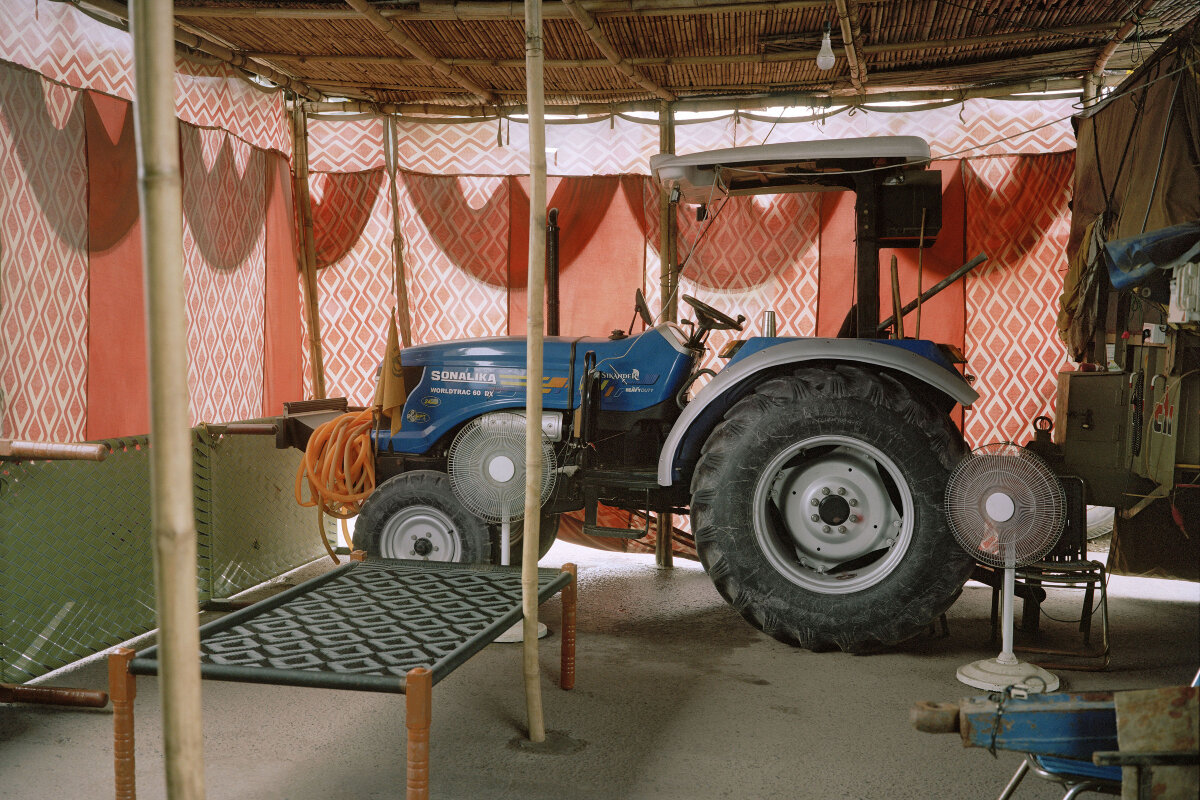
image © Gauri Gill | courtesy of the artist and Vadehra Art Gallery
From the stillness of the Louvre’s monumental interiors, the list shifts to a landscape shaped by collective action and improvisation. In The Village on the Highway, Gauri Gill documents the improvised shelters built by India’s protesting farmers, revealing a terrain defined by resilience and resourcefulness. Exhibited at Vadehra Art Gallery in New Delhi, the series comprises 90 large-format analog photographs tracing how roadside encampments evolved into self-sustaining settlements. Farming vehicles became shelters, tarpaulin and bamboo formed walls and partitions, and fabric enclosures were cut to create makeshift doors, creating spaces adapted for rest, cooking, bathing, and gathering.
Even the road became a site of cultivation, with small vegetable plots providing sustenance. Everyday objects such as pots, coolers, and mosquito nets take on sculptural presence in Gill’s images, underscoring the ingenuity of these lived environments and the realities facing India’s marginalized farmers.