
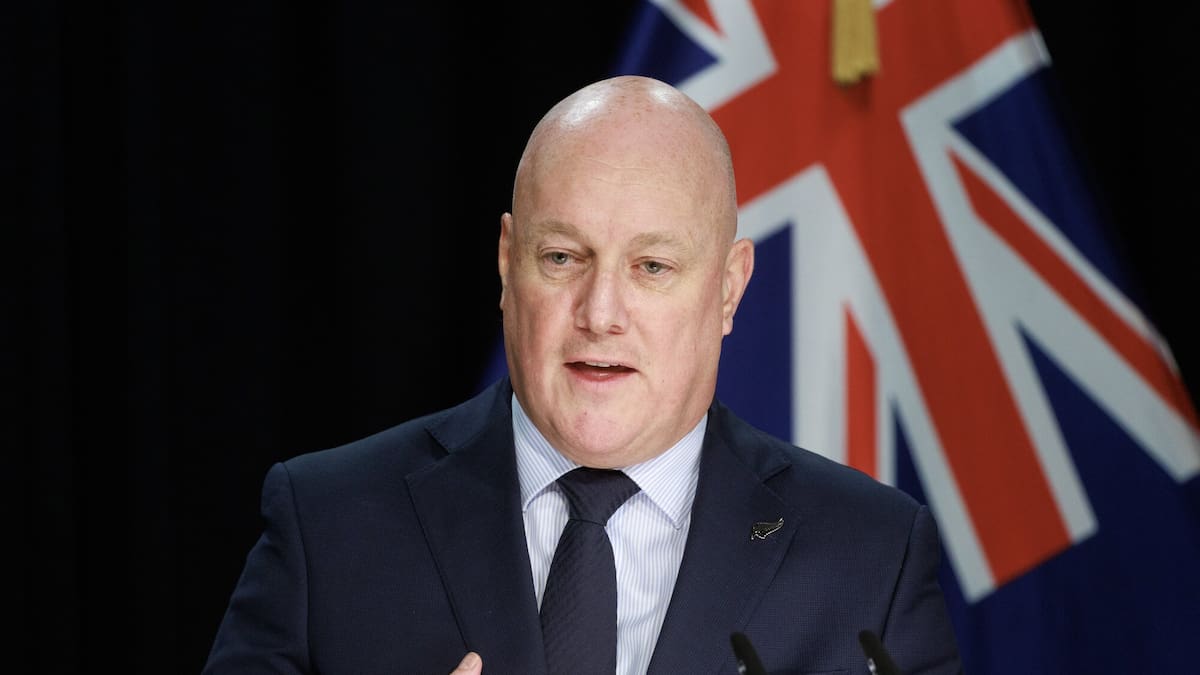
When Luxon promised in a debate with Chris Hipkins to finalise an FTA with India in his first term, it seemed like a typical Luxon gaffe. Hipkins laughed, saying one country couldn’t force another to strike a deal to fit its own domestic political timetable. Hipkins wasn’t alone.
It was received wisdom at our Ministry of Foreign Affairs and Trade (MFAT) and New Zealand-India Business Council that an FTA with India was impossible. India’s independence movement under Mahatma Gandhi emphasised self-sufficiency, and successive governments after 1947 were highly protectionist.
Like New Zealand, India’s decisive economic crisis came in 1991, with its “Epochal Budget” delivered by Prime Minister Narasimha Rao and Finance Minister Manmohan Singh just six days before Jim Bolger and Ruth Richardson had to unveil their “Mother of All Budgets”.
But India remained a free-trade recalcitrant, resisting the Uruguay Round and helping derail the Doha Development Round.
Worse for New Zealand was India’s sensitivities around dairy and meat, tied to religion, rural livelihoods and vegetarianism, and its insistence on greater migration under the banner “free trade in labour”. It made sense when previous National and Labour Governments decided the best strategy was limited, product-by-product engagement rather than a big, bold push. Luxon’s lack of knowledge of this historical baggage was probably key to him making his daring pledge.
Luxon’s critics might argue the work was mainly done by Trade Minister Todd McClay and MFAT’s trade negotiations team. But without Luxon’s determination against all expert opinion, India would never have been so high on the agenda, with McClay visiting seven times and Peters twice since the election and Luxon taking two planeloads of New Zealand business and Indian-community leaders to New Delhi and Mumbai in March.
Astutely given India’s Hindutva-influenced Government under Bharatiya Janata Party (BJP) Prime Minister Narendra Modi, Luxon chose to visit the Hindu Swaminarayan Akshardham in east Delhi rather than the Muslim Taj Mahal in Agra. Modi and his Trade Minister, Piyush Goyal, also of the BJP, surely noticed the signal.
Trade deals with superpowers are always controversial. According to Goyal and his Ministry of Commerce and Industry, New Zealand has agreed all Indian imports will be 100% duty free, including textiles, apparel, carpets, automobiles and agricultural products. That should put downward pressure on the cost of all clothing, flooring, vehicles and perhaps food in New Zealand.
New Zealand also promises market access to Indian providers in 118 services sectors, including telecommunications, construction, education, environmental consulting, finance, travel and tourism.
In return, New Delhi promises New Zealand market access to 70% of product lines, covering 95% of our existing exports to India, while keeping tariffs on 30%. New Zealand exporters of dairy products, aluminium and meat except sheepmeat will continue paying tariffs, or pass them on to Indian consumers.
New Zealand has also agreed to establish Centres of Excellence in India to deliver Agriculture Productivity Action Plans to help Indian growers of kiwifruit, apples and honey increase their production and quality. Improved access for our exporters of kiwifruit, apples and honey is linked to the success of these schemes.
Farmers display the cotton they have harvested to buyers at the Khargone mandi. Photo / Saumya Khandelwal, The New York Times
According to Goyal’s officials, the improved trade access also depends on the New Zealand private sector investing at least US$20 billion ($34b) in India over the next 15 years.
For context, that’s about a third of our Superannuation Fund or a quarter of our KiwiSaver accounts. As a percentage of GDP, New Zealand’s commitment is materially more than what Norway, Switzerland, Iceland and Liechtenstein promised to secure their FTA with India last year.
In fact, neither the Superannuation Fund nor KiwiSaver accounts are likely to fund much of the $34b, with Goyal saying the cash must be foreign direct investment (FDI) not foreign portfolio or institutional investment. That means it can’t be investments in shares, bonds or other liquid financial instruments but in more illiquid direct investments such as factories, roads or energy generation.
With New Zealand itself struggling to attract FDI, this is a big ask for our private sector, but one it must deliver for India to honour the trade-access parts of the deal.
New Zealand will also introduce multi-entry working-holiday visas for 1000 young Indians annually, and maintain a quota of 5000 three-year temporary-employment visas at all times, which India highlights as benefiting its chefs, music teachers and Ayurveda, yoga, naturopathy, Unani, siddha and homeopathy practitioners.
New Zealand is also the first country to promise new student mobility and post-study work visas specifically for Indians. Goyal’s officials say the visas must allow at least 20 hours per week employment during study, plus post-study work opportunities of up to three years for Stem bachelor’s and master’s graduates, and four years for doctorate holders.
Most significantly, there will no longer be any numerical cap on Indian students coming to New Zealand.
All this was too much for Peters, with NZ First strategists saying privately for weeks that their party would vote against the deal.
That makes Luxon’s triumph dependent on Labour, assuming the Greens aren’t an option. With NZ First’s position well known, Labour strategists say they were astounded National didn’t consult them at least in the weeks before Monday night’s announcement.
Previous practice, until the end of the Key-English Government, was for National and Labour foreign affairs and trade ministers to work closely with the opposition to ensure they were sufficiently aligned so that other countries could rely on New Zealand’s commitments long-term.
Labour strategists say Peters maintains that tradition in foreign affairs but McClay less so in trade. Maintaining alignment on foreign and trade policy wherever possible is also part of a Prime Minister’s job.
Labour’s trade spokesman, Damien O’Connor, was nevertheless charitable enough to say that the deal initially looked like a “good step forward”, while lamenting the lack of gains for dairy. Whether his colleagues can stomach the effects on the labour market and education system and $34b of investment funds going from New Zealand to India is something they will ponder over summer.
After getting any sort of deal agreed so quickly, Luxon will be praying Labour falls into line.
Catch up on the debates that dominated the week by signing up to our Opinion newsletter – a weekly round-up of our best commentary.