
Jo Durrant,Gloucestershireand
Maisie Lillywhite,Gloucestershire
 BBC
BBC

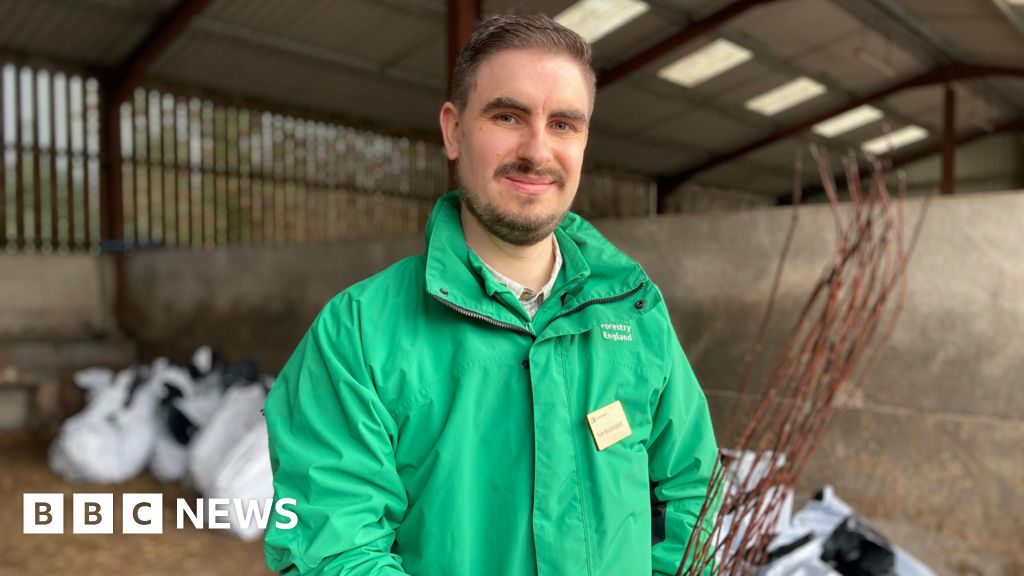
Tom Brockington said the planting of the trees means the Forest of Dean will be extended
A forest will be extended for the first time in more than 200 years as plans to plant 120,000 this winter get under way.
After buying Hoarthorn’s Farm in late 2024, Forestry England will plant thousands of trees at the 88-hectare (217 acre) site near Berry Hill in the Forest of Dean in Gloucestershire.
Tom Brockington, area manager for Forestry England, said the move is “very significant” with between 1,000 and 1,500 trees being planted per day in the forest’s first expansion since 1817.
It is hoped the trees of varying species will support wildlife and mitigate the effects of climate change, he added.
Trees in the Forest of Dean have been harvested and replanted for more than a century, but Forestry England is now extending it beyond its traditional boundary, Mr Brockington said.
Geological and soil surveys were carried out to work out which trees would be best supported in each area of the site, and consideration was given to how wildlife could move around the site.
“Biodiversity requires a buffering of established wildlife hotspots,” Mr Brockington said.
“We want to be able to create those linkages where animals can move between established woodland and other established woodland… so we’ve chosen trees that support that transfer of species.”
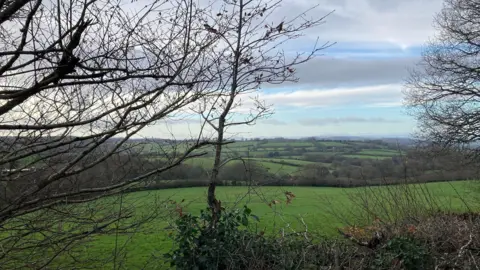
Part of the site will be left clear for cattle to graze on during the winter months
In terms of climate change, Mr Brockington said having a variety of species means, if one is susceptible to disease, a significant number of trees will not be lost.
“We are looking at western France, because it’s a very similar climate to what we could expect in our country in 40 to 50 years’ time, which would be when these trees are reaching maturity,” he added.
“So we need to be thinking about which trees might be drought susceptible or resilient.”
A central area of the site will be left as pasture, which will be grazed by cattle during the winter, and it is hoped all 120,000 trees will be in the ground by the end of March.