
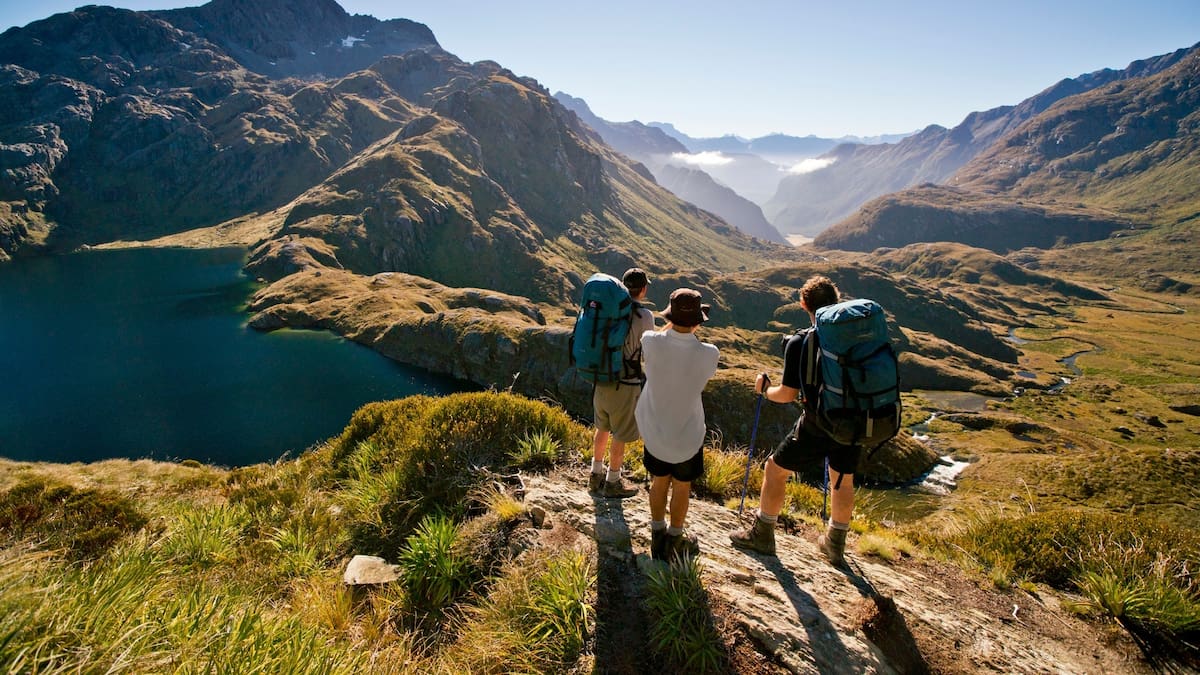
As a new year approaches, this feels like a natural moment to step back and ask not only where we have come from, but where we want to go next, and how ambitious we are willing to be together.
Most people do not arrive in New Zealand with a grand plan. They come for many reasons: adventure, opportunity, family, curiosity or a sense that life could be lived differently here. What they often share is the experience of being drawn in quietly.
My own arrival story is not especially dramatic. I came expecting to stay briefly, before returning to Europe. Instead, life began to take shape around me. Relationships deepened. Work became meaningful. Community formed. Over time, without any single decisive moment, this became home.
That gradual shift is familiar to many migrants. Home does not move through declaration, but through belonging. It happens through everyday moments: school drop-offs, workmates who become friends, neighbours who look out for one another and the growing sense that this place is invested in you, just as you are invested in it.
Parents often come to visit, not to persuade their children back, but to understand the place that has captured them. They walk the beaches, sit in the light and watch how people live. Like so many before them, they often fall in love too. In my case, my parents did as well, choosing to make Aotearoa home and becoming immigrants to these beautiful shores.
New Zealand has a way of doing this gently. I can think of many places I have lived, from the US to the UK and Australia, and none of them feels quite like this. With open skies, open hearts and a sense of possibility that is difficult to manufacture and even harder to sustain, New Zealand offers space: to think, to try and to imagine a future that feels both ambitious and grounded.
There is something grounding about becoming a Kiwi by choice rather than by birth. Belonging is not assumed. It is earned slowly, through contribution, care and showing up over time.
You learn quickly that status counts for little and contribution counts for everything. That leadership here is practical and grounded. That trust is the default. That fairness is not aspirational, but expected.
These values are not written down in any single place, but they are deeply felt. They show up in everyday interactions, in how people relate to one another, in workplaces that favour collaboration over hierarchy and in communities that value participation over perfection.
This culture makes it easier for people to integrate without losing who they are. New Zealand’s identity is deeply rooted, yet generous enough to grow as others contribute to it. That openness is one of the country’s quiet strengths and one that becomes increasingly important in a changing world.
For many people, the decision to stay becomes permanent when they raise children in New Zealand. It sharpens perspective and clarifies what matters.
New Zealand gives children something increasingly rare: space. Space to breathe, explore and fail safely. Space to be curious and ambitious without being crushed by expectation. Not every country offers that.
The space and serenity offered in places such as Orokawa Bay, in the Bay of Plenty, is a gift for kids growing up in New Zealand.
Children grow up barefoot on beaches, learning te reo at school and seeing diversity as everyday rather than exceptional. They are trusted early. They are encouraged to explore independently and to form a relationship with the natural world around them.
For me, this has been critical. I can picture the life my children might have had elsewhere, including in Sweden, but I would not choose it over what New Zealand offers. Here, childhood feels expansive rather than prescribed. There is room to grow into who you are, not who you are expected to be.
As parents, people become acutely aware of the things that matter most: safety, fairness and opportunity. A sense that the future is something to look forward to, not fear. These are things New Zealand still offers in abundance.
They are also part of what makes this country distinctive. In a world where many families feel squeezed by pace, pressure and expectation, the way New Zealand supports childhood and family life is a genuine strength. It is part of our unique appeal and something we should value, protect and build on if we want to continue attracting people from around the world who are looking not just for work, but for a good life.
What people notice and value about New Zealand
Having lived in other places, I have noticed how clearly the small, everyday behaviours in New Zealand shape the kind of country we are becoming.
Willingness to help
People stop. People smile. People help. Often without being asked. This instinct builds resilience at a community level and creates momentum when challenges arise.
A close friend arrived from Sweden on holiday with her family. On one of their first outings, we went to the zoo together. Her young son tripped and scraped his knees, and as we were helping him up, a passerby stopped to offer plasters and a quiet word of reassurance.
What struck her was the ease of it. Not the help itself, but how naturally it happened. She said it was not that people elsewhere are unkind, but that this kind of easy, unprompted interaction with strangers felt distinctly Kiwi.
A belief in fairness
Fairness shows up in language and expectation. People believe opportunity should be shared and that systems should work for everyone. That belief builds social trust and long-term resilience.
Quiet confidence
New Zealanders do remarkable things without fanfare. There is strength in that restraint and confidence in simply getting on with the job. It creates space for substance over spectacle.
Connection to the land
Nature here is not a backdrop. It is a relationship. Beaches, bush and open space shape how people live, think and regain perspective. That connection anchors ambition in responsibility.
Cultural richness
Aotearoa is shaped by te ao Māori, strengthened by Pacific communities and enriched by people from across the world. Diversity here is not a threat to identity. It is a source of creativity and strength.
An appetite to innovate
For a small country, New Zealand thinks boldly. In health, technology, agriculture and sustainability, there is a willingness to try, learn and lead. That matters in a rapidly changing world.
A new year moment of opportunity
New Zealand is navigating some significant long-term shifts. An ageing population is changing the shape of our workforce and public services. Productivity and how we grow sustainable economic value matter more than ever. Technology is reshaping how we work, learn and connect, while climate considerations are influencing how we plan for the future. These changes bring complexity, but they also create opportunity if we respond with intent.
But this is not a country defined by retreat. Our history is one of adaptation and resilience. We collaborate naturally. We innovate pragmatically. We do our best work when we focus less on what is broken and more on what can be built.
There is also a quiet pragmatism here. New Zealanders tend to look for solutions rather than slogans. Progress is valued when it improves real lives, not when it simply sounds good. That instinct gives the country a strong foundation for the year ahead.
The start of a new year is a chance to be intentional. To decide where we want to lead rather than follow, and where we are prepared to do things differently.
Opportunity knocks
New Zealand continues to attract people not just because of policy settings or economic forecasts, but because it captures the imagination. Through beauty, scale and a sense of possibility that feels tangible, it offers something deeper than opportunity alone: the chance to imagine a good life.
In a world where talent, creativity and energy are increasingly mobile, countries compete on meaning. On whether people can picture a future for themselves and their families, and whether a place feels open to contribution. New Zealand has that advantage. Our landscapes invite imagination. Our culture makes room for participation. Our size allows us to move faster, try sooner and lead in ways much larger countries struggle to.
The year ahead is an opportunity to be deliberate about how we use those strengths and how we build systems that genuinely reflect our values. As the year turns, there is reason for optimism. Not because the path ahead is easy, but because the foundations are strong.
Being a Kiwi is not defined by a single starting point. It is shaped by mindset. It is about pitching in, caring deeply, thinking boldly and acting practically, and believing our best days are ahead of us.
That is what many people see when they look at New Zealand: a country full of possibility, grounded in fairness and shaped by people who care. For me, it is also the country that became my home, and one I am deeply grateful to be part of. The year ahead is our chance to be intentional about how we build on that together.
Catch up on the debates that dominated the week by signing up to our Opinion newsletter – a weekly round-up of our best commentary.