
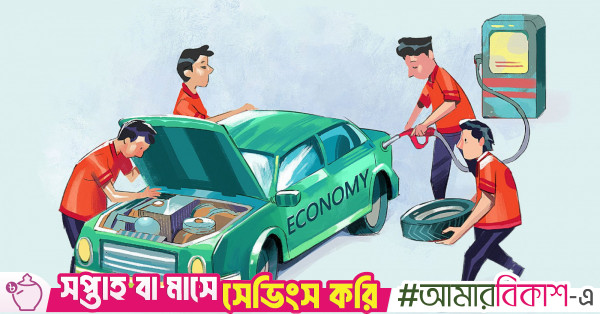
Bangladesh is heading towards national polls in less than two months’ time. Naturally, the debates, discussions and discourses in the country are on political issues. But once the election is over and an elected government takes over, one of the most important issues for the administration will be the economy – the country’s economy should be its top priority.
This is because, apart from every other reason, the economy is the major concern of the common people – issues ranging from inflation, joblessness, inequalities in opportunities, access to resources like credit, to qualities of basic social services available, economic uncertainties, mob violence and the list goes on. Therefore, the newly elected government is expected to have commitments to prioritise the economy.
Three things should be flagged at the outset. First, the commitments to prioritise the economy must be supplemented with priority setting. Second, both the commitment and the concrete priorities should be at the core of the economic policies of the new government. Third, the next democratically elected government, after taking charge, must formulate, as soon as possible, a medium-term blueprint or a road plan with specific timelines to give people a sense of economic direction. The time lines would clearly indicate as to what the government intends to achieve year by year. At the end of every year, the road map must be objectively monitored and evaluated with robust and credible data to hold the government accountable.

Keep updated, follow The Business Standard’s Google news channel
A relevant question in the context of the plan is: what are the issues that the plan should address taking the current realities of the Bangladesh economy and looking at the future of the economy. In that respect, three broader categories of challenges will be important: lingering challenges, deepening challenges and emerging challenges.
First, in the area of lingering challenges, poverty and inequalities continue to remain a critical factor. In fact, it has been revealed in researches and the World Bank reports that the progress of Bangladesh in reducing the incidence of poverty over the years has been reversed in the recent past. Between 2010 and 2022, Bangladesh has managed to lift 3 crore 40 lakh people out of poverty, but during the last three years, the incidence of poverty in this country has gone up from 18 per cent to 21 per cent. Today, about 3 crore 60 lakh people million live in poverty in Bangladesh, with 30 lakh new additions during the last three years. And 6 crore 20 lakh people have been identified as being at risk of falling into the poverty trap. Inequalities and discriminations are a critical reality of our economy. For example, while child mortality among the highest income quintile in Bangladesh is 20 per 1,000 live births, the comparable figure for the bottom quintile is 50 per 1,000 live births. In recent times, while income inequalities, as measured by the Gini coefficient, have remained in rural areas, it has gone up in urban Bangladesh.
The second lingering challenge is the low qualitative standard of basic social services, such as health and education. Yes, there have been quantitative expansions in health and education, but those progress was not accompanied by qualitative transformations. In education, getting certificates, and not skill and knowledge, have become the primary goal; in the health sector, the priority is on infrastructures, and not on quality service provisions. In both areas, high quality services are available to the rich and such discrimination is a major driving force for entrenching inequalities in the Bangladesh society.
The third lingering challenge is sluggishness in the growth of savings, investments and revenue generation. Compared to the neighbouring countries, the savings rates continue to be low in Bangladesh. Over the years, we have not been able to attract a substantial amount of foreign direct investments. Just look at countries like Vietnam. The tax-GDP ratio in Bangladesh continues to be around 8 or 9 per cent, while in Nepal it is 19 per cent and in India 12 per cent. Bangladesh has historically been dependent on indirect taxes, such as import duties; and that dependence has not shifted to direct taxes.
The list of deepening challenges for Bangladesh is quite long. The Bangladesh economy is characterised by a phenomenon of jobless growth, high unemployment, defaulted loans, and significant human deprivations. Despite a 10 per cent industrial growth, 14 lakh manufacturing jobs were lost in the Bangladesh economy in a decade (2013-2024). Garment exports have tripled during this period, but jobs remain stagnant. There are more than 27 lakh people in the economy who are unemployed. About 13 per cent of university graduates are without work. The youth unemployment in the country is twice that of overall unemployment. Joblessness and jobless growth are major deepening challenges Bangladesh is now facing.
The financial sector of the country is in a deep crisis. Defaulted loans in Bangladesh have hit a record of nearly Taka 6. 5 lakh crores. The huge amount of laundered money that has left the country remains unrecovered. Financial discipline is yet to be restored. Non-poverty human deprivations are deepening. About 11 crore people do not have access to safely managed drinking water. Only 59 per cent births of children under-5 are registered and only 47 per cent of the children have birth certificates. After finishing primary education, 56 per cent of children cannot make it to class 10. There has been a steep rise in child labour over the past 6 years, from 6 per cent in 2019 to more than 9 per cent in 2025. Today, the rate of child marriage is 56 per cent, implying that 1 n every 2 girls get married before they reach 18 years. The challenge from climate change is also deepening with implications on economic growth and human development. In Bangladesh, discriminations against women and violence against them are not only a shocking reality, but also a deepening danger.
The emerging challenges are coming both from within the country as well as outside the country. In recent times, the country’s fertility rate rose to 2.4 per cent after decades of decline and stagnation. This will have far-reaching implications on population growth and urbanization, which is posing a particular threat to the Bangladesh economy. For example, as the second highest populated city in the world, Dhaka, with its 3 crore 66 lakh people, has reached its coping limits. With pollution, decaying social services like sewage, waste management, with disappearing open space and water-bodies, Dhaka has become a city of concrete. All these have become impending challenges to people of Bangladesh. On the global front, the consequences of the LDC graduation of Bangladesh, the US tariff-hikes will directly affect the Bangladesh economy in the coming days. The challenge of the country would be to prepare for all these emerging threats and to steer the economy out of danger with prudence, resilience and a well-thought of plan.
The next elected government must take note of these challenges seriously and include them in the suggested future economic road map of Bangladesh. If the government moves in the correct direction with objective and honest policies and strengthened institutions, it will build a development trajectory which will ensure economic democracy with equality and non-discrimination, enhanced well-being of the people. If it fails, that would then be a big ‘lost opportunity’, which has happened so many times in the history of the country.
Sketch: TBS
“>
Sketch: TBS