

Retailers are bracing for a difficult 2026 as fresh data revealed a surge in the number of companies calling in administrators.
Soaring costs, higher taxes and sluggish consumer confidence have heaped financial pressure on high street firms, pushing greater numbers to the brink in 2025, according to an analysis of insolvencies by advisory firm Kroll.
The number of retail firms to call in administrators grew 21.4 per cent on a pro-rata basis in the year to the end of November, according to the data, which also includes wholesalers that supply retailers and other businesses.
There were 128 retail sector administrations over the year to November, compared with 115 in all of 2024. Retail saw the second-highest number of administrations of any sector of the economy behind manufacturing.
However, there was some much-needed cheer for the industry last week as MRI data showed that Boxing Day footfall at retail destinations surged to a ten-year high, rising 4.4 per cent year-on-year.
Footfall on high streets grew 3.6 per cent, while shopping centre footfall rose 2.1 per cent. Retail parks saw the greatest increase, up 8.8 per cent. The data does not capture sales so cannot give an indicator of how much money was spent.
Jenni Matthews, a retail analyst at MRI, said the data suggested that people were visiting hospitality and leisure businesses as well as shops when they went out. There were reports of long queues at Bicester Village and brisk trade at London’s Westfield shopping centres.
However, the Boxing Day figures came after the number of general retail firms considered to be in “critical distress” surged by 16.7 per cent year-on-year in the fourth quarter of 2025 (up to December 15), hitting 1,947, according to a “red flag” report from the insolvency practitioners Begbies Traynor.
Kien Tan, senior retail adviser at PwC, added: “It’s an inflationary environment where cost inflation is also picking up, where consumers are being a little bit more careful about how they spend and the No 1 concern is the high cost of living.”
Helen Dickinson, chief executive of the British Retail Consortium, blamed the spate of insolvencies on higher costs and government policy.
She said: “The higher number of retailers calling in administrators this year reflects the increased cost burden added to the industry. From billions in additional national insurance to the new packaging tax, the combination of costs imposed by government has reduced profitability of an already low-margin industry.”

Helen Dickinson, chief executive of the British Retail Consortium, blamed higher costs and government policy for the surge in insolvencies
ALAMY
Retail chiefs have repeatedly singled out the move by Rachel Reeves to increase employer national insurance contributions (NICs) and lower the threshold at which they are paid as being particularly difficult for the industry to absorb, because of the number of lower-paid and part-time staff they employ.
Jonathan James, who runs a group of 40 convenience stores, said: “The high street’s under pressure from all angles. We’re doing a lot more to ensure that, wherever we’ve got costs, we do our best to mitigate those. For example, we’re rolling out more self-checkouts to enable us to keep labour costs low.”
He added: “We’ve tried as much as we could to manage our costs without passing it on to customers, but undoubtedly, some of that has had to be passed on.”
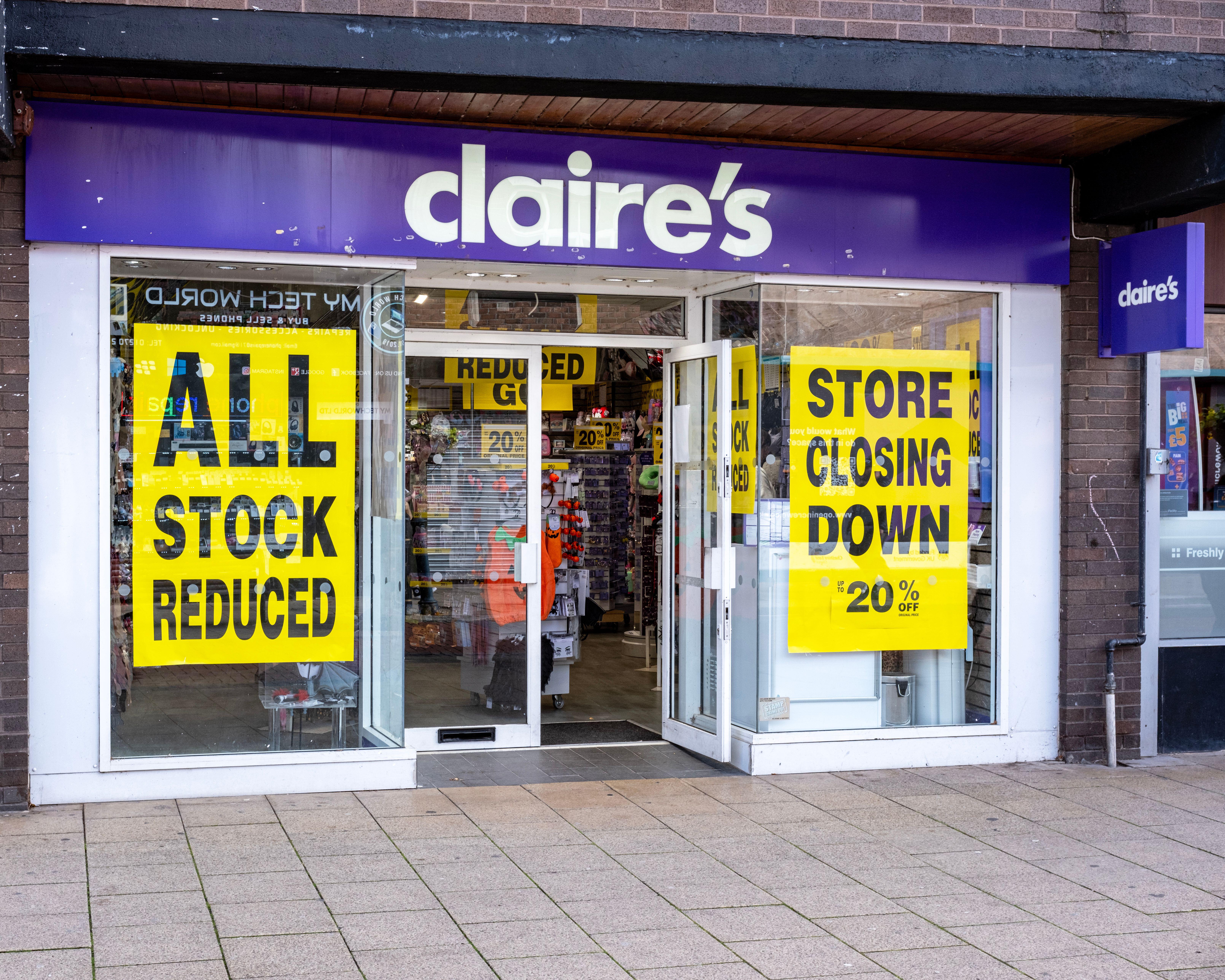
The fashion accessories collapsed into administration in the UK and Ireland in August
ALAMY
Notable examples of retail firms to call in the administrators in 2025 included the UK arm of Claire’s Accessories, which did so in August and was sold to private equity firm Modella Capital, as well as the upmarket tiles brand Fired Earth, which closed its estate of 20 showrooms in November.
Other casualties included online retailers Bodycare and SilkFred, and the independent musical instruments store GAK in Brighton.
River Island and Poundland, meanwhile, both narrowly avoided going into administration by putting forward significant restructuring plans, which were both approved by the High Court.
Kroll’s data covers only administrations, which are typically used when a struggling company’s creditors believe a better outcome than liquidation can be achieved.
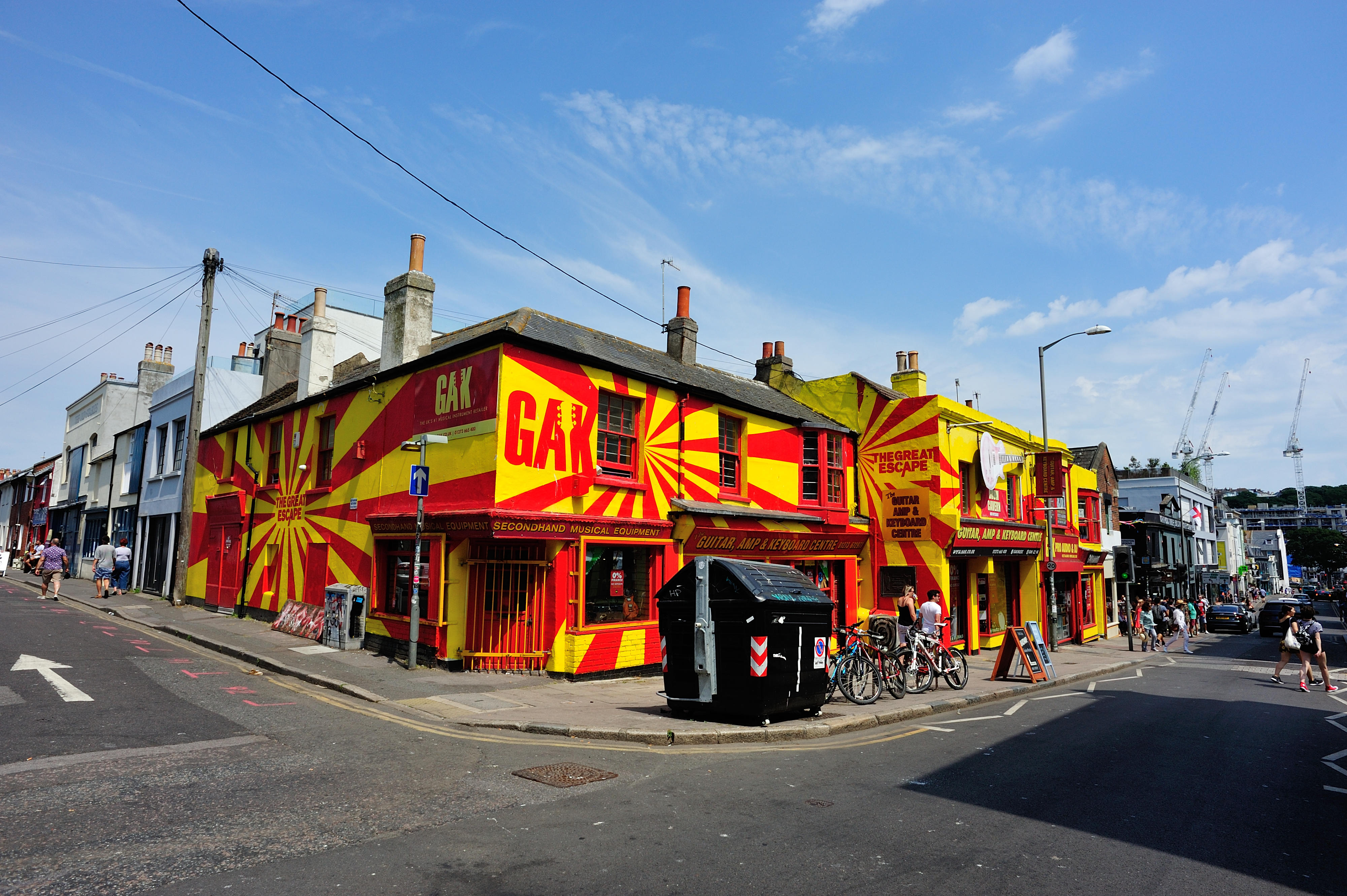
The independent musical instruments store GAK, which stands for Guitar, amp and keyboard, was a key part of the Brighton music scene for more than three decades
ALAMY
It is not just retailers facing the prospect of a challenging year. According to Begbies Traynor’s data, the number of bars and restaurants in critical distress rose by 14.1 per cent in the last quarter of the year to 1,034.
Julie Palmer, regional managing partner at Begbies Traynor, said: “If anything, the situation with the hospitality sector is even more precarious. Typically, this sector operates on narrow margins and even small changes to the cost base can have a devastating impact.”
A government spokesman said: “We are a pro-business government that has capped corporation tax at 25 per cent — the lowest rate in the G7 — capped business rates with a £4.3 billion support package, and have seen interest rates cut six times since the election, benefiting businesses in every part of Britain.
“The fair and necessary decisions we made at this budget and the last mean we can deliver on the country’s priorities — cutting debt and borrowing and cutting the cost of living.”