
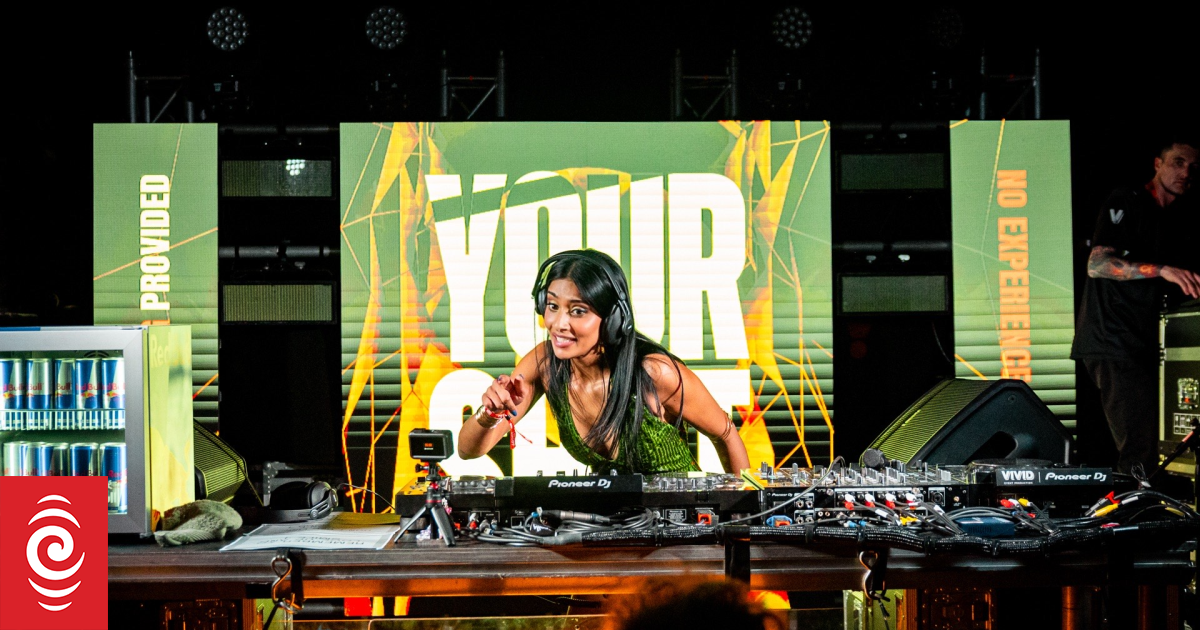
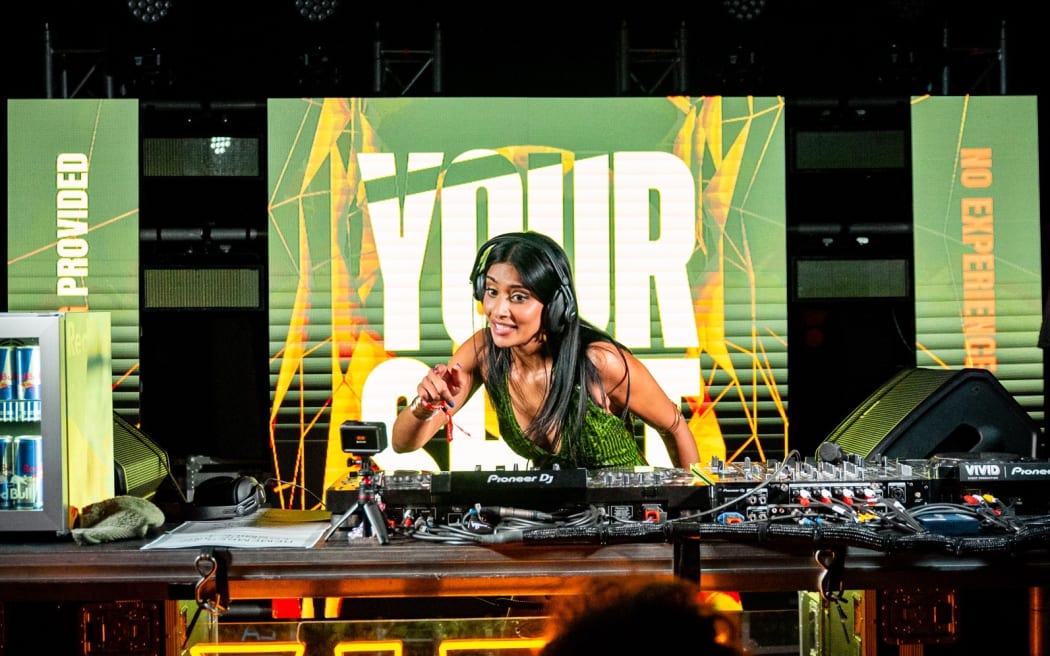
Natasha Bidesi, also known as TA$H, says Indian DJs are underrepresented in New Zealand’s nightlife scene.
Photo: Supplied
More young Indian New Zealanders are stepping up to the decks, blending Bollywood, Punjabi and electronic sounds as DJ culture gains a stronger foothold in the community.
What was once a niche hobby has increasingly become a serious pursuit, particularly for women who say the space is slowly opening despite longstanding cultural and industry barriers.
Natasha Bidesi, also known in the DJ world as TA$H, is among those new to the scene.
Originally from Fiji, Bidesi is of Indian origin but has grown up in New Zealand.
She also runs a communications and marketing consultancy.
“I’ve always loved music and how it brings people together,” Bidesi says. “I love the freedom and expression that dance and movement bring.”
Bidesi says she has been organising events for several years, with DJing feeling like a natural progression.
However, she says Indian DJs remain underrepresented in New Zealand’s nightlife scene.
“I would say we’re a minority,” she says.
She points to what she describes as a paradox in the Indian community when it comes to creative careers.
“Our history is deeply rooted in the arts,” she says.
“My first interaction with the arts was through Bollywood films, but growing up we’re often pigeonholed by pressures to focus on academia.”
Rayna Sangita Deo, who performs as Raynstorm, agrees.
Deo, who is of Indian heritage from Bihar with parents originally from Fiji, admits struggling to find role models when she first entered the DJ scene.
“When I got into the scene, I felt like there were no other Indian DJs around that I could relate to,” she says.
“Over time I was glad to see a few familiar faces, but it was still just a very small handful.”
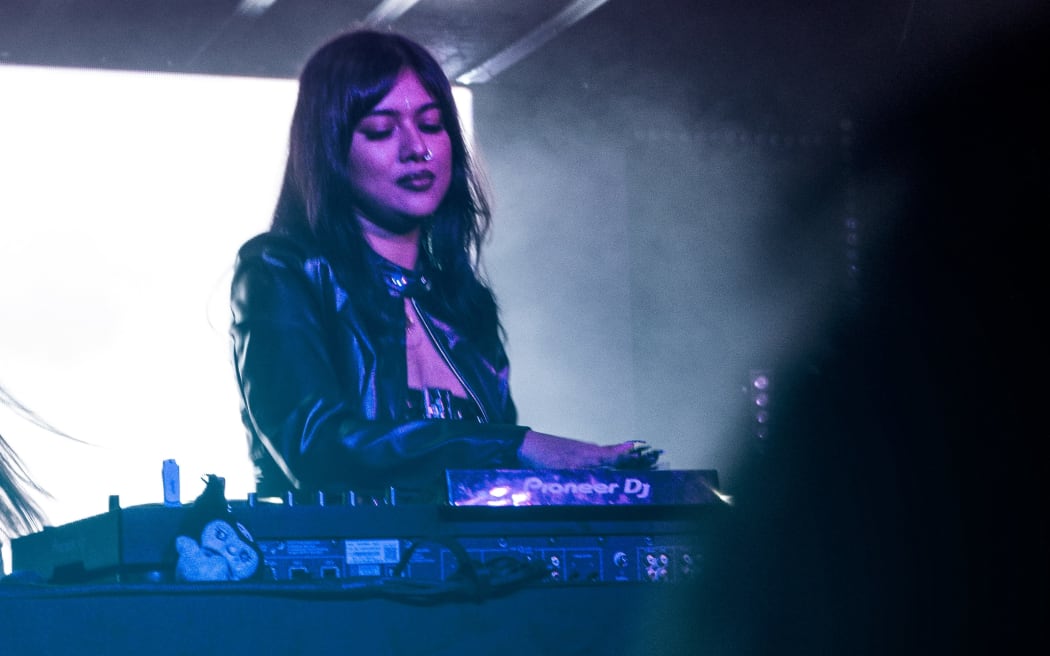
Rayna Sangita Deo, also known Raynstorm, struggled to find role models when she first entered the DJ scene.
Photo: Supplied
Deo says safety concerns and a lack of encouragement has historically held many Indian women back from DJing.
“A lot of Indian DJs I’ve seen tend to hold themselves back, and that’s something I like to push against,” she says.
She also says working as a DJ is unfamiliar territory for many Indian families, including her own.
“My family initially saw it as a hobby, not a career,” she says.
“But the more effort I put into it, and the more recognition and success I received, they began to see that it could be a viable career.”
Deo believes attitudes are changing, with more women stepping into the space, a view Bidesi shares.
“We make up so much of the population, and I saw it in how we dressed and expressed ourselves,” Bidesi says.
“I thought we needed to learn to take up space and own the places we were in, because culturally, as brown girls, we were often taught to shrink ourselves, and that was not very freeing.”
Amita Kala, who performs as Basmami, has been working as a DJ since 2002.
A third-generation Gujarati born in South Africa, Kala moved to New Zealand at the age of 10.
Kala is also the founder of Aunty’s House.
“What got me into DJing was being around other DJs,” Kala says.
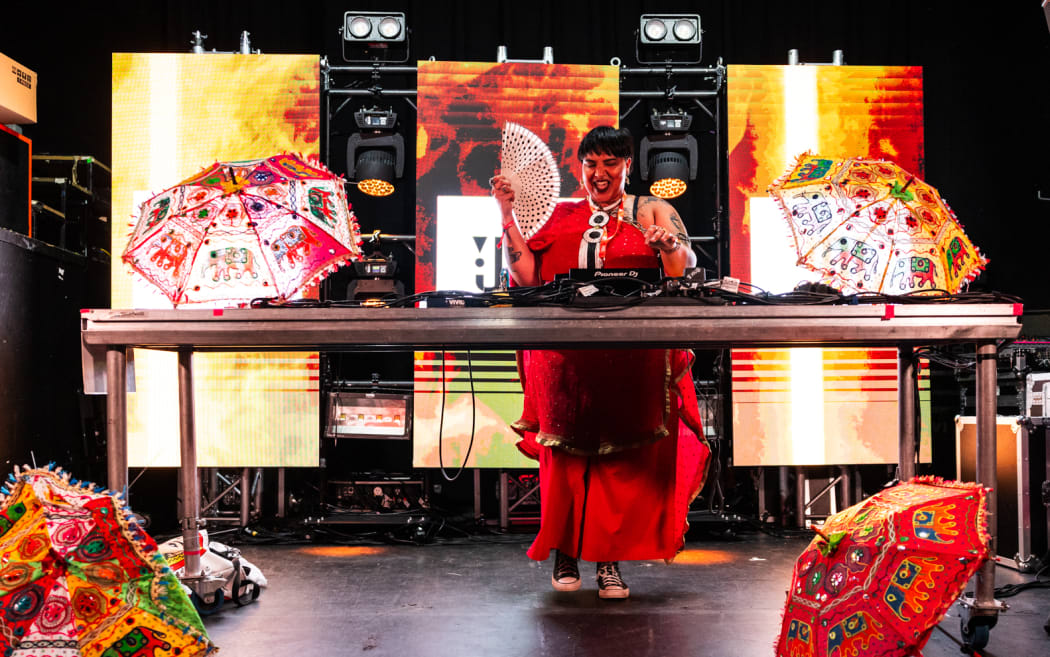
Amita Kala, also known as DJ Basmami, wants to create safe spaces for queer and Black, Indigenous and people of colour communities.
Photo: Supplied
Kala admits to being inspired by DJ HALFQUEEN and DJ Shaka and enjoys weaving Indian culture into her sets.
“I often describe my genre as millennial nostalgia with Bollywood bangers,” she says.
“I’m a performance DJ,” she says. “I have a theatre and dance background, so when I’m DJing, I’m telling a story and giving people the energy to witness that.”
Kala also describes herself as a political DJ, saying she was deliberate about the tracks she played.
“I’ll play Aaradhana’s new album, and in one of my sets I played Tama Iti’s ‘Mana’ speech,” she says. “Some DJs will even include chants like ‘from the river to the sea, Palestine will be free’.”
She says creating safe spaces for queer and Black, Indigenous and people of colour communities in New Zealand was central to her work.
New arrivals to both DJing and New Zealand are also finding opportunities to explore the craft.
Darwin Castellino, performing under the pen name Don Castle, arrived from Mumbai nearly three years ago to study.
While he had experimented with bedroom DJing in India, he never pursued it professionally.
“When I came to New Zealand, it was a whole different game,” he says.
“I started meeting people, going to clubs and seeing artists. It was a completely different culture.”
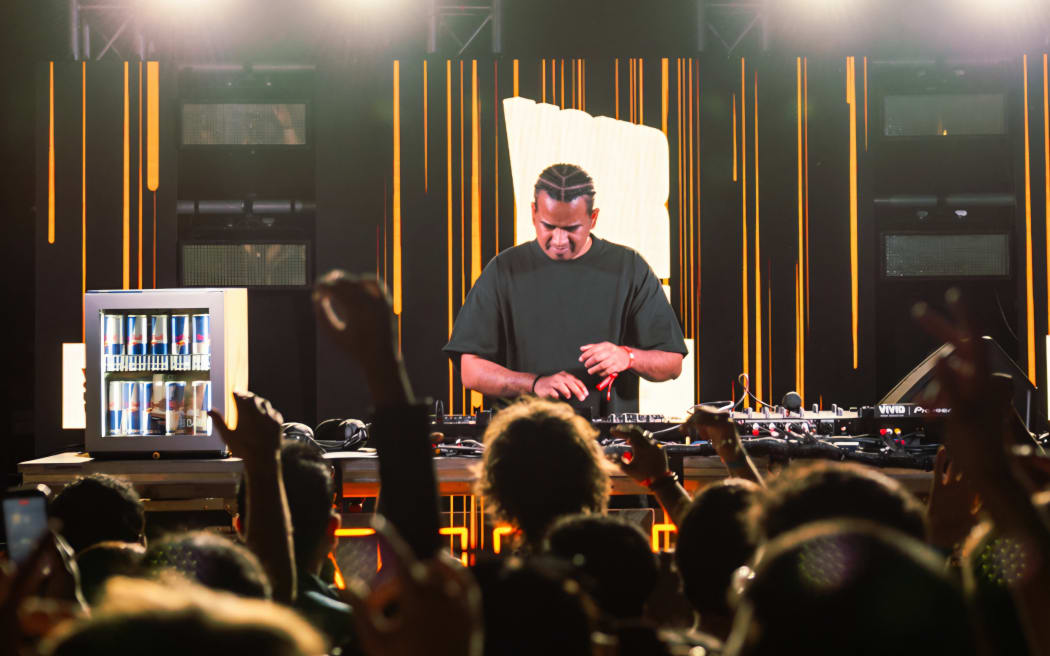
Darwin Castellino is originally from Mumbai, India.
Photo: Supplied
Castellino says one key difference between India and New Zealand is the flexibility to DJ part time.
“In India, there’s no concept of a part-time DJ,” he says. “You’re either all in or all out.”
Working in finance, Castellino says New Zealand has allowed him to balance both careers.
He is now focused on creating his own music and hoping to release work next year.
Joshua Joe from Kerala is also new to DJing.
Known as J Square, he says attending a DJ competition last year had inspired him to give it a go.
“I thought, ‘If they can do it, why can’t I?” he says.
“I started researching how DJing works and what I needed to learn.”
Joe says nightlife is limited in the part of India he comes from, and that DJing in New Zealand has helped him discover a new side of himself.
“I’m learning so much and I’m grateful to be in a country where I can do this,” he says.
“I’m very thankful to New Zealand for that.”
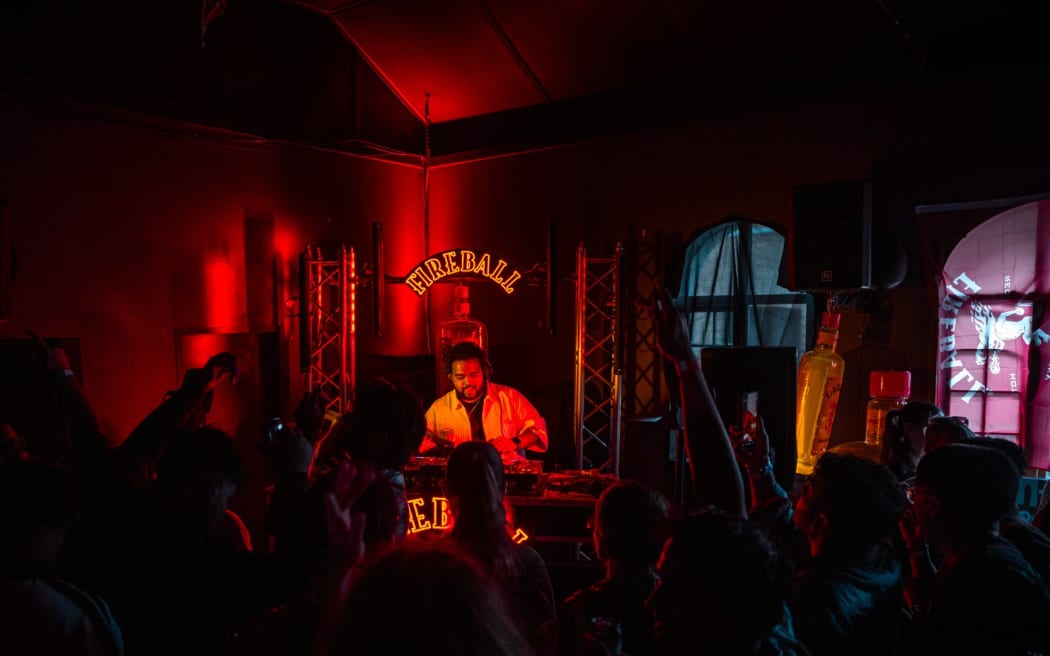
Joshua Joe says DJing in New Zealand has helped him to discover a new side of himself.
Photo: Supplied
All of them agreed that having Indian heritage was an added advantage for DJs in New Zealand.
“We’re exposed to music and the arts from a very young age because of our culture, so there’s often no real separation between identity and music,” Bidesi says.
“Most Indian DJs bring Indian sounds into their sets and that makes it even stronger.”