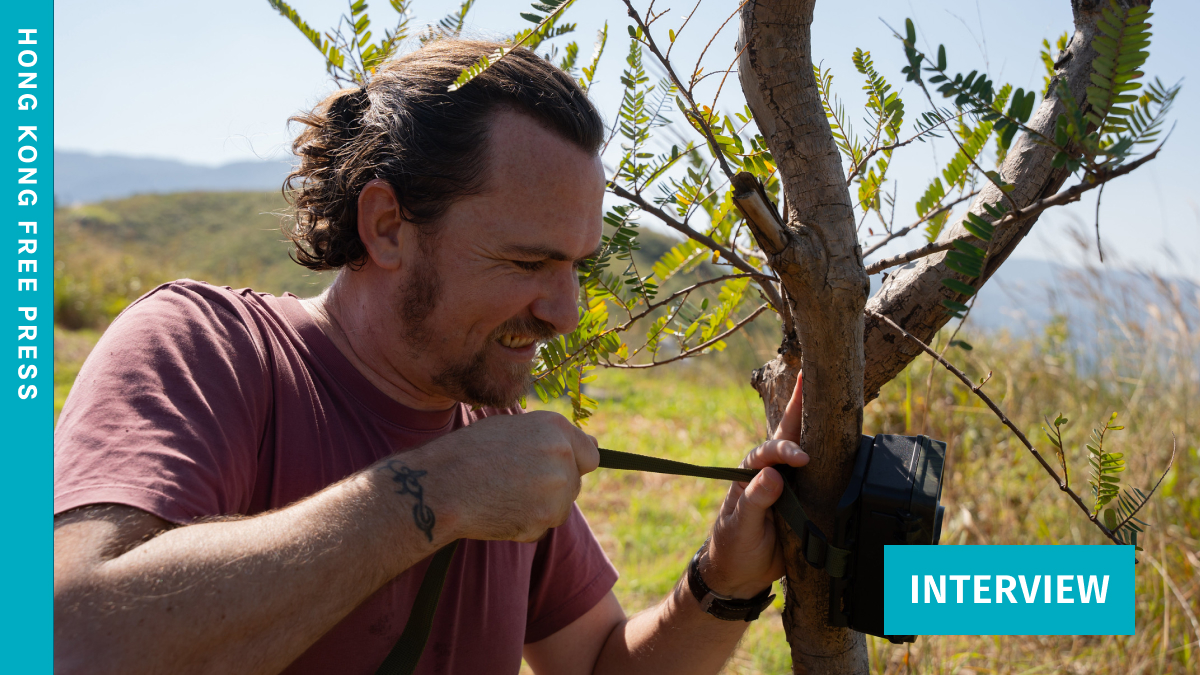
When Hong Kong videographer Chris Owen embarked on an off-trail hike in the countryside 10 years ago to improve his health following a lung collapse, what he saw across a small ravine changed his life.
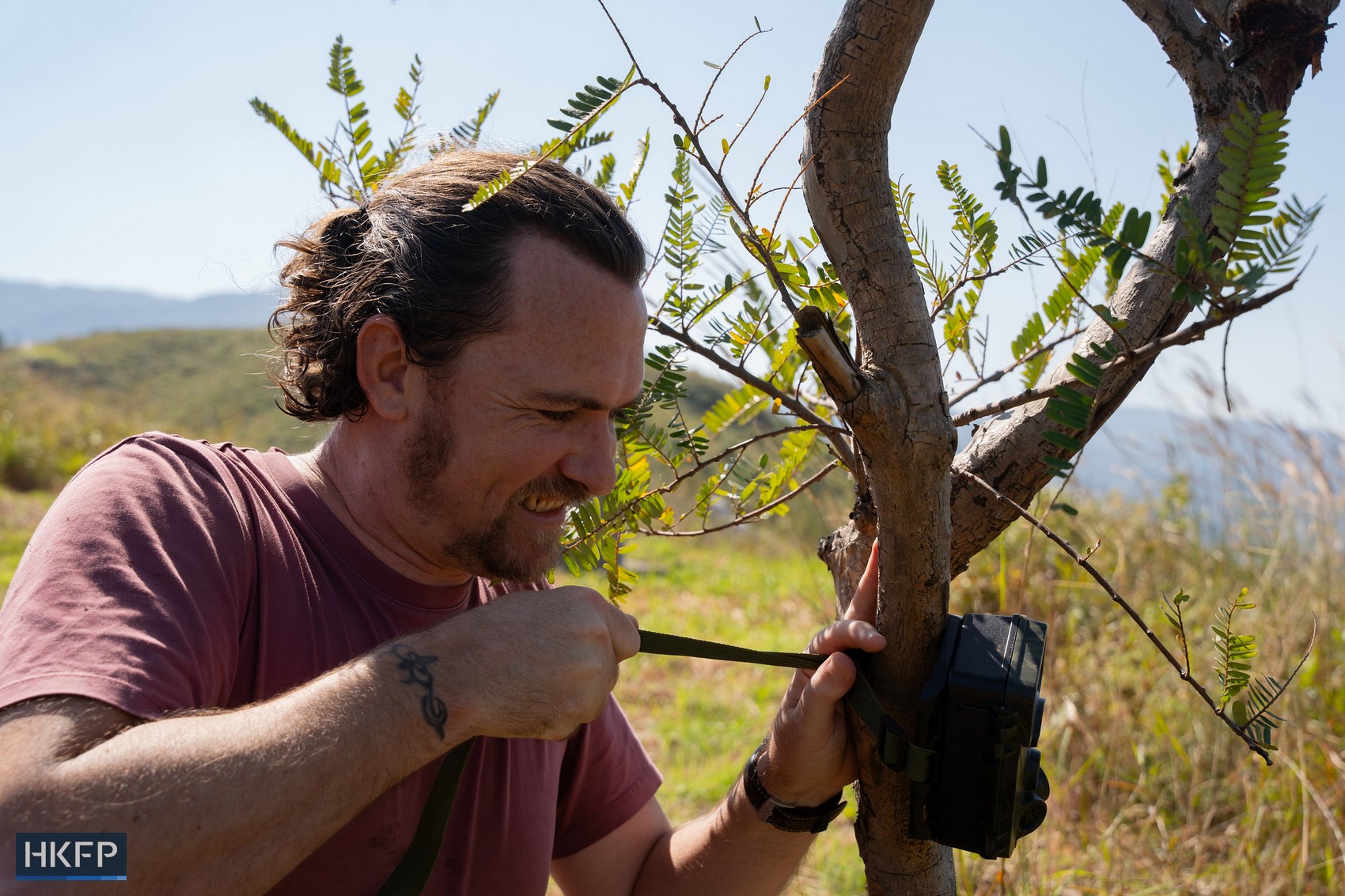 Hong Kong-British wildlife videographer Chris Owen. Photo: Kyle Lam/HKFP.
Just about five metres away, a barking deer popped out, looked at him, and then walked away. The 37-year-old Brit, who described himself as a city boy who grew up around skyscrapers and dense urban landscapes, was in complete shock.
The one-second encounter felt like a full minute, the filmmaker recalled in an interview with HKFP.
“It was the first time I’d ever seen a wild creature besides a dog or a cat [in Hong Kong]. I’d probably seen pigs before too… I remembered hearing long ago that there were deer in Hong Kong. I didn’t believe it until I saw one,” Owen said.
Fuelled by his passion for filmmaking and curiosity to find out what other wild species were hidden in Hong Kong’s off-beaten paths, Owen took his camera gear and returned to the same location in the hope of capturing them on screen.
Despite his repeated attempts and sitting on the mountainside for hours in the early morning, Owen got nothing. He would hear rustling in the bushes or other noises, but no wildlife would make an appearance.
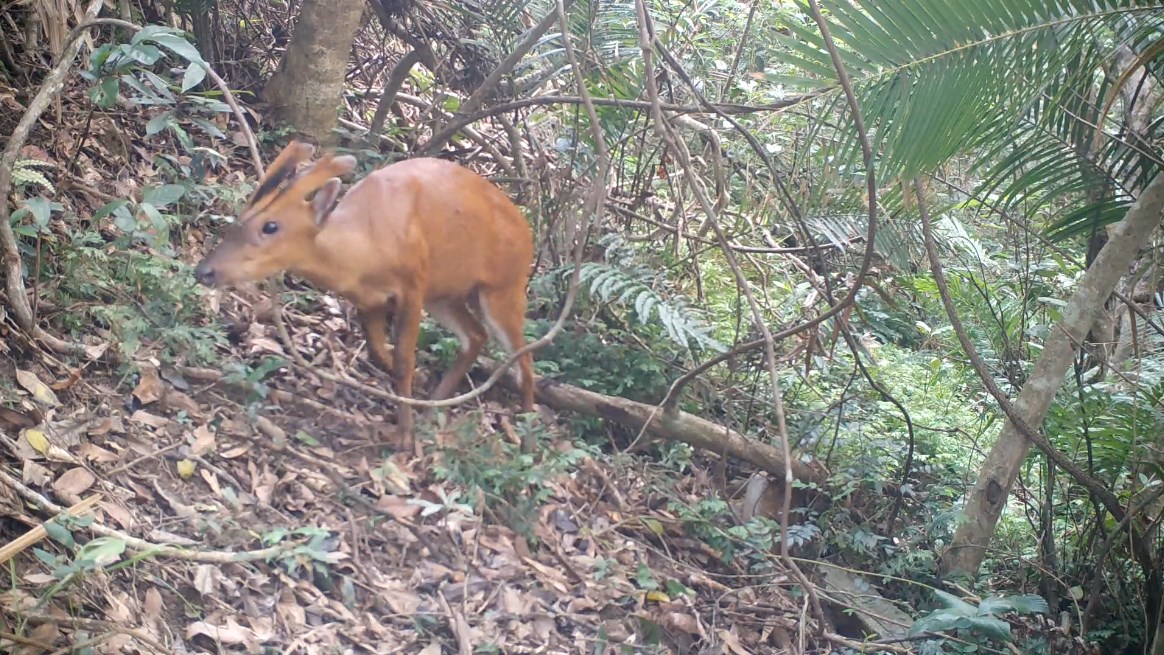 A barking deer in Hong Kong. Photo: Screenshot, via Chris Owen.
He later learned that the animals could detect his scent and therefore would not go near him. The city’s thick, dense forests also made it difficult to spot them.
After some research, Owen discovered trail cameras – a scouting tool frequently used by hunters to identify areas with active animal presence and determine their routines.
The camouflaged camera, equipped with infrared sensors, captures a photo or video when it detects heat and movement without spooking the subject. Some advanced and more expensive models allow users to access the content from their smartphones at a remote location without retrieving the SD card.
The videographer began setting up cameras at different countryside locations. Some required him to navigate through overgrown terrain, while others could only be accessed by sliding downslope with a rope.
One time, Owen found himself stuck in a swamp for hours while trying to reach a setup location. More than half of his body was covered with mud when he eventually managed to get out.
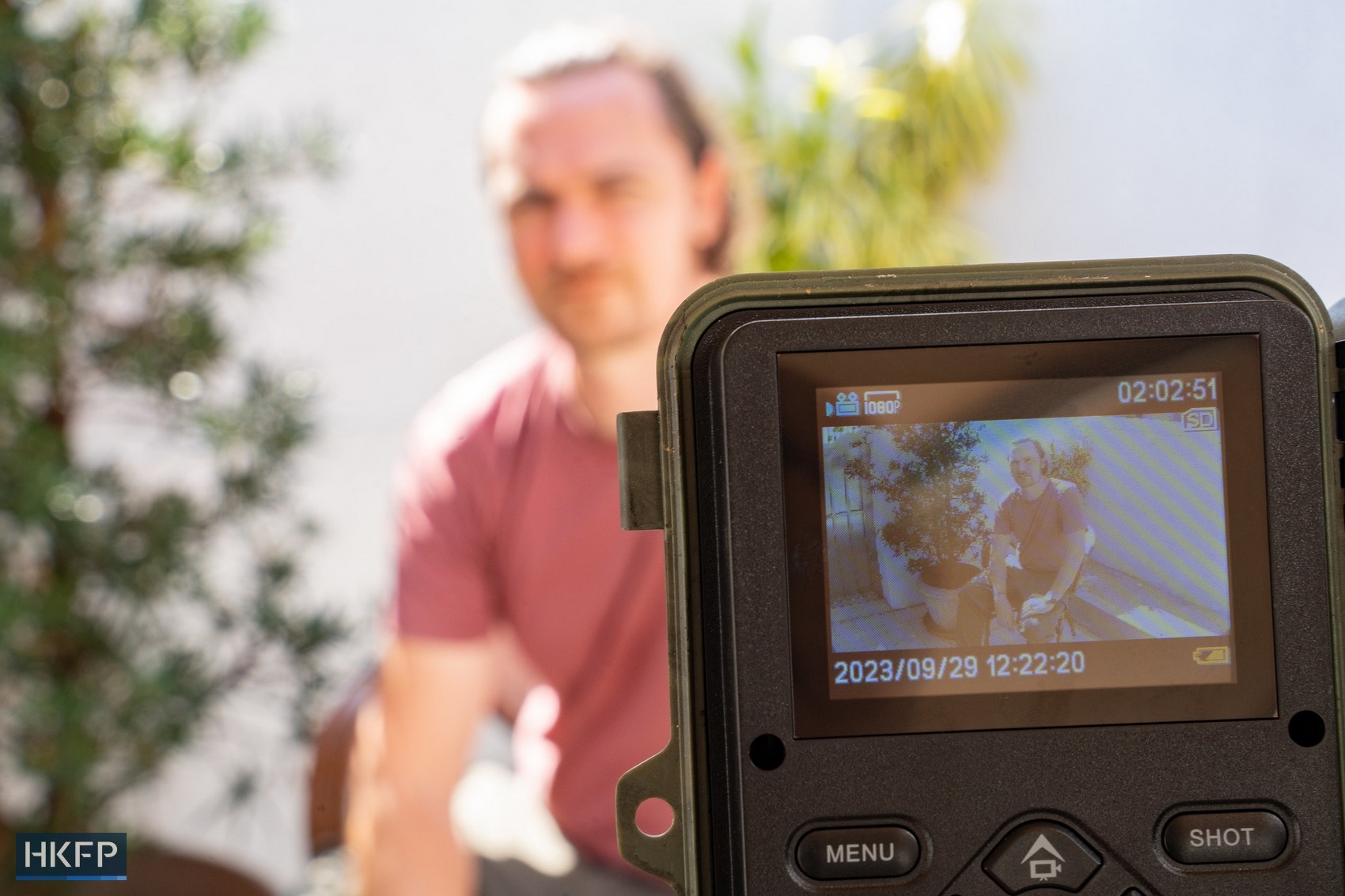
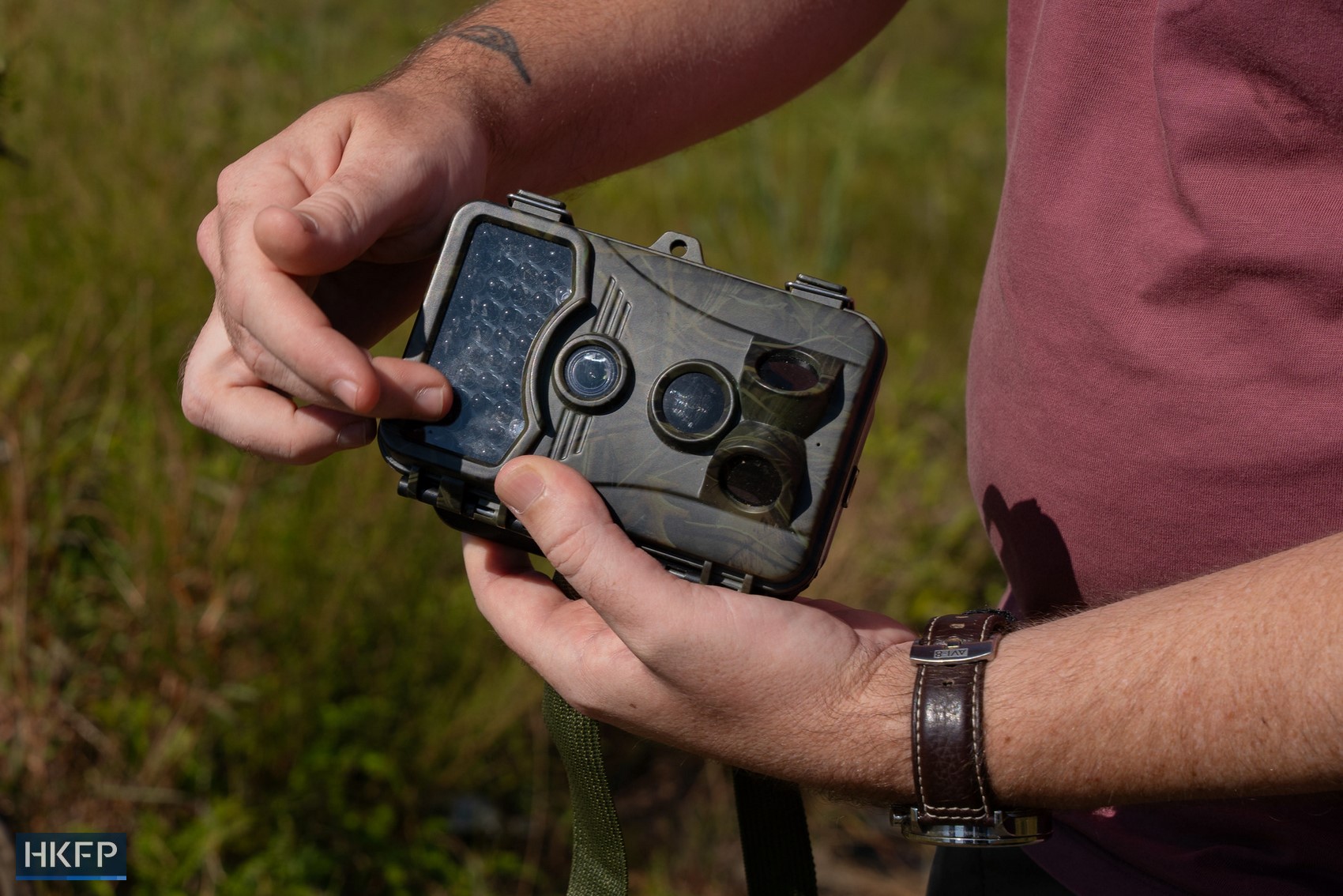 Wildlife videographer Chris Owen showcases a trail camera he used to capture animal sightings in Hong Kong. Photo: Kyle Lam/HKFP.
Since 2019, Owen has posted nearly 400 images and videos of precious wildlife sightings on his Instagram page “Wild About Hong Kong.” He has also produced long-form videos about the city’s fauna and shared them on his YouTube channel.
So far, he has captured at least 10 mammal species on camera, including the Chinese mongoose, masked palm civet, Malayan porcupine, ferret-badger, leopard cat, and wild boar.
Some of these creatures featured in the “Hong Kong Fauna” stamp collection released in 1982, which celebrated local biodiversity. They were all relatively easy to capture on trail cameras except one: the critically endangered pangolin.
Hong Kong is home to the Chinese pangolin, which has been heavily trafficked to the brink of extinction. In some cultures, its meat is treated as a luxury delicacy, while others claim its scales have medicinal value. In 2020, the World Wide Fund for Nature estimated that more than one million pangolins had been trafficked globally over a decade. It was estimated that 195,000 pangolins were traded in 2019 just for their scales.
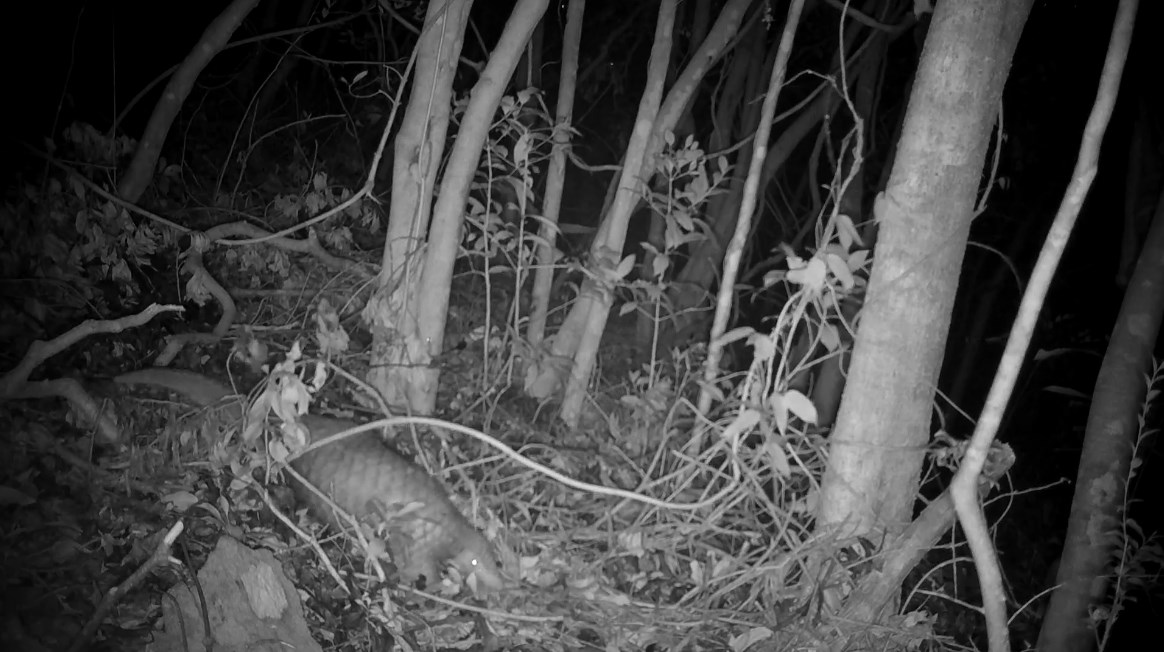 A Chinese pangolin in Hong Kong. Photo: Screenshot, via Chris Owen.
Owen spent around five years searching for this nocturnal species while trying to increase his chances by studying its diet. He was able to find their dens, but many were empty as Chinese pangolins tend to build new homes every year.
After many false hopes, the videographer finally hit the jackpot in 2019. He did not expect to find anything interesting when he retrieved the camera from the wild, but when he clicked through the footage at home, he saw a Chinese pangolin standing right in front of the lens.
“I slapped the table. I was super happy,” Owen said.
Apart from coming across rare species in the territory, the videographer said unexpected animal behaviour has also kept the years-long documentation process interesting.
One time, he captured a family of wild boars attempting to walk along the same route. A piglet climbed on top of its mother’s snout, only to be met with “tough love” as the adult boar flicked it away, sending it flying across the bushes. The young piglet immediately got back on its feet, however, and climbed on top again, Owen recalled.
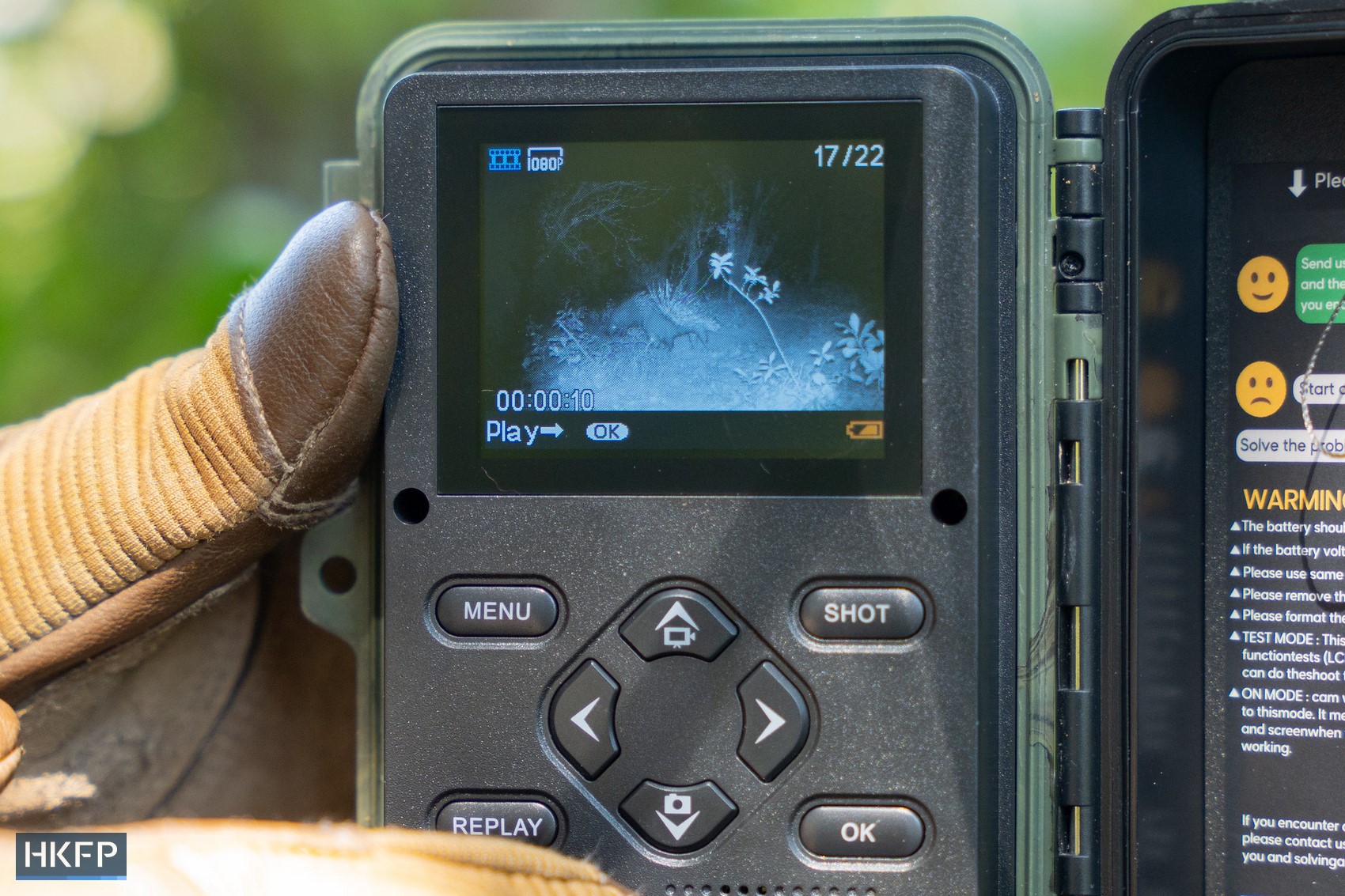 Videographer Chris Owen captures a porcupine on his trail camera. Photo: Kyle Lam/HKFP.
He has also caught suspected poachers on camera in areas where he found animal traps. In one clip, a poacher walked towards the trail camera with a knife in hand. Luckily, no damage was done to the device.
See also: Hong Kong adds illegal wildlife trade to organised crime ordinance, bolstering investigatory powers
The videographer once owned as many as 16 trail cameras, but the number dropped to four after many were stolen or damaged in the wild.
Owen normally leaves his cameras at a location for at least two weeks, allowing time for his scent on the device to wear off. There are tricks to get rid of his smell, but he was reluctant to try them because they involve using deer urine, which is “kind of gross,” he said.
Capturing rare wildlife sightings on camera is by no means just luck. Owen has spent years honing his animal-tracking skills, such as identifying paths forged by wild boars that allow other creatures to use them, as well as recognising droppings.
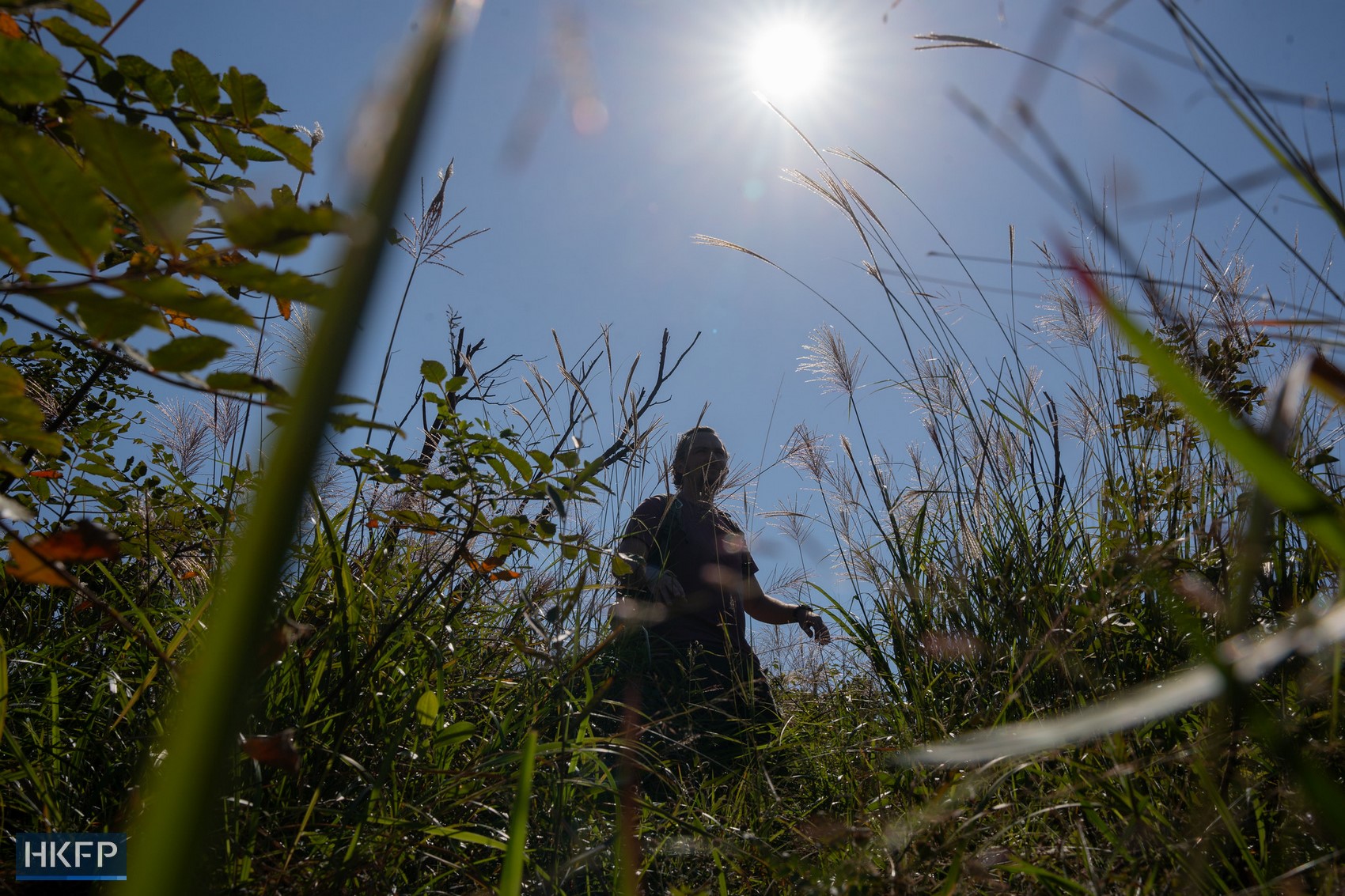 Hong Kong-British wildlife videographer Chris Owen. Photo: Kyle Lam/HKFP.
This skill set started developing years before Owen’s fascination with nature began.
The filmmaker was born in Malawi and spent the first two years of his life there. After relocating to Hong Kong, his family returned to the African country – which has rich flora and fauna – once a year for more than a decade. Owen’s father, a geology professor, took the youngster on safaris, giving Owen the opportunity to learn about searching for wildlife and monitoring their movements.
Little did Owen know that such experiences would become valuable resources that helped him become a wildlife videographer years later.
Owen’s expertise has opened doors for him to collaborate with various organisations and bodies. For instance, the Hong Kong Golf Club in Fanling, curious about the wildlife on its land, asked Owen to set up cameras on its property.
Separately, a cluster of farms plagued by wild boars eating their crops requested Owen’s assistance to investigate how the creatures were entering their fields.
Owen has always kept the locations of his cameras secret to avoid encouraging others to visit the areas, which may harm the wildlife. He, however, welcomes more people to take up the hobby of using trail cameras to document animals across the city, with one thing to keep in mind: leave as little trace as possible.
 Hong Kong-British wildlife videographer Chris Owen. Photo: Kyle Lam/HKFP.
In the early days, Owen thought leaving food in front of the camera could lure subjects near his devices. He soon learned that it was a bad practice as it disrupted the animals’ diet and normal travelling routines, and he warned fellow wildlife enthusiasts against it.
Hong Kong designates around 40 per cent of its land as country parks and special areas, where statutory protection applies. As the city’s urban development continues to expand, Owen calls on the government and developers to bear in mind that wildlife does not stay contained within country parks. Animals roam freely, and if development cuts off their paths between different areas, it will negatively impact biodiversity.
See also: HKFP Yum Cha: Astrid Andersson on Hong Kong’s critically endangered cockatoo population
It is his dream to work full-time on wildlife videography, Owen said, but the Instagram page and other projects are simply not able to support him financially at the moment.
Still, he hopes his efforts could help raise awareness of the city’s biodiversity and prompt more protection for species that may already be quietly disappearing in a rapidly developing city.
“Anyone can say they are raising awareness for something. Usually, I think it is a bit of a cop-out… but in this case, raising awareness is very important because if you don’t know there are all these creatures here, why would you try to protect [them]?” he asked.
Support HKFP | Policies & Ethics | Error/typo? | Contact Us | Newsletter | Transparency & Annual Report | Apps
Safeguard press freedom; keep HKFP free for all readers by supporting our team