
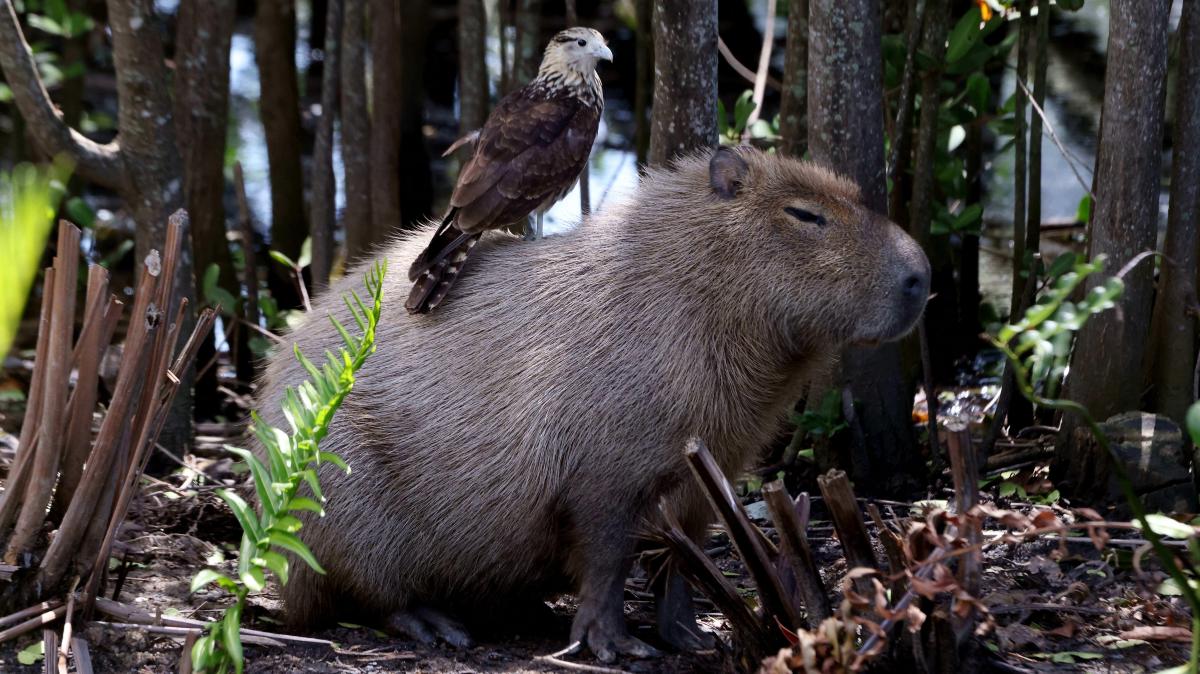
In Rio de Janeiro, near the upscale neighbourhood of Leblon, there’s a new tourist attraction in town. On the shore of Rodrigo de Freitas lagoon, in the shadow of Corcovado, the mountain from where the statue of Christ the Redeemer overlooks the city, a family of capybaras are drawing a crowd of fans.
One of their most ardent admirers is Robert Karp, a retired photojournalist who has lived in the city for two years and witnessed their colonisation of the lagoon’s edge — from a couple of capybaras two years ago to a family of ten by October this year.
“They’re almost like they’re these odd cartoon characters,” says Karp, an American expat who visits them every day. “They’re like 120-pound guinea pigs. I don’t know what it is about them that makes them so likeable, but I’m on board.”

In cities across South America, capybara numbers are on the rise. The largest rodent native to the continent, they live on land and in water, near lakes, rivers and mangroves. During the pandemic, when Brazil declared a strict lockdown, they encroached further into parks and private gardens. As their numbers rapidly increased, they had to roam further to find grass and fruit to eat.
They are also wildly popular, particularly with children and young people. The 2021 Disney film Encanto featured Chispi the capybara, a Russian song called Capybara has gone viral and tens of thousands of memes of the rodents have taken over TikTok. They are also hugely popular in Japan, although none live in the wild there. There are capybara cafés in Tokyo, as well as Florida in the United States, where the animals “hang out” with customers.
“They’ve become the new meerkat,” says Sharon Walia, a British documentary maker whose film The Route to Cappiness is out in March. She says that in Japan in recent years, thanks to its “kawaii” or “cuteness” culture, capybaras have become cultural icons, and are even used as mascots in temples as symbols of serenity. “You see people walking around Japan with capybara handbags, little capybara tote bags. You just see it everywhere,” Walia says. Brazil has the largest population of Japanese people — about two million — outside Japan.
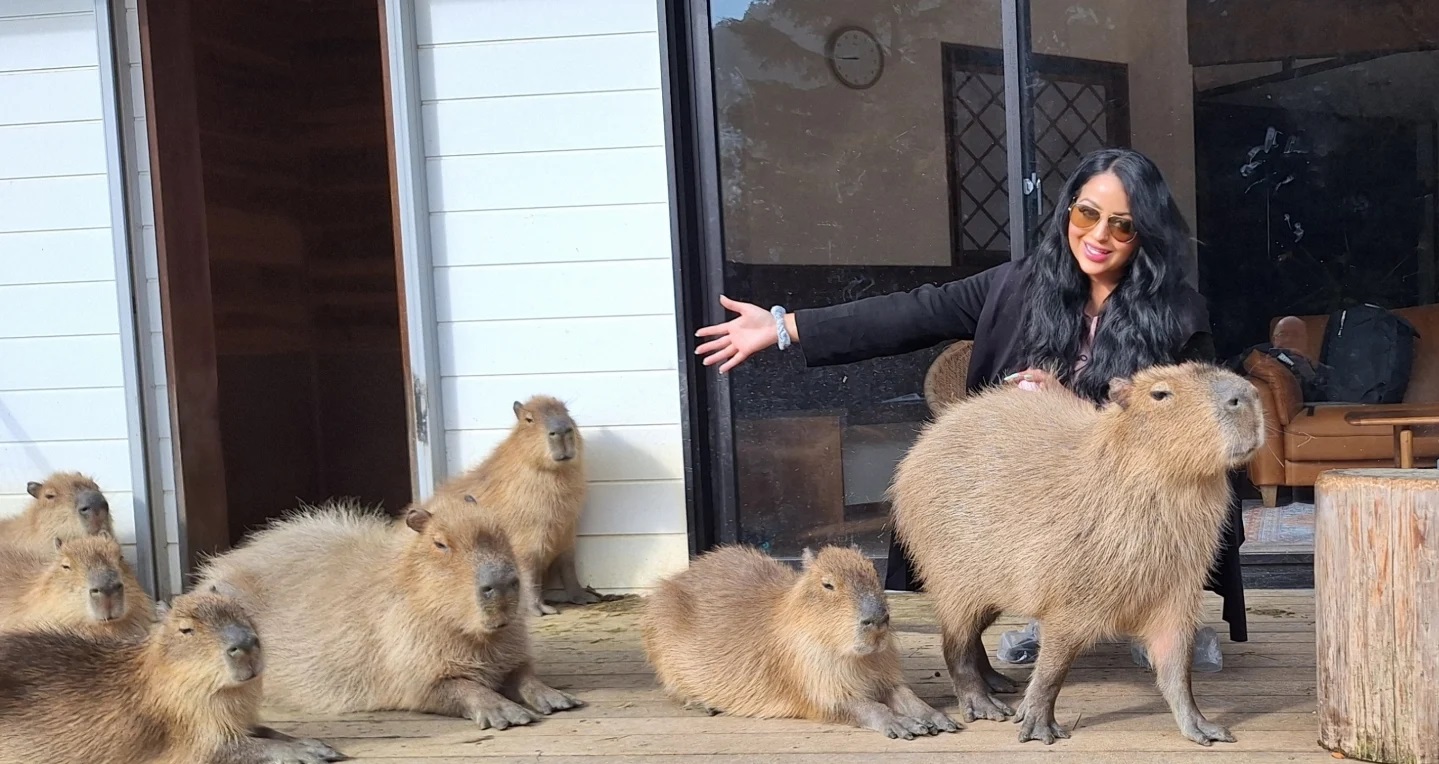
In the UK, too, these animals — once almost unheard of — have been in high demand. Last year a female capybara named Cinnamon spent a week on the run in Shropshire when she escaped from Hoo Zoo and Dinosaur World, making international headlines. In February Edinburgh Zoo acquired two capybaras, while Twycross Zoo in Leicestershire got some in October. Wheelgate Park, in Nottinghamshire, Wingham Wildlife Park, Kent, and Amazona Zoo, Norfolk, also acquired capybaras this year. In November, London Zoo opened its new capybara “spa” enclosure with pools and mud baths. In February, after her return, Hoo Zoo started a new capybara feeding experience with Cinnamon (£80 for two people). It is now their most popular attraction.
In Brazil, capybaras are becoming a common sight. The rodents are legally protected — killing one carries up to a year-long prison sentence and a fine — and, in urban settings, they have no natural predators. They are also very fertile. Females can have two litters a year, with up to eight pups to a litter.
In Sao Paulo state, the capybara population in Ruo do Porto Park has grown by 150 per cent in the past four years. In the wealthy gated area of Nordelta in Buenos Aires, numbers have tripled in two years to 1,000. A sterilisation programme has now begun.
Not everyone is as crazy about capybaras as Karp. While some communities struggle to live alongside the creatures, animal rights protesters have opposed some locals’ calls for them to be culled and sterilised. They are carriers of ticks, which in turn carry the fatal Brazilian spotted fever, and there has been a rise in cases, especially in Sao Paolo state. Capybaras have also destroyed gardens, attacked pets and caused fatal road traffic accidents.

Capybaras on the bank of the Pinheiros River in Sao Paulo
NELSON ALMEIDA/AFP/GETTY IMAGES
Ibram Viroomal, manager of the Amazon reserve in the state of Pará for the conservation charity IPBio, says that indigenous tribes in protected reserves hunt capybaras for food. He thinks that people should learn to live alongside them in cities. “To me, personally, it seems counterintuitive for society to say we should create urban green spaces in urban zones, and then complain about the wildlife that naturally comes along with them.”
To Brazilians, capybaras are “just about as exciting as living in Nottingham and seeing a flock of pigeons”, Walia says. Still, some people are realising the potential for exploiting the current craze. Agenor Tupinambá, a Brazilian wildlife influencer, was filming videos swimming with a capybara called Filo, dressing her up in human clothes, until Ibama, Brazil’s environmental watchdog, confiscated her in 2023. The issue sparked an outcry online, with both sides equally incensed.
The issue continues to create rifts. “We can coexist with capybaras, and one solution would be to put up physical barriers to stop them settling near roads or sports facilities and heavily used parks,” says Juliana Junqueira, who works for Ibama. In Rio de Janeiro, work has just been completed to divert a cycle lane and a fence has been erected around the capybara habitat.
The environmental watchdog recommends that people should keep their distance from capybaras — advice that will be tested as Brazil’s tourist season peaks and visitors flock to see them. “They may have a docile appearance, but people should remember that capybaras are wild, territorial animals,” Junqueira says. “Like all wild animals, they may react defensively, especially when they feel threatened or when offspring are nearby.”