

Cutting carbon dioxide emissions to slow global warming has become an undeniable necessity — but it’s not the only action we need to take. On the first day of the COP30 climate summit, a leading Swedish scientist shared precise data on how much CO2 must be extracted from the atmosphere.
We have no other choice: it’s not enough to simply reduce CO2 emissions — we also have to remove the excess already lingering in the air. Johan Rockström, one of the world’s top scientists in atmospheric science and hydrology, also serves as an adviser to the United Nations and to COP30’s presidency. Based on his calculations, humanity would need to remove a staggering 10 billion tons of CO2 from the air every year to have a chance of limiting global warming to +1.7°C compared with pre-industrial levels. In any case, the limit set by the 2015 Paris Agreement, +1.5°C, will inevitably be exceeded.
But according to Rockström, it’s theoretically possible not to surpass +1.7°C if humanity succeeds in removing that enormous quantity of CO2 from the atmosphere. How? It would require building an entirely new industrial sector — carbon capture. Some experiments have already been carried out, though most projects remain confidential.
Why aren’t we moving faster to develop and implement this technology? Because capturing carbon on a massive scale is extremely expensive, and the investment still isn’t profitable. According to The Guardian, it could cost trillions of dollars. Yet the economic challenge isn’t the only concern: once the carbon is captured, it has to be stored underground, which could have harmful environmental side effects.
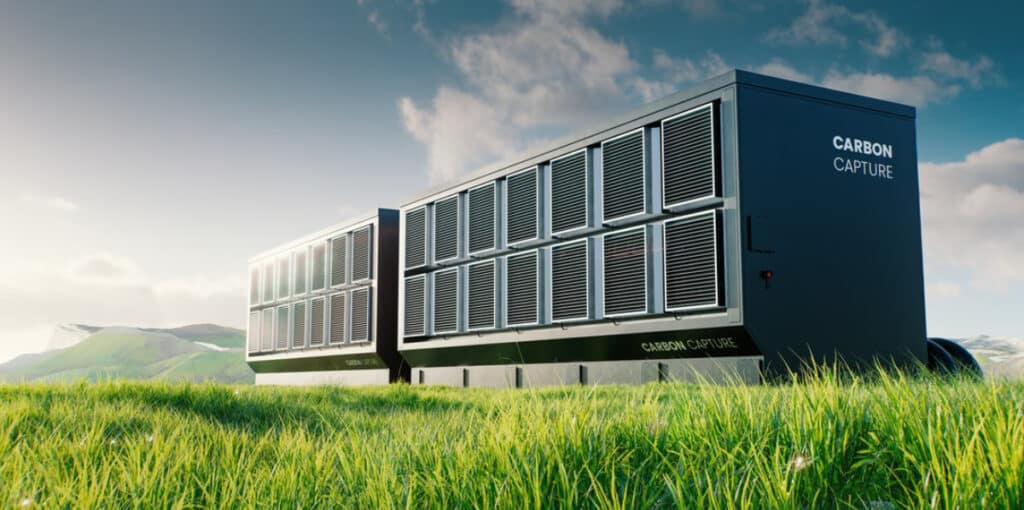
Technological CO2 sequestration in the soil is extremely expensive. © malp, Adobe Stock
There are technological and natural ways to remove excess carbon
So, are we really stuck? Alongside reducing annual CO2 emissions, there’s an effective and far cheaper way to store excess carbon: protecting and expanding forests. This approach costs an average of $50 for each ton of CO2 removed — a fraction of the $200 per ton required by industrial methods. How societies choose to remove this excess CO2 was one of the central topics discussed at the most recent COP conference.

Karine Durand
Specialist for extreme weather and environment
A specialist in extreme weather phenomena and environmental issues, this journalist and TV host has been explaining climate topics since 2009. With over 15 years of experience in both French and American media, she is also an international speaker.
Trained in communication and environmental sciences, primarily in the United States, she shares her passion for vast natural landscapes and the impacts of climate change through her work on biodiversity and land management.