
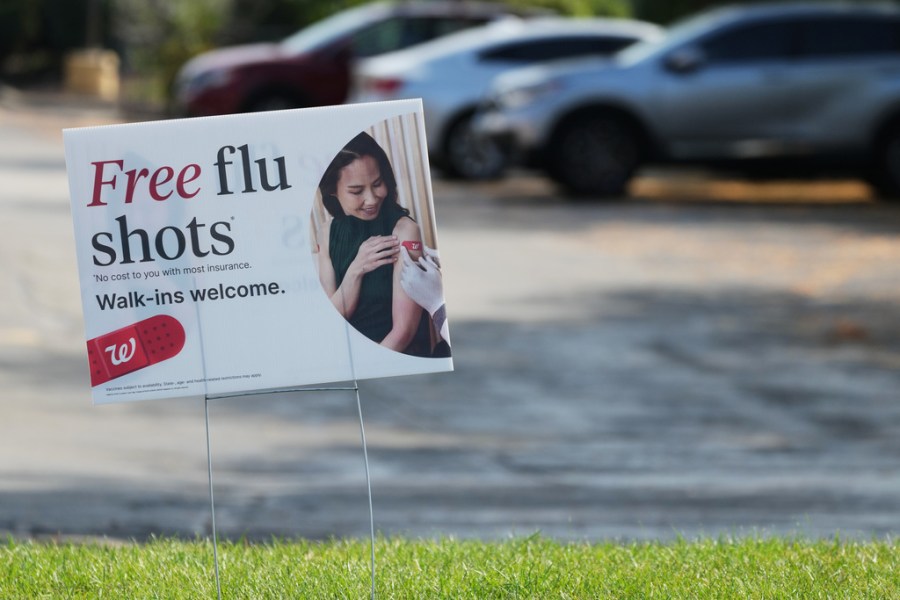
Flu activity is rising sharply across the country, according to new data from the Centers for Disease Control and Prevention (CDC), with some areas seeing record-high numbers of illnesses.
The numbers come as experts brace for a particularly harsh season driven by a new, mutated variant of the virus that is circulating widely.
According to estimates posted by CDC on Dec. 30, there are 32 states and jurisdictions — including South Carolina; Louisiana; Washington, D.C.; and New York City — showing “high” or “very high” levels of flu.
The CDC estimates there have been at least 7.5 million illnesses, 81,000 hospitalizations and 3,100 deaths from flu so far this season. At least eight children have died from flu this season.
While the CDC said this influenza season is not severe, “flu activity is expected to continue for several weeks.”
Laboratory testing, outpatient health care visits, hospitalizations and mortality are all higher than they were in the previous Dec. 19 update, which CDC said signaled the start of the flu season.
Experts generally anticipate flu cases will most likely to peak in January or February, surging after winter travel and holiday gatherings.
Influenza A(H3N2) viruses are the most commonly reported. Health officials and experts have expressed concern that the current flu vaccine may not be a good match for the dominant variant circulating — subclade K — but they say the vaccine will still protect against serious illness.
Subclade K earned the nickname “super flu” because it drove high numbers of cases elsewhere in the world. Subclade K emerged at the tail end of the Southern Hemisphere’s flu season, after the World Health Organization and U.S. health agencies chose the strain the vaccine would match.
The vaccines take months to make, bottle and distribute, so health agencies typically meet toward the end of one flu season to prepare for the next. Scientists use data from the previous year to predict which strains of the virus are likely to be most prevalent over the coming year.
“Flu shot IS mismatched” with the dominant strain this year, “but still worth it,” former Surgeon General Jerome Adams wrote on the social platform X.
Even partial protection from the vaccine “makes flu milder if you catch it,” Adams wrote, noting that “partial” protection is better than “none… especially in a bad season.”
Early data from England this year showed that the vaccine was around 70 percent to 75 percent effective at preventing flu hospitalization in children, and around 30 percent to 40 percent effective at doing so in adults.
The CDC recommends that everyone ages 6 months and older get a flu vaccine each season. But vaccination rates have been decreasing in recent years.
Only about 130 million flu vaccines have been distributed this season, CDC data shows, 13 million fewer doses than at this point last year. As of Dec. 13, 42.3 percent of children reportedly received a flu vaccination, according to CDC, similar to the 41.9 percent last season at the same time point.
CDC said 42.2 percent of adults reported they had received a flu vaccination, higher than the 40.5 percent last season at this same time point.
There are now at-home tests that can detect both COVID-19 and the flu. If someone is infected with the flu, prescription antiviral drugs can be effective at lessening the severity of symptoms. According to CDC, treatment of flu with flu antiviral medications works best when started almost immediately, just one to two days after symptoms begin.
Starting antiviral treatment shortly after symptoms begin also can help reduce some flu complications. If someone has symptoms for more than five days, doctors say antivirals may not be very effective.
However, starting antivirals later can still be beneficial, especially if the sick person is at higher risk of serious flu complications or is in the hospital with more severe illness.
The most common is oseltamivir, the generic version of Tamiflu. It’s available as a pill or liquid suspension and is approved by the Food and Drug Administration for early treatment of flu for adults, children and babies as young as 14 days old.
Some doctors also prescribe antivirals as a preventative for people who are at high risk for the virus if they are exposed.
Copyright 2026 Nexstar Media, Inc. All rights reserved. This material may not be published, broadcast, rewritten, or redistributed.
For the latest news, weather, sports, and streaming video, head to The Hill.