
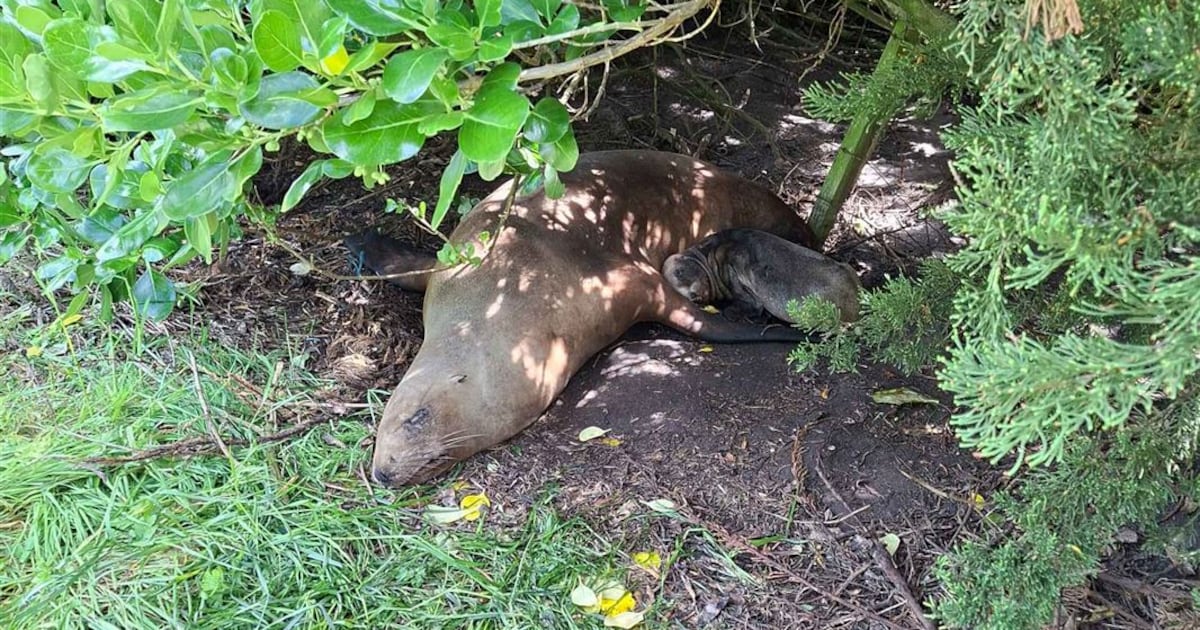
The first pakeke pup of the Otago, New Zealand sea lion breeding season has arrived. While the birth marks a successful breeding season for the nationally endangered species, the public is urged to remain alert for sea lions while travelling during summer.
Pakeke are one of the world’s rarest sea lion species only found in Aotearoa. They face threats from human activity including fishing, and diseases and pup mortality.
The pup was born by their mother, a six-year-old sea lion named Tui, on Christmas day. The pup’s gender isn’t known yet but may be determined during the Department of Conservation’s tagging process later this year.
Tui is directly descended from Mum, who gave birth to the first pup born on mainland New Zealand in 1993 following a 150-year of absence of breeding for the species. To achieve breeding colony status at least 35 pups need to be born every year for five years.
Department of Conservation (DOC) biodiversity ranger Moss Thompson says there are “approximately 49 breeding-age females in our population this year and we are expecting around 35 pups.”
Breeding occurs over the summer months and breeding colonies occupy the same sites every year. The pups are born on the breeding beach but are moved by their mothers into nearby vegetation when they reach about six weeks old.
“They are very vulnerable during this time so please give them plenty of space and leave them time to rest and form essential mother-pup bonds.”
Thomspon says there may be changes to access tracks on some beaches including signs requesting no dogs or for dogs to be kept on leads.
“These changes will be temporary while we have mums and pups using these areas. Please follow this signage when you’re out naturing in the area and be prepared to use another access route or walk your pooch in the other direction.”
Pakake will also be crossing the roads and using parks in coastal areas so travelers are advised to drive carefully.
DOC staff, mana whenua and New Zealand Sea Lion Trust volunteers will continue to monitor areas where pakeke are located over Summer.