
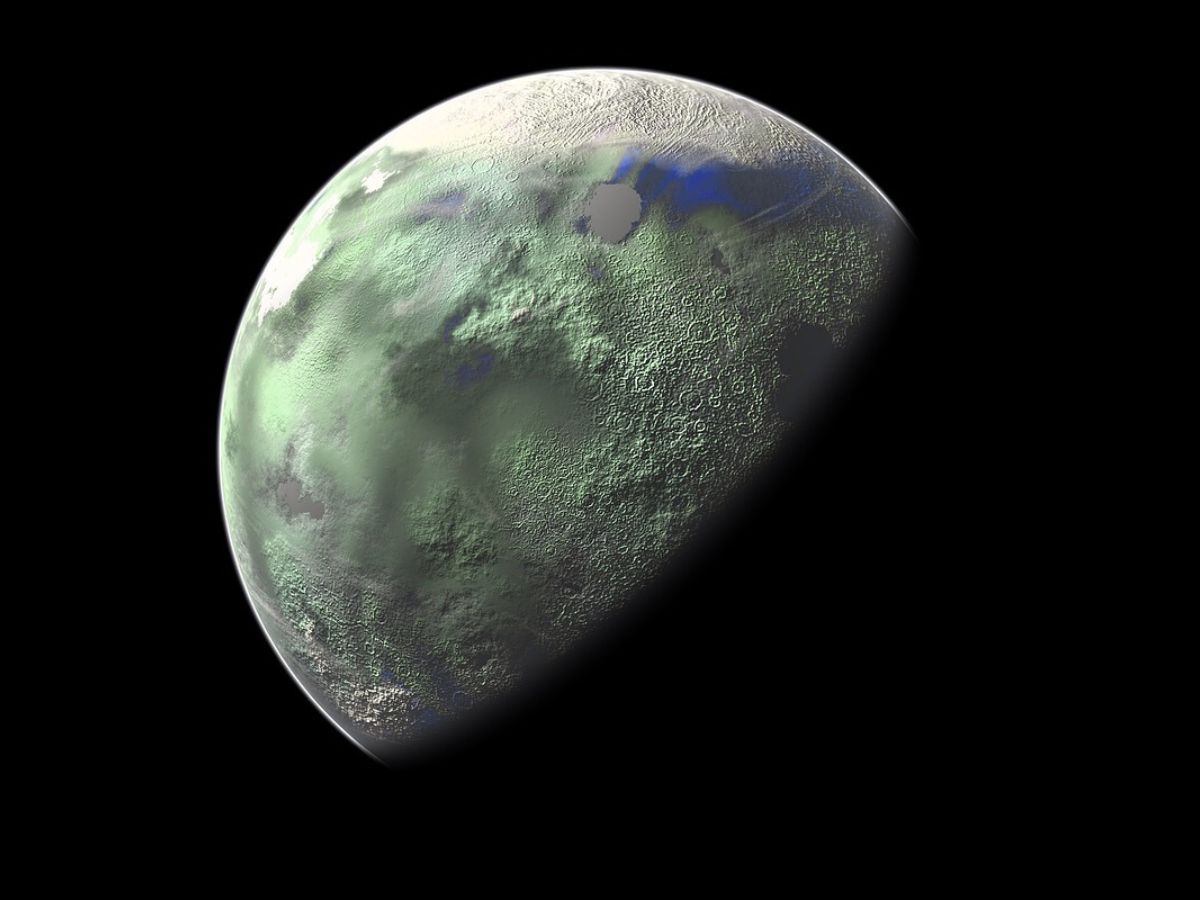
 An artist’s illustration showing a planet in space. (Image source: TheDigitalArtist – Pixabay)
Astronomers have detected a new rogue planet located about 10,000 light-years from Earth. But while this discovery is amazing, the mystery surrounding these planets remains unsolved, and further studies will need to be conducted.
Rogue planets are a mystery to astronomers around the world. Indeed, planets generally orbit around one or two stars, like Earth around the Sun. However, in 2000, astronomers discovered an object that does not orbit any star, and in 2024, scientists managed to detect a rogue planet transforming the light of a distant star with the help of the Gaia telescope and other devices.
With these new observations, they were able to determine its distance, as it is located approximately 9,950 light-years from Earth and has a mass equivalent to that of Saturn. And while this discovery calls many things into question, astronomers believe that there are many rogue planets in our galaxy, as Subo Dong explains:
“Our discovery offers further evidence that the galaxy may be teeming with rogue planets.”
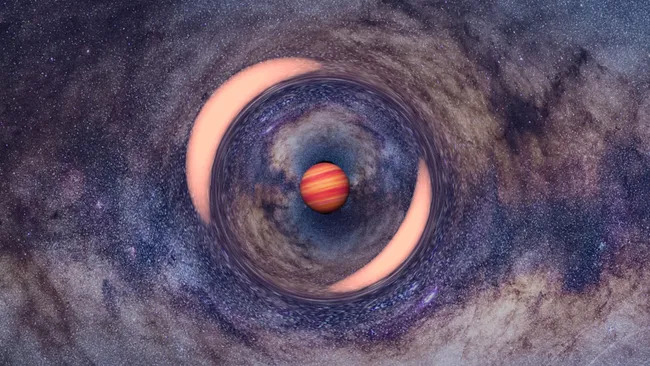 An illustration of a rogue planet exerting a gravitational microlensing effect on a distant star. (Image source: J. Skowron, K. Ulaczyk / OGLE)
However, the origin of these planets is still quite mysterious. Indeed, it is difficult to know why they wander through space without orbiting a star. But certain hypotheses have been put forward, such as chaotic interactions during their formation propelling them outside the gravitational pull of their star. In addition, some stars could pass through stellar systems, causing disorder, not to mention that planets can form directly from clouds of gas and dust.
Therefore, as with this discovery named KMT-2024-BLG-0792/OGLE-2024-BLG-0516, further studies could provide answers to these questions. Not to mention that other discoveries could be made in the near future, particularly with new telescopes.
 Alexis Stegmann – Tech Writer – 458 articles published on Notebookcheck since 2025
I’ve been working in the field of web writing for several years, and I’m passionate about keeping readers up to date with the latest news on astronomy, technology, the world of video games and other exciting subjects. In particular, I’ve had the opportunity to work on a number of websites, which has enabled me to cover a wide range of subjects. In my personal life, I’m passionate about a wide range of subjects, including astronomy, video games, history and science. I’m also drawn to psychology, which is a subject that deserves greater documentation and recognition.