
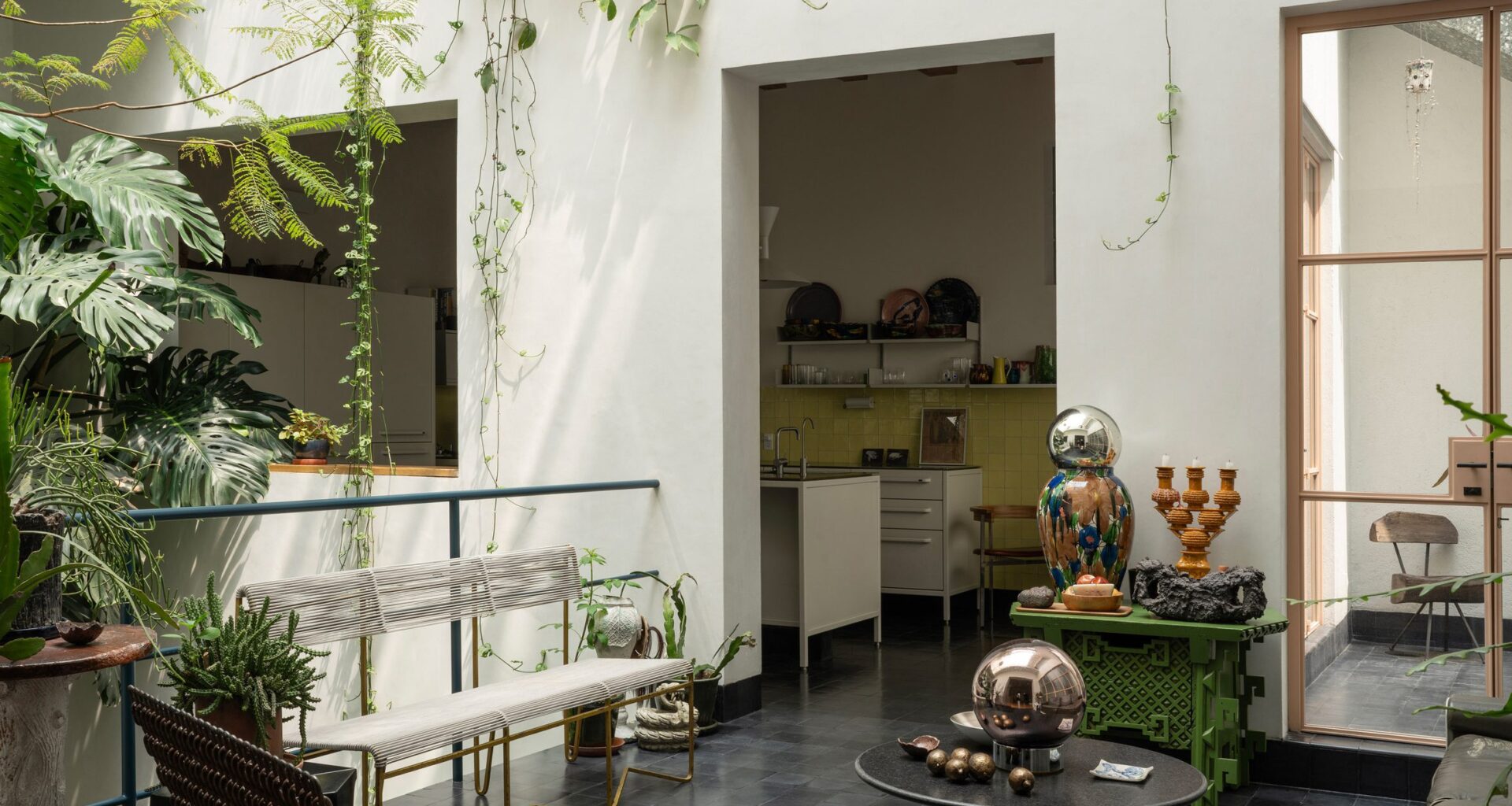
This historic house that revolves around a light- and plant-filled atrium in Mexico City has been preserved and revitalised by local studio Max von Werz Architects.
Max von Werz Architects worked with the owner of Casa C, artist José León Cerrillo, to thoughtfully renovate the 1913 building in the central Roma Norte neighbourhood.
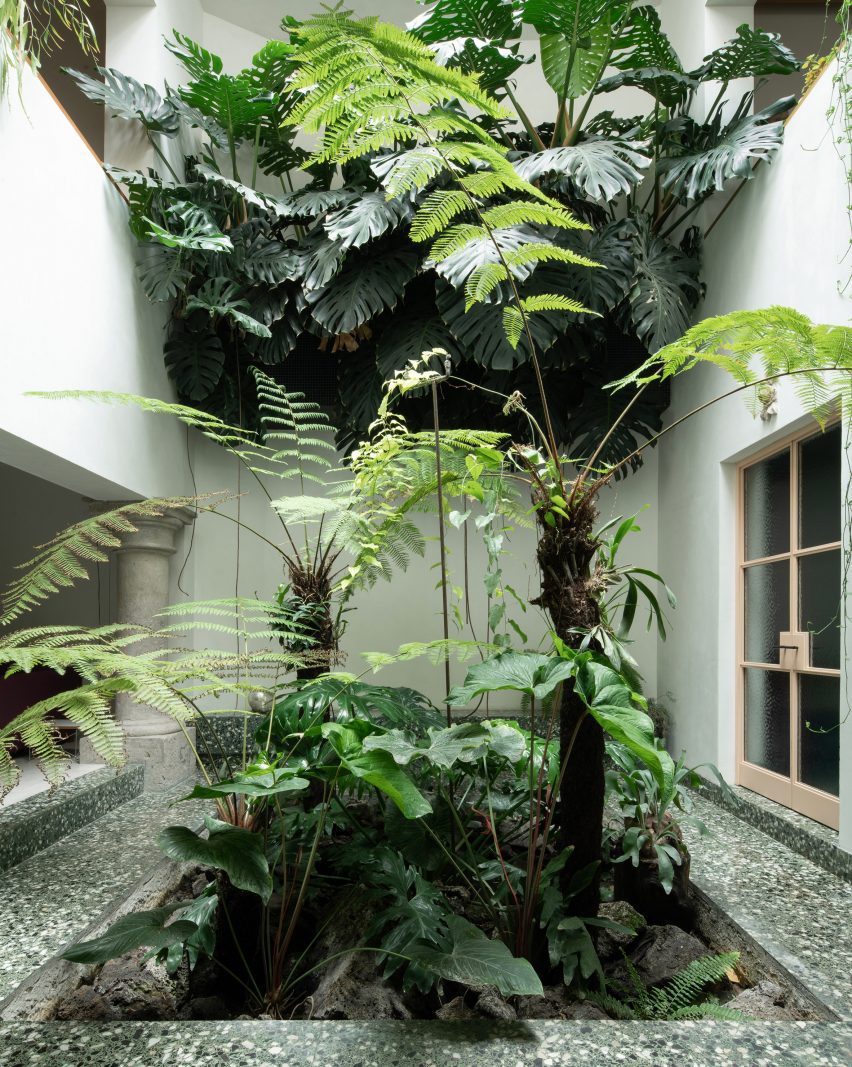 At the base of Casa C’s atrium, green terrazzo surrounds tropical plants
Designed in the French style characteristic of Mexico’s Porfiriato era, the house features ornate corbels, garlands and wrought iron detailing across its stone facade.
These were all restored, while the interior was transformed to reflect the structure’s history, bringing it up to contemporary living standards.
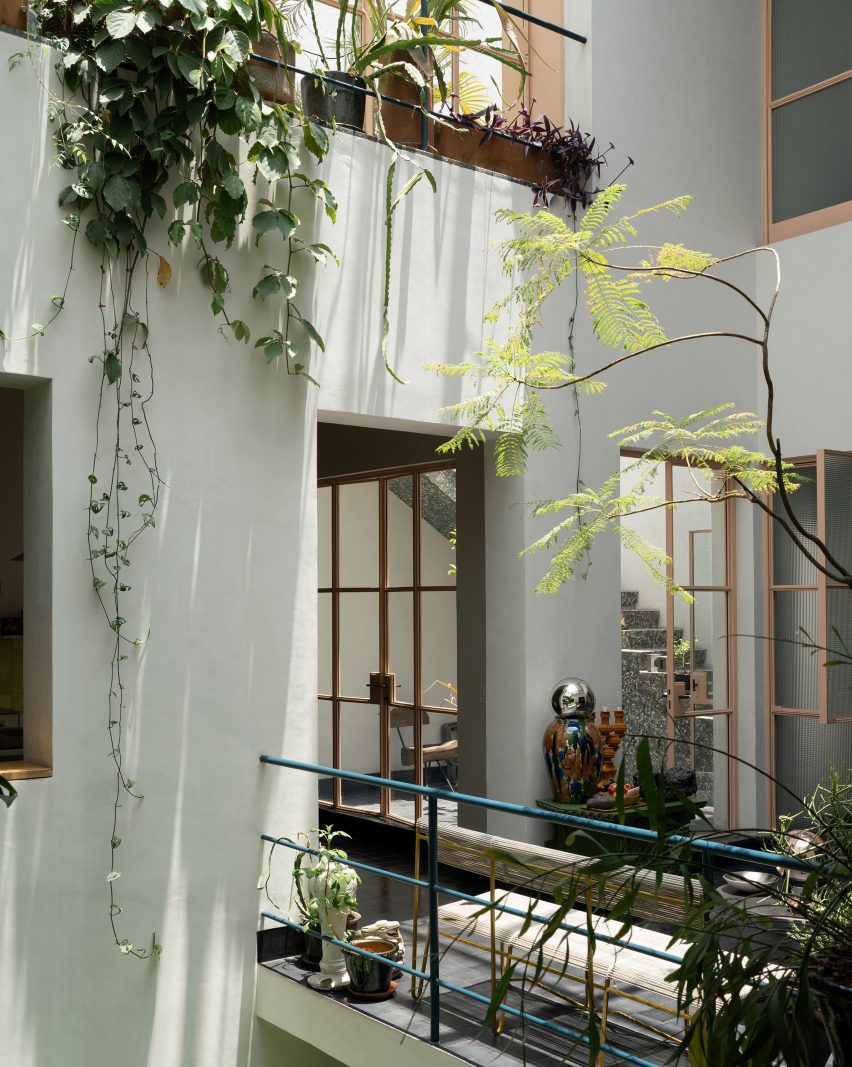 The house features custom metalwork that’s lacquered as a nod to Le Corbusier’s colour theories
“Previous owners’ alterations and additions to the original interior finishes made conventional restoration conjectured and problematic,” said architect Max von Werz.
“Rather than resorting to imitative pastiche, the designers opted to strip away layers of modifications and employ modernist detailing that honours the locale’s tradition of craftsmanship while refreshing the townhouse’s previously run-down and stuffy living spaces.”
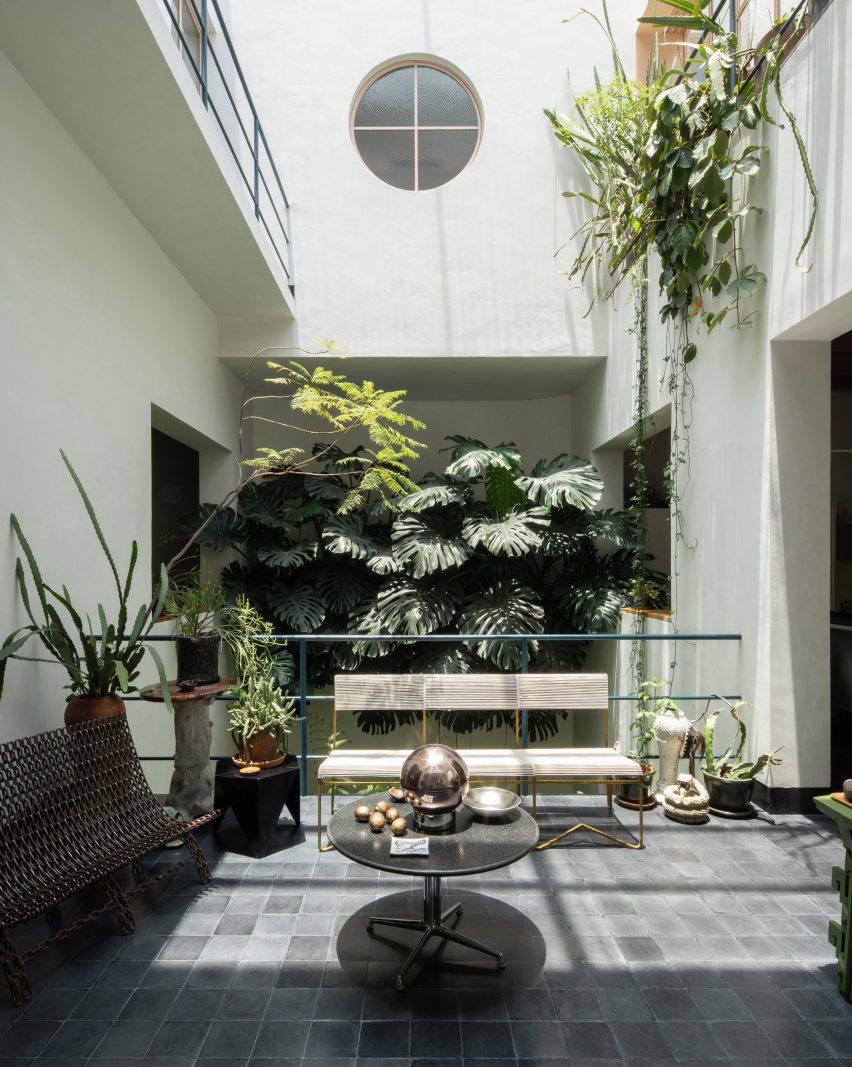 The home is filled with the furniture and decor collected by its owner, artist José León Cerrillo
The house is organised around a three-storey atrium that connects the surrounding spaces and brings in natural light from the roof windows.
Glass French doors framed in peach-coloured steel enable this light to permeate into the other rooms, while fritted panels are used in windows on the upper levels for privacy.
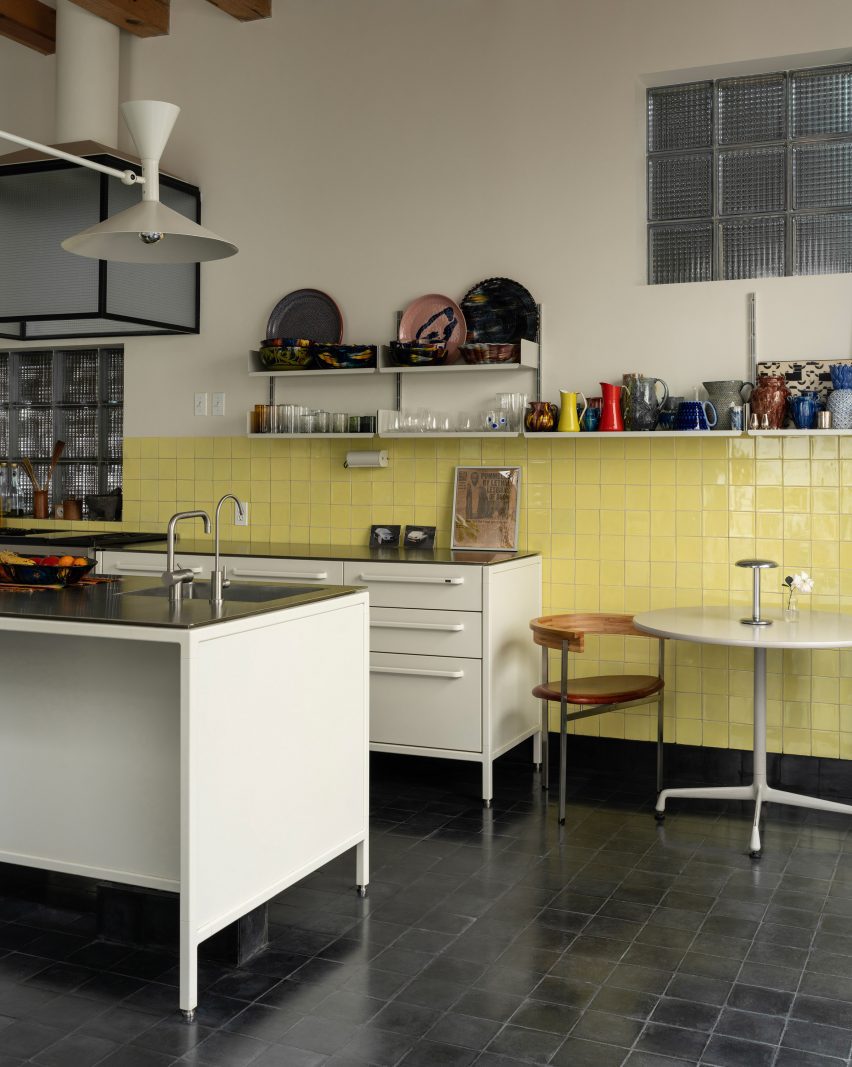 The kitchen’s yellow tiles and metal fixtures create a utilitarian look
The custom metalwork, which also includes balustrades and the skylights, is “lacquered in powdery hues that nod to Le Corbusier‘s colour theories” according to von Werz.
At the base, green terrazzo surrounds a central planting area filled with tropical species, which also flow from wall-mounted planters overhead.
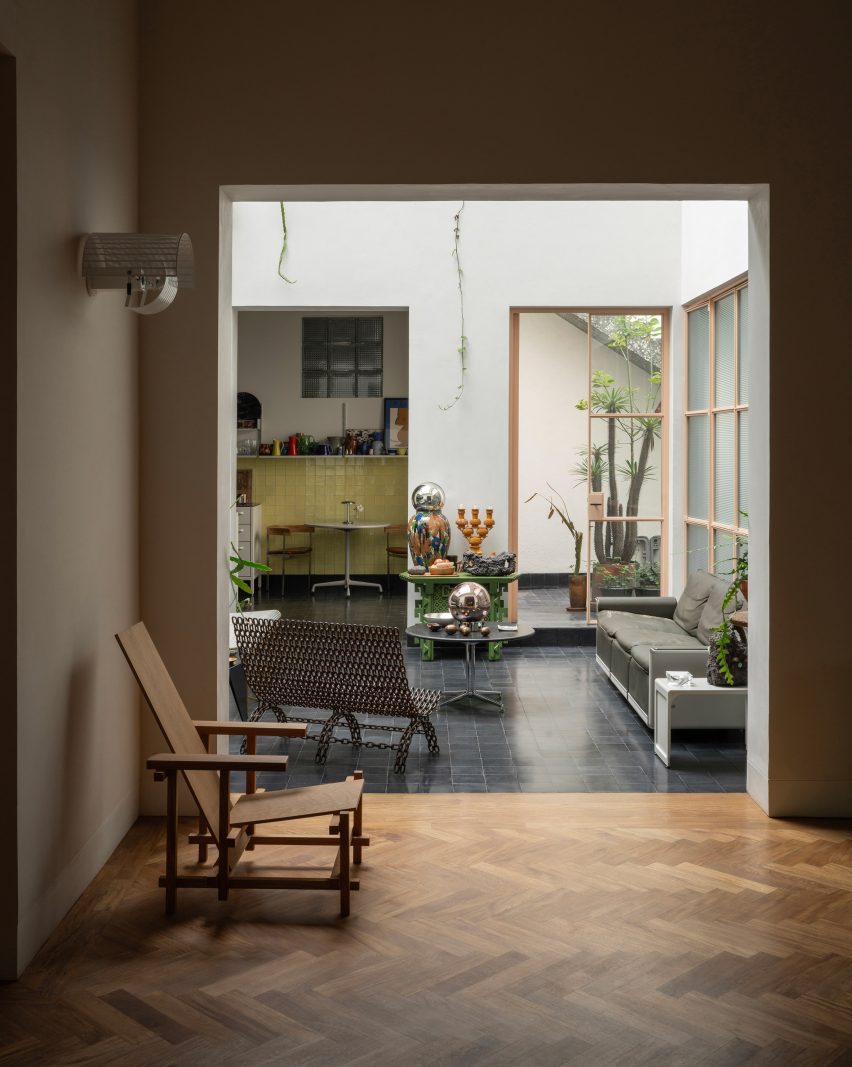 Dark tiles across the kitchen and atrium balconies contrast the herringbone flooring in other living spaces
Two staircases provide vertical circulation: one at the front of the property just beyond the ornate entrance, and the other made from cast terrazzo tucked to the side of the atrium.
“The layout largely preserves the house’s original functional and spatial configuration while introducing a winding architectural promenade towards its rear,” said von Werz.
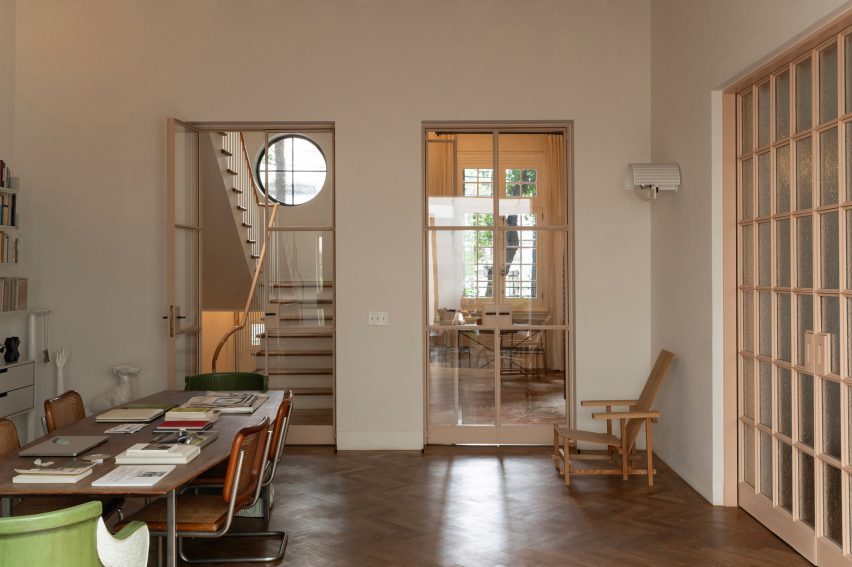 Rooms towards the front of the house are connected by glass French doors that allow light to pass between them
On the first floor, dark blue-green tiles differentiate the atrium balcony and the adjacent kitchen from the herringbone parquet flooring through the living spaces closer to the street.
The kitchen also features yellow wall tiles, metal cabinetry, an island and open shelves that create a utilitarian look.
Max von Werz merges old and new at Baja Club Hotel in Mexico
At the top is a roof garden, where the colour palette shifts to deep red thanks to the volcanic stone finish of planters and paving.
Cement tiles also extend over the walls of service volumes, while tone-matched metal grids also define spaces and direct views around the rooftop oasis.
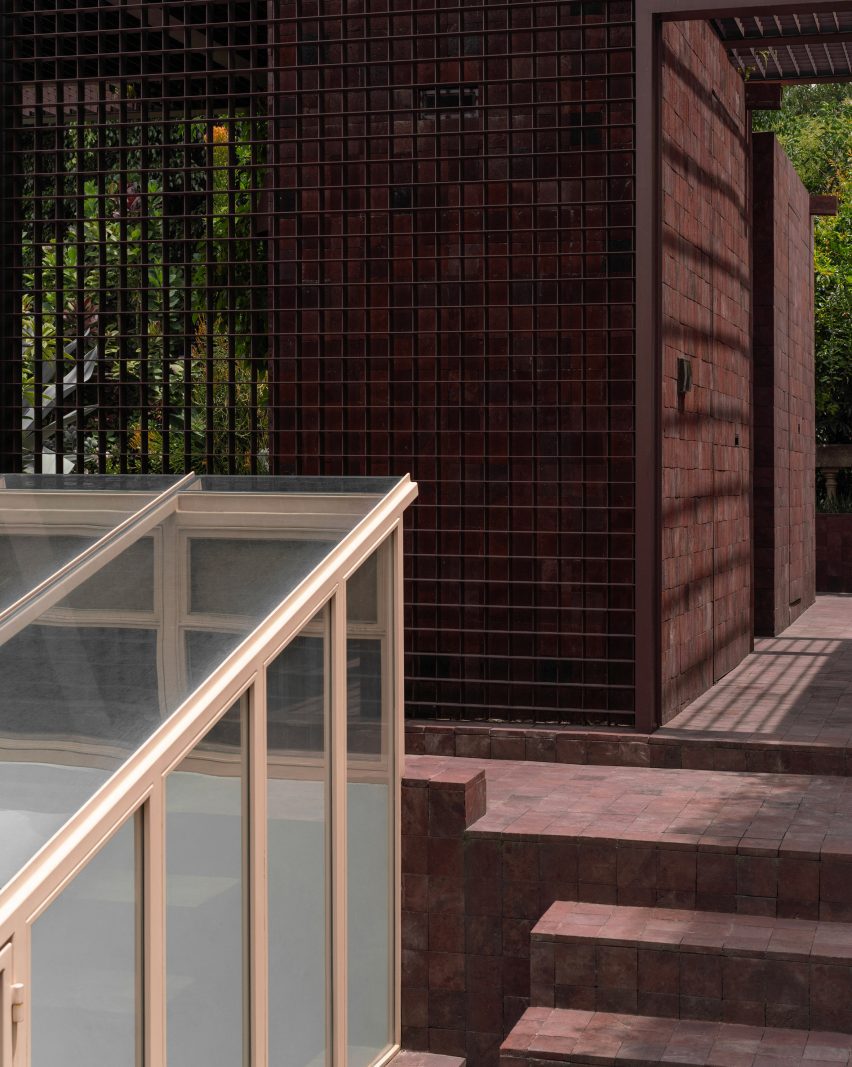 Dark red volcanic stone is used for the tiles that cover surfaces across the rooftop garden
The whole house is filled with Cerrillo’s collection of sculptural furniture and decorative objects, while the planting and details like circular windows add even more personality.
“The outcome is an eclectic project that breathes new life into a storied structure, while creating a serene and luminous home for its new resident artist,” von Werz said.
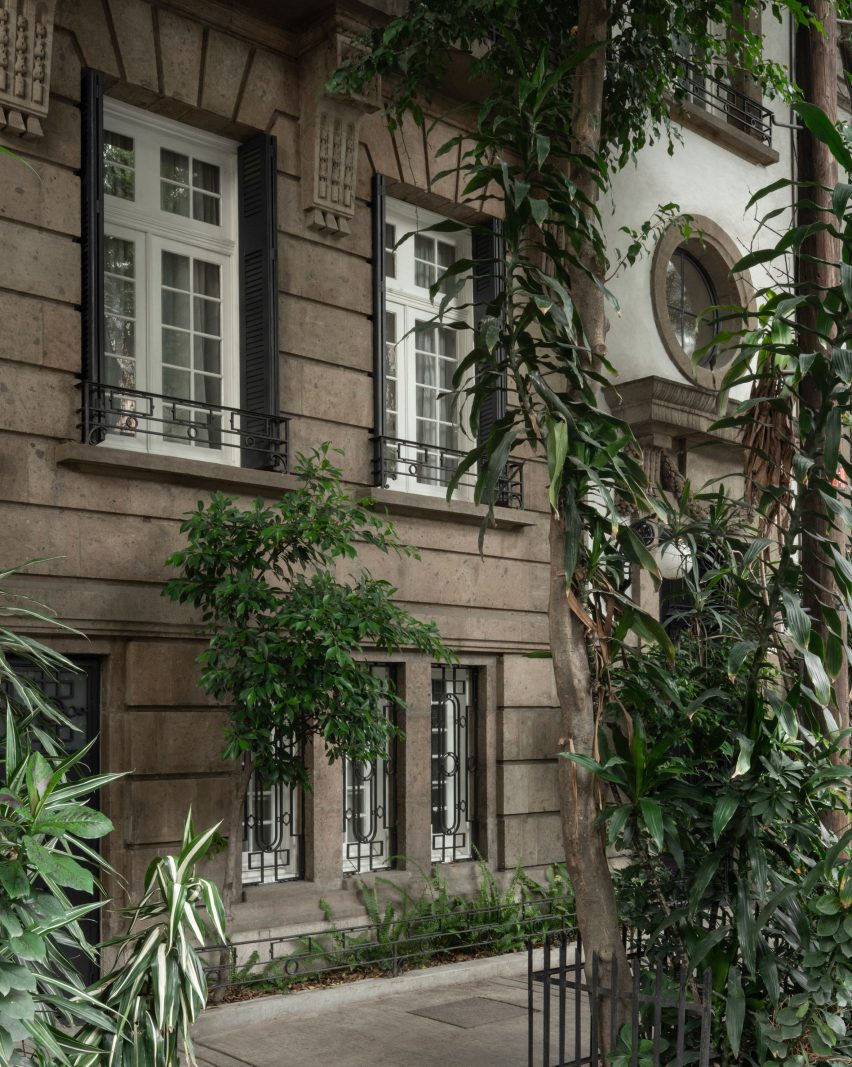 The townhouse in Mexico City’s Roma Norte neighbourhood has a stone facade designed in an ornate French style
The architect has previously completed the Baja Club Hotel on Mexico’s Baja Peninsula, which involved adapting a colonial-style villa dating to 1910 and constructing a new four-storey extension.
Mexico City’s Roma Norte neighbourhood is popular for its art galleries, design showrooms and eateries, including EWE Studio’s space in a converted dance hall and a taco restaurant clad in broken tiles.
The photography is by Fabian Martinez.