
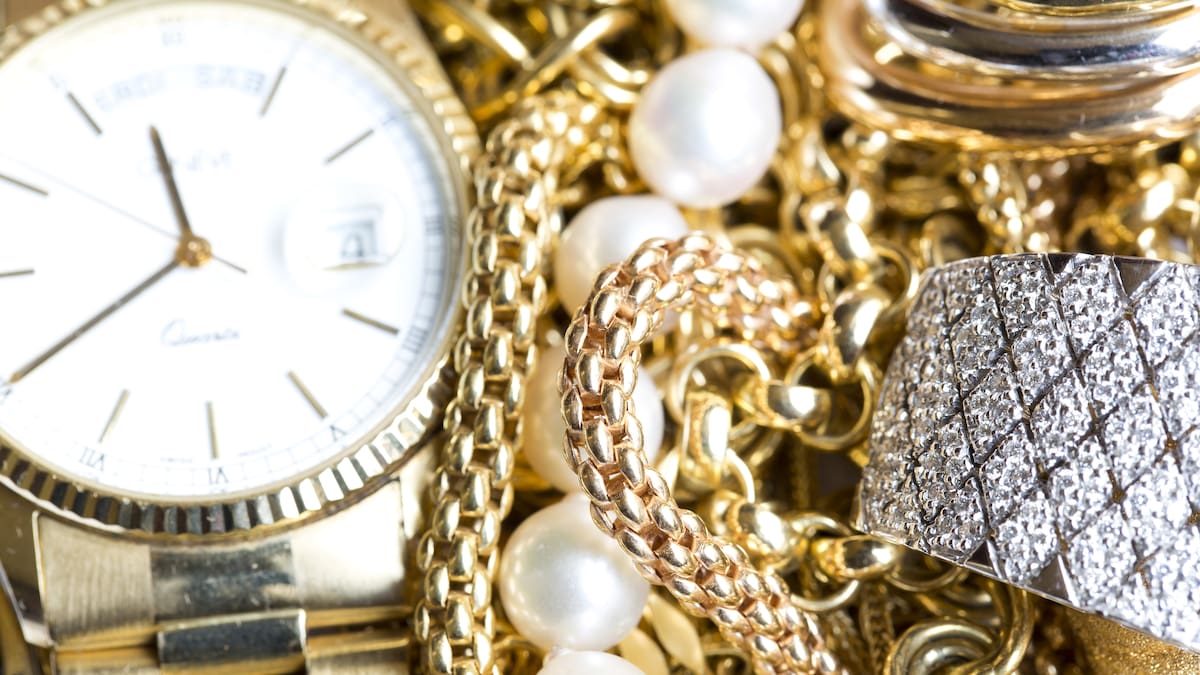
Auckland’s Queen St is home to Partridge’s, Tiffany & Co, Prada, Dior, Louis Vuitton, BVLGARI, Gucci and Swarovski.
Next year will bring the opening of Cartier, confirmed by the business for autumn, and another luxury retailer that is set to announce its plans soon.
Beck said the stores on Auckland’s lower Queen St had been instrumental in evolving the luxury market, especially over the past few years.
She said the luxury sector had been resilient during Covid and performed “extremely well”, although it had been a bit tougher over 2024 and 2025.
Heart of the City chief executive Viv Beck believes key projects coming to an end in Auckland will boost the luxury retail sector. Photo / Greg Bowker
Looking at the 2024 results for most major brands, this appears to be the case.
In the year to December 31, 2024, Tiffany & Co’s revenue fell 15% to $15.8 million and it made $148,000 in profit, down 68% from the year prior.
Over the same period, Prada reported a 13% decline in sales to $5.6m, although its net profit rose from $17,528 to $173,908.
Gucci followed suit and reported the largest drop in sales, down 33.5% from $40.9m to $27.2m but its net profit rose from $1.5m to $2.3m.
Likewise, revenue at Christian Dior, Swarovski and Louis Vuitton declined marginally, while Chanel made minor improvements.
Beck said while performances had been more mixed in 2025, new investment and store openings would come online at the right time this year.
“The city centre is coming out of a decade of major construction. We’ve got tourism growing again. We’ve got international students back to the pre-Covid levels.
“We’ve got the convention centre opening in February, which is significant. The City Rail Link is tipped for September-ish next year, and other developments are set to open. This is a significant area of opportunity.
“The other thing is that the area is in proximity to world-class hotels, the arts, dining and our waterfront. The foot traffic generally at this end has been stronger, but this has been developed and nurtured over time and we see lots of potential ahead.”
Newmarket Business Association chief executive Mark Knoff-Thomas says consumer confidence is gathering momentum. Photo / Supplied
Newmarket Business Association chief executive Mark Knoff-Thomas echoed similar sentiments and said all signs were pointing to decent growth for the luxury sector in the year ahead.
Knoff-Thomas said Newmarket had seen foot traffic build significantly in the annual rush towards Christmas, with Black Friday traffic already demonstrating the momentum flowing through to the area’s luxury operators.
Newmarket is home to 17 luxury stores, including brands such as Gucci, Balenciaga, Louis Vuitton, Golden Goose and Versace.
“Consumer confidence is finally gathering momentum from what we’re seeing in our trading data, and lower interest rates and stronger discretionary spend are helping. Our mix of luxury brands, boutique retailers and a loyal, high-value local catchment gives luxury a solid foundation,” Knoff-Thomas said.
“Newmarket’s always been resilient and, with new openings adding depth across the precinct, our tier one brands are benefiting from a renewed buzz that’s only building as we move towards 2026.”
Newmarket recently had Chemist Warehouse move into the former Smith & Caughey’s site, but Knoff-Thomas said it added to the diversity of the area.
“Newmarket has a super-diverse variety of retail – from the very best global luxury, to local and international discount brands, and everything in between. Newmarket thrives on that diversity as a well-connected precinct, that’s been something true since our earliest market days.”
He said the chemist’s opening showed a vote of confidence in the strip and noted the business would be a foot traffic drawcard that would benefit other retailers.
Speaking of other retailers, Knoff-Thomas confirmed negotiations on “several significant deals” for national and multinational brands to potentially open next year are taking place.
He couldn’t confirm any specific names but said the vacancy rate looks likely to return to pre-Covid levels in the year ahead.
Murray Bevan, director of Auckland-based fashion PR agency Showroom22. Photos / Supplied
Showroom22 founder and director Murray Bevan said luxury brands are not as susceptible to the same discussions made across New Zealand’s retail sector.
“The local brands are very risk averse and they are not used to spending money to make money. As soon as the chips are down, they hunker down and they sit on their hands and they don’t spend,” Bevan said.
“International brands have a huge amount of confidence and a resilience to be able to ride through moments of soft markets and actually double down in those periods. When they come out of those periods, they are significantly stronger than they were when they came into them.”
Reflecting on New Zealand’s wider retail industry and how it relates, Bevan said irrespective of the price point, brands are trying to make sure their value proposition is as high as possible to the customer.
He explained that whether it be a $100 product or a $1000 product, the buying experience must be rich and the customer must believe they are getting value for money.
“One of the things that’s probably helping hugely with big international brands and especially the luxury sector that’s coming into New Zealand is that young, modern Kiwi consumers are far more globally savvy than they’ve ever been before.”
Bevan believed the shift to online shopping during the Covid pandemic had reduced consumer interaction with brands and their storytelling, something he expects will return as more Kiwis return to shopping in store.
But one area Bevan hopes will make an even bigger impact this year is New Zealand’s local designers.
“We’re losing the nuance of that tapestry of local brands, which used to make up more than probably 50% of people’s shopping carts.
“I worry that the social media algorithm is teaching us that actually bigger is better. There’s less education and there’s less care from a younger demographic, at least, being put into any knowledge of, let alone financial commitment, to the local fashion industry and that’s a very hard wave to push against.”
Looking to the year ahead, Bevan believes the industry and consumers will seek products and experiences that artificial intelligence can’t replicate, citing a desire for connection and quality that comes from human creativity.
He also shared his excitement for Eddie von Dadelszen’s new venture set to open this year, the Faradays department store.
Auckland’s 131 Queen Street is set to become the city’s new department store, as luxury brand Faradays prepares for its next evolution. Photo / Krukziener Properties
The $30 million department store on Auckland’s Queen St plans to open by mid-2026 and feature a restaurant, retail experiences and valet parking.
The location at 131 Queen St is being transformed by Fearon Hay Architects into a three-level, 3000sq m store, with upwards of eight figures being spent renovating the interior of the heritage-listed Milne & Choyce building, once home to one of the first department stores in New Zealand.
Dadelszen is no stranger to the luxury sector and said it was experiencing one of its most significant recalibrations in recent memory, domestically and worldwide.
“Globally, luxury is settling into a more sustainable 2-4% annual growth trajectory after an extraordinary post-pandemic boom where price increases accounted for over 80% of growth,” Dadelszen said.
“McKinsey and Business of Fashion describe this as the end of luxury’s ‘golden quinquennium’ – but that recalibration creates genuine opportunity for properly positioned players. What’s compelling about New Zealand is that we’re starting from a completely different baseline.”
Dadelszen said New Zealanders spent roughly $9 billion annually on luxury goods overseas, but the local market was “essentially ignored” apart from a small handful of brands that had opened retail stores here.
He also highlighted the regional differences that are becoming more entrenched.
With Commercial Bay, several international brands and independent stores, and developments such as Faradays, Dadelszen said Auckland was finally building the infrastructure New Zealand deserves.
“Auckland now commands 11.6% luxury representation of CBD tenancies compared to Wellington’s 0.6%, clearly establishing us as New Zealand’s luxury capital.”
Faradays chief executive Edward von Dadelszen is set to transform Queen St with a new three-storey department store. Photo / Guy Coombes
As to why international brands are choosing to come to New Zealand, Dadelszen said it was because the fundamentals are sound, highlighting New Zealand’s affluent, globally-aware, multicultural customer base.
He also said the major luxury houses are undergoing a “creative reset”, moving away from price-led growth and refocusing on craftmanship and storytelling, something that will benefit emerging markets such as New Zealand.
Another aspect of the market helping with that push is the changing generation of its consumers.
“Gen Z and Millennials now represent 40% of the luxury market, driving more accessible brands like Miu Miu and Coach into significant periods of growth.
“These consumers prioritise storytelling and genuine engagement over logos – exactly what curated, independent luxury retail delivers better than transactional megabrand formats.”
For Dadelszen and his upcoming venture, he said he’s focused on creating something considered and sustainable that meets New Zealand’s luxury infrastructure during a period of industry change.
“The industry consensus is clear: this requires bold, long-term thinking.”
Tom Raynel is a multimedia business journalist for the Herald, covering small business, retail and tourism.
Stay ahead with the latest market moves, corporate updates, and economic insights by subscribing to our Business newsletter – your essential weekly round-up of all the business news you need.