

This rare glimpse inside Mark Zuckerberg’s home offers a compelling lesson in warm minimalism and the power of color restraint. Rather than leaning into the stark, tech-driven aesthetic often associated with Silicon Valley, the space demonstrates how a carefully considered neutral palette can create depth, softness, and understated elegance.
The result is a minimalist living room that feels calm and inviting, shaped by tone and texture rather than contrast or statement color.
Crisp whites are replaced with a spectrum of creams, sands, and warm off-whites – hues that feel grounded, natural, and easy to live with. These subtle color shifts allow light to move gently across the room throughout the day, bringing the palette to life without overwhelming the senses.
You may like
Natural materials also play a key role in adding richness to this neutral living room: wood side and coffee tables, a generously scaled textured rug, and tactile upholstery prevent the scheme from feeling flat or overly pared back and clinical.
The living room furniture choices reinforce this softened approach to minimalism. A curved cream sofa introduces fluidity and warmth, softening the architecture and encouraging visual flow. Walls and woodwork sit within a closely related tonal family, creating a seamless backdrop that enhances the sense of space and brightness without relying on sharp contrast.
To avoid sterility, natural elements are used as quiet focal points. A large indoor tree brings organic movement and vitality, while dark-framed mirrors add definition and balance. These details prove that restraint doesn’t equate to emptiness; when thoughtfully layered, minimal interiors can feel characterful and deeply comfortable.
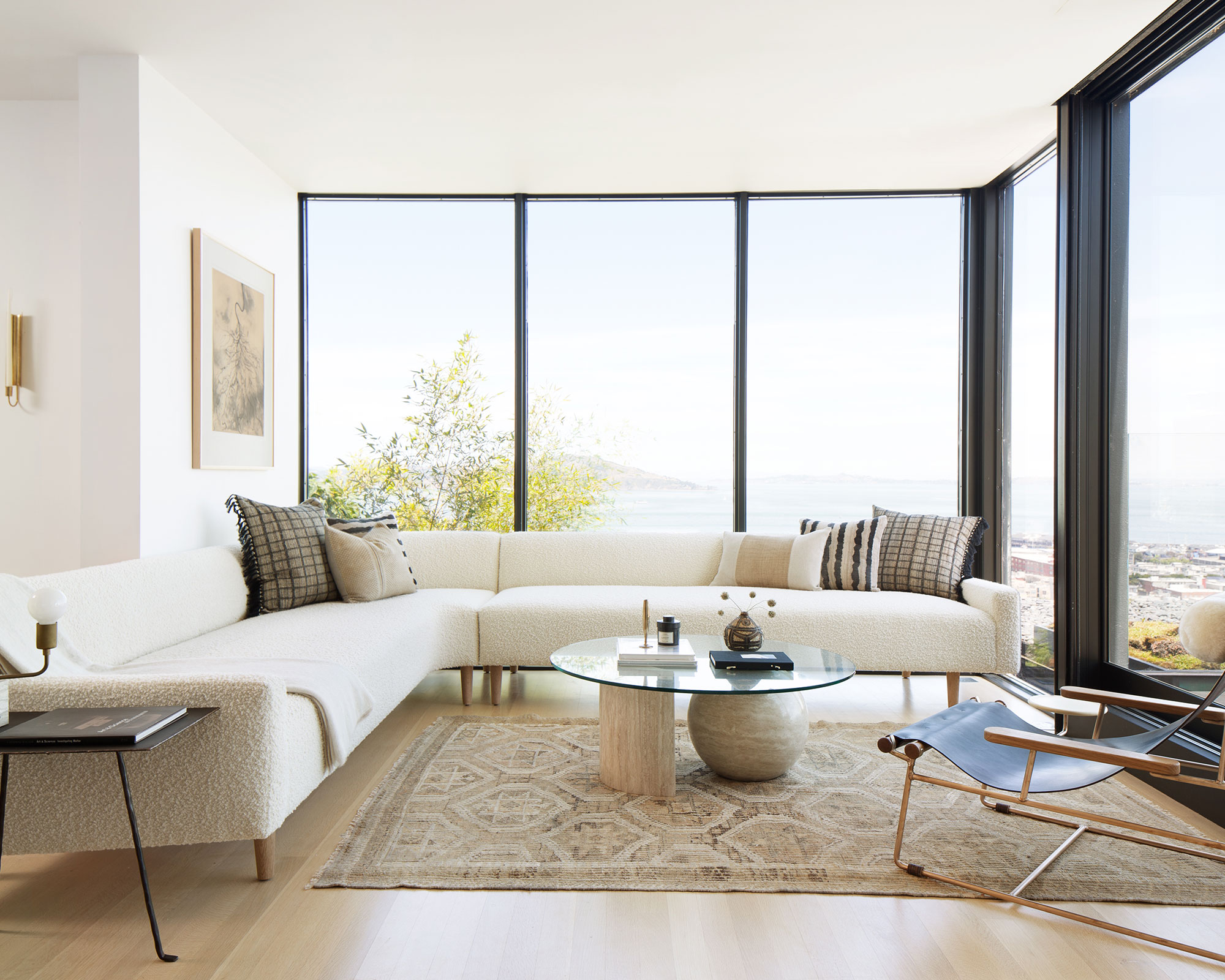
This space echoes Zuckerberg’s signature warm minimalism by pairing a neutral, ‘quiet luxury’ palette with expansive glass to blend high-end architecture with the natural landscape. It mirrors his preference for functional simplicity, using rich textures rather than bold colors to create a focused, uncluttered environment.
(Image credit: JDP Interiors / Bess Friday)
This approach speaks to a wider shift in how we use color at home. In open-plan living spaces, particularly, a harmonious, neutral palette helps create cohesion and calm. Monochromatic schemes – layered with texture rather than color – are especially effective, allowing rooms to feel expansive, light-filled, and emotionally grounding.
It’s not just celebrities embracing this softer design language. As life feels increasingly fast-paced, many of us are drawn to interiors that offer a sense of refuge. Quiet luxury, warm minimalism, and restrained decorating choices reflect a collective desire for homes that soothe rather than stimulate.
As Lucy Searle, Content Director of Homes & Gardens, notes, what people are longing for now are light, open spaces and calming color palettes that create an emotional response – interiors that feel serene, balanced, and genuinely uplifting. This home is a clear expression of that desire, proving that when color is used thoughtfully, minimalism can feel not only beautiful but deeply restorative.
Shop the Look
While the exact details of Mark Zuckerberg’s home remain a mystery, there is – thankfully – a wealth of beautiful neutral decor accessories and furniture pieces that can make any cream living room feel rich, luxurious, and effortlessly expensive.