
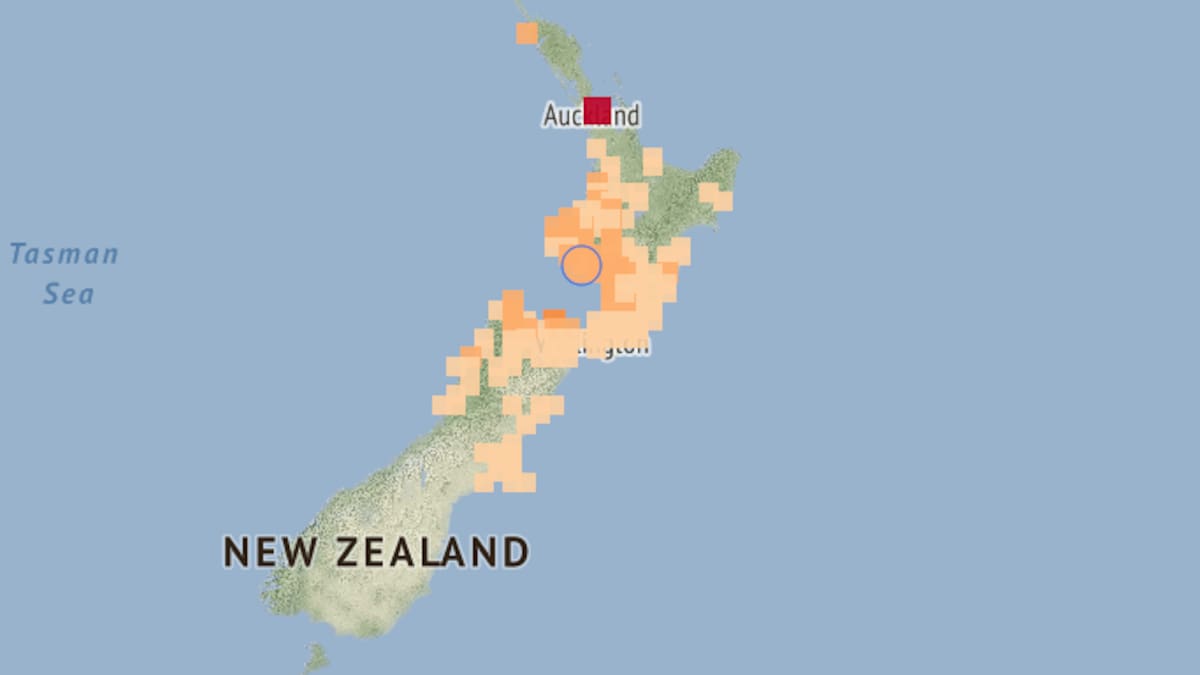
“Decent little shake,” wrote one person on social media platform, X.
“Nice sharp shake,” wrote another.
In Wellington, the earthquake began as a low, subtle shake that grew in strength, lasting roughly 20 seconds.
Meanwhile Facebook users described it as a “huge wobble in New Plymouth”.
“I heard it coming! Hate them!” said a Levin resident.
“Only just at my house in bulls, felt like a big truck going past,” said another.
A Waitarere resident said there was “lots of noise for a while then a big wobble”.
Meanwhile a Wellingtonian said it was “so small I thought it was vertigo”. They weren’t even sure an earthquake had happened until they checked online, they said.
One woman in the Horowhenua region said her china cabinet and pictures began rattling first.
“Only then the wave came, and ended with a big jolt,” she wrote, saying it got her heart going as she enjoyed a “morning cuppa”.
Another person in Patea, near the epicentre, said the house “jumped”.
One woman in Inglewood said the quake “wriggled along the hallway like a wet dog”.
“Whole house groaned. Woke the cat. I’m pleased I was sitting down,” she said.
The shake comes two weeks after another tremor that rumbled the lower North Island.
The strong 4.7 magnitude earthquake hit on Boxing Day near Pongaroa.
It was measured at 17km deep, with the shaking initially described as moderate. It was revised an hour later to strong.
The quake was widely felt from Wellington to Whanganui.
“Alright, which one of you rolled out of bed after eating three different Christmas meals yesterday?” Civil Defence Manawatū Whanganui jokingly posted at the time.
“Quakes like this one are always a good reminder to Drop, Cover and Hold when the ground starts shaking.”
What to do if you’re woken up by a quake
Hawke’s Bay Emergency Management director Shane Briggs said staying in bed during a quake that wakes you had been official advice for some time.
“People are far more likely to be injured if they get up and move around during an earthquake. Research using ACC injury data from the 2016 Kaikōura–Hurunui earthquake supports this.
“Research consistently shows that ‘drop, cover, and hold’ is the best way to stay safe in earthquakes in New Zealand – and if you’re in bed, that becomes ‘stay, cover, and hold’.”
Briggs said the advice was the same regardless of building type, and moving towards a doorway was no longer recommended.
“Doors can swing violently, striking people or trapping fingers.
“This older advice came from a time when buildings were constructed differently, and door frames were often the strongest part of a structure.
“Modern buildings are designed differently, and that’s no longer the case.”
Once the shaking stops, people should get up if it was long and strong and they were in the blue tsunami evacuation zone, he said.