
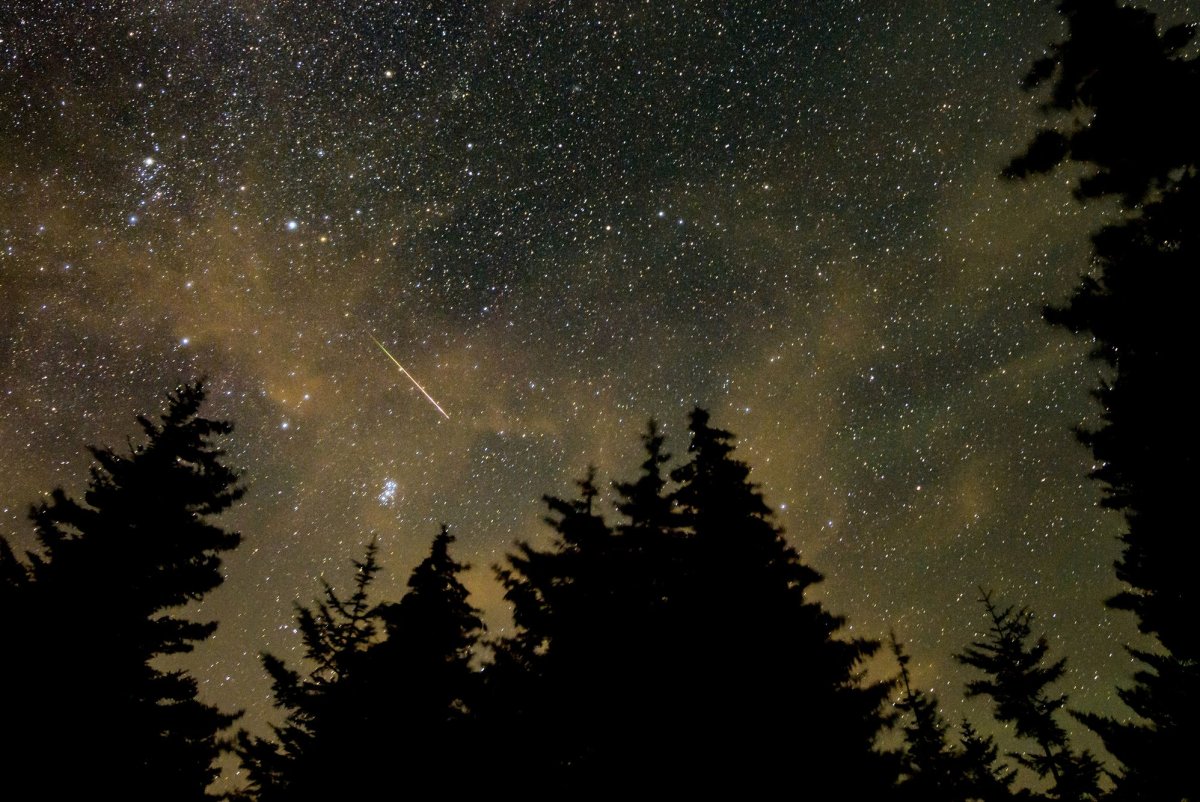
There will be plenty of chances to spot shooting stars throughout 2026, with meteor showers putting on a show nearly every month.
The two biggest showers of the year are expected to have excellent viewing conditions, while others may produce unusually bright meteors known as fireballs.
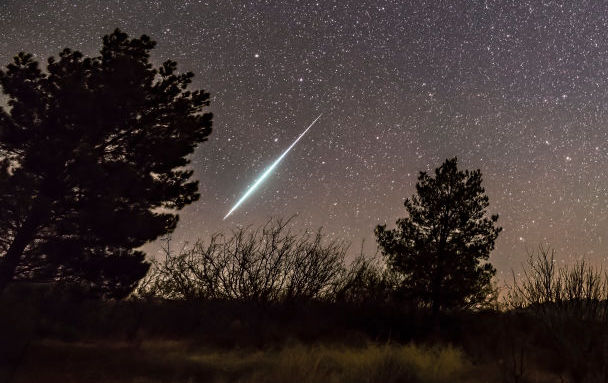 A single bright meteor from the Geminid meteor shower of December 2017. Photo by VW Pics/Contributor)
Here are the top meteor showers of 2026 to mark on your calendar:
Lyrid meteor shower: April 21-22
Winter is a slow season for skywatching due to the lack of major meteor showers, as well as the often cold, cloudy nights. But as spring returns, so will better stargazing, starting with the Lyrids on April 21-22.
The peak coincides with Earth Day, and people who spend a night under the stars may spot up to 20 meteors per hour.
Eta Aquarids: May 5-6
The Eta Aquarids are typically one of the best meteor showers of the year for the Southern Hemisphere, peaking on the night of May 5-6. People north of the equator can still catch part of the show, but it will have competition in the sky in 2026.
“In 2026, a waning gibbous moon will severely affect this shower, reducing hourly rates to less than 10 [per hour],” the American Meteor Society explained on its website.
Pair of late-July meteor showers
Late July features a pair of meteor showers that serve as an appetizer for an even bigger event in August.
The Southern Delta Aquarids and the Alpha Capricornids are long-running showers that can combine for as many as 30 meteors per hour during the final nights of the month. In 2026, however, they’ll coincide with a full moon, which will outshine all but the brightest meteors.
Perseid meteor shower: Aug. 12-13
The Perseids will be the must-see meteor shower of 2026, with peak rates that can reach around 100 shooting stars per hour on the night of Aug. 12-13.
This year will be an excellent year for the Perseids, with the peak on a moonless night, allowing the brightest part of the display to shine through. That’s the opposite of 2025, when a full moon clashed with the peak.
A few meteors may begin to streak across the sky shortly after nightfall, but like most meteor showers, the strongest burst of activity usually happens after midnight.
Orionid meteor shower: Oct. 21-22
Autumn is one of the best times of year for meteor watching. Nights are cooler and often clearer, and multiple showers streak across the sky in a fairly short window.
The Orionids kick off that stretch on the night of Oct. 21-22, with around 20 shooting stars per hour. The shower is also one of two annual meteor displays created by debris from Halley’s Comet, with the other being May’s Eta Aquarids.
Taurid meteor showers: Early November
A pair of long-running meteor showers peaks during the first half of November, sending a slow but steady stream of meteors across the sky.
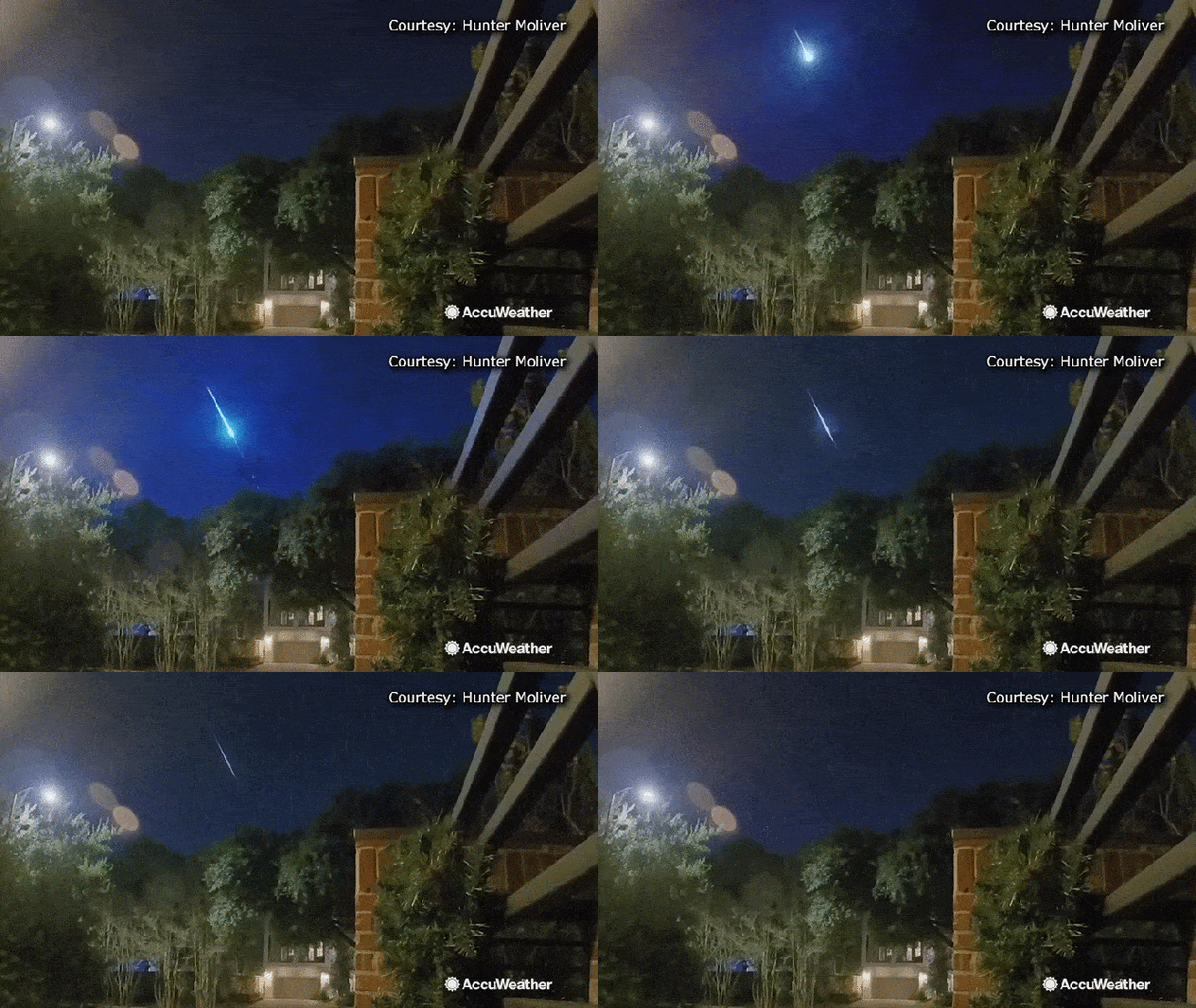 A fireball captured over Houston on Dec. 5, 2019. It was so bright that it was seen as far away as Oklahoma and Louisiana. Video by Hunter Moliver
The Southern Taurids and Northern Taurids combine for around five to 10 shooting stars per hour, but they can be active through the first two weeks of the month. The Taurids are also known for fireballs – exceptionally bright meteors that can briefly light up the sky.
Leonid meteor shower: Nov. 16-17
As the Taurids start to fade, the Leonids will ramp up, peaking on the night of Nov. 16-17.
The Leonids are renowned for producing some of the biggest meteor storms in history. However, a more typical showing is expected in 2026, with around 15 to 20 meteors per hour.
Geminid meteor shower: Dec. 13-14
The Geminids will be one of the year’s can’t-miss astronomy events, with peak rates that can reach around 120 meteors per hour on the night of Dec. 13-14.
“This is the one major shower that provides good activity prior to midnight,” the AMS said.
Even though the Geminids can outperform the Perseids, December weather can be fickle. Where the sky is clear, cold conditions can still make for a tough night outside.
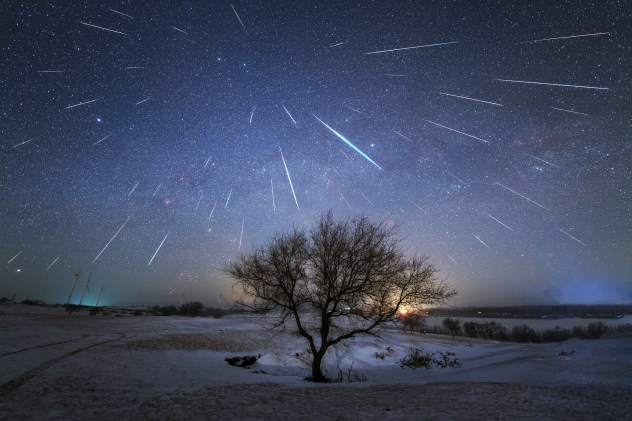 December 13, 2017 – The annual Geminid meteor shower is raining down on planet Earth above the winter landscape of Heilongjiang province of China. 48 meteors are recorded in this composite image which stream away from the shower’s radiant in constellation Gemini.
This year will be a good one for viewing the Geminids as the peak coincides with a crescent moon.
Ursid meteor shower: Dec. 21-22
The final meteor shower of the year is also one of the most overlooked. Even so, it’s one of the last chances of 2026 to spot shooting stars.
“The Ursids are often neglected due to the fact it peaks just before Christmas and the rates are much less than the Geminids, which peaks just a week before the Ursids,” the AMS explained.
The shower peaks on the first night of astronomical winter – the longest night of the year in the Northern Hemisphere – with around 10 shooting stars per hour.
All peak dates are according to the American Meteor Society.