
In March, Immigration Minister Erica Stanford announced changes to the rules for children of temporary migrants.
From March 17 last year, dependent children of temporary visa holders would no longer be eligible for student and visitor visas if they had a severe cognitive or development disorder requiring significant support.
Stanford’s rationale for the change was a “spike” in children of migrants with learning difficulties being enrolled in schools and putting “significant strain” on the education system.
Sophia and her family have lived in Pāpāmoa since 2022. Gregori said he loved the schools, beaches, parks, housing and safety.
“I just changed everything to stay here and that would be a big loss for us. It’s very hard to start again … there’s no way we’re going to just send her to Brazil alone. It’s impossible.”
Move in search of a better life
Gregori said he immigrated to New Zealand in May 2022 to “build a better future”. His brother-in-law already lived here.
His wife Valquiria De Espindola Gregori, son Gabriel, and daughter Sophia followed that December.
In October 2024, Sophia was diagnosed with autism at level 3, signifying a need for very significant support. She attends Tauranga Special School.
Marciano, a tiler, and Valquiria, a baker, were granted work visas and Gabriel, 13, was granted a student visa, valid until 2029.
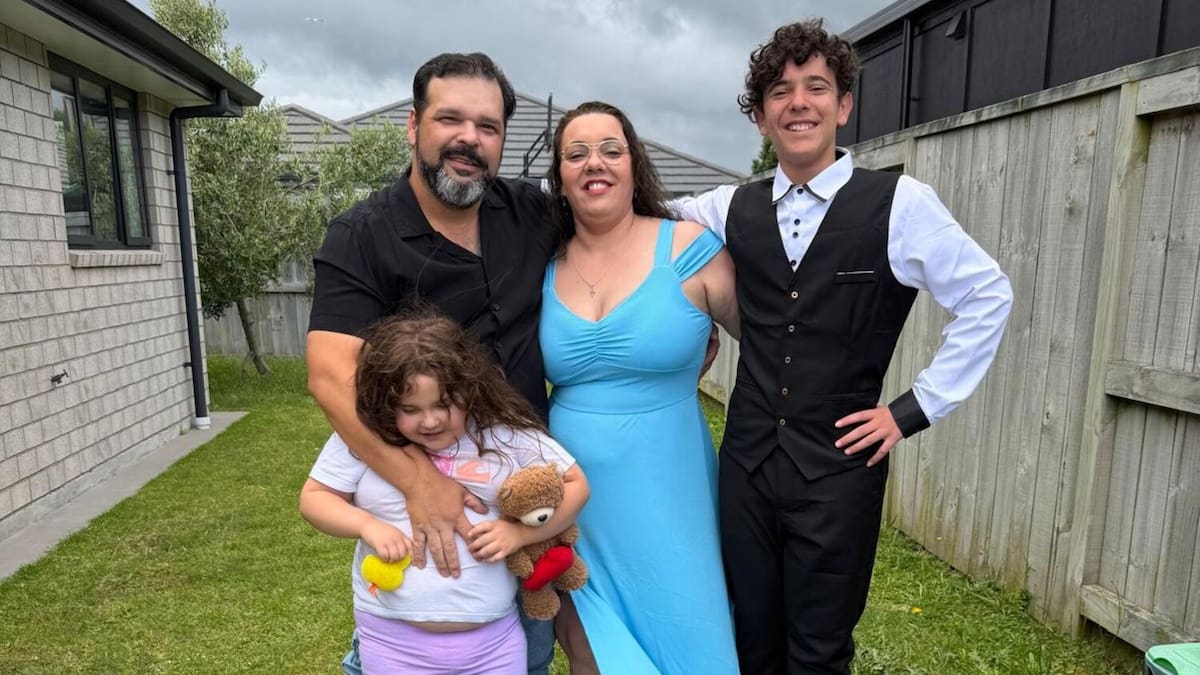
Valquiria De Espindola Gregori and Marciano De Castro Gregori with their children Gabriel and Sophia. The family is fighting for Sophia to be allowed to stay in the country after her visa was denied because of her autism diagnosis. Photo / Supplied
A letter from Immigration New Zealand in August 2025 said Sophia was likely to impose “significant costs or demands on New Zealand special education services” and health services.
It said she had autism spectrum disorder with level 3 social communication impairment and, at the time, had toileting difficulties, no oral language and was unable to give her name, gender or age.
Her current visa is valid until February 10.
The family launched a petition urging Associate Immigration Minister Chris Penk to intervene.
Juliana Carvalho from advocacy group Migrants Against the Acceptable Standard of Health Aotearoa said she had been supporting the family, who were “another example of the harm and unfairness of the current immigration policy”.
“What is the implicit message when they do give visas to the entire family … and not to the child?”
The disability rights advocate called for the acceptable standard of health policy to be abolished.
Green MP Ricardo Menéndez March said his office was preparing a ministerial intervention request.
Green MP Ricardo Menéndez March says his office is preparing a ministerial intervention to allow Sophia to stay in New Zealand. Photo / Mark Mitchell
Menéndez March said there had been other recent cases where families with disabled children faced being separated, “which is completely unworkable and cruel”.
He said the acceptable standard of health policy separated families and treated disabled people “like they’re just a number”.
“If we want workers in the country, we can’t be asking them to keep their disabled children offshore.”
Immigration New Zealand deputy chief operating officer Jeannie Melville acknowledged the family’s difficult situation.
Melville said Gregori obtained an essential skills work visa in 2022. Visas were also granted for his partner (partner of a worker work visa) and two children (a dependent child student visa for Gabriel and a visitor visa for Sophia), valid until 2025.
Melville said Sophia was too young for school when she applied for a visitor visa, rendering education-related support needs irrelevant. She was considered to have an acceptable standard of health and her visa was approved.
In March 2024, Gregori was granted a five-year accredited employer work visa.
Valquiria and Gabriel’s new visas were approved in July 2025.
Sophia applied for a dependent child student visa in May 2025.
Melville said a clinical review of Sophia found she did not have an acceptable standard of health for that visa and her application was declined.
She said INZ carefully considered all applications involving dependent children, including those with special needs, under health and eligibility criteria.
A qualified medical assessor determined whether an applicant had an acceptable standard of health.
INZ was required to determine whether applicants were likely to be a risk to the public health system or impose significant costs or demands on health or special education services, and whether they could do the work or study linked to the visa.
In some cases, the “overriding issue of concern” may be the need for services and resources that were already “under pressure”, she said.
INZ can consider a medical waiver of the health requirements, accounting for the level of support required, family connections to New Zealand and a family’s potential contribution to the country, Melville said.
“We understand that Sophia is supported by her family and we acknowledge their commitment to meeting her needs. However, Sophia was not eligible for a medical waiver in this instance.”
The medical assessor found Sophia’s conditions were “likely to place significant demands on New Zealand’s special education services” because she was eligible for ongoing resourcing schemes funding.
Applicants likely to qualify for this funding were not considered to have an acceptable standard of health regardless of a family’s ability to provide care or their background, she said.
Families that had exhausted standard options could request ministerial intervention, asking the Immigration Minister to review their case.
The request was not guaranteed and it was not possible to say how long it could take.
Megan Wilson is a health and general news reporter for the Bay of Plenty Times and the Rotorua Daily Post. She has been a journalist since 2021.